Results by title
16 books match the query 'Folktales'

Affrilachian Tales
Folktales from the African-American Appalachian TraditionLynette Ford
Parkhurst Brothers, Inc., 2012
Folktales from the African American Appalachian tradition. Told by Lyn Ford, one of America’s busiest touring storytellers. The power of Lyn's storytelling comes straight out of her family heritage, which is the content of this, her first book. Here she tells how she learned stories from her father and grandfather—and she includes many of the stories they told her.

Brothers Grimm And Their Critics
Folktales And The Quest For MeaningChrista Kamenetsky
Ohio University Press, 1993
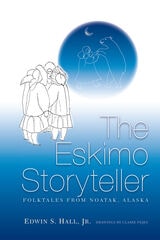
Eskimo Storyteller
Folktales from Noatak, Alaska New EditionEdwin Hall
University of Alaska Press, 1999
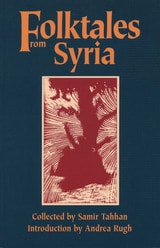
Folktales from Syria
Collected by Samir Tahhan
University of Texas Press, 2004
Syrian poet Samir Tahhan collected folktales from old men sitting outside their houses in Aleppo, drinking tea. Afraid these stories would disappear with the passing of this generation, Tahhan also went to halls and events to hear professional storytellers and record their performances. Anthropologist Andrea Rugh helped translate the resulting two volumes of stories from the original Arabic and wrote the informative introduction to this one-volume collection.
Some of the tales appeared in rhyming verse in Arabic and some were based on events that are said to have actually taken place in Aleppo. Rugh explains the concepts of the most popular types of Syrian story structures: the gissa, the hikaya, and the hudutha. With two of the poems, the Arabic and the English are shown side by side in order to demonstrate the internal poetic structures of the original rhymes.
With their emphasis on morality and social values, the tales will be familiar to Western audiences. Another value for the reader is finding the accepted social values and behaviors that Arab adults try to inculcate in their younger generation, often through complex characterizations. Teasing out these meanings gives the reader an appreciation for the act of translation and hints of the power of the Arabic language in prose and poetry.
Professional illustrator Douglas Rugh has provided the book's black-and-white prints based on the stories and his experiences as a child growing up in the Middle East.

Folktales from the Helotes Settlement
John Igo
University of North Texas Press, 2014
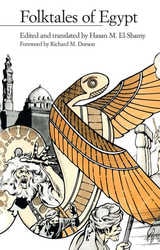
Folktales of Egypt
Hasan M. El-Shamy
University of Chicago Press, 1982
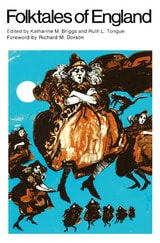
Folktales of England
Edited by Katharine M. Briggs and Ruth L. Tongue
University of Chicago Press, 1968
"This is a fine, homely feast, immediately intelligble. . . ."—Times Educational Supplement
". . . should be of special concern to Americans since many of the tales are parallel to or the source of our own folk stories."—Choice
"This is entertainment, to be sure, but is also part of man's attempts to comprehend his world."—Quartet
"Folktales of England is by all odds the most satisfactory general collection of folktales to come out of England since the advent of modern collection and classification techniques."—Ernest W. Baughman, Journal of American Folklore
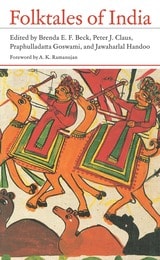
Folktales of India
Edited by Brenda E. F. Beck, Peter J. Claus, Praphulladatta Goswami, and Jawahar
University of Chicago Press, 1986

Folktales of India
Edited by Brenda E. F. Beck, Peter J. Claus, Praphulladatta Goswami, and Jawahar
University of Chicago Press, 1987
"This collection does an excellent job of representing India. . . . It is the type of book that can be enjoyed by all readers who love a well-told tale as well as by scholars of traditional narrative and scholars of India in general."—Hugh M. Flick, Jr., Asian Folklore Studies
"The stories collected here are representative, rich in structural subtlety, and endowed with fresh earthy humor."—Kunal Chakraborti, Contributions to Indian Sociology
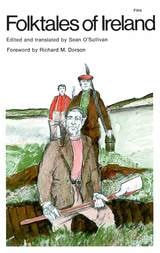
Folktales of Ireland
Edited by Sean O'Sullivan
University of Chicago Press, 1966
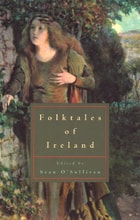
Folktales of Ireland
Edited by Sean O'Sullivan
University of Chicago Press, 1966
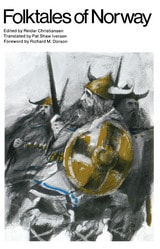
Folktales of Norway
Edited by Reidar Christiansen
University of Chicago Press, 1964
"The translation is excellent, retaining the traditional Norwegian style . . . the tales themselves will also appeal to the interested layman."—Library Journal
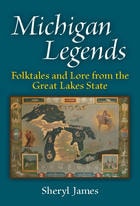
Michigan Legends
Folktales and Lore from the Great Lakes StateSheryl James
University of Michigan Press, 2013
Over the course of its history, the state of Michigan has produced its share of folktales and lore. Many are familiar with the Ojibwa legend of Sleeping Bear Dunes, and most have heard a yarn or two told of Michigan’s herculean lumberjack, Paul Bunyan.
But what about Detroit’s Nain Rouge, the red-eyed imp they say bedeviled the city’s earliest residents? Or Le Griffon, the Great Lakes’ original ghost ship that some believe haunts the waters to this day? Or the Bloodstoppers, Upper Peninsula folk who’ve been known to halt a wound’s bleeding with a simple touch thanks to their magic healing powers?
In Michigan Legends, Sheryl James collects these and more stories of the legendary people, events, and places from Michigan’s real and imaginary past. Set in a range of historical time periods and locales as well as featuring a collage of ethnic traditions—including Native American, French, English, African American, and Finnish—these tales are a vivid sample of the state’s rich cultural heritage. This book will appeal to all Michiganders and anyone else interested in good folktales, myths, legends, or lore.
Otomi Parables, Folktales, and Jokes
H. Russell Bernard and Jesus Salinas Pedraza
University of Chicago Press Journals, 1976

Picture Books for Children
Fiction, Folktales, and PoetryMary Northrup
American Library Association, 2012
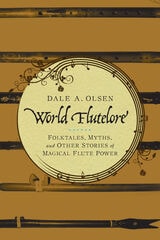
World Flutelore
Folktales, Myths, and Other Stories of Magical Flute PowerDale A. Olsen
University of Illinois Press, 2013
Describing and interpreting many examples of flutes as they are found in mythology, poetry, lyrics, and other narrative and literary sources from around the world, veteran ethnomusicologist Dale Olsen seeks to determine what is singularly distinct or unique about flutes, flute playing, and flute players in a global context. He shows how and why flutes are important for personal, communal, religious, spiritual, and secular expression and even, perhaps, existence. This is a book for students, scholars, and any reader interested in the cultural power of flutes.