Results by title
534 books match the query 'Making' and 4 start with v

Vida Zoo-cial
The Buenos Aires Zoo and the Making of Argentine Society, 1875–1924Ashley Elizabeth Kerr
Vanderbilt University Press, 2025
Premio al Mejor Libro en Humanidades, Latin American Studies Association, Nineteenth-Century Section, 2026
In late nineteenth- and early twentieth‑century Buenos Aires, elites attempted to tackle growing poverty and social problems with a suite of social, educational, and medical reforms, hoping to make the city and larger nation more “modern” and “progressive” on the world stage. Known as the “social question,” this turn-of-the-century preoccupation with the future of the city and nation was undergirded by a larger set of social Darwinist beliefs about the biological and racial inferiority of immigrants and the working class, linking them to higher susceptibility to alcoholism, sexual deviancy, insanity, and disease.
In Vida Zoo-cial, Ashley Elizabeth Kerr argues that the Buenos Aires Zoo and its many animal species were an important tool in attempts to remake Argentinian society. Elites used the zoo’s physical spaces, programming, and visual and literary representations of its animals to try to educate and “improve” the masses, especially immigrants and the poor, but stopped short of supporting more radical social transformations. Drawing upon extensive archival research from the zoo’s archive, including correspondence, municipal reports, receipts, and employment records, as well as a range of literary and popular culture sources, Kerr records these efforts, which included enlisting lionesses as object lessons in proper motherhood and elephants as model immigrants. Although some projects were successful, Kerr also documents the many ways others went awry when the zoo's animals and the humans who came to see them failed to cooperate.
Vida Zoo-cial is not only a story about how the poor and working class resisted elite efforts for social reform founded upon racialized beliefs and pseudoscience, but also one that challenges readers to rethink the relationship between humans and non‑humans.
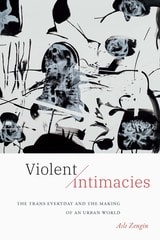
Violent Intimacies
The Trans Everyday and the Making of an Urban WorldAsli Zengin
Duke University Press, 2024
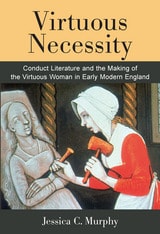
Virtuous Necessity
Conduct Literature and the Making of the Virtuous Woman in Early Modern EnglandJessica C. Murphy
University of Michigan Press, 2015

Voice Over
The Making of Black RadioWilliam Barlow
Temple University Press, 1998
Barlow, whose voice has been heard on WPFW (Washington, D.C.) for many years, brings an insider's knowledge to this account of black radio as a predominantly local and still powerful medium. Many of the broadcasters he profiles -- Jack Cooper, Paul Robeson, Richard Durham, Cathy Hughes, Al Benson, Georgie Woods, Peggy Mitchell, Hal Jackson, Jocko Henderson, Mary Mason, Wesley South, Martha Jean "the Queen" Steinberg, to name a few -- became not only celebrities but also respected members of their communities. Atlanta's Jack "the Rapper" Gibson, for instance, tells how he literally shared his microphone with Rev. Martin Luther King Jr. to announce meetings and rally listeners around a key issue. By showing the extent to which so many black broadcasters achieved the status of trusted and influential community leaders, Barlow acknowledges that their grassroots activism was an indispensable and often overlooked part of the ongoing African American civil rights movement.
Voice Over also addresses black radio's broadly significant role in entertainment and shifting race relations. Until the rock and roll revolution, audiences had largely been segregated. The African American personality jocks who introduced white teens to rhythm and blues were a revelation; their wild style and personas and the music they played changed broadcasting while it enthralled a multiracial audience. Although the stations that introduced the enormously popular music were identified as black, virtually none was black-owned or managed. The broadcasters who distanced themselves from music industry perks and payoffs proposed an ambitious agenda for change. This little-known story sets the stage for how the proliferation of black-owned stations and networks occurred and for Barlow's assessment of the instability of today's black radio scene.
Written for a broad spectrum of readers -- from nostalgic fans of Jocko and Georgie Woods to loyal listeners of surviving stations and media watchers committed to diversity in broadcasting -- Voice Over tells the whole story of the making of black radio.