Results by title
1415 books match the query 'Medical' and 17 start with v
Vaccine Nation
America's Changing Relationship with ImmunizationElena Conis
University of Chicago Press, 2014
Vaccine Nation opens in the 1960s, when government scientists—triumphant following successes combating polio and smallpox—considered how the country might deploy new vaccines against what they called the “milder” diseases, including measles, mumps, and rubella. In the years that followed, Conis reveals, vaccines fundamentally changed how medical professionals, policy administrators, and ordinary Americans came to perceive the diseases they were designed to prevent. She brings this history up to the present with an insightful look at the past decade’s controversy over the implementation of the Gardasil vaccine for HPV, which sparked extensive debate because of its focus on adolescent girls and young women. Through this and other examples, Conis demonstrates how the acceptance of vaccines and vaccination policies has been as contingent on political and social concerns as on scientific findings.
By setting the complex story of American vaccination within the country’s broader history, Vaccine Nation goes beyond the simple story of the triumph of science over disease and provides a new and perceptive account of the role of politics and social forces in medicine.

Vaccine Nation
America's Changing Relationship with ImmunizationElena Conis
University of Chicago Press, 2014
With employers offering free flu shots and pharmacies expanding into one-stop shops to prevent everything from shingles to tetanus, vaccines are ubiquitous in contemporary life. The past fifty years have witnessed an enormous upsurge in vaccines and immunization in the United States: American children now receive more vaccines than any previous generation, and laws requiring their immunization against a litany of diseases are standard. Yet, while vaccination rates have soared and cases of preventable infections have plummeted, an increasingly vocal cross section of Americans have questioned the safety and necessity of vaccines. In Vaccine Nation, Elena Conis explores this complicated history and its consequences for personal and public health.
Vaccine Nation opens in the 1960s, when government scientists—triumphant following successes combating polio and smallpox—considered how the country might deploy new vaccines against what they called the “milder” diseases, including measles, mumps, and rubella. In the years that followed, Conis reveals, vaccines fundamentally changed how medical professionals, policy administrators, and ordinary Americans came to perceive the diseases they were designed to prevent. She brings this history up to the present with an insightful look at the past decade’s controversy over the implementation of the Gardasil vaccine for HPV, which sparked extensive debate because of its focus on adolescent girls and young women. Through this and other examples, Conis demonstrates how the acceptance of vaccines and vaccination policies has been as contingent on political and social concerns as on scientific findings.
By setting the complex story of American vaccination within the country’s broader history, Vaccine Nation goes beyond the simple story of the triumph of science over disease and provides a new and perceptive account of the role of politics and social forces in medicine.

Valuing Health for Policy
An Economic ApproachEdited by George Tolley, Donald Kenkel, and Robert Fabian
University of Chicago Press, 1994

Variables Related to Human Breast Cancer
V. Elving Anderson
University of Minnesota Press, 1958
Veins of Devotion
Blood Donation and Religious Experience in North IndiaCopeman, Jacob
Rutgers University Press, 2008
Veins of Devotion details recent collaborations between guru-led devotional movements and public health campaigns to encourage voluntary blood donation in northern India. Focusing primarily on Delhi, Jacob Copeman carefully situates the practice within the context of religious gift-giving, sacrifice, caste, kinship, and nationalism. The book analyzes the operations of several high-profile religious orders that organize large-scale public blood-giving events and argues that blood donation has become a site not only of frenetic competition between different devotional movements, but also of intense spiritual creativity.
Despite tensions between blood banks and these religious groups, their collaboration is a remarkable success storyùthe nation's blood supply is replenished while blood donors discover new devotional possibilities.
Download open access ebook here.

Victors for Dentistry (1962–2017)
Decades of Innovation and DiscoverySharon K. Grayden, Editor; Jerry Mastey, Contributor
Michigan Publishing Services, 2018
This book celebrates all that the professional community known as the U-M School of Dentistry has accomplished. Through good times and times of change, it has always been about the people—the drivers, the visionaries, and the innovators—who persisted regardless of the usual obstacles and inertia that often stand in the path of progress in higher education. They elevated the school to a world-class prominence that most definitely exemplifies the university’s history as home to the “leaders and best.”
Viral Economies
Bird Flu Experiments in VietnamNatalie Porter
University of Chicago Press, 2019
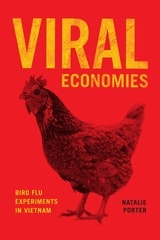
In Viral Economies, Natalie Porter draws from long-term research on bird flu in Vietnam to chart the pathways of scientists, NGO workers, state veterinarians, and poultry farmers as they define and address pandemic risks. Porter argues that as global health programs expand their purview to include life and livestock, they weigh the interests of public health against those of commercial agriculture, rural tradition, and scientific innovation. Porter challenges human-centered analyses of pandemics and shows how dynamic and often dangerous human-animal relations take on global significance as poultry and their pathogens travel through global livestock economies and transnational health networks. Viral Economies urges readers to think critically about the ideas, relationships, and practices that produce our everyday commodities, and that shape how we determine the value of life—both human and nonhuman.

Viral Frictions
Global Health and the Persistence of HIV Stigma in KenyaElizabeth J. Pfeiffer
Rutgers University Press, 2022
Viral Loads
Anthropologies of Urgency in the Time of COVID-19Edited by Lenore Manderson, Nancy J. Burke, and Ayo Wahlberg
University College London, 2021
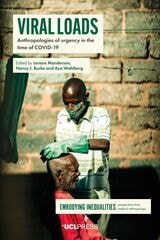
The COVID-19 pandemic disrupted some lives more than others. While more than half the world’s population experienced physical restrictions in the wake of the virus, Viral Loads reveals how the international response placed disparate burdens on exploited communities across the globe. Contributors from six continents situate the pandemic within a highly connected yet exceedingly unequal world marked by fragmented communities, austere economies, and unstable governments. Ambitious in its scope, Viral Loads insists that medical anthropology must be part of any future efforts to build a new post-pandemic world.
Virulent Zones
Animal Disease and Global Health at China's Pandemic EpicenterLyle Fearnley
Duke University Press, 2020

Virus Research in Twentieth-Century Uganda
Between Local and GlobalJulia Ross Cummiskey
Ohio University Press, 2024
Virus Research in Twentieth-Century Uganda presents the stories of scientists at the Uganda Virus Research Institute (UVRI), a biomedical center founded in 1936. The book analyzes the strategies and conditions that allowed the institute to endure and thrive through successive political and scientific regimes of the interwar period, the postwar period, the transition to independence, the conflicts of the 1970s and 1980s, and the Museveni presidency. Julia Ross Cummiskey combines methods and themes from the history of medicine and public health, science and technology studies, and African studies to show that the story of the UVRI and the people who worked there transforms our understanding of the nature of local and international expertise and the evolution of global health research over the course of the twentieth century.
Global health is one of the chief areas in which African and foreign institutions interact today. Billions of dollars are invested in global health projects on the continent, many involving strategically selected “local partners.” In the discourse of these projects, local and global are often framed as complementary but distinct categories of people, institutions, traditions, and practices. But the history of biomedical research at the UVRI shows that these distinctions are unstable and mutable and that people and institutions have mobilized both categories to attract funding, professional prestige, and research opportunities. The book complicates the local/global binary that is implicit (and sometimes explicit) in many studies of colonial, international, and global health and medical research, especially in Africa. Moreover, it challenges assumptions about global health as an enterprise dominated by researchers based in the Global North and recenters the history of biomedicine in Africa.
Vision Impairment
Science, Art and Lived ExperienceMichael Crossland
University College London, 2024
What is it like to go blind? Three hundred and fifty million people around the world live with severe vision impairment, ranging from those who can see a couple of letters on a sight chart to those who perceive no light at all. Vision Impairment introduces the readers to some of them, including artists, poets, scientists, architects, politicians, broadcasters, and musicians. Through their stories, this book discusses life with vision impairment–from childhood and education to dating, employment, and aging–as well as the portrayal of blind people in literature and film, the use of technology by people with vision impairment, and the psychological effects of losing vision.
Based on Michael Crossland’s extensive work in children’s and adults’ low vision clinics, and his twenty years of research into vision impairment, the book blends individual stories, key research findings, and the most recent scientific discoveries to present an informative yet optimistic overview of living with sight loss.
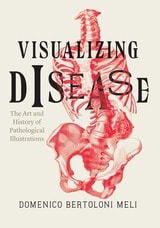
Visualizing Disease
The Art and History of Pathological IllustrationsDomenico Bertoloni Meli
University of Chicago Press, 2018
Starting in the Renaissance, Bertoloni Meli delves into the wide range of figures involved in the early study and representation of disease, including not just men of medicine, like anatomists, physicians, surgeons, and pathologists, but also draftsmen and engravers. Pathological preparations proved difficult to preserve and represent, and as Bertoloni Meli takes us through a number of different cases from the Renaissance to the mid-nineteenth century, we gain a new understanding of how knowledge of disease, interactions among medical men and artists, and changes in the technologies of preservation and representation of specimens interacted to slowly bring illustration into the medical world.

Vital Conflicts in Medical Ethics
A Virtue Approach to Craniotomy and Tubal PregnanciesMartin Rhonheimer
Catholic University of America Press, 2009
Vital Signs
The Deadly Costs of Health InequalityLee Humber
Pluto Press, 2019
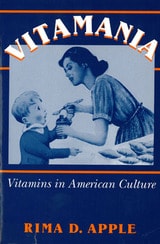
Vitamania
Vitamins in American CultureRima Apple
Rutgers University Press, 1996
"Have you taken your vitamins today?" That question echoes daily through American households. Thanks to intensive research in nutrition and medicine, the importance of vitamins to health is undisputed. But millions of Americans believe that the vitamins they get in their food are not enough. Vitamin supplements have become a multibillion-dollar industry. At the same time, many scientists, consumer advocacy groups, and the federal Food and Drug Administration doubt that most people need to take vitamin pills.
Vitamania tells how and why vitamins have become so important to so many Americans. Rima Apple examines the claims and counterclaims of scientists, manufacturers, retailers, politicians, and consumers from the discovery of vitamins in the early twentieth century to the present. She reveals the complicated interests--scientific, professional, financial--that have propelled the vitamin industry and its would-be regulators. From early advertisements linking motherhood and vitamin D, to Linus Pauling's claims for vitamin C, to recent congressional debates about restricting vitamin products, Apple's insightful history shows the ambivalence of Americans toward the authority of science. She also documents how consumers have insisted on their right to make their own decisions about their health and their vitamins.
Vitamania makes fascinating reading for anyone who takes--or refuses to take--vitamins. It will be of special interest to students, scholars, and professionals in public health, the biomedical sciences, history of medicine and science, twentieth-century history, nutrition, marketing, and consumer studies.
Voices of Mental Health
Medicine, Politics, and American Culture, 1970-2000Halliwell, Martin
Rutgers University Press, 2017
Together, these three dimensions bring into conversation a diverse cast of late-century writers, filmmakers, actors, physicians, politicians, policy-makers, and social critics. In doing so, Martin Halliwell’s Voices of Mental Health breaks new ground in deepening our understanding of the place, politics, and trajectory of mental health from the moon landing to the millennium.