Results by title
2817 books match the query 'Nature' and 26 start with v
Vanishing Bees
Science, Politics, and Honeybee HealthSuryanarayanan, Sainath
Rutgers University Press, 2016
Vanishing Sands
Losing Beaches to MiningOrrin H. Pilkey, Norma J. Longo, William J. Neal, Nelson G. Rangel-Buitrago, Keith C. Pilkey, and Hannah L. Hayes
Duke University Press, 2022
Vascular Flora of Illinois
Robert H. Mohlenbrock
Southern Illinois University Press, 2002
This latest Vascular Flora of Illinois includes over thirty-two hundred species, an increase of almost three hundred since 1986. In addition, for the first time, taxa below the rank of species are recognized and may be identified by keys. Investigating seldom-visited patches of prairies, wetlands, and forested canyons, Mohlenbrock has added several native species to this flora. And while there has been extensive exploration for plants, Mohlenbrock has also researched the herbaria in an attempt to verify previous reports of records of Illinois plants.
Because of a reinterpretation of existing genera, the number of genera of Illinois plants has increased markedly. Recent biosystematic techniques have begun to substantiate the genera that botanists such as John Kunkel Small, Per Axel Rydberg, and Edmund C. Greene proposed nearly a century ago.
The sequence of groups in this book is ferns, conifers, and flowering plants, with dicotyledons given before monocotyledons. Within each group, the families are arranged alphabetically, as are the genera within each family and the species within each genus.
For each taxon recognized in this book, Mohlenbrock gives a common name if one is generally used in Illinois. He follows this by an indication of flowering time for flowering plants and of spore-production time for ferns and their relatives. He also provides a habitat statement and a general comment on distribution in Illinois for each taxon. Synonyms for some other scientific names used previously for a taxon appear in italics. This book contains indexes both for common names and for family and genus names.
Vascular Flora of Illinois
A Field Guide, Fourth EditionRobert H. Mohlenbrock
Southern Illinois University Press, 2013
This latest edition of Vascular Flora of Illinois includes over thirty-four hundred species of flora from Illinois, adding more than 250 newly-recognized plants to this definitive collection. Because cataloguing our heritage is foremost in importance among naturalists, this book compiles essential information about plants in Illinois. Mohlenbrock includes all known taxa native to Illinois either at present or in the past and all non-native vascular plants that grow spontaneously and appear able to maintain themselves year after year without cultivation. The sequence of groups in the guide is ferns, conifers, and flowering plants, with cotyledons given before monocotyledons. Within each group, the families are arranged alphabetically, as are the genera within each family and the species within each genus. For each taxon recognized in this book, Mohlenbrock gives us a common name if one is generally used in Illinois. He follows this with an indication of flowering time for flowering plants, and of spore-production time in the case of ferns and their relatives. He also provides a habitat statement and a general comment on distribution in Illinois for each taxon.
Containing information on Illinois flora not available anywhere else, this fourth edition of Vascular Flora of Illinois is essential for ecologists, environmentalists, and land developers. Those interested in wildflower identification will also find this guide helpful.
Veer Ecology
A Companion for Environmental ThinkingJeffrey Jerome Cohen
University of Minnesota Press, 2017
The words most commonly associated with the environmental movement—save, recycle, reuse, protect, regulate, restore—describe what we can do to help the environment, but few suggest how we might transform ourselves to better navigate the sudden turns of the late Anthropocene. Which words can help us to veer conceptually along with drastic environmental flux? Jeffrey Jerome Cohen and Lowell Duckert asked thirty brilliant thinkers to each propose one verb that stresses the forceful potential of inquiry, weather, biomes, apprehensions, and desires to swerve and sheer. Each term is accompanied by a concise essay contextualizing its meaning in times of resource depletion, environmental degradation, and global climate change.
Some verbs are closely tied to natural processes: compost, saturate, seep, rain, shade, sediment, vegetate, environ. Many are vaguely unsettling: drown, unmoor, obsolesce, power down, haunt. Others are enigmatic or counterintuitive: curl, globalize, commodify, ape, whirl. And while several verbs pertain to human affect and action—love, represent, behold, wait, try, attune, play, remember, decorate, tend, hope—a primary goal of Veer Ecology is to decenter the human. Indeed, each of the essays speaks to a heightened sense of possibility, awakening our imaginations and inviting us to think the world anew from radically different perspectives. A groundbreaking guide for the twenty-first century, Veer Ecology foregrounds the risks and potentialities of living on—and with—an alarmingly dynamic planet.
Contributors: Stacy Alaimo, U of Texas at Arlington; Joseph Campana, Rice U; Holly Dugan, George Washington U; Lara Farina, West Virginia U; Cheryll Glotfelty, U of Nevada, Reno; Anne F. Harris, DePauw U; Tim Ingold, U of Aberdeen; Serenella Iovino, U of Turin; Stephanie LeMenager, U of Oregon; Scott Maisano, U of Massachusetts, Boston; Tobias Menely, U of California, Davis; Steve Mentz, St. John’s U; J. Allan Mitchell, U of Victoria; Timothy Morton, Rice U; Vin Nardizzi, U of British Columbia; Laura Ogden, Dartmouth College; Serpil Opperman, Hacettepe U, Ankara; Daniel C. Remein, U of Massachusetts, Boston; Margaret Ronda, U of California, Davis; Nicholas Royle, U of Sussex; Catriona Sandilands, York U; Christopher Schaberg, Loyola U; Rebecca R. Scott, U of Missouri; Theresa Shewry, U of California, Santa Barbara; Mick Smith, Queen’s U; Jesse Oak Taylor, U of Washington; Brian Thill, Golden West College; Coll Thrush, U of British Columbia, Vancouver; Cord J. Whitaker, Wellesley College; Julian Yates, U of Delaware.

Veganism, Sex and Politics
Tales of Danger and PleasureC. Lou Hamilton
Intellect Books, 2019
Vegetables for the Gourmet Gardener
A Practical Resource from the Garden to the TableSimon Akeroyd
University of Chicago Press, 2014
A feast for the eyes and the table, this user-friendly resource traverses the realms of both the garden and the kitchen, addressing the cultivation, storage, and preparation of nearly seventy useful vegetables. Practical growing tips, fascinating histories, nutritional information, and classic recipes appear alongside botanical illustrations drawn from the Royal Horticultural Society’s cherished collection. With both familiar varieties and novel options, Vegetables for the Gourmet Gardener will inspire you to create a world of new shapes, colors, and tastes.
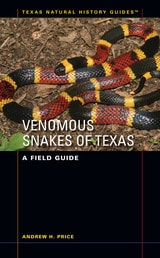
Venomous Snakes of Texas
A Field GuideBy Andrew H. Price
University of Texas Press, 2009
Texas has about one hundred twenty native species and subspecies of snakes, fifteen of which are venomous. Since 1950, Texans have turned to the Poisonous Snakes of Texas pamphlet series published by the Texas Parks and Wildlife Department for help in identifying these snakes and for expert advice on preventing and treating snakebite. Venomous Snakes of Texas, a thoroughly revised and updated edition of Poisonous Snakes, carries on this tradition as a one-stop, all-you-need-to-know guide to Texas's rattlesnakes, copperheads, cottonmouths, and coral snakes.
In this authoritative field guide, you'll find:
- Full-color photographs and a county-by-county distribution map for each species.
- Each species' common and scientific name, description, look-alikes, and a summary sketch of its habitat, behavior, reproduction, venom characteristics, predator-prey relationships, and fossil record.
- Up-to-date advice on recognizing venomous snakes and preventing and treating snakebite, both at home and in the field.
- A glossary of terms and an extensive bibliography.
A special feature of this guide is an expanded treatment of the ecological and evolutionary context in which venomous snakes live, which supports Price's goal "to lessen the hatred and fear and to increase the understanding, the respect, and even the appreciation with which venomous snakes should be regarded."
Views of Nature
Alexander von Humboldt
University of Chicago Press, 2014
Views of Nature, or Ansichten der Natur, was Humboldt’s best-known and most influential work—and his personal favorite. While the essays that comprise it are themselves remarkable as innovative, early pieces of nature writing—they were cited by Thoreau as a model for his own work—the book’s extensive endnotes incorporate some of Humboldt’s most beautiful prose and mature thinking on vegetation structure, its origins in climate patterns, and its implications for the arts. Written for both a literary and a scientific audience, Views of Nature was translated into English (twice), Spanish, and French in the nineteenth century, and it was read widely in Europe and the Americas. But in contrast to many of Humboldt’s more technical works, Views of Nature has been unavailable in English for more than one hundred years. Largely neglected in the United States during the twentieth century, Humboldt’s contributions to the humanities and the sciences are now undergoing a revival to which this new translation will be a critical contribution.
Village of the Dammed
The Fight for Open Space and the Flooding of a Connecticut TownJames Lomuscio
Brandeis University Press, 2025
In the early 1940s, the Bridgeport Hydraulic Company flooded Connecticut’s Saugatuck River Valley to create a reservoir that would meet the region’s growing population. Under twelve billion gallons of water lay Valley Forge, once a thriving iron and steel manufacturing town, which was seized by eminent domain to create the reservoir and dam. In Village of the Dammed, journalist James Lomuscio tells the story of the rise and fall of Valley Forge, drawing on Civil War-era photographs of the town and other sources to show what the town was like, document the futile battle to save it, and reveal the flooding’s life-altering repercussions. He also recounts a grassroots movement to prevent the development of nearby Trout Brook Valley in the 1990s, a heated fight with a different outcome. As the population of the American northeast continues to swell and spread, placing new demands on existing resources, communities are frequently confronted with forces and choices not unlike those faced by Valley Forge and Trout Brook Valley. Village of the Dammed reminds us to be ever vigilant in the protection of our irreplaceable environmental heritage.
Visualizing Posthuman Conservation in the Age of the Anthropocene
Amy D. Propen
The Ohio State University Press, 2018
Through case studies in which visual technologies and science play a prominent role in arguments to protect threatened marine species—from photographs showing the impact of ocean plastics on vulnerable sea birds, to debates about seismic testing and its impact on marine species, to maps created from GPS tracking projects—Propen advances a notion of posthuman environmental conservation that decenters the human enough to consider ideas about the material world from the vantage point of the nonhuman animal. In so bringing together work in environmental humanities, animal studies, human geography, and visual-material rhetoric, Propen further shows how interdisciplinary ways of knowing can further shape and illuminate our various lived and embodied experiences.
Vital Decomposition
Soil Practitioners and Life PoliticsKristina M. Lyons
Duke University Press, 2020
Voice in the Wilderness
Conversations with Terry Tempest Williamsedited by Michael Austin
Utah State University Press, 2006
In her writings, Terry Tempest Williams repeatedly invites us as readers into engagement and conversation with both her and her subject matter, whether it is nature or society, environment or art. From her evocation, in Desert Quartet: An Erotic Landscape, of an eroticism of place that defines erotic as "in relation," to the spiritual connectivity and familial bonds she explores in Refuge: An Unnatural History of Family and Place and the political engagement she urges in The Open Space of Democracy, much of her work is about relationship, connection, and community. Like much good writing, her books invite readers into thoughtful dialogue with the text. Frequently in demand for workshops, lectures, and other speaking venues and well known as an environmental activist, Williams has a public persona and voice almost indistinguishable from her written ones.
Thus, the interviews she has often granted--in print, on the radio, on the Web--seamlessly elaborate the ideas and extend the explorations of her written texts. They also tell us much about the genesis, context, and intent of her books. With her distinctive, impassioned voice and familiar felicity of language, she talks about wilderness and wildlife, place and eroticism, art and literature, democracy and politics, family and heritage, Mormonism and religion, writing and creativity, and other subjects that engage her agile mind. The set of interviews gathered and introduced by Michael Austin in A Voice in the Wilderness represent the span of Terry Tempest Williams's career as a naturalist, author, and activist.
Voices From the Meadow of the Mind of the Wandering Spirit
David J. Jude
Michigan Publishing Services, 2024
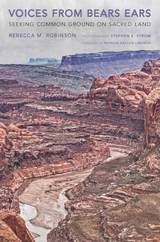
Voices from Bears Ears
Seeking Common Ground on Sacred LandRebecca M. Robinson; Photographs by Stephen E. Strom; Foreword by Patricia Nelson Limerick
University of Arizona Press, 2018
Through the stories of twenty individuals, and informed by interviews with more than seventy people, Voices from Bears Ears captures the passions of those who fought to protect Bears Ears and those who opposed the monument as a federal “land grab” that threatened to rob them of their economic future. It gives voice to those who have felt silenced, ignored, or disrespected. It shares stories of those who celebrate a growing movement by Indigenous peoples to protect ancestral lands and culture, and those who speak devotedly about their Mormon heritage. What unites these individuals is a reverence for a homeland that defines their cultural and spiritual identity, and therein lies hope for finding common ground.
Journalist Rebecca Robinson provides context and perspective for understanding the ongoing debate and humanizes the abstract issues at the center of the debate. Interwoven with these stories are photographs of the interviewees and the land they consider sacred by photographer Stephen E. Strom. Through word and image, Robinson and Strom allow us to both hear and see the people whose lives are intertwined with this special place.
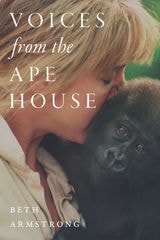
Voices from the Ape House
Beth Armstrong
The Ohio State University Press, 2020
Through anecdotal stories, readers get a glimpse into the fascinating lives of gorillas—the familiar gentleness of mothers and fathers toward their infants, power plays and social climbing, the unruly nature of teenagers, the capacity for humor, and the shared sadness by group members as they mourn the death of one of their own. In the end, Armstrong’s conflict with captivity and her lifelong fondness for these animals helped shape a zoo program dedicated to gorilla conservation.
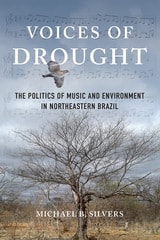
Voices of Drought
The Politics of Music and Environment in Northeastern BrazilMichael B. Silvers
University of Illinois Press, 2018
Silvers offers case studies focused on the sertão that range from the Brazilian wax harvested in Ceará for use in early wax cylinder sound recordings to the drought- and austerity-related cancellation of Carnival celebrations in 2014-16. Unearthing links between music and the environmental and social costs of drought, his daring synthesis explores ecological exile, poverty, and unequal access to water resources alongside issues like corruption, prejudice, unbridled capitalism, and expanding neoliberalism.
Voices of Indigenuity
Michelle Montgomery
University Press of Colorado, 2023
Advocating for and providing an expansion of place-based Indigenized education that infuses Indigenous epistemologies for student success in both K–12 and higher education curricula, these essays explore topics such as land fragmentation, remote sensing, and outreach through the lens of TEK, demonstrating methods of fusing learning with Indigenous knowledge (IK). Contributors emphasize the need to increase the perspectives of IK within institutionalized knowledge beyond being co-opted into non-Indigenous frameworks that may be fundamentally different from Indigenous ways of thinking.
Decolonizing current harmful pedagogical curricula and research training about the natural world through an Indigenous- guided approach is an essential first step to rebuilding a healthy relationship with our environment while acknowledging that all relationships come with an ethical responsibility. Voices of Indigenuity captures the complexities of exploring the contextu- alized meanings for why TEK should be integrated into Western environmental science processes and frameworks while rooted in Indigenous studies programs.
Volcanoes and Wine
From Pompeii to NapaCharles Frankel
University of Chicago Press, 2019
Traveling across regions wellknown to wine lovers like Sicily, Oregon, and California, as well as the less familiar places, such as the Canary Islands, Frankel gives an in-depth account of famous volcanoes and the wines that spring from their idiosyncratic soils. From Santorini’s vineyards of rocky pumice dating back to a four-thousand-year-old eruption to grapes growing in craters dug in the earth of the Canary Islands, from Vesuvius’s famous Lacryma Christi to the ambitious new generation of wine growers reviving the traditional grapes of Mount Etna, Frankel takes us across the stunning and dangerous world of volcanic wines. He details each volcano’s most famous eruptions, the grapes that grow in its soils, and the people who make their homes on its slopes, adapting to an ever-menacing landscape. In addition to introducing the history and geology of these volcanoes, Frankel's book serves as a travel guide, offering a host of tips ranging from prominent vineyards to visit to scenic hikes in each location.
This illuminating guide will be indispensable for wine lovers looking to learn more about volcanic terroirs, as well as anyone curious about how cultural heritage can survive and thrive in the shadow of geological danger.
Volcanoes
Encounters through the AgesDavid M. Pyle
Bodleian Library Publishing, 2017
That’s Pliny the Younger, writing to Tacitus about the eruption of Vesuvius in 79 CE, one of many volcanic eruptions that have become part of the story of human history. We have always, it seems, been simultaneously fascinated and terrified by volcanoes, and this book brings together an unforgettable selection of firsthand accounts from around the world and through the centuries.
In these pages, anonymous seventeenth-century seafarers tell of exploding islands, Alexander Von Humboldt and Charles Darwin show us volcanoes through the eyes of developing science, and artists sketch the spectacular London sunsets created by the eruption of Krakatoa, half the world away. As the years pass, words and paintings give way to the first photograph of an eruption, and eventually to detailed satellite imagery, but the awesome force of volcanoes still comes through, sublime and spectacular.
As we were reminded in 2010 when the eruption of Iceland’s Eyjafjallajökull snarled travel throughout Europe, volcanoes remain powerful and unpredictable even today. In the pages of this book, we can appreciate their majesty from a safe distance.
Voracious Science and Vulnerable Animals
A Primate Scientist's Ethical JourneyJohn P. Gluck
University of Chicago Press, 2016
Gluck begins by taking us inside the laboratory of Harry F. Harlow at the University of Wisconsin, where Gluck worked as a graduate student in the 1960s. Harlow’s primate lab became famous for his behavioral experiments in maternal deprivation and social isolation of rhesus macaques. Though trained as a behavioral scientist, Gluck finds himself unable to overlook the intense psychological and physical damage these experiments wrought on the macaques. Gluck’s sobering and moving account reveals how in this and other labs, including his own, he came to grapple with the uncomfortable justifications that many researchers were offering for their work. As his sense of conflict grows, we’re right alongside him, developing a deep empathy for the often smart and always vulnerable animals used for these experiments.
At a time of unprecedented recognition of the intellectual cognition and emotional intelligence of animals, Voracious Science and Vulnerable Animals is a powerful appeal for our respect and compassion for those creatures who have unwillingly dedicated their lives to science. Through the words of someone who has inflicted pain in the name of science and come to abhor it, it’s important to know what has led this far to progress and where further inroads in animal research ethics are needed.
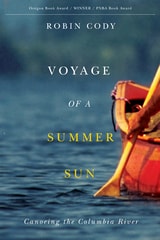
Voyage of a Summer Sun
Canoeing the Columbia RiverRobin Cody
Oregon State University Press, 2012
On a June morning in 1990, high up in the Canadian Rockies, Robin Cody pushed his sixteen-foot Kevlar canoe through tall grass and mud to launch it on peaceful Columbia Lake, the nominal source of the river that heaves more water into the Pacific ocean than any other in North or South America. For the next eighty-two days, Cody would portage massive dams and revel in the rapids as the great river plunges 2,700 feet in 1,200 miles before reaching the river’s mouth in Astoria.
Cody’s canoe sneaks up on the bear and moose and raptors and beavers who make a living on the Columbia. He drops in on riverpeople: the trapper, the wind surfer, the archeologist, the lock operator, the native woman who grew up at riverside in a dwelling of tule reeds. With a generous and infectious spirit, Cody draws us into the mysteries of a much-altered and regulated river that is still, at heart, a life-giving place.
This first OSU Press edition of Voyage of a Summer Sun—winner of the Pacific Northwest Booksellers Association Book Award and the Oregon Book Award, and an Oregon State Library choice for “150 Books for the Oregon Sesquicentennial”—includes a new afterword by the author.
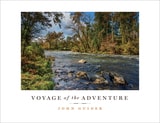
Voyage of the Adventure
Retracing the Donelson Party's Journey to the Founding of NashvilleJohn Guider
Vanderbilt University Press, 2021
This photo book contains more than 120 striking images from the course of the journey, allowing the reader to see how much has changed and how much has remained untouched in the two and a half centuries since Donelson first took to the water. Equally significant, the essays include long-ignored contemporary histories of both the Cherokee whom Donelson encountered and the slaves he brought with him, some of whom did not survive the journey.
Guider, a professional photographer, has created images of every point in the thousand-mile trip from a platform just a few feet above the waterline of three of Tennessee’s most notable rivers.
Voyageur Country
The Story of Minnesota’s National ParkRobert Treuer
University of Minnesota Press, 1998
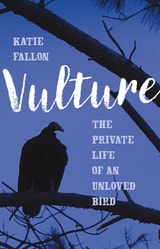
Vulture
The Private Life of an Unloved BirdKatie Fallon
University Press of New England, 2018
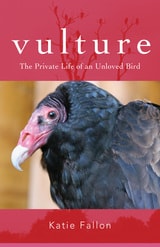
Vulture
The Private Life of an Unloved BirdKatie Fallon
Brandeis University Press, 2020
Few animals have a worse reputation than the vulture. But is it deserved? With Vulture, Katie Fallon offers an irresistible argument to the contrary, tracing a year in the life of a typical North American turkey vulture. Turkey vultures, also known as buzzards, are the most widely distributed and abundant scavenging birds of prey on the planet, found from central Canada to the southern tip of Argentina and nearly everywhere in between. Deftly drawing on the most up-to-date scientific papers and articles and weaving those in with interviews with world-renowned raptor and vulture experts and her own compelling natural history writing, Fallon examines all aspects of the bird’s natural history: breeding, incubating eggs, raising chicks, migrating, and roosting. The result is an intimate portrait of an underappreciated bird—one you’ll never look at in the same way again.