Results by title
8812 books match the query 'Political Science' and 76 start with v

VISIONS OF PLACE
CITY, NEIGHBORHOODS, SUBURBS, AND CINCINNATI'S CLIFTON, 1850–2000ZANE L. MILLER
The Ohio State University Press, 2001
Almost every American city has or had neighborhoods like Clifton, which developed in the mid-nineteenth century as a silk-stocking suburb with a more diverse population than most observers noticed. Incorporated by Cincinnati in the late nineteenth century, Clifton had a reputation as a better-than-average place in which to live, a view that persisted until the end of the twentieth century.
In Visions of Place, Zane L. Miller treats ideas about the nature of cities—including their neighborhoods and their suburbs—as the dynamic factors in Clifton’s experience and examines the changes in Clifton's social, physical, civic, and political structure resulting from these transforming notions. These structural shifts involved a variety of familiar nineteenth- and twentieth-century urban phenomena, including not only the switch from suburban village to city neighborhood and the salience of interracial fears but also the rise of formal city planning and conflicts among Protestants, Catholics, and Jews over the future of Clifton's religious and ethnic ambiance.
Miller concludes with a policy analysis of current and future prospects for neighborhoods like Clifton and the cities and metropolitan areas of which they form a part.

Vaccination Politics
The Comparative Politics and Policy of COVID-19 VaccinationEdited by Scott L. Greer, Elize Massard da Fonseca, Holly Jarman, and Elizabeth J. King
University of Michigan Press, 2027
COVID-19 vaccines were a historic triumph, with less than a year between the initial identification of the microbe and effective vaccines being administered. They were also a public administration challenge, demanding that governments of the world procure and administer billions of doses in widely different contexts. In many countries they were intensely polarizing, catalyzing a rise in anti-vaccination politics.
Vaccination Politics brings together public health and political science expertise for a global, systematic comparison of vaccination politics. The authors look at 32 countries’ experiences—from Austria to Malawi and the United States to Hong Kong—to understand how trust, wealth, pharmaceutical industries, regulators, international organizations, and health systems succeeded or failed at acquiring vaccines and vaccinating citizens. It shows how different governments and populations navigated challenges. Global inequality, political trust, contestation over health system priorities, and opportunistic politicians all played roles in shaping the subsequent politics of health and vaccination around the world. A conclusion brings together lessons for policy and key issues for further research. While the next pandemic is unknown to us today, the response to it will be shaped by the positive and negative legacies of COVID-19 vaccination politics.
Value Change in Global Perspective
Paul R. Abramson and Ronald Inglehart
University of Michigan Press, 1995
from Materialist values (such as the desire for economic and physical security) to Post-materialist values (such as the desire for freedom, self-expression, and the quality of life) is in all likelihood a global phenomenon. Value Change in Global Perspective analyzes over thirty years worth of national surveys in European countries and presents the most comprehensive and nuanced discussion of this shift to date. By paying special attention to the way generational replacement transforms values among mass publics, the authors are able to present a comprehensive analysis of the processes through which values change.

Value Wars
The Global Market Versus the Life EconomyJohn McMurtry
Pluto Press, 2002
Value in Marx
The Persistence of Value in a More-Than-Capitalist WorldGeorge Henderson
University of Minnesota Press, 2013
Long prone to dogmatic disagreement, the question of value in Marx’s thought—what value is, the purpose it serves, its application to real-world capitalism—requires renewal if Marx’s work is to remain vibrant. In Value in Marx, George Henderson offers a lucid rereading of Marx that strips value of its turgid theoretical reduction and reframes it as an investigation into the tensions between social relations and forms as they are rather than as what they could otherwise become.
Drawing on Marx’s Capital and Grundrisse, Henderson shows how these volumes do not harbor a single theory of value that equates value to capital. Instead, these books experimentally compose and recompose value for a world that is more than capitalist. At stake is how Marx conceives of human freedom, of balanced social arrangements, and of control over the things people produce. Henderson finds that the limits on social becoming, including the tendency toward alienated existence, haunt Marx even as he looks beyond the critique of capital to an emancipated society to come.
Can these limits be confronted in a creative, even joyful, way? Can they become aspects of what we desire, rather than being silenced and denied? As long as we persist in interpreting value broadly, following it as an active and not a shut-down, predetermined feature of Marx’s texts, Henderson ultimately views Marx as responding positively to these challenges and employing value as a powerful tool of the political imaginary.
Value, Conflict, and Order
Berlin, Hampshire, Williams, and the Realist Revival in Political TheoryEdward Hall
University of Chicago Press, 2020
Is the purpose of political philosophy to articulate the moral values that political regimes would realize in a virtually perfect world and show what that implies for the way we should behave toward one another? That model of political philosophy, driven by an effort to draw a picture of an ideal political society, is familiar from the approach of John Rawls and others. Or is political philosophy more useful if it takes the world as it is, acknowledging the existence of various morally non-ideal political realities, and asks how people can live together nonetheless?
The latter approach is advocated by “realist” thinkers in contemporary political philosophy. In Value, Conflict, and Order, Edward Hall builds on the work of Isaiah Berlin, Stuart Hampshire, and Bernard Williams in order to establish a political realist’s theory of politics for the twenty-first century. The realist approach, Hall argues, helps us make sense of the nature of moral and political conflict, the ethics of compromising with adversaries and opponents, and the character of political legitimacy. In an era when democratic political systems all over the world are riven by conflict over values and interests, Hall’s conception is bracing and timely.
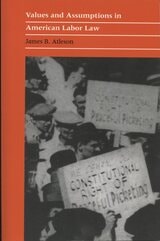
Values and Assumptions in American Labor Law
James B. Atleson
University of Massachusetts Press, 1983
Chosen as a Lawyer's Literary Club Selection, this book looks behind stated legal rules and doctrines in the field of labor law to clearly formulate the often hidden values and assumptions that motivate those who make labor law decisions. The author demonstrates that the “received wisdom” in labor law, which is that decisions are based on analyses of the rational implications of statutory policy, language, or legislative history, fails to account for the actual history of decision-making, particularly the interpretation of the Wagner Act of 1935 that established collective bargaining and the National Labor Relations Board. Through close interpretation, Atleson shows the legal decisions that have been reached are better explained by such factors as notional of inherent property rights, the need for capital mobility, and the interest in continued productivity.
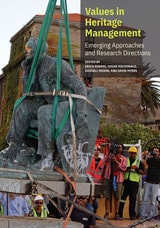
Values in Heritage Management
Emerging Approaches and Research DirectionsErica Avrami
J. Paul Getty Trust, The, 2019
Over the last fifty years, conservation professionals have confronted increasingly complex political, economic, and cultural dynamics. This volume, with contributions by leading international practitioners and scholars, reviews how values-based methods have come to influence conservation, takes stock of emerging approaches to values in heritage practice and policy, identifies common challenges and related spheres of knowledge, and proposes specific areas in which the development of new approaches and future research may help advance the field.
The free online edition of this open-access book is available at www.getty.edu/publications/heritagemanagement/ and includes zoomable illustrations. Also available are free PDF, EPUB, and Kindle/MOBI downloads of the book.
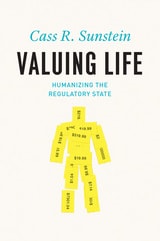
Valuing Life
Humanizing the Regulatory StateCass R. Sunstein
University of Chicago Press, 2014
As OIRA Administrator, Sunstein helped oversee regulation in a broad variety of areas, including highway safety, health care, homeland security, immigration, energy, environmental protection, and education. This background allows him to describe OIRA and how it works—and how it can work better—from an on-the-ground perspective. Using real-world examples, many of them drawn from today’s headlines, Sunstein makes a compelling case for improving cost-benefit analysis, a longtime cornerstone of regulatory decision-making, and for taking account of variables that are hard to quantify, such as dignity and personal privacy. He also shows how regulatory decisions about health, safety, and life itself can benefit from taking into account behavioral and psychological research, including new findings about what scares us, and what does not. By better accounting for people’s fallibility, Sunstein argues, we can create regulation that is simultaneously more human and more likely to achieve its goals.
In this highly readable synthesis of insights from law, policy, economics, and psychology, Sunstein breaks down the intricacies of the regulatory system and offers a new way of thinking about regulation that incorporates human dignity– and an insistent focus on the consequences of our choices.

Vanishing Bees
Science, Politics, and Honeybee HealthSuryanarayanan, Sainath
Rutgers University Press, 2016
Varieties of Civic Innovation
Deliberative, Collaborative, Network, and Narrative ApproachesJennifer Girouard
Vanderbilt University Press, 2014
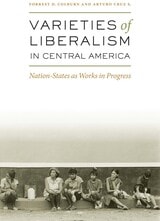
Varieties of Liberalism in Central America
Nation-States as Works in ProgressBy Forrest D. Colburn and Arturo Cruz S.
University of Texas Press, 2007
Why do some countries progress while others stagnate? Why does adversity strengthen some countries and weaken others? Indeed, in this era of unprecedented movement of people, goods, and ideas, just what constitutes a nation-state? Forrest Colburn and Arturo Cruz suggest how fundamental these questions are through an exploration of the evolution of Guatemala, El Salvador, Honduras, Nicaragua, and Costa Rica over the last quarter of a century, a period of intriguing, often confounding, paradoxes in Central America's development.
Offering an elegant defense of empiricism, Colburn and Cruz explore the roles of geography and political choice in constructing nations and states. Countries are shown to be unique: there are a daunting number of variables. There is causality, but not the kind that can be revealed in the laboratory or on the blackboard. Liberalism—today defined as democracy and unfettered markets—may be in vogue, but it has no inherent determinants. Democracy and market economies, when welded to the messy realities of individual countries, are compatible with many different outcomes. The world is more pluralistic in both causes and effects than either academic theories or political rhetoric suggest.
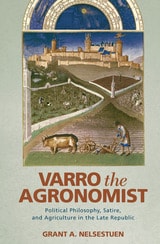
Varro the Agronomist
Political Philosophy, Satire, and Agriculture in the Late RepublicGrant A. Nelsestuen
The Ohio State University Press, 2015
On one level, Varro’s treatise presents an innovative account of the Roman farm, which rationalizes new agricultural and pastoral opportunities for contemporary elite owners of large-scale estates. But on another level, this bold agronomical vision associates the farm’s different spheres with distinct areas under Roman control, thereby allegorizing Rome’s empire on the model of a farm. Nelsestuen argues that Varro’s treatise thus provides his contemporaries with a model for governing the Roman state, anticipates Augustus’ subsequent transformation of Roman dominion into a coherent territorial state, and offers an ancient theory of imperialism.
Shedding new light on the only completely extant work of a much-celebrated but ill-understood figure, Varro the Agronomist has much to offer to those interested in Latin literature—especially, Cicero and Vergil—as well as on the political dimensions of intellectual life in first-century bce Rome, ancient imperialism, and Roman political philosophy.
Vehicle of Influence
Building a European Car MarketRoland Stephen
University of Michigan Press, 2000
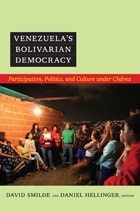
Venezuela's Bolivarian Democracy
Participation, Politics, and Culture under ChávezDavid Smilde and Daniel Hellinger, eds.
Duke University Press, 2011
Contributors
Carolina Acosta-Alzuru
Julia Buxton
Luis Duno Gottberg
Sujatha Fernandes
María Pilar García-Guadilla
Kirk A. Hawkins
Daniel Hellinger
Michael E. Johnson
Luis E. Lander
Margarita López-Maya
Elizabeth Gackstetter Nichols
Coraly Pagan
Guillermo Rosas
Naomi Schiller
David Smilde
Alejandro Velasco

Venezuela's Movimiento al Socialismo
From Guerrilla Defeat to Innovative PoliticsSteve Ellner
Duke University Press, 1988
The author places MAS in its international national, and historical contexts in order to determine the extent to which it is a unique communist party, as it claims to be. He traces the theory of "national democratic revolution, " which MAS rejects, back to Lenin, and discusses the Latin American left's reevaluation of that thesis. Ellner examines the guerrilla movement in Venezuela, the student movement of the late 1960s, and the emergence of the "New Left" in other countries, especially noting their influence on the formation of MAS. He also discusses the group's role in Venezuelan elections and it's relations with the other parties.
Venice
A Contested Bohemia in Los AngelesAndrew Deener
University of Chicago Press, 2012

Verdict According to Conscience
Perspectives on the English Criminal Trial Jury, 1200-1800Thomas Andrew Green
University of Chicago Press, 1985
Vernacular Sovereignties
Indigenous Women Challenging World PoliticsManuela Lavinas Picq
University of Arizona Press, 2018
In Vernacular Sovereignties, Manuela Lavinas Picq shows that Indigenous women have long been dynamic political actors who have partaken in international politics and have shaped state practices carrying different forms of resistance. Her research on Ecuador shows that although Kichwa women face overlapping oppressions from socioeconomic exclusions to sexual violence, they are achieving rights unparalleled in the world. They successfully advocated for women’s participation in the administration of Indigenous justice during the 2008 constitutional reform, creating the first constitution in Latin America to explicitly guarantee the rights of Indigenous women and the first constitution worldwide to require gender parity in the administration of justice.
Picq argues that Indigenous women are among the important forces reshaping states in Latin America. She offers empirical research that shows the significance of Indigenous women in international politics and the sophistication of their activism. Indigenous women strategically use international norms to shape legal authority locally, defying Western practices of authority as they build what the author calls vernacular sovereignties. Weaving feminist perspectives with Indigenous studies, this interdisciplinary work expands conceptual debates on state sovereignty.
Picq persuasively suggests that the invisibility of Indigenous women in high politics is more a consequence of our failure to recognize their agency than a result of their de facto absence. It is an invitation not merely to recognize their achievements but also to understand why they matter to world politics.
Very Special Agents
The Inside Story of America's Most Controversial Law Enforcement Agency--The Bureau of Alcohol, Tobacco, and FirearmsJames Moore, ATF (Ret.)
University of Illinois Press, 1997
Moore's personal, from-the-hip history spans the long-running war against dons and drug dealers and covers agents' daring infiltration of the Ku Klux Klan, Hell's Angels, and other violent groups. He reveals the cutting-edge forensics work that helped crack the World Trade Center and Oklahoma City bombings and also provides an insider account of the raid on the Branch Davidians at Waco. Finally, Moore discusses the ATF's rivalry with the FBI and the political power games that impede the government's ability to fight crime.

Veto Power
Institutional Design in the European UnionJonathan B. Slapin
University of Michigan Press, 2011
"This is a terrific book. The questions that Slapin asks about intergovernmental conferences (IGCs) in the European Union are extraordinarily important and ambitious, with implications for the EU and for international cooperation more generally. Furthermore, Slapin's theorizing of his core questions is rigorous, lucid, and accessible to scholarly readers without extensive formal modeling background . . . This book is a solid, serious contribution to the literature on EU studies."
---Mark Pollack, Temple University
"An excellent example of the growing literature that brings modern political science to bear on the politics of the European Union."
---Michael Laver, New York University
Veto rights can be a meaningful source of power only when leaving an organization is extremely unlikely. For example, small European states have periodically wielded their veto privileges to override the preferences of their larger, more economically and militarily powerful neighbors when negotiating European Union treaties, which require the unanimous consent of all EU members.
Jonathan B. Slapin traces the historical development of the veto privilege in the EU and how a veto---or veto threat---has been employed in treaty negotiations of the past two decades. As he explains, the importance of veto power in treaty negotiations is one of the features that distinguishes the EU from other international organizations in which exit and expulsion threats play a greater role. At the same time, the prominence of veto power means that bargaining in the EU looks more like bargaining in a federal system. Slapin's findings have significant ramifications for the study of international negotiations, the design of international organizations, and European integration.
Vibrant Matter
A Political Ecology of ThingsJane Bennett
Duke University Press, 2010
Bennett examines the political and theoretical implications of vital materialism through extended discussions of commonplace things and physical phenomena including stem cells, fish oils, electricity, metal, and trash. She reflects on the vital power of material formations such as landfills, which generate lively streams of chemicals, and omega-3 fatty acids, which can transform brain chemistry and mood. Along the way, she engages with the concepts and claims of Spinoza, Nietzsche, Thoreau, Darwin, Adorno, and Deleuze, disclosing a long history of thinking about vibrant matter in Western philosophy, including attempts by Kant, Bergson, and the embryologist Hans Driesch to name the “vital force” inherent in material forms. Bennett concludes by sketching the contours of a “green materialist” ecophilosophy.
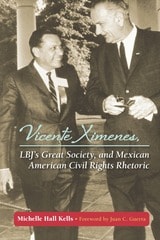
Vicente Ximenes, LBJ's Great Society, and Mexican American Civil Rights Rhetoric
Michelle Hall Kells, with a foreword by Juan C. Guerra
Southern Illinois University Press, 2018
Kells draws on Ximenes’s extensive archive of speeches, reports, articles, and oral interviews to present the activist’s rhetorical history. After a discussion of Ximenes’s early life, the author focuses on his career as an activist, examining Ximenes’s leadership in several key civil rights events, including the historic 1967 White House Cabinet Committee Hearings on Mexican American Affairs. Also highlighted is his role in advancing Mexican Americans and Latinos from social marginalization to greater representation in national politics.
This book shows us a remarkable man who dedicated the majority of his life to public service, using rhetoric to mobilize activists for change to secure civil rights advances for his fellow Mexican Americans.
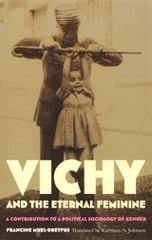
Vichy and the Eternal Feminine
A Contribution to a Political Sociology of GenderFrancine Muel-Dreyfus
Duke University Press, 2001
Drawing on an extensive body of legislative, religious, educational, medical, and literary texts, Muel-Dreyfus examines how the Vichy regime brutally resurrected the gender politics that had been rejected during France’s social struggles in the 1930s. Strikingly, she reveals how this resurrection in turn fed into racial politics: childless women, for instance, and those who had abortions were construed—like Jews—as threats to France’s racial “purity.” With its atendant patterns of social inclusion and exclusion that were deeply rooted in the political and cultural history of the Third Republic, Muel-Dreyfus claims, a pervasive range of gendered metaphors helped to structure the very laws and policies of the Vichy regime.
The French language edition of this book was published in 1996 to wide acclaim. Contributing to theories about the role of gender in political philosophy, to the cultural anthropology of symbolic representation, and to our understanding of the history of fascism, Vichy and the Eternal Feminine will appeal to French, European, and twentieth-century historians; students and scholars of gender and racial studies; political scientists; and anthropologists.
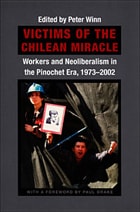
Victims of the Chilean Miracle
Workers and Neoliberalism in the Pinochet Era, 1973–2002Peter Winn, ed.
Duke University Press, 2004
Implemented in the 1970s at the point of the bayonet and in the shadow of the torture chamber, the neoliberal policies of Augusto Pinochet’s dictatorship reversed many of the gains in wages, benefits, and working conditions that Chile’s workers had won during decades of struggle and triggered a severe economic crisis. Later refined and softened, Pinochet’s neoliberal model began, finally, to promote economic growth in the mid-1980s, and it was maintained by the center-left governments that followed the restoration of democracy in 1990. Yet, despite significant increases in worker productivity, real wages stagnated, the expected restoration of labor rights faltered, and gaps in income distribution continued to widen. To shed light on this history and these ongoing problems, the contributors look at industries long part of the Chilean economy—including textiles and copper—and industries that have expanded more recently—including fishing, forestry, and agriculture. They not only show how neoliberalism has affected Chile’s labor force in general but also how it has damaged the environment and imposed special burdens on women. Painting a sobering picture of the two Chiles—one increasingly rich, the other still mired in poverty—these essays suggest that the Chilean miracle may not be as miraculous as it seems.
Contributors.
Paul Drake
Volker Frank
Thomas Klubock
Rachel Schurman
Joel Stillerman
Heidi Tinsman
Peter Winn
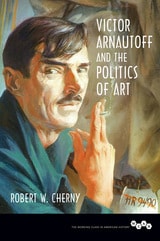
Victor Arnautoff and the Politics of Art
Robert W. Cherny
University of Illinois Press, 2017

Victorian Critics of Democracy
Carlyle, Ruskin, Arnold, Stephen, Maine, LeckyBenjamin Evans Lippincott
University of Minnesota Press, 1938
Victorian Critics of Democracy was first published in 1938. Minnesota Archive Editions uses digital technology to make long-unavailable books once again accessible, and are published unaltered from the original University of Minnesota Press editions.
Video for Change
A Guide For Advocacy and ActivismEdited by Sam Gregory, Gillian Caldwell, Ronit Avni, and Thomas Harding
Pluto Press, 2005
Written by leading video activists, and staff of the world-renowned human rights organization WITNESS, this practical handbook will appeal to experienced campaigners as well as aspiring video activists. It combines a comprehensive analysis of what's going on in this growing global field with a how-to primer to doing it yourself.
Viet Nam Expose
French Scholarship on Twentieth-Century Vietnamese SocietyGisele Bousquet and Pierre Brocheux, Editors
University of Michigan Press, 2002
The book is divided into three parts. Part I, "Vietnamese Society in the Early Twentieth Century," takes a micro approach to the study of Vietnamese society on the eve of the irreversible social transformation that occurred as the colonial infrastructure took root in Indochina. Part II, "Vietnamese Intellectuals: Contesting Colonial Power," contains biographical accounts of Vietnamese intellectuals who tried to reform their society under colonial domination. Part III, "Post-Colonial Vietnam: From Welfare State to Market-Oriented Economy," traces Vietnam's search for a viable economic model while maintaining itself as a socialist state.
The book speaks to diverse themes, including the nature of village life, the development of health care during the colonial era, the status of women, the role of Vietnamese intellectuals in the anticolonial struggle, the building of a socialist state, contemporary rural migration, labor relations, and Vietnam in an age of globalization.
Gisele Bousquet is Research Associate at the Center for Southeast Asian Studies, University of California, Berkeley. Pierre Brocheux is Maître de Conference of History, Université Denis Diderot-Paris VII.
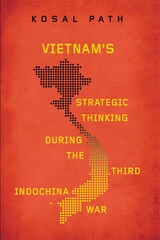
Vietnam's Strategic Thinking during the Third Indochina War
Kosal Path
University of Wisconsin Press, 2023
In contrast to earlier studies, Path traces the moving target of these changing policy priorities, providing a vital addition to existing scholarship on asymmetric wartime decision-making and alliance formation among small states. The result uncovers how this critical period had lasting implications for the ways Vietnam continues to conduct itself on the global stage.
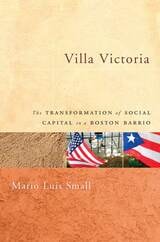
Villa Victoria
The Transformation of Social Capital in a Boston BarrioMario Luis Small
University of Chicago Press, 2004
This book examines a neglected Puerto Rican enclave in Boston to consider the pros and cons of social scientific thinking about the true nature of ghettos in America. Mario Luis Small dismantles the theory that poor urban neighborhoods are inevitably deprived of social capital. He shows that the conditions specified in this theory are vaguely defined and variable among poor communities. According to Small, structural conditions such as unemployment or a failed system of familial relations must be acknowledged as affecting the urban poor, but individual motivations and the importance of timing must be considered as well.
Brimming with fresh theoretical insights, Villa Victoria is an elegant work of sociology that will be essential to students of urban poverty.
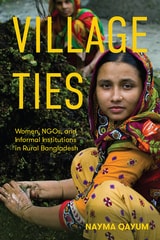
Village Ties
Women, NGOs, and Informal Institutions in Rural BangladeshNayma Qayum
Rutgers University Press, 2022

Village and Bureaucracy in Southern Sung China
Brian E. McKnight
University of Chicago Press, 1983
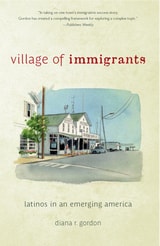
Village of Immigrants
Latinos in an Emerging AmericaGordon, Diana R
Rutgers University Press, 2015
Greenport today boasts a population that is one-third Hispanic. Gordon contends that these immigrants have effectively saved the town’s economy by taking low-skill jobs, increasing the tax base, filling local schools, and patronizing local businesses. Greenport’s seaside beauty still attracts summer tourists, but it is only with the support of the local Latino workforce that elegant restaurants and bed-and-breakfasts are able to serve these visitors. For Gordon the picture is complex, because the wave of immigrants also presents the town with challenges to its services and institutions. Gordon’s portraits of local immigrants capture the positive and the negative, with a cast of characters ranging from a Guatemalan mother of three, including one child who is profoundly disabled, to a Colombian house painter with a successful business who cannot become licensed because he remains undocumented. Village of Immigrants weaves together these people’s stories, fears, and dreams to reveal an environment plagued by threats of deportation, debts owed to coyotes, low wages, and the other bleak realities that shape the immigrant experience—even in the charming seaport town of Greenport.
A timely contribution to the national dialogue on immigration, Gordon’s book shows the pivotal role the American small town plays in the ongoing American immigrant story—as well as how this booming population is shaping and reviving rural communities.

Village of the Dammed
The Fight for Open Space and the Flooding of a Connecticut TownJames Lomuscio
Brandeis University Press, 2025
In the early 1940s, the Bridgeport Hydraulic Company flooded Connecticut’s Saugatuck River Valley to create a reservoir that would meet the region’s growing population. Under twelve billion gallons of water lay Valley Forge, once a thriving iron and steel manufacturing town, which was seized by eminent domain to create the reservoir and dam. In Village of the Dammed, journalist James Lomuscio tells the story of the rise and fall of Valley Forge, drawing on Civil War-era photographs of the town and other sources to show what the town was like, document the futile battle to save it, and reveal the flooding’s life-altering repercussions. He also recounts a grassroots movement to prevent the development of nearby Trout Brook Valley in the 1990s, a heated fight with a different outcome. As the population of the American northeast continues to swell and spread, placing new demands on existing resources, communities are frequently confronted with forces and choices not unlike those faced by Valley Forge and Trout Brook Valley. Village of the Dammed reminds us to be ever vigilant in the protection of our irreplaceable environmental heritage.
Violence As Obscenity
Limiting the Media's First Amendment ProtectionKevin W. Saunders
Duke University Press, 1996
Saunders examines the public debate on media violence, the arguments of professional and public interest groups urging governmental action, and the media and the ACLU’s desire for self-regulation. Citing research that links violence in the media to actual violence, Saunders argues that a present danger to public safety may be reduced by invoking the existing law on obscenity. Reviewing the justifications of that law, he finds that not only is the legal history relied on by the Supreme Court inadequate to distinguish violence from sex, but also many of the justifications apply more forcefully to instances of violence than to sexually explicit material that has been ruled obscene. Saunders also examines the actions that Congress, states, and municipalities have taken to regulate media violence as well as the legal limitations imposed on such regulations by the First Amendment protections given to speech and the press. In discussing the current operation of the obscenity exception and confronting the issue of censorship, he advocates adapting to the regulation of violent material the doctrine of variable obscenity, which applies a different standard for material aimed at youth, and the doctrine of indecency, which allows for federal regulation of broadcast material.
Cogently and passionately argued, Violence as Obscenity will attract scholars of American constitutional law and mass communication, and general readers moved by current debates about media violence, regulation, and censorship.
Violence against Queer People
Race, Class, Gender, and the Persistence of Anti-LGBT DiscriminationMeyer, Doug
Rutgers University Press, 2015
Selected as one of “The Best of the Best from the University Presses: Books You Should Know About” at the 2016 ALA Annual Conference
Violence against lesbians and gay men has increasingly captured media and scholarly attention. But these reports tend to focus on one segment of the LGBT community—white, middle class men—and largely ignore that part of the community that arguably suffers a larger share of the violence—racial minorities, the poor, and women. In Violence against Queer People, sociologist Doug Meyer offers the first investigation of anti-queer violence that focuses on the role played by race, class, and gender.
Drawing on interviews with forty-seven victims of violence, Meyer shows that LGBT people encounter significantly different forms of violence—and perceive that violence quite differently—based on their race, class, and gender. His research highlights the extent to which other forms of discrimination—including racism and sexism—shape LGBT people’s experience of abuse. He reports, for instance, that lesbian and transgender women often described violent incidents in which a sexual or a misogynistic component was introduced, and that LGBT people of color sometimes weren’t sure if anti-queer violence was based solely on their sexuality or whether racism or sexism had also played a role. Meyer observes that given the many differences in how anti-queer violence is experienced, the present media focus on white, middle-class victims greatly oversimplifies and distorts the nature of anti-queer violence. In fact, attempts to reduce anti-queer violence that ignore race, class, and gender run the risk of helping only the most privileged gay subjects.
Many feel that the struggle for gay rights has largely been accomplished and the tide of history has swung in favor of LGBT equality. Violence against Queer People, on the contrary, argues that the lives of many LGBT people—particularly the most vulnerable—have improved very little, if at all, over the past thirty years.

Violence and Grace
Exceptional Life between Shakespeare and ModernityNichole E. Miller
Northwestern University Press, 2014
In Violence and Grace, Nichole Miller establishes a conceptual link between early modern English drama and twentieth-century political theology, both of which emerge from the experience of political crisis. Miller’s analyses accordingly undertake to retrieve for political theology the relations between gender, sexuality, and the political aesthetics of violence on the early modern stage, addressing the plays of Marlowe, Middleton, and especially Shakespeare. In doing so, she expands our understanding of drama’s continuing theoretical impact.

Violence and Memory
The Mulele Rebellion in Postcolonial CongoEmery Kalema
Duke University Press, 2027
Violence and Peace
From the Atomic Bomb to Ethnic CleansingPierre Hassner
Central European University Press, 1997
Violence and Policing
Madiha Tahir and Shamus Khan, special issue editors
Duke University Press, 0
Contributors. Kim Shayo Buchanan, Samira Bueno, Andrew M. Carruthers, Didier Fassin, Ilana Feldman, Phillip Atiba Goff, Jesse A. Goldberg, Rivke Jaffe, Caren Kaplan, Shamus Khan, Andrea Miller, Fatima Mojaddedi, Stuart Schrader, Madiha Tahir, Michelle C. Velasquez-Potts, Graham Denyer Willis
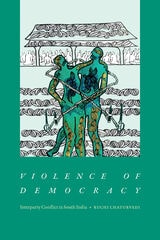
Violence of Democracy
Interparty Conflict in South IndiaRuchi Chaturvedi
Duke University Press, 2023
Violence
Analysis, Intervention, and PreventionSean Byrne
Ohio University Press, 2012
In a world desperate to comprehend and address what appears to be an ever-enlarging explosion of violence, this book provides important insights into crucial contemporary issues, with violence providing the lens. Violence: Analysis, Intervention, and Prevention provides a multidisciplinary approachto the analysis and resolution of violent conflicts. In particular, the book discusses ecologies of violence, and micro-macro linkages at the local, national, and international levels as well as intervention and prevention processes critical to constructive conflict transformation.
The causes of violence are complex and demand a deep multidimensional analysis if we are to fully understand its driving forces. Yet in the aftermath of such destruction there is hope in the resiliency, knowledge, and creativity of communities, organizations, leaders, and international agencies to transform the conditions that lead to such violence.
Violent Democracies in Latin America
Enrique Desmond Arias and Daniel M. Goldstein, eds.
Duke University Press, 2010
The contributors—anthropologists, political scientists, sociologists, and historians—explore how individuals and institutions in Latin American democracies, from the rural regions of Colombia and the Dominican Republic to the urban centers of Brazil and Mexico, use violence to impose and contest notions of order, rights, citizenship, and justice. They describe the lived realities of citizens and reveal the historical foundations of the violence that Latin America suffers today. One contributor examines the tightly woven relationship between violent individuals and state officials in Colombia, while another contextualizes violence in Rio de Janeiro within the transnational political economy of drug trafficking. By advancing the discussion of democratic Latin American regimes beyond the usual binary of success and failure, this collection suggests more sophisticated ways of understanding the challenges posed by violence, and of developing new frameworks for guaranteeing human rights in Latin America.
Contributors: Enrique Desmond Arias, Javier Auyero, Lilian Bobea, Diane E. Davis, Robert Gay, Daniel M. Goldstein, Mary Roldán, Todd Landman, Ruth Stanley, María Clemencia Ramírez

Violent Exceptions
Children's Human Rights and Humanitarian RhetoricsWendy S. Hesford
The Ohio State University Press, 2021

Violent Exceptions
Children's Human Rights and Humanitarian RhetoricsWendy S. Hesford
The Ohio State University Press, 2021

Violent Extremism
A Handbook of Risk Assessment and ManagementEdited by Caroline Logan, Randy Borum, and Paul Gill
University College London, 2023
Violent extremism has galvanized public fear and attention. Driven by their concerns, the public has pushed for law enforcement and mental health systems to prevent attacks rather than just respond to them after they occur. The prevention process requires guidance for practitioners and policymakers on how best to identify people who may be at risk, to understand and assess the nature and function of the harm they may cause, and to manage them to mitigate or prevent harm. Violent Extremism provides such guidance.
Over ten chapters, prepared by leading experts, this handbook illuminates the nature of violent extremism and the evolution of prevention-driven practice. Authors draw on the literature and their experience to explain which factors might increase (risk factors) or decrease (protective factors) risk, how those factors might operate, and how practitioners can prepare risk formulations and scenario plans that inform risk management strategies to prevent violent extremist harm.
Each chapter is crafted to support thoughtful, evidence-based practice that is transparent, accountable, and ultimately defensible. Written for an international audience, the volume will be of interest to law enforcement and mental health professionals, criminal justice and security personnel, as well as criminologists, policymakers, and researchers.

Violent Histories, Livable Futures
Forging the Power of the PeopleEric King Watts
Michigan State University Press, 2026
Our political landscape is crowded with competing voices—claims, demands, grievances, and even acts of violence—all made in the name of some idea of “the people.” This powerful concept has been wielded both to assert democratic sovereignty and to justify exclusion and control. Violent Histories, Livable Futures unpacks this complex dynamic through compelling historical case studies, spanning sub-Saharan Africa in the 1950s, post–World War II Guatemala, and the United States in the aftermath of George Floyd’s murder. By tracing how societies have contended over which people matter and which do not, this book offers a deeply relevant exploration of power, representation, and the struggle for justice, all in pursuit of a more livable future.
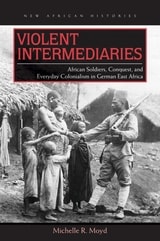
Violent Intermediaries
African Soldiers, Conquest, and Everyday Colonialism in German East AfricaMichelle R. Moyd
Ohio University Press, 2014
The askari, African soldiers recruited in the 1890s to fill the ranks of the German East African colonial army, occupy a unique space at the intersection of East African history, German colonial history, and military history.
Lauded by Germans for their loyalty during the East Africa campaign of World War I, but reviled by Tanzanians for the violence they committed during the making of the colonial state between 1890 and 1918, the askari have been poorly understood as historical agents. Violent Intermediaries situates them in their everyday household, community, military, and constabulary roles, as men who helped make colonialism in German East Africa.
By linking microhistories with wider nineteenth-century African historical processes, Michelle Moyd shows how as soldiers and colonial intermediaries, the askari built the colonial state while simultaneously carving out paths to respectability, becoming men of influence within their local contexts.
Through its focus on the making of empire from the ground up, Violent Intermediaries offers a fresh perspective on African colonial troops as state-making agents and critiques the mythologies surrounding the askari by focusing on the nature of colonial violence.
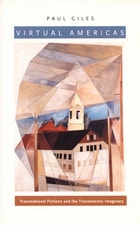
Virtual Americas
Transnational Fictions and the Transatlantic ImaginaryPaul Giles
Duke University Press, 2002
Throughout Virtual Americas Giles focuses on specific examples of transatlantic cultural interactions such as Frederick Douglass’s experiences and reputation in England; Herman Melville’s satirizing fictions of U.S. and British nationalism; and Vladimir Nabokov’s critique of European high culture and American popular culture in Lolita. He also reverses his perspective, looking at the representation of San Francisco in the work of British-born poet Thom Gunn and Sylvia Plath’s poetic responses to England. Giles develops his theory about the need to defamiliarize the study of American literature by considering the cultural legacy of Surrealism as an alternative genealogy for American Studies and by examining the transatlantic dimensions of writers such as Henry James and Robert Frost in the context of Surrealism.