Results by title
4127 books match the query 'Science' and 44 start with v

Vaccine Nation
America's Changing Relationship with ImmunizationElena Conis
University of Chicago Press, 2014
Vaccine Nation opens in the 1960s, when government scientists—triumphant following successes combating polio and smallpox—considered how the country might deploy new vaccines against what they called the “milder” diseases, including measles, mumps, and rubella. In the years that followed, Conis reveals, vaccines fundamentally changed how medical professionals, policy administrators, and ordinary Americans came to perceive the diseases they were designed to prevent. She brings this history up to the present with an insightful look at the past decade’s controversy over the implementation of the Gardasil vaccine for HPV, which sparked extensive debate because of its focus on adolescent girls and young women. Through this and other examples, Conis demonstrates how the acceptance of vaccines and vaccination policies has been as contingent on political and social concerns as on scientific findings.
By setting the complex story of American vaccination within the country’s broader history, Vaccine Nation goes beyond the simple story of the triumph of science over disease and provides a new and perceptive account of the role of politics and social forces in medicine.
Vaccine Nation
America's Changing Relationship with ImmunizationElena Conis
University of Chicago Press, 2014
With employers offering free flu shots and pharmacies expanding into one-stop shops to prevent everything from shingles to tetanus, vaccines are ubiquitous in contemporary life. The past fifty years have witnessed an enormous upsurge in vaccines and immunization in the United States: American children now receive more vaccines than any previous generation, and laws requiring their immunization against a litany of diseases are standard. Yet, while vaccination rates have soared and cases of preventable infections have plummeted, an increasingly vocal cross section of Americans have questioned the safety and necessity of vaccines. In Vaccine Nation, Elena Conis explores this complicated history and its consequences for personal and public health.
Vaccine Nation opens in the 1960s, when government scientists—triumphant following successes combating polio and smallpox—considered how the country might deploy new vaccines against what they called the “milder” diseases, including measles, mumps, and rubella. In the years that followed, Conis reveals, vaccines fundamentally changed how medical professionals, policy administrators, and ordinary Americans came to perceive the diseases they were designed to prevent. She brings this history up to the present with an insightful look at the past decade’s controversy over the implementation of the Gardasil vaccine for HPV, which sparked extensive debate because of its focus on adolescent girls and young women. Through this and other examples, Conis demonstrates how the acceptance of vaccines and vaccination policies has been as contingent on political and social concerns as on scientific findings.
By setting the complex story of American vaccination within the country’s broader history, Vaccine Nation goes beyond the simple story of the triumph of science over disease and provides a new and perceptive account of the role of politics and social forces in medicine.

Van der Waals Heterostructures and Twistronics
Advances in two-dimensional quantum materialsPramoda Kumar Nayak
The Institution of Engineering and Technology, 2026
Vanished Giants
The Lost World of the Ice AgeAnthony J. Stuart
University of Chicago Press, 2021
Long after the extinction of dinosaurs, when humans were still in the Stone Age, woolly rhinos, mammoths, mastodons, sabertooth cats, giant ground sloths, and many other spectacular large animals that are no longer with us roamed the Earth. These animals are regarded as “Pleistocene megafauna,” named for the geological era in which they lived—also known as the Ice Age.
In Vanished Giants: The Lost World of the Ice Age, paleontologist Anthony J. Stuart explores the lives and environments of these animals, moving between six continents and several key islands. Stuart examines the animals themselves via what we’ve learned from fossil remains, and he describes the landscapes, climates, vegetation, ecological interactions, and other aspects of the animals’ existence. Illustrated throughout, Vanished Giants also offers a picture of the world as it was tens of thousands of years ago when these giants still existed. Unlike the case of the dinosaurs, there was no asteroid strike to blame for the end of their world. Instead, it appears that the giants of the Ice Age were driven to extinction by climate change, human activities—especially hunting—or both. Drawing on the latest evidence provided by radiocarbon dating, Stuart discusses these possibilities. The extinction of Ice Age megafauna can be seen as the beginning of the so-called Sixth Extinction, which is happening right now. This has important implications for understanding the likely fate of present-day animals in the face of contemporary climate change and vastly increasing human populations.
Vanishing Bees
Science, Politics, and Honeybee HealthSuryanarayanan, Sainath
Rutgers University Press, 2016
Vascular Flora of Illinois
Robert H. Mohlenbrock
Southern Illinois University Press, 2002
This latest Vascular Flora of Illinois includes over thirty-two hundred species, an increase of almost three hundred since 1986. In addition, for the first time, taxa below the rank of species are recognized and may be identified by keys. Investigating seldom-visited patches of prairies, wetlands, and forested canyons, Mohlenbrock has added several native species to this flora. And while there has been extensive exploration for plants, Mohlenbrock has also researched the herbaria in an attempt to verify previous reports of records of Illinois plants.
Because of a reinterpretation of existing genera, the number of genera of Illinois plants has increased markedly. Recent biosystematic techniques have begun to substantiate the genera that botanists such as John Kunkel Small, Per Axel Rydberg, and Edmund C. Greene proposed nearly a century ago.
The sequence of groups in this book is ferns, conifers, and flowering plants, with dicotyledons given before monocotyledons. Within each group, the families are arranged alphabetically, as are the genera within each family and the species within each genus.
For each taxon recognized in this book, Mohlenbrock gives a common name if one is generally used in Illinois. He follows this by an indication of flowering time for flowering plants and of spore-production time for ferns and their relatives. He also provides a habitat statement and a general comment on distribution in Illinois for each taxon. Synonyms for some other scientific names used previously for a taxon appear in italics. This book contains indexes both for common names and for family and genus names.
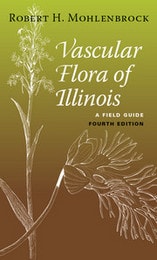
Vascular Flora of Illinois
A Field Guide, Fourth EditionRobert H. Mohlenbrock
Southern Illinois University Press, 2013
This latest edition of Vascular Flora of Illinois includes over thirty-four hundred species of flora from Illinois, adding more than 250 newly-recognized plants to this definitive collection. Because cataloguing our heritage is foremost in importance among naturalists, this book compiles essential information about plants in Illinois. Mohlenbrock includes all known taxa native to Illinois either at present or in the past and all non-native vascular plants that grow spontaneously and appear able to maintain themselves year after year without cultivation. The sequence of groups in the guide is ferns, conifers, and flowering plants, with cotyledons given before monocotyledons. Within each group, the families are arranged alphabetically, as are the genera within each family and the species within each genus. For each taxon recognized in this book, Mohlenbrock gives us a common name if one is generally used in Illinois. He follows this with an indication of flowering time for flowering plants, and of spore-production time in the case of ferns and their relatives. He also provides a habitat statement and a general comment on distribution in Illinois for each taxon.
Containing information on Illinois flora not available anywhere else, this fourth edition of Vascular Flora of Illinois is essential for ecologists, environmentalists, and land developers. Those interested in wildflower identification will also find this guide helpful.
Vascular Plant Families and Genera
R. K. Brummitt
Royal Botanic Gardens, Kew, 2000

Vascular Plants of Northern Utah
An Identification ManualRichard Shaw
Utah State University Press, 1989
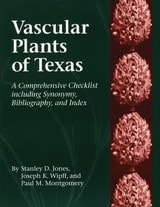
Vascular Plants of Texas
A Comprehensive Checklist Including Synonymy, Bibliography, and IndexBy Stanley D. Jones, Joseph K. Wipff, and Paul M. Montgomery
University of Texas Press, 1997
Everyone with a professional interest in the flora of Texas will welcome this checklist of the vascular plants. This comprehensive list also includes crops, persistent perennials, and naturalized plants and encompasses over 1,000 changes to the previous (Hatch, 1990) checklist. The authors have arranged this checklist phylogenetically by classes following the Cronquist system.
Several features make this checklist especially useful. Chief among them is the relative synonymy (name history). An extensive index makes current classification and correct nomenclature readily accessible, while the botanical bibliography is the most extensive ever compiled for Texas. The authors also note which plants have been listed as threatened or endangered by the Texas Organization of Endangered Species, which are designated as Federal Noxious Weeds, and which have been chosen as state tree, flower, fruit, etc. by the Texas Legislature.
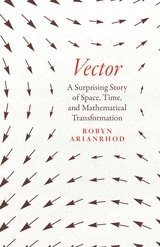
Vector
A Surprising Story of Space, Time, and Mathematical TransformationRobyn Arianrhod
University of Chicago Press, 2024
The stars of this book, vectors and tensors, are unlikely celebrities. If you ever took a physics course, the word “vector” might remind you of the mathematics needed to determine forces on an amusement park ride, a turbine, or a projectile. You might also remember that a vector is a quantity that has magnitude and (this is the key) direction. In fact, vectors are examples of tensors, which can represent even more data. It sounds simple enough—and yet, as award-winning science writer Robyn Arianrhod shows in this riveting story, the idea of a single symbol expressing more than one thing at once was millennia in the making. And without that idea, we wouldn’t have such a deep understanding of our world.
Vector and tensor calculus offers an elegant language for expressing the way things behave in space and time, and Arianrhod shows how this enabled physicists and mathematicians to think in a brand-new way. These include James Clerk Maxwell when he ushered in the wireless electromagnetic age; Einstein when he predicted the curving of space-time and the existence of gravitational waves; Paul Dirac, when he created quantum field theory; and Emmy Noether, when she connected mathematical symmetry and the conservation of energy. For it turned out that it’s not just physical quantities and dimensions that vectors and tensors can represent, but other dimensions and other kinds of information, too. This is why physicists and mathematicians can speak of four-dimensional space-time and other higher-dimensional “spaces,” and why you’re likely relying on vectors or tensors whenever you use digital applications such as search engines, GPS, or your mobile phone.
In exploring the evolution of vectors and tensors—and introducing the fascinating people who gave them to us—Arianrhod takes readers on an extraordinary, five-thousand-year journey through the human imagination. She shows the genius required to reimagine the world—and how a clever mathematical construct can dramatically change discovery’s direction.
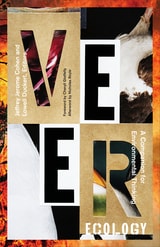
Veer Ecology
A Companion for Environmental ThinkingJeffrey Jerome Cohen
University of Minnesota Press, 2017
The words most commonly associated with the environmental movement—save, recycle, reuse, protect, regulate, restore—describe what we can do to help the environment, but few suggest how we might transform ourselves to better navigate the sudden turns of the late Anthropocene. Which words can help us to veer conceptually along with drastic environmental flux? Jeffrey Jerome Cohen and Lowell Duckert asked thirty brilliant thinkers to each propose one verb that stresses the forceful potential of inquiry, weather, biomes, apprehensions, and desires to swerve and sheer. Each term is accompanied by a concise essay contextualizing its meaning in times of resource depletion, environmental degradation, and global climate change.
Some verbs are closely tied to natural processes: compost, saturate, seep, rain, shade, sediment, vegetate, environ. Many are vaguely unsettling: drown, unmoor, obsolesce, power down, haunt. Others are enigmatic or counterintuitive: curl, globalize, commodify, ape, whirl. And while several verbs pertain to human affect and action—love, represent, behold, wait, try, attune, play, remember, decorate, tend, hope—a primary goal of Veer Ecology is to decenter the human. Indeed, each of the essays speaks to a heightened sense of possibility, awakening our imaginations and inviting us to think the world anew from radically different perspectives. A groundbreaking guide for the twenty-first century, Veer Ecology foregrounds the risks and potentialities of living on—and with—an alarmingly dynamic planet.
Contributors: Stacy Alaimo, U of Texas at Arlington; Joseph Campana, Rice U; Holly Dugan, George Washington U; Lara Farina, West Virginia U; Cheryll Glotfelty, U of Nevada, Reno; Anne F. Harris, DePauw U; Tim Ingold, U of Aberdeen; Serenella Iovino, U of Turin; Stephanie LeMenager, U of Oregon; Scott Maisano, U of Massachusetts, Boston; Tobias Menely, U of California, Davis; Steve Mentz, St. John’s U; J. Allan Mitchell, U of Victoria; Timothy Morton, Rice U; Vin Nardizzi, U of British Columbia; Laura Ogden, Dartmouth College; Serpil Opperman, Hacettepe U, Ankara; Daniel C. Remein, U of Massachusetts, Boston; Margaret Ronda, U of California, Davis; Nicholas Royle, U of Sussex; Catriona Sandilands, York U; Christopher Schaberg, Loyola U; Rebecca R. Scott, U of Missouri; Theresa Shewry, U of California, Santa Barbara; Mick Smith, Queen’s U; Jesse Oak Taylor, U of Washington; Brian Thill, Golden West College; Coll Thrush, U of British Columbia, Vancouver; Cord J. Whitaker, Wellesley College; Julian Yates, U of Delaware.
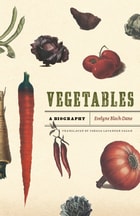
Vegetables
A BiographyEvelyne Bloch-Dano
University of Chicago Press, 2012
From Michael Pollan to locavores, Whole Foods to farmers' markets, today cooks and foodies alike are paying more attention than ever before to the history of the food they bring into their kitchens—and especially to vegetables. Whether it’s an heirloom tomato, curled cabbage, or succulent squash, from a farmers' market or a backyard plot, the humble vegetable offers more than just nutrition—it also represents a link with long tradition of farming and gardening, nurturing and breeding.
In this charming new book, those veggies finally get their due. In capsule biographies of eleven different vegetables—artichokes, beans, chard, cabbage, cardoons, carrots, chili peppers, Jerusalem artichokes, peas, pumpkins, and tomatoes—Evelyne Bloch-Dano explores the world of vegetables in all its facets, from science and agriculture to history, culture, and, of course, cooking. From the importance of peppers in early international trade to the most recent findings in genetics, from the cultural cachet of cabbage to Proust’s devotion to beef-and-carrot stew, to the surprising array of vegetables that preceded the pumpkin as the avatar of All Hallow’s Eve, Bloch-Dano takes readers on a dazzling tour of the fascinating stories behind our daily repasts.
Spicing her cornucopia with an eye for anecdote and a ready wit, Bloch-Dano has created a feast that’s sure to satisfy gardeners, chefs, and eaters alike.
Venus
Edited by D. M. Hunten, L. Colin, T. M. Donahue, and V. I. Moroz
University of Arizona Press, 1983
"The book contains the results of the exploration of Venus by spacecraft during the period 1962-1978. . . . The book represents an excellent review of the principal results of Venus in the period covered."—Bulletin of the Astronomical Institute of Czechoslovakia
"A wealth of new information."—Science
"Strongly recommended."—Science Books & Films
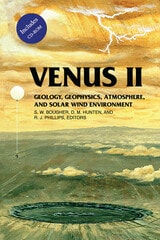
Venus II
Geology, Geophysics, Atmosphere, and Solar Wind EnvironmentEdited by S. W. Bougher, D. M. Hunten, and R. J. Phillips
University of Arizona Press, 1997
Topics addressed include geology, surface processes, volcanism, tectonism, impact cratering, geodynamics, upper and lower atmospheres, and solar wind environment. The diversity of the coverage reflects the interdisciplinary nature of Venus science and the breadth of knowledge that has contributed to it. A CD-ROM developed by the Jet Propulsion Laboratory accompanies the book and incorporates text, graphics, video, software, and various digital products from selected contributors to the text. A multimedia interface allows users to navigate the text and the extensive databases included on the disk. Venus II is the most authoritative single volume available on the second planet. Its contents will not only help shape the goals of future Venus missions but will also enhance our understanding of current Mars explorations.
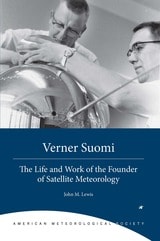
Verner Suomi
The Life and Work of the Founder of Satellite MeteorologyJohn M. Lewis et al.
American Meteorological Society, 2018
Vestiges of the Natural History of Creation and Other Evolutionary Writings
Robert Chambers
University of Chicago Press, 1994
With a new introduction by James Secord, a bibliography of reviews, and a new index, this volume adds to Vestiges and Explanations Chambers's earliest works on cosmology, an essay on Darwin, and an autobiographical essay, raising important issues about the changing meanings of popular science and religion and the rise of secular ideologies in Western culture.
Vicious Circles
Jon Barwise and Lawrence S. Moss
CSLI, 1996
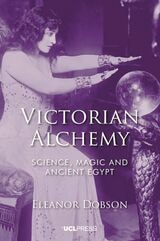
Victorian Alchemy
Science, Magic and Ancient EgyptEleanor Dobson
University College London, 2022
With its material remnants paradoxically symbolizing both antiquity and modernity to Victorian audiences, ancient Egypt was at once evocative of ancient magical power and of cutting-edge science, a tension that might be productively conceived of as “alchemical.” Examining literature and other cultural forms including art, photography, and early film, Eleanor Dobson herein traces the myriad ways in which the Victorian fascination with ancient Egypt evoked the entwined forces of magic and science, providing more than a mere setting for Orientalist fantasies and nightmares. From imaging technologies and astronomy to investigations into the electromagnetic spectrum and the human mind itself, this book demonstrates how conceptions of modernity were inextricably bound up in the contemporary reception of the ancient world, illustrating how such ideas took root and flourished in the Victorian era and persist to this day.
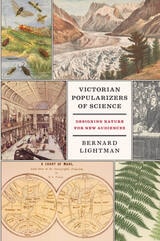
Victorian Popularizers of Science
Designing Nature for New AudiencesBernard Lightman
University of Chicago Press, 2007
Bernard Lightman examines more than thirty of the most prolific, influential, and interesting popularizers of the day, investigating the dramatic lecturing techniques, vivid illustrations, and accessible literary styles they used to communicate with their audience. By focusing on a forgotten coterie of science writers, their publishers, and their public, Lightman offers new insights into the role of women in scientific inquiry, the market for scientific knowledge, tensions between religion and science, and the complexities of scientific authority in nineteenth-century Britain.
Victorian Relativity
Radical Thought and Scientific DiscoveryChristopher Herbert
University of Chicago Press, 2001
Christopher Herbert shows that the idea of relativity produced revolutionary changes in one field after another in the nineteenth century. Surveying a long line of thinkers including Herbert Spencer, Charles Darwin, Alexander Bain, W. K. Clifford, W. S. Jevons, Karl Pearson, James Frazer, and Einstein himself, Victorian Relativity argues that the early relativity movement was bound closely to motives of political and cultural reform and, in particular, to radical critiques of the ideology of authoritarianism. Recuperating relativity from those who treat it as synonymous with nihilism, Herbert portrays it as the basis of some of our crucial intellectual and ethical traditions.
Victorian Science in Context
Edited by Bernard Lightman
University of Chicago Press, 1997
Victorian Science in Context captures the essence of this fascination, charting the many ways in which science influenced and was influenced by the larger Victorian culture. Contributions from leading scholars in history, literature, and the history of science explore questions such as: What did science mean to the Victorians? For whom was Victorian science written? What ideological messages did it convey? The contributors show how practical concerns interacted with contextual issues to mold Victorian science—which in turn shaped much of the relationship between modern science and culture.
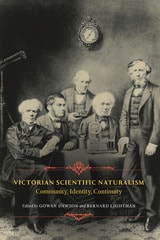
Victorian Scientific Naturalism
Community, Identity, ContinuityEdited by Gowan Dawson and Bernard Lightman
University of Chicago Press, 2014
Victorian Sensation
The Extraordinary Publication, Reception, and Secret Authorship of Vestiges of the Natural History of CreationJames A. Secord
University of Chicago Press, 2000
In a pioneering cultural history, James A. Secord uses the story of Vestiges to create a panoramic portrait of life in the early industrial era from the perspective of its readers. We join apprentices in a factory town as they debate the consequences of an evolutionary ancestry. We listen as Prince Albert reads aloud to Queen Victoria from a book that preachers denounced as blasphemy vomited from the mouth of Satan. And we watch as Charles Darwin turns its pages in the flea-ridden British Museum library, fearful for the fate of his own unpublished theory of evolution. Using secret letters, Secord reveals how Vestiges was written and how the anonymity of its author was maintained for forty years. He also takes us behind the scenes to a bustling world of publishers, printers, and booksellers to show how the furor over the book reflected the emerging industrial economy of print.
Beautifully written and based on painstaking research, Victorian Sensation offers a new approach to literary history, the history of reading, and the history of science. Profusely illustrated and full of fascinating stories, it is the most comprehensive account of the making and reception of a book (other than the Bible) ever attempted.

Victorian Toronto, 1850 to 1900
Pattern and Process of GrowthPeter G. Goheen
University of Chicago Press, 1970
Vida Zoo-cial
The Buenos Aires Zoo and the Making of Argentine Society, 1875–1924Ashley Elizabeth Kerr
Vanderbilt University Press, 2025
Premio al Mejor Libro en Humanidades, Latin American Studies Association, Nineteenth-Century Section, 2026
In late nineteenth- and early twentieth‑century Buenos Aires, elites attempted to tackle growing poverty and social problems with a suite of social, educational, and medical reforms, hoping to make the city and larger nation more “modern” and “progressive” on the world stage. Known as the “social question,” this turn-of-the-century preoccupation with the future of the city and nation was undergirded by a larger set of social Darwinist beliefs about the biological and racial inferiority of immigrants and the working class, linking them to higher susceptibility to alcoholism, sexual deviancy, insanity, and disease.
In Vida Zoo-cial, Ashley Elizabeth Kerr argues that the Buenos Aires Zoo and its many animal species were an important tool in attempts to remake Argentinian society. Elites used the zoo’s physical spaces, programming, and visual and literary representations of its animals to try to educate and “improve” the masses, especially immigrants and the poor, but stopped short of supporting more radical social transformations. Drawing upon extensive archival research from the zoo’s archive, including correspondence, municipal reports, receipts, and employment records, as well as a range of literary and popular culture sources, Kerr records these efforts, which included enlisting lionesses as object lessons in proper motherhood and elephants as model immigrants. Although some projects were successful, Kerr also documents the many ways others went awry when the zoo's animals and the humans who came to see them failed to cooperate.
Vida Zoo-cial is not only a story about how the poor and working class resisted elite efforts for social reform founded upon racialized beliefs and pseudoscience, but also one that challenges readers to rethink the relationship between humans and non‑humans.
Vienna in the Age of Uncertainty
Science, Liberalism, and Private LifeDeborah R. Coen
University of Chicago Press, 2007
Vienna in the Age of Uncertainty traces the vital and varied roles of science through the story of three generations of the eminent Exner family, whose members included Nobel Prize–winning biologist Karl Frisch, the teachers of Freud and of physicist Erwin Schrödinger, artists of the Vienna Secession, and a leader of Vienna’s women’s movement. Training her critical eye on the Exners through the rise and fall of Austrian liberalism and into the rise of the Third Reich, Deborah R. Coen demonstrates the interdependence of the family’s scientific and domestic lives, exploring the ways in which public notions of rationality, objectivity, and autonomy were formed in the private sphere. Vienna in the Age of Uncertainty presents the story of the Exners as a microcosm of the larger achievements and tragedies of Austrian political and scientific life in the late nineteenth and early twentieth centuries.
Views of Nature
Alexander von Humboldt
University of Chicago Press, 2014
Views of Nature, or Ansichten der Natur, was Humboldt’s best-known and most influential work—and his personal favorite. While the essays that comprise it are themselves remarkable as innovative, early pieces of nature writing—they were cited by Thoreau as a model for his own work—the book’s extensive endnotes incorporate some of Humboldt’s most beautiful prose and mature thinking on vegetation structure, its origins in climate patterns, and its implications for the arts. Written for both a literary and a scientific audience, Views of Nature was translated into English (twice), Spanish, and French in the nineteenth century, and it was read widely in Europe and the Americas. But in contrast to many of Humboldt’s more technical works, Views of Nature has been unavailable in English for more than one hundred years. Largely neglected in the United States during the twentieth century, Humboldt’s contributions to the humanities and the sciences are now undergoing a revival to which this new translation will be a critical contribution.
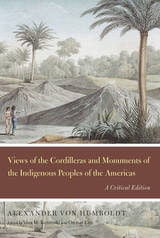
Views of the Cordilleras and Monuments of the Indigenous Peoples of the Americas
A Critical EditionAlexander von Humboldt
University of Chicago Press, 2013
Virgin Mary and the Neutrino
Reality in TroubleIsabelle Stengers
Duke University Press, 2023
Virulent Zones
Animal Disease and Global Health at China's Pandemic EpicenterLyle Fearnley
Duke University Press, 2020
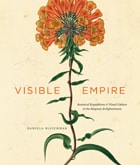
Visible Empire
Botanical Expeditions and Visual Culture in the Hispanic EnlightenmentDaniela Bleichmar
University of Chicago Press, 2012
Between 1777 and 1816, botanical expeditions crisscrossed the vast Spanish empire in an ambitious project to survey the flora of much of the Americas, the Caribbean, and the Philippines. While these voyages produced written texts and compiled collections of specimens, they dedicated an overwhelming proportion of their resources and energy to the creation of visual materials. European and American naturalists and artists collaborated to manufacture a staggering total of more than 12,000 botanical illustrations. Yet these images have remained largely overlooked—until now.
In this lavishly illustrated volume, Daniela Bleichmar gives this archive its due, finding in these botanical images a window into the worlds of Enlightenment science, visual culture, and empire. Through innovative interdisciplinary scholarship that bridges the histories of science, visual culture, and the Hispanic world, Bleichmar uses these images to trace two related histories: the little-known history of scientific expeditions in the Hispanic Enlightenment and the history of visual evidence in both science and administration in the early modern Spanish empire. As Bleichmar shows, in the Spanish empire visual epistemology operated not only in scientific contexts but also as part of an imperial apparatus that had a long-established tradition of deploying visual evidence for administrative purposes.
Vision Impairment
Science, Art and Lived ExperienceMichael Crossland
University College London, 2024
What is it like to go blind? Three hundred and fifty million people around the world live with severe vision impairment, ranging from those who can see a couple of letters on a sight chart to those who perceive no light at all. Vision Impairment introduces the readers to some of them, including artists, poets, scientists, architects, politicians, broadcasters, and musicians. Through their stories, this book discusses life with vision impairment–from childhood and education to dating, employment, and aging–as well as the portrayal of blind people in literature and film, the use of technology by people with vision impairment, and the psychological effects of losing vision.
Based on Michael Crossland’s extensive work in children’s and adults’ low vision clinics, and his twenty years of research into vision impairment, the book blends individual stories, key research findings, and the most recent scientific discoveries to present an informative yet optimistic overview of living with sight loss.
Visions of Cell Biology
Reflections Inspired by Cowdry's "General Cytology"Edited by Karl S. Matlin, Jane Maienschein, and Manfred D. Laubichler
University of Chicago Press, 2017
Despite extraordinary advances in describing both the structure and function of cells, cell biology tends to be overshadowed by molecular biology, a field that developed contemporaneously. This book remedies that unjust disparity through an investigation of cell biology’s evolution and its role in pushing forward the boundaries of biological understanding. Contributors show that modern concepts of cell organization, mechanistic explanations, epigenetics, molecular thinking, and even computational approaches all can be placed on the continuum of cell studies from cytology to cell biology and beyond. The first book in the series Convening Science: Discovery at the Marine Biological Laboratory, Visions of Cell Biology sheds new light on a century of cellular discovery.
Visions of Science
Books and Readers at the Dawn of the Victorian AgeJames A. Secord
University of Chicago Press, 2015
In Visions of Science, James A. Secord offers a new way to capture this unique moment of change. He explores seven key books—among them Charles Babbage’s Reflections on the Decline of Science, Charles Lyell’s Principles ofGeology, Mary Somerville’s Connexion of the Physical Sciences, and Thomas Carlyle’s Sartor Resartus—and shows how literature that reflects on the wider meaning of science can be revelatory when granted the kind of close reading usually reserved for fiction and poetry. These books considered the meanings of science and its place in modern life, looking to the future, coordinating and connecting the sciences, and forging knowledge that would be appropriate for the new age. Their aim was often philosophical, but Secord shows it was just as often imaginative, projective, and practical: to suggest not only how to think about the natural world but also to indicate modes of action and potential consequences in an era of unparalleled change.
Visions of Science opens our eyes to how genteel ladies, working men, and the literary elite responded to these remarkable works. It reveals the importance of understanding the physical qualities of books and the key role of printers and publishers, from factories pouring out cheap compendia to fashionable publishing houses in London’s West End. Secord’s vivid account takes us to the heart of an information revolution that was to have profound consequences for the making of the modern world.
Visualizing Disease
The Art and History of Pathological IllustrationsDomenico Bertoloni Meli
University of Chicago Press, 2018
Starting in the Renaissance, Bertoloni Meli delves into the wide range of figures involved in the early study and representation of disease, including not just men of medicine, like anatomists, physicians, surgeons, and pathologists, but also draftsmen and engravers. Pathological preparations proved difficult to preserve and represent, and as Bertoloni Meli takes us through a number of different cases from the Renaissance to the mid-nineteenth century, we gain a new understanding of how knowledge of disease, interactions among medical men and artists, and changes in the technologies of preservation and representation of specimens interacted to slowly bring illustration into the medical world.
Vita Sexualis
Karl Ulrichs and the Origins of Sexual ScienceRalph M. Leck
University of Illinois Press, 2020
Vital Decomposition
Soil Practitioners and Life PoliticsKristina M. Lyons
Duke University Press, 2020
Vital Minimum
Need, Science, and Politics in Modern FranceDana Simmons
University of Chicago Press, 2015
The result was the concept of the "vital minimum"--the living wage, a measure of physical and social needs. In this book, Dana Simmons traces the history of this concept, revealing the intersections between technologies of measurement, such as calorimeters and social surveys, and technologies of wages and welfare, such as minimum wages, poor aid, and welfare programs. In looking at how we define and measure need, Vital Minimum raises profound questions about the authority of nature and the nature of inequality.
Voice Machines
The Castrato, the Cat Piano, and Other Strange SoundsBonnie Gordon
University of Chicago Press, 2023
Italian courts and churches began employing castrato singers in the late sixteenth century. By the eighteenth century, the singers occupied a celebrity status on the operatic stage. Constructed through surgical alteration and further modified by rigorous training, castrati inhabited human bodies that had been “mechanized” to produce sounds in ways that unmechanized bodies could not. The voices of these technologically enhanced singers, with their unique timbre, range, and strength, contributed to a dramatic expansion of musical vocabulary and prompted new ways of imagining sound, the body, and personhood.
Connecting sometimes bizarre snippets of history, this multi-disciplinary book moves backward and forward in time, deliberately troubling the meaning of concepts like “technology” and “human.” Voice Machines attends to the ways that early modern encounters and inventions—including settler colonialism, emergent racialized worldviews, the printing press, gunpowder, and the telescope—participated in making castrati. In Bonnie Gordon’s revealing study, castrati serve as a critical provocation to ask questions about the voice, the limits of the body, and the stories historians tell.
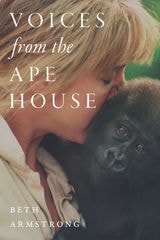
Voices from the Ape House
Beth Armstrong
The Ohio State University Press, 2020
Through anecdotal stories, readers get a glimpse into the fascinating lives of gorillas—the familiar gentleness of mothers and fathers toward their infants, power plays and social climbing, the unruly nature of teenagers, the capacity for humor, and the shared sadness by group members as they mourn the death of one of their own. In the end, Armstrong’s conflict with captivity and her lifelong fondness for these animals helped shape a zoo program dedicated to gorilla conservation.
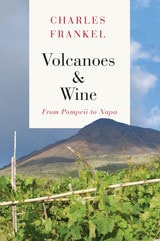
Volcanoes and Wine
From Pompeii to NapaCharles Frankel
University of Chicago Press, 2019
Traveling across regions wellknown to wine lovers like Sicily, Oregon, and California, as well as the less familiar places, such as the Canary Islands, Frankel gives an in-depth account of famous volcanoes and the wines that spring from their idiosyncratic soils. From Santorini’s vineyards of rocky pumice dating back to a four-thousand-year-old eruption to grapes growing in craters dug in the earth of the Canary Islands, from Vesuvius’s famous Lacryma Christi to the ambitious new generation of wine growers reviving the traditional grapes of Mount Etna, Frankel takes us across the stunning and dangerous world of volcanic wines. He details each volcano’s most famous eruptions, the grapes that grow in its soils, and the people who make their homes on its slopes, adapting to an ever-menacing landscape. In addition to introducing the history and geology of these volcanoes, Frankel's book serves as a travel guide, offering a host of tips ranging from prominent vineyards to visit to scenic hikes in each location.
This illuminating guide will be indispensable for wine lovers looking to learn more about volcanic terroirs, as well as anyone curious about how cultural heritage can survive and thrive in the shadow of geological danger.
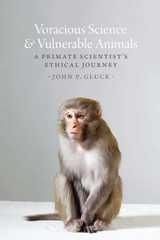
Voracious Science and Vulnerable Animals
A Primate Scientist's Ethical JourneyJohn P. Gluck
University of Chicago Press, 2016
Gluck begins by taking us inside the laboratory of Harry F. Harlow at the University of Wisconsin, where Gluck worked as a graduate student in the 1960s. Harlow’s primate lab became famous for his behavioral experiments in maternal deprivation and social isolation of rhesus macaques. Though trained as a behavioral scientist, Gluck finds himself unable to overlook the intense psychological and physical damage these experiments wrought on the macaques. Gluck’s sobering and moving account reveals how in this and other labs, including his own, he came to grapple with the uncomfortable justifications that many researchers were offering for their work. As his sense of conflict grows, we’re right alongside him, developing a deep empathy for the often smart and always vulnerable animals used for these experiments.
At a time of unprecedented recognition of the intellectual cognition and emotional intelligence of animals, Voracious Science and Vulnerable Animals is a powerful appeal for our respect and compassion for those creatures who have unwillingly dedicated their lives to science. Through the words of someone who has inflicted pain in the name of science and come to abhor it, it’s important to know what has led this far to progress and where further inroads in animal research ethics are needed.
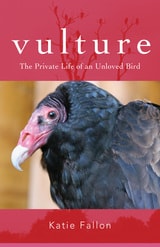
Vulture
The Private Life of an Unloved BirdKatie Fallon
Brandeis University Press, 2020
Few animals have a worse reputation than the vulture. But is it deserved? With Vulture, Katie Fallon offers an irresistible argument to the contrary, tracing a year in the life of a typical North American turkey vulture. Turkey vultures, also known as buzzards, are the most widely distributed and abundant scavenging birds of prey on the planet, found from central Canada to the southern tip of Argentina and nearly everywhere in between. Deftly drawing on the most up-to-date scientific papers and articles and weaving those in with interviews with world-renowned raptor and vulture experts and her own compelling natural history writing, Fallon examines all aspects of the bird’s natural history: breeding, incubating eggs, raising chicks, migrating, and roosting. The result is an intimate portrait of an underappreciated bird—one you’ll never look at in the same way again.