Results by title
661 books match the query 'South America' and 10 start with v
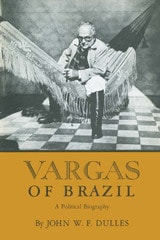
Vargas of Brazil
A Political BiographyBy John W. F. Dulles
University of Texas Press, 1967
The dominant public figure in Brazil from 1930 until 1954 was a highly contradictory and controversial personality. Getúlio Vargas, from the pampas of the southern frontier state of Rio Grande do Sul, became the dictator who ruled without ever forgetting the lower classes.
Vargas was a consummate artist at politics. He climbed the political ladder through seats in the state and national legislatures to the post of federal Finance Minister and to the governorship of Rio Grande do Sul. His career then took him to the National Palace as Provisional President and as Constitutional President, and later as the dictator of his "New State." After his deposition in 1945 and a period of semiretirement, his continuing widespread popularity resulted in his successful come-back campaign in 1950 for the Presidency on the Labor Party ticket.
Vargas' contributions to Brazilian political and economic life were many and important. Taking advantage of the power which his political magic provided him, he brought Brazil from a loose confederacy of semifeudal states to a strongly centralized nation. He was a great eclectic, welding into his social, political, and economic policies what he found good in various programs. He was also a great opportunist in the sense that he adroitly took advantage of conditions and circumstances to effect his ends. He was intimately related to the revolutionary changes in Brazilian life after 1930.
Vargas, "Father of the Brazilians," attributed achievements such as these to power in his own hands. His foes, however, still feared the political wizard, and they cheered the military when it deposed him. After his return, "on the arms of the people," Vargas saw that the armed forces were determined to repeat history, and in 1954 he chose another path—suicide.
All of these exciting events are related in John W. F. Dulles's Vargas of Brazil: A Political Biography. Despite its emphasis on Vargas the politician and statesman, the reader comes to know Vargas the man.
For this portrait of Vargas and of Brazil the author has drawn much material from State Department papers in the National Archives and from other public sources, and from interviews with numerous persons who were participants in the events he describes or observers of them. The result is an interesting, revealing, valid account of an important people. Many illustrations supplement the text.
Venezuela's Bolivarian Democracy
Participation, Politics, and Culture under ChávezDavid Smilde and Daniel Hellinger, eds.
Duke University Press, 2011
Contributors
Carolina Acosta-Alzuru
Julia Buxton
Luis Duno Gottberg
Sujatha Fernandes
María Pilar García-Guadilla
Kirk A. Hawkins
Daniel Hellinger
Michael E. Johnson
Luis E. Lander
Margarita López-Maya
Elizabeth Gackstetter Nichols
Coraly Pagan
Guillermo Rosas
Naomi Schiller
David Smilde
Alejandro Velasco

Venezuela's Movimiento al Socialismo
From Guerrilla Defeat to Innovative PoliticsSteve Ellner
Duke University Press, 1988
The author places MAS in its international national, and historical contexts in order to determine the extent to which it is a unique communist party, as it claims to be. He traces the theory of "national democratic revolution, " which MAS rejects, back to Lenin, and discusses the Latin American left's reevaluation of that thesis. Ellner examines the guerrilla movement in Venezuela, the student movement of the late 1960s, and the emergence of the "New Left" in other countries, especially noting their influence on the formation of MAS. He also discusses the group's role in Venezuelan elections and it's relations with the other parties.
Vertical Empire
The General Resettlement of Indians in the Colonial AndesJeremy Ravi Mumford
Duke University Press, 2012

Victims and Warriors
Violence, History, and Memory in AmazoniaCasey High
University of Illinois Press, 2015
Victims and Warriors examines contemporary violence in the context of political and economic processes that transcend local events. Casey High explores how popular imagery of Amazonian violence has become part of Waorani social memory in oral histories, folklore performances, and indigenous political activism. As Amazonian forms of social memory merge with constructions of masculinity and other intercultural processes, the Waorani absorb missionaries, oil development, and logging depredations into their legacy of revenge killings and narratives of victimhood. High shows that these memories of past violence form sites of negotiation and cultural innovation, and thus violence comes to constitute a central part of Amazonian sociality, identity, and memory.

Vida Zoo-cial
The Buenos Aires Zoo and the Making of Argentine Society, 1875–1924Ashley Elizabeth Kerr
Vanderbilt University Press, 2025
Premio al Mejor Libro en Humanidades, Latin American Studies Association, Nineteenth-Century Section, 2026
In late nineteenth- and early twentieth‑century Buenos Aires, elites attempted to tackle growing poverty and social problems with a suite of social, educational, and medical reforms, hoping to make the city and larger nation more “modern” and “progressive” on the world stage. Known as the “social question,” this turn-of-the-century preoccupation with the future of the city and nation was undergirded by a larger set of social Darwinist beliefs about the biological and racial inferiority of immigrants and the working class, linking them to higher susceptibility to alcoholism, sexual deviancy, insanity, and disease.
In Vida Zoo-cial, Ashley Elizabeth Kerr argues that the Buenos Aires Zoo and its many animal species were an important tool in attempts to remake Argentinian society. Elites used the zoo’s physical spaces, programming, and visual and literary representations of its animals to try to educate and “improve” the masses, especially immigrants and the poor, but stopped short of supporting more radical social transformations. Drawing upon extensive archival research from the zoo’s archive, including correspondence, municipal reports, receipts, and employment records, as well as a range of literary and popular culture sources, Kerr records these efforts, which included enlisting lionesses as object lessons in proper motherhood and elephants as model immigrants. Although some projects were successful, Kerr also documents the many ways others went awry when the zoo's animals and the humans who came to see them failed to cooperate.
Vida Zoo-cial is not only a story about how the poor and working class resisted elite efforts for social reform founded upon racialized beliefs and pseudoscience, but also one that challenges readers to rethink the relationship between humans and non‑humans.

Views of Nature
Alexander von Humboldt
University of Chicago Press, 2014
Views of Nature, or Ansichten der Natur, was Humboldt’s best-known and most influential work—and his personal favorite. While the essays that comprise it are themselves remarkable as innovative, early pieces of nature writing—they were cited by Thoreau as a model for his own work—the book’s extensive endnotes incorporate some of Humboldt’s most beautiful prose and mature thinking on vegetation structure, its origins in climate patterns, and its implications for the arts. Written for both a literary and a scientific audience, Views of Nature was translated into English (twice), Spanish, and French in the nineteenth century, and it was read widely in Europe and the Americas. But in contrast to many of Humboldt’s more technical works, Views of Nature has been unavailable in English for more than one hundred years. Largely neglected in the United States during the twentieth century, Humboldt’s contributions to the humanities and the sciences are now undergoing a revival to which this new translation will be a critical contribution.
Village of the Ghost Bells
A NovelBy Edla Van Steen
University of Texas Press, 1991
In the village of the ghost bells, the church chimes ring—even though the church has no bells. One of the neighbors wants to buy dreams—or is she a dream that someone else is dreaming? Where and why do dreams become nightmares?
These are only some of the fascinating questions raised in Village of the Ghost Bells, Edla Van Steen’s second novel. First published in 1983 as Coraçôes mordidos, the novel tells the story of the would-be utopian community built on an old plantation of the outskirts of São Paulo, Brazil. Its atmosphere is dreamlike, often verging on the supernatural, and strange events signal the transformation of the utopian dream into a nightmare. Ultimately destroyed by greed, corruption, and exploitation, the community becomes a microcosm of the Brazilian socioeconomic system, in which it takes all of a person’s warmth, idealism, passion, and humor to survive the bleak environment.

Vintage Moquegua
History, Wine, and Archaeology on a Colonial Peruvian PeripheryBy Prudence M. Rice
University of Texas Press, 2011
The microhistory of the wine industry in colonial Moquegua, Peru, during the colonial period stretches from the sixteenth through nineteenth centuries, yielding a wealth of information about a broad range of fields, including early modern industry and labor, viniculture practices, the cultural symbolism of alcohol consumption, and the social history of an indigenous population. Uniting these perspectives, Vintage Moquegua draws on a trove of field research from more than 130 wineries in the Moquegua Valley.
As Prudence Rice walked the remnants of wine haciendas and interviewed Peruvians about preservation, she saw that numerous colonial structures were being razed for development, making her documentary work all the more crucial. Lying far from imperial centers in pre-Hispanic and colonial times, the area was a nearly forgotten administrative periphery on an agricultural frontier. Spain was unable to supply the Peruvian viceroyalty with sufficient wine for religious and secular purposes, leading colonists to import and plant grapevines. The viniculture that flourished produced millions of liters, most of it distilled into pisco brandy. Summarizing archaeological data and interpreting it through a variety of frameworks, Rice has created a three-hundred-year story that speaks to a lost world and its inhabitants.
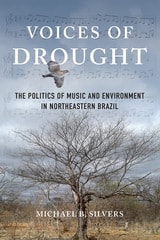
Voices of Drought
The Politics of Music and Environment in Northeastern BrazilMichael B. Silvers
University of Illinois Press, 2018
Silvers offers case studies focused on the sertão that range from the Brazilian wax harvested in Ceará for use in early wax cylinder sound recordings to the drought- and austerity-related cancellation of Carnival celebrations in 2014-16. Unearthing links between music and the environmental and social costs of drought, his daring synthesis explores ecological exile, poverty, and unequal access to water resources alongside issues like corruption, prejudice, unbridled capitalism, and expanding neoliberalism.