Results by title
1214 books match the query 'Subjects & Themes' and 16 start with v
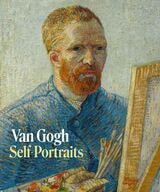
Van Gogh. Self-Portraits
Edited by Karen Serres
Paul Holberton Publishing, 2022
This volume accompanies an exhibition at London’s Courtauld Gallery, the first to explore the full chronological range of Vincent van Gogh’s self-portraits.
The myth of Van Gogh today is linked as much to his extraordinary life as it is to his world-famous paintings. His biography has often shaped the way his self-portraits have been (mis)understood. Spanning his entire career, this volume explores these highly personal paintings, analyzing the artist’s self-representation in context to reveal the role it plays in his oeuvre. Of particular interest is the striking way the evolution of Van Gogh’s self-representation can be seen as a microcosm of his development as a painter.
In addition to the celebrated Self-Portrait with Bandaged Ear, the exhibition showcases a group of major masterpieces brought together from international collections, including the Van Gogh Museum in Amsterdam, the Musee d’Orsay in Paris, the Art Institute of Chicago, and the National Gallery of Art in Washington, DC, among others. Beautifully illustrated, this exhibition companion includes detailed entries on each work, an appendix illustrating all of Van Gogh’s self-portraits, and three insightful essays on the theme.
Vega’s Fugitive
PoemsMarina Tsvetaeva, Alyssa Dinega Gillespie
Northwestern University Press, 2027
An incandescent new collected translation of virtuosic Russian poet Marina Tsvetaeva
Marina Tsvetaeva needs no introduction—a poetic genius, she is one of the most gifted and original poets in the Russian literary canon. All the verse genres Tsvetaeva employed, including lyric poems, poetic cycles, and long narrative poems, are represented here, in Vega’s Fugitive, translated by award-winning translator and Tsvetaeva scholar Alyssa Dinega Gillespie. Tsvetaeva’s poems, some never-before translated, appear in potent English versions that are both highly faithful to the originals and lyrical in their own right. As a result, Tsvetaeva’s verse—with its driving rhythms, striking sound plays, and searing insights—is reborn in a new language and new constellations of meaning. These poems dive fearlessly into themes of place, time, and distance; the female body; the poet’s fate; desire and longing; grief, loss, and immortality. Vega’s Fugitive makes Tsvetaeva’s masterful work not just accessible, but unforgettable for English-language readers around the world.
Velvet
PoemsWilliam Fargason
Northwestern University Press, 2024
Velvet, the second full-length collection from award-winning poet William Fargason, explores chronic illness, patriarchal abuse, intergenerational trauma, and racial inequality in the American South. Its speaker moves through the generations that preceded him to understand himself, and to heal from traumas both inherited and lived. As part of that heritage, the speaker confronts a family history of participation in racist ideologies and organizations to make sense of his own place within, and responsibility to, this history. In the titular lyric essay, “Velvet,” Fargason braids scientific research and YouTube videos in an attempt to forge paths for healing while contending with an inherited chronic disease. Ultimately, Velvet argues against traditional forms of toxic masculinity and suggests that vulnerability, soft and bleeding as the velvet on a deer’s antlers, offers one solution to it.
Venus in Fur
A PlayDavid Ives
Northwestern University Press, 2012
An unsettling drama, a playful comedy, and an exploration of gender roles and sexuality, Venus in Fur is a witty, dark look at the art of acting—onstage and off.
A young playwright, Thomas, has written an adaptation of the 1870 novel Venus in Fur by Leopold von Sacher-Masoch (after whom the term “masochism” was coined); the novel is the story of an obsessive adulterous relationship between a man and the mistress to whom he becomes enslaved. At the end of a long day in which the actresses Thomas auditions fail to impress him, in walks Vanda, very late and seemingly clueless, but she convinces him to give her a chance. As they perform scenes from Thomas’s play, and Vanda the actor and Vanda the character gradually take control of the audition, the lines between writer, actor, director, and character begin to blur.
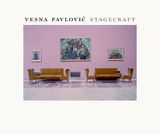
Vesna Pavlovic
StagecraftVesna Pavlovic
Vanderbilt University Press, 2021
The book includes critical essays that contextualize and expound on Pavlović's unique treatment of the photographic medium, in which a photographic moment is expanded to include the conditions of image making, production, documentation, and representation.
Vespers
Lewty, Jane
University of Iowa Press, 2026
Often called “evening prayer,” vespers is held around sunset. Its purpose: to give thanks for the day and offer a sacrifice of praise to God. In Jane Lewty’s Vespers, she superimposes the tropes of the Christian ritual onto a very different type of sacrifice—that of making art.
Through nightly devotion, the speaker of these poems maps ritual until it degrades: the speaker as an obedient robot, a scribe-concubine, a centaur wearing skates, a poet seeking virtuosity and dexterity. Vespers asks: What if writing prompts are a bad idea? What if one could become addicted to the incremental process? Is it possible to walk away from an addiction without suffering and trauma?
Vespers
Contemporary American Poems of Religion and SpiritualityVirgil Suarez
University of Iowa Press, 2003
At the heart of human existence lie fundamental questions that are pondered by philosophers, theologians, poets and thoughtful people from all walks of life. What is the meaning of life? Who or what is a divine being? How can a benevolent deity justify human suffering? Such questions are especially relevant to our lives in the current climate of American society. In Vespers: American Poems of Religion and Spirituality, editors Virgil Suárez and Ryan G. Van Cleave offer the reading world a timely anthology of powerful and passionate poems that cut to the heart of our contemporary theological and spiritual underpinnings.
Featuring fifty of today's most respected American poets, including Pulitzer Prize winners Stephen Dunn and Carolyn Kizer, Vespers allows us to witness and understand the challenging ideas and philosophies surrounding religion and spirituality. Through these poems, we can come to a better understanding of who, what, and why we are.
From deathbed spirituals to initiation songs, transformative ballads to transcendent sonnets, poets of myriad backgrounds—Native American, African American, Asian American, Latino, Protestant, Buddhist, Catholic, Jewish—echo the thoughts, concerns, and fears that linger in our souls. Their poems help us realize that we are not alone, that we're never truly alone, that even in the face of darkness the world is vibrant, beautiful, joyous.
More than a creative exploration of theological concerns—Vespers is a roadmap of where we've been, where we are, and where we are heading in terms of our spiritual and religious existence. It will keep you company, good company, whatever your religious or spiritual background.
Virgin Crossing Borders
Feminist Resistance and Solidarity in TranslationEmek Ergun
University of Illinois Press, 2023
Ergun’s comparative framework reveals translation’s potential to facilitate cross-border flows of feminist theories, empower feminist interventions, connect feminist activists across differences and divides, and forge transnational feminist solidarities. As she considers hopeful and woeful pictures of border crossings, Ergun invites readers to revise their views of translation’s role in transnational feminism and examine their own potential as ethically and politically responsible agents willing to search for new meanings.
Sophisticated and compelling, Virgin Crossing Borders reveals translation’s vital role in exchanges of feminist theories, stories, and knowledge.
Virginia Woolf’s Mythic Method
Amy C. Smith
The Ohio State University Press, 2022
Virtuous Citizens
Counterpublics and Sociopolitical Agency in Transatlantic LiteratureKendall McClellan
University of Alabama Press, 2021
Transatlantic Perspectives on Civic Identity and Political Participation.
The rise of the bourgeois public sphere and the contemporaneous appearance of counterpublics in the eighteenth century deeply influenced not only how politicians and philosophers understood the relationships among citizens, disenfranchised subjects, and the state but also how members of the polity understood themselves. In Virtuous Citizens: Counterpublics and Sociopolitical Agency in Transatlantic Literature, Kendall McClellan uncovers a fundamental and still redolent transformation in conceptions of civic identity that occurred over the course of the eighteenth and nineteenth centuries. Literature of this period exposes an emotional investment in questions of civic selfhood born out of concern for national stability and power, which were considered products of both economic strength and a nation’s moral fiber. McClellan shows how these debates traversed the Atlantic to become a prominent component of early American literature, evident in works by James Fenimore Cooper, Catharine Maria Sedgwick, Sarah Josepha Hale, and Harriet Beecher Stowe, among others.
Underlying popular opinion about who could participate in the political public, McClellan argues, was an impassioned rhetorical wrestling match over the right and wrong ways to demonstrate civic virtue. Relying on long-established tropes of republican virtue that lauded self-sacrifice and disregard for personal safety, abolitionist writers represented loyalty to an ideals-based community as the surest safeguard of both private and public virtue. This evolution in civic virtue sanctioned acts of protest against the state, offered disenfranchised citizens a role in politics, and helped usher in the modern transnational public sphere.
Virtuous Citizens shows that the modern public sphere has always constituted a vital and powerful space for those invested in addressing injustice and expanding democracy. To illuminate some of the fundamental issues underlying today’s sociopolitical unrest, McClellan traces the transatlantic origins of questions still central to the representation of movements like Black Lives Matter, the Women’s March, and the Alt-Right: What is the primary loyalty of a virtuous citizen? Are patriots those who defend the current government against attacks, external and internal, or those who challenge the government to fulfill sociopolitical ideals?
Visionary of the Word
Melville and ReligionEdited by Jonathan A. Cook and Brian Yothers
Northwestern University Press, 2017
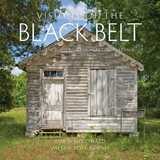
Visions of the Black Belt
A Cultural Survey of the Heart of AlabamaRobin McDonald and Valerie Pope Burnes
University of Alabama Press, 2015
Capturing the soul of the South’s Black Belt.
In Visions of the Black Belt, Robin McDonald and Valerie Pope Burnes offer a richly illustrated tour of the Black Belt, the fertile arc that represents the cultural efflorescence of Alabama’s heartland. Like knowledgeable friends, McDonald and Burnes guide readers through the Black Belt’s towns and architecture and introduce the region’s great panoply of citizens, farmers, craftspeople, cooks, writers, and musicians.
A constellation of Black Belt towns arose during Alabama’s territorial decades, communities like Selma, Camden, Eutaw, Tuskegee, Greenville, and many more. Visions of the Black Belt recounts their stories and others, such as Demopolis’s founding by exiles from Napoleon’s France. As an escarpment of clouds scuds across an indigo sky, the ruins of Alabama’s lost capital of Cahaba reveal the secrets of its lost squares. Also on this picturesque tour are the Black Belt’s homes, from artless cabins wreathed in fern to ozymandian manses wrapped by stately columns, such as Kirkwood and Reverie.
Among the emblematic houses of worship lovingly photographed in Visions of the Black Belt is Prairieville’s St. Andrew’s Episcopal Church, noted for its “carpenter gothic” style. Also reflecting the region’s history of faith are poignant graveyards such as Greenville’s Pioneer Cemetery with its homespun memorials of seashell-and-concrete and the elegant marbles clad in ebon lichen of Selma's Live Oak Cemetery.
In photos and text, McDonald and Burnes bring to life the layers of history that shaped the Black Belt’s tastes, sounds, and colors. Their gastronomic discoveries include the picant crawfish of the Faunsdale Bar & Grill and GainesRidge Dining Club’s famed Black Bottom pie. They bring the sounds of the Black Belt to life by presenting a wide range of musicians and musical events, from bona fide blues and soul masters to Eutaw’s Black Belt Roots Festival.
Including two maps and more than 370 full-color photographs, Visions of the Black Belt offers a timeless message of faith, determination, and the rich simplicity of living in harmony with the rhythms of the land and nature.
Published in Cooperation with the Black Belt Treasures Cultural Arts Center, Camden, Alabama.
Voegelinian Readings of Modern Literature
Edited by Charles R. Embry
University of Missouri Press, 2011
For Voegelinian Readings of Modern Literature, scholar Charles R. Embry has collected essays that consider particular pieces of literature in light of the philosopher’s work. These essays supply a theoretical grounding for the reading of novels, poems, and plays and reveal how the Voegelinian perspective exposes the existential and philosophical dimensions of the literary works themselves. As a unit, this collection of essays shows how modern pieces of literature can symbolize their creators’ participation in the human search for the truth of existence—just as myths, philosophical works, and religious texts always have.
Voegelin’s primary concern as a philosopher was to expose the roots of the disturbances of the modern era—religious conflict, imperialism, war—so that the sources of order leading to meaning are revealed. The openness of Voegelinian thought and the many ways he considered the levels of reality generate intriguing themes for literary criticism. In these essays, noted Voegelin scholars focus on American and European literary artists from the 1700s through the late twentieth century, including Emily Dickinson, Henrik Ibsen, Thomas Carlyle, D. H. Lawrence, Marcel Proust, and Hermann Broch.
While the intersection of the work of Eric Voegelin and literature has been a part of Voegelin scholarship for decades, this book explores that relationship in an extended form. Through a broad collection of thoughtful essays, Voegelinian Readings of Modern Literature reveals how much Voegelin did to break down the barriers between literature and philosophy and makes an engaging contribution to Voegelin scholarship.
Voices From the Meadow of the Mind of the Wandering Spirit
David J. Jude
Michigan Publishing Services, 2024
Vulnerability Index
PoemsElizabeth Robinson
Northwestern University Press, 2026
During Elizabeth Robinson’s six years working with chronically unhoused people in Boulder, Colorado, her relationships with the community’s most vulnerable deepened—even as they were filtered through a web of paperwork, systems, and strictures. The Vulnerability Index questionnaire is just one such system. Ubiquitous in shelters across America, it is representative of the endless tasks that people living on the street must complete to receive even minor assistance.
Moving between the local court, jail, shelter, and soup kitchen, Robinson’s poems capture the strange juxtapositions of the intimate, bureaucratic, and absurd that such spaces demand: a frostbite victim wants to share his state-sponsored recovery room with a friend from the street, a domestic violence survivor must change her name and even her social security number, an unhoused activist joins a vigil for another woman only to discover that she is, mistakenly, the person being mourned. Spare yet richly empathetic, Robinson’s verse works to implicate the reader’s own vulnerability on every page.
vanishing point.
Kimberly Reyes
Omnidawn, 2023
Through her latest collection, Kimberly Reyes navigates the physical, hereditary, and liminal worlds between land, time, and memory. The poems in vanishing point. take us to San Francisco, Ireland, and the Atlantic Ocean, reclaiming and examining contested space as the poet seeks to revive left-behind histories, reconsider what we see, and reveal what we cannot see.