Results by title
1295 books match the query 'Women authors' and 16 start with v

Vasto Pensamiento, Vast Thought
Latinas in the Nineteenth-Century California PressVanessa Ovalle Perez
Amherst College Press, 2027
Following the California Gold Rush, writing by local Latinas was increasingly published in the California Spanish-language press, including many women who were not wealthy or of elite social standing. In Vasto Pensamiento, Vast Thought: Latinas in the Nineteenth-Century California Press, Vanessa Ovalle Perez identifies a diverse selection of Latina voices, focusing particularly on social justice messages and creative works. She traces how Latinas leveraged rhetorical strategies that were both socially performative and literary in a culturally specific Latinx context. In the oscillation between expressions of intimacy and self-conscious cultural and social positioning, these women sought platforms for both their personal ambitions and social justice causes. Taking an intersectional feminist approach paired with deep historical investigation, Vasto Pensamiento, Vast Thought centers the words and stories of these women writers and public speakers, providing transcriptions and translations of numerous key texts. These include Anastasia Leyva’s testimony of her brother’s lynching; speeches and toasts of women who participated in Mexican Patriotic Assemblies; fiction and poetry of sisters Guadalupe and Carlota Gutierrez; and verses by the anonymous poet “Josefina.” These texts offer insight related to nineteenth-century Latina personal and political investments across both sides of the border, allowing us to see the connectedness of rhetorical strategy and Latina self-fashioning in the public sphere.
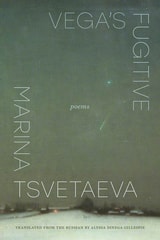
Vega’s Fugitive
PoemsMarina Tsvetaeva, Alyssa Dinega Gillespie
Northwestern University Press, 2027
An incandescent new collected translation of virtuosic Russian poet Marina Tsvetaeva
Marina Tsvetaeva needs no introduction—a poetic genius, she is one of the most gifted and original poets in the Russian literary canon. All the verse genres Tsvetaeva employed, including lyric poems, poetic cycles, and long narrative poems, are represented here, in Vega’s Fugitive, translated by award-winning translator and Tsvetaeva scholar Alyssa Dinega Gillespie. Tsvetaeva’s poems, some never-before translated, appear in potent English versions that are both highly faithful to the originals and lyrical in their own right. As a result, Tsvetaeva’s verse—with its driving rhythms, striking sound plays, and searing insights—is reborn in a new language and new constellations of meaning. These poems dive fearlessly into themes of place, time, and distance; the female body; the poet’s fate; desire and longing; grief, loss, and immortality. Vega’s Fugitive makes Tsvetaeva’s masterful work not just accessible, but unforgettable for English-language readers around the world.
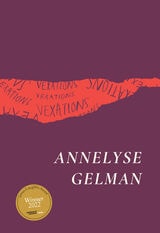
Vexations
Annelyse Gelman
University of Chicago Press, 2023
Annelyse Gelman’s book-length poem Vexations is a surreal, glitchy meditation on empathy, ecology, and precarity. Throughout the book winds a narrative about a mother and daughter as they move through a world of social and economic collapse in search of a post-capitalist safe haven. All the while, they also navigate a condition that affects the daughter’s empathic abilities, making her vulnerable to emotional contagion.
Vexations is titled and structured after Erik Satie’s composition of the same name, a piece that requires patience, endurance, and concentration from both its audience and its players. Similarly, Gelman’s Vexations employs repetition and variation to engage the reader’s attention. Hers is an ambient poetry, drawing on the aesthetic qualities of drone music and sampling voices and sounds to create a lush literary backdrop filled with pulsing psychedelic detail.
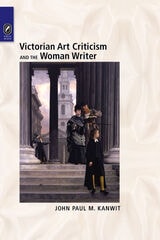
Victorian Art Criticism and the Woman Writer
John Paul M. Kanwit
The Ohio State University Press, 2013
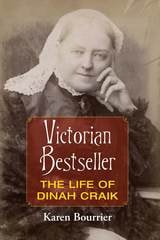
Victorian Bestseller
The Life of Dinah CraikKaren Bourrier
University of Michigan Press, 2019
Victorian Bestseller is the first book to relate the story of Dinah Craik’s remarkable life. Combining extensive archival work with theoretical work in disability studies and the professionalization of women’s authorship, Karen Bourrier engagingly traces the contours of this author’s life. Craik, who wrote extensively about disability in her work, was no stranger to it in her personal and professional life, marked by experiences of mental and physical disability, and the ebb and flow of health. Following scholarship in the ethics of care and disability studies, the book posits Craik as an interdependent subject, placing her within a network of writers, publishers, editors and artists, friends, and family members. Victorian Bestseller also traces the conditions in the material history of the book that allowed Victorian women writers’ careers to flourish. In doing so, the biography connects corporeality, gender, and the material history of the book to the professionalization of Victorian women’s authorship.
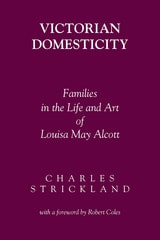
Victorian Domesticity
Families in the Life and Art of Louisa May AlcottCharles Strickland
University of Alabama Press, 1985
The subject of Victorian Domesticity is family life in America. The life and works of Louisa May Alcott served as the vehicle for exploring and analyzing this subject. Although Alcott was deeply influenced by popular currents of sentimentality, her own experience exposed her to the confusions and contradictions generated when sentiment confronted the reality of life in 19th-century America.
In the first chapter Strickland outlines the ways in which sentimentality colored the perception of 19th-century Americans about such issues as courtship, marriage, the relationship between the sexes, generational relationships, and the relationship between the nuclear family and the community outside the family. Chapters two and three trace Alcott’s childhood and adolescent experiences, exploring the tensions that developed between Louisa and her father, and detailing the ways in which she carried the double burden of being both poor and female as she sought her identity as a writer.
The following six chapters treat the varieties of family life that appear in Alcott’s stories, the impact of feminism on her life, and her emphasis on the importance of child nurture. In the final two chapters the author treats the relationships that Alcott perceived between the family and the world around it and assesses the legacy of the Victorian family idea.
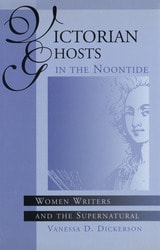
Victorian Ghosts in the Noontide
Women Writers and the SupernaturalVanessa D. Dickerson
University of Missouri Press, 1996
During the nineteenth century, British society was making rapid advancements in science and technology. While the men became materially productive, women were expected to be the fulcrums of society's changes. As one means of adjusting to these changes, many women focused on supernaturalism and spirituality.
In Victorian Ghosts in the Noontide, Vanessa D. Dickerson analyzes women's spirituality in a materialistic age by examining the supernatural fiction of Charlotte and Emily Brontë, Elizabeth Gaskell, and George Eliot and provides interpretive readings of familiar texts like Jane Eyre and Wuthering Heights. Other works by lesser-known authors are also examined.
Technological advances eliminated many of the jobs women were accustomed to doing. This left women looking for their place in society. A sense of "in-betweenness" developed in these women who were now expected to attend not only to the physical but also to the moral and spiritual needs of the family. As an answer to this "in-betweenness" some channeled their power toward the art of writing. Because people in the mid-1800s were so thoroughly engaged in scientific thought and advancements, supernatural folklore and spirituality were disreputable ideas for anyone, especially women, to explore. Ghosts and spirits were tied to old-wives' tales, superstitions, and legends. However, by focusing on these concepts and using fiction as an outlet, women were able to make great strides in being seen and heard. The art of writing functioned as an exploration of their spiritualism in which women discovered expression, freedom, and power.
This perceptive, well-written book will add a new dimension to our understanding of women's supernatural writings of the Victorian era. Scholars of Victorian literature, women's studies, and popular culture will benefit from its insights.
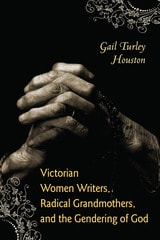
Victorian Women Writers, Radical Grandmothers, and the Gendering of God
Gail Turley Houston
The Ohio State University Press, 2013
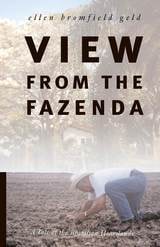
View from the Fazenda
A Tale of the Brazilian HeartlandsEllen Bromfield Geld
Ohio University Press, 2012
“I imagine everyone has a center of gravity,” says Ellen Bromfield Geld. “Something which binds one to the earth and gives sense and direction to what one does.” For Ellen, this center is a writing table before a window that looks out upon groves of pecan trees and mahogany-colored cattle in seas of grass. The place is Fazenda Pau D’Alho, Brazil, where she and her husband, Carson, have lived and farmed since 1961.
Healing the ravaged coffee plantation, rearing five children, exploring the outposts, the Gelds have created a dynamic yet peaceful life far from Ellen’s native Ohio. Their practice of sustainable agriculture, and Ellen’s plea for the preservation of Brazil’s remaining wilderness areas, reflect the legacy of her father, the novelist and farm visionary Louis Bromfield. Their shared vision is crystallized in her account of a cattle drive across the Pantanal, the vast flood plain on Brazil’s side of the Paraguay River. She describes a two-hundred year symbiosis between ranchers and a fragile ecosystem that is being threatened by development.
View from the Fazenda is distilled from fifty years of living in Brazil, weaving daily life on the farm into her quest to understand a nation. It portrays a true melting pot of people who—as conquerers, immigrants, or slaves, their blood and history mingled with those of native Indians—have created the character of Brazil. This huge, diverse county, living in several eras at the same time, is ever changing through its people’s amazing ability to “find a way.”
Ellen Bromfield Geld evokes the land and people of Brazil and offers readers an invigorating glimpse into a soulful life. “It seems to me that being a bit of a poet is perhaps the only way one can survive as a farmer,” she explains. “For in the end, more than anything, farming is a way of life you either love or become bitter enduring.”
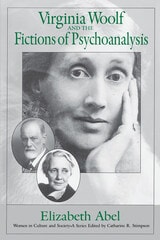
Virginia Woolf and the Fictions of Psychoanalysis
Elizabeth Abel
University of Chicago Press, 1989
"Virginia Woolf and the Fictions of Psychoanalysis brings Woolf's extraordinary craftsmanship back into view; the book combines powerful claims about sexual politics and intellectual history with the sort of meticulous, imaginative close reading that leaves us, simply, seeing much more in Woolf's words than we did before. It is the most exciting book on Woolf to come along in some time."—Lisa Ruddick, Modern Philology

Vision/Re-Vision
Adapting Contemporary American Fiction To FilmBarbara Tepa Lupack
University of Wisconsin Press, 1996
The essays in Vision/Re-Vision analyze in detail ten popular and important films adapted from contemporary American fiction by women, addressing the ways in which the writers' latent or overt feminist messages are reinterpreted by the filmmakers who bring them to the screen, demonstrating that there is much to praise as well as much to fault in the adaptations and that the process of adaptation itself is instructive rather than destructive, since it enriches understanding about both media.
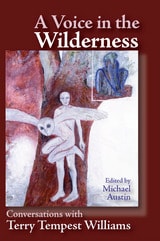
Voice in the Wilderness
Conversations with Terry Tempest Williamsedited by Michael Austin
Utah State University Press, 2006
In her writings, Terry Tempest Williams repeatedly invites us as readers into engagement and conversation with both her and her subject matter, whether it is nature or society, environment or art. From her evocation, in Desert Quartet: An Erotic Landscape, of an eroticism of place that defines erotic as "in relation," to the spiritual connectivity and familial bonds she explores in Refuge: An Unnatural History of Family and Place and the political engagement she urges in The Open Space of Democracy, much of her work is about relationship, connection, and community. Like much good writing, her books invite readers into thoughtful dialogue with the text. Frequently in demand for workshops, lectures, and other speaking venues and well known as an environmental activist, Williams has a public persona and voice almost indistinguishable from her written ones.
Thus, the interviews she has often granted--in print, on the radio, on the Web--seamlessly elaborate the ideas and extend the explorations of her written texts. They also tell us much about the genesis, context, and intent of her books. With her distinctive, impassioned voice and familiar felicity of language, she talks about wilderness and wildlife, place and eroticism, art and literature, democracy and politics, family and heritage, Mormonism and religion, writing and creativity, and other subjects that engage her agile mind. The set of interviews gathered and introduced by Michael Austin in A Voice in the Wilderness represent the span of Terry Tempest Williams's career as a naturalist, author, and activist.
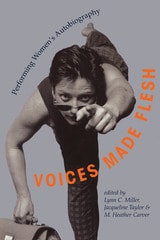
Voices Made Flesh
Performing Women'S AutobiographyLynn C. Miller
University of Wisconsin Press, 2003
Fourteen bold, dynamic, and daring women take the stage in this collection of women's lives and stories. Individually and collectively, these writers and performers speak the unspoken and perform the heretofore unperformed.
The first section includes scripts and essays about performances of the lives of Gertrude Stein, Georgia O'Keeffe, Mary Church Terrell, Charlotte Cushman, Anaïs Nin, Calamity Jane, and Mary Martin. The essays consider intriguing interpretive issues that arise when a woman performer represents another woman's life. In the second section, seven performers—Tami Spry, Jacqueline Taylor, Linda Park-Fuller, Joni Jones, Terri Galloway, Linda M. Montano, and Laila Farah—tell their own stories. Ranging from narrrative lectures (sometimes aided by slides and props) to theatrical performances, their works wrest comic and dramatic meaning from a world too often chaotic and painful. Their performances engage issues of sexual orientation, ethnicity, race, loss of parent, disability, life and death, and war and peace. The volume as a whole highlights issues of representation, identity, and staging in autobiographical performance. It examines the links among theory and criticism of women's autobiography, feminist performance theory, and performance practice.
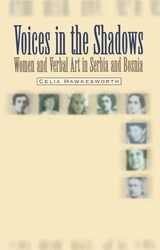
Voices in the Shadows
Women and Verbal Art in Serbia and BosniaCelia Hawkesworth
Central European University Press, 2000
Women are conspicuously absent from traditional cultural histories of south-east Europe. This book addresses that imbalance by describing the contribution of women to literary culture in the Orthodox/ Ottoman areas of Serbia and Bosnia.
The first complete literary history in relation to women's writing in south-east Europe. The author provides a broad chronological account of this contribution, dividing the book into two main parts; the earlier period up until the eighteenth century concentrates on the projections of gender through the medium of oral tradition and the lives of a handful of educated women in medieval Serbia and the few works of literature they left. Hawkesworth also looks at the written literature produced by women, first in the mid-nineteenth century and then at the turn of the century. The second part focuses on the trials and tribulations that affected feminism and women's literature throughout the twentieth century. The author finishes by highlighting the new women's movement, 1975-1990, a great period for women in Yugoslavia which created a stimulating atmosphere for outstanding pieces of women's journalism, prose and verse, culminating in the creation of new women's studies courses in many universities.
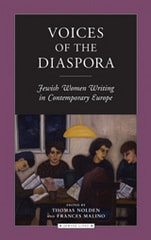
Voices of the Diaspora
Jewish Women Writing in Contemporary EuropeThomas Nolden
Northwestern University Press, 2005
At the same time, these writers address themes specific to their national contexts. Berlin-born Barbara Honigmann questions the possibility of Jewish life in the country responsible for the "final solution." Maghreb-born Marlène Amar and Reina Roffé address the experiences of displacement and emancipation as Sephardic women in Western, post-colonial societies. Clara Sereni describes how Jews in post-Fascist Italy reemerged with a self-assertiveness that troubled a society that had found comfort in amnesia. Ludmila Ulitskaya portrays a Jewish girlhood on the eve of Stalin's death empowered by the religious traditions of Jewish resistance.
From the unique perspective of women's literary voices, this volume reveals to English-speaking readers the extraordinary vivacity and diversity of European Jewry, and introduces them to a new generation of women writers.
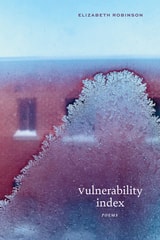
Vulnerability Index
PoemsElizabeth Robinson
Northwestern University Press, 2026
During Elizabeth Robinson’s six years working with chronically unhoused people in Boulder, Colorado, her relationships with the community’s most vulnerable deepened—even as they were filtered through a web of paperwork, systems, and strictures. The Vulnerability Index questionnaire is just one such system. Ubiquitous in shelters across America, it is representative of the endless tasks that people living on the street must complete to receive even minor assistance.
Moving between the local court, jail, shelter, and soup kitchen, Robinson’s poems capture the strange juxtapositions of the intimate, bureaucratic, and absurd that such spaces demand: a frostbite victim wants to share his state-sponsored recovery room with a friend from the street, a domestic violence survivor must change her name and even her social security number, an unhoused activist joins a vigil for another woman only to discover that she is, mistakenly, the person being mourned. Spare yet richly empathetic, Robinson’s verse works to implicate the reader’s own vulnerability on every page.