Results by title
18284 books match the query 'United States' and 122 start with v
Voices and Votes Teacher's Guide
How Democracy Works in Wisconsin TGJon Kasparek and Bobbie Malone
Wisconsin Historical Society Press, 2006
Voices and Votes: How Democracy Works in Wisconsin; Teacher's Guide and Student Materials features several activities for each chapter to engage students in a more in-depth exploration of the book. These activities, designed for both individual and small groups, demand the use of higher-level thinking skills while integrating a wide range of learning styles, and all have culminating components that can be used for assessment. The guide also features easily reproducible student pages, including maps, charts, and interesting illustrations.
Voices and Votes
How Democracy Works in WisconsinJon Kasparek
Wisconsin Historical Society Press, 2006
Voices & Votes: How Democracy Works in Wisconsin invites upper elementary school students to explore the intersection of American civics and Wisconsin history. This sixth and final book in the New Badger History series introduces students to the basic structures of American democracy, state government, and Wisconsin's road to statehood. The first seven chapters help students grasp how the three branches of government function at the federal, state, local, and tribal levels, while tying these structural notions to Wisconsin history. Students will learn that citizens' voices and votes help government evolve to meet ever-changing societal needs. The last chapter emphasizes how young people can actively engage in their communities to bring about positive change.
Voices and Votes
How Government Works in WisconsinWisconsin Historical Society Press, 2025
What are the different levels of government in Wisconsin? How are laws made? What is a political party? Who is allowed to vote in elections? How can citizens get involved in their communities?
These questions and many more are answered in this revised and updated edition of Voices and Votes, aimed at students in grades 3–5. Filled with color photos and illustrations—as well as diagrams, maps, and vocabulary words that make the material easy to absorb—this book explores:
- The fundamentals of federal, state, local, and Tribal government
- How Wisconsin’s constitution was created and how it has changed
- The way elections work and why voting matters
Readers will also find compelling examples of citizens from our state’s past who spoke up and worked to change laws and policies in order to improve their communities, including:
- Gaylord Nelson, who advocated for the environment as a state senator, member of Congress, and governor
- Vel Phillips, who helped expand housing opportunities as a member of Milwaukee’s city council
- Jesus Salas, who worked with state agencies to improve the lives of migrant farmworkers in Wisconsin
The book also offers contemporary stories of young people engaging with their communities, working to solve problems, and sharing their voices. This brilliantly updated edition of Voices and Votes will inspire a new generation of readers to understand and participate in our democracy.
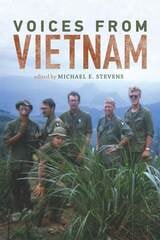
Voices from Vietnam
Michael E. Stevens
Wisconsin Historical Society Press, 1996
An unforgettable collection of 174 letters and diary entries written by 92 wisconsin men and women who served in Vietnam. Includes a journal kept by Menasha native Frederic Flom on cigarette wrappers during his final 16 days of captivity — the only known diary smuggled out by a Vietnam prisoner of war.
Voices from the Heart of the Land
Rural Stories that Inspire CommunityRichard L. Cates Jr.
University of Wisconsin Press, 2008
Voices from the Wild Horse Desert
The Vaquero Families of the King and Kenedy RanchesBy Jane Clements Monday and Betty Bailey Colley
University of Texas Press, 1997
Founded before the Civil War, the King and Kenedy Ranches have become legendary for their size, their wealth, and their endless herds of cattle. A major factor in the longevity of these ranches has always been the loyal workforce of vaqueros (Mexican and Mexican American cowboys) and their families. Some of the vaquero families have worked on the ranches through five or six generations.
In this book, Jane Clements Monday and Betty Bailey Colley bring together the voices of these men and women who make ranching possible in the Wild Horse Desert. From 1989 to 1995, the authors interviewed more than sixty members of vaquero families, ranging in age from 20 to 93. Their words provide a panoramic view of ranch work and life that spans most of the twentieth century.
The vaqueros and their families describe all aspects of life on the ranches, from working cattle and doing many kinds of ranch maintenance to the home chores of raising children, cooking, and cleaning. The elders recall a life of endless manual labor that nonetheless afforded the satisfaction of jobs done with skill and pride. The younger people describe how modernization has affected the ranches and changed the lifeways of the people who work there.
Voices in the Wilderness
Public Discourse and the Paradox of Puritan RhetoricPatricia Roberts-Miller
University of Alabama Press, 1999
Both Jürgen Habermas and Wayne Booth—two of the most influential theorists in the domain of public discourse and good citizenry—argue for an inclusive public deliberation that involves people who are willing to listen to one another, to identify points of agreement and disagreement, and to make good faith attempts to validate any disputed claims. The Puritan voice crying in the wilderness, Roberts-Miller shows, does none of these things. To this individual of conscience engaged in a ceaseless battle of right and wrong against greedy philistines, all inclusion, mediation, and reciprocity are seen as evil, corrupting, and unnecessary. Hence, the voice in the wilderness does not in any real sense participate in public deliberation, only in public pronouncement.
Arguing that our culture’s continuing affection for the ethos of the voice crying in the wilderness is one of our more troubling inheritances from the early American ambivalence to public discourse—including the Puritan denigration of rhetoric—Roberts-Miller contends that the monologic discourse of the Puritans in fact contains within it arguments for dialogism. Thus, the history of rhetoric can provide much richer fields for reimagining discourse than heretofore credited. Roberts-Miller concludes by extending her findings into their practical applications for argumentation in the public sphere and in the composition classroom.

Voices of Mental Health
Medicine, Politics, and American Culture, 1970-2000Halliwell, Martin
Rutgers University Press, 2017
Together, these three dimensions bring into conversation a diverse cast of late-century writers, filmmakers, actors, physicians, politicians, policy-makers, and social critics. In doing so, Martin Halliwell’s Voices of Mental Health breaks new ground in deepening our understanding of the place, politics, and trajectory of mental health from the moon landing to the millennium.

Voices of the Jazz Age
Profiles of Eight Vintage JazzmenChip Deffaa
University of Illinois Press, 1990
Voicing America
Language, Literary Form, and the Origins of the United StatesChristopher Looby
University of Chicago Press, 1996

Volatile States
Institutions, Policy, and the Performance of American State EconomiesW. Mark Crain
University of Michigan Press, 2003
Volksgeist as Method and Ethic
Essays on Boasian Ethnography and the German Anthropological TraditionEdited by George W. Stocking, Jr.
University of Wisconsin Press, 1998
Volunteer Forty-Niners
Tennesseans and the California Gold RushWalter T. Durham
Vanderbilt University Press, 1997
In Volunteer Forty-Niners, Walter T. Durham provides the first comprehensive examination of the role Tennessee and Tennesseans played in creating a new state and a new society on the West Coast. Drawing from such archival sources and personal narratives in letters and diaries, public records, and newspaper reports, Durham has woven a wealth of information into his recounting of their adventures. He follows many of the emigrants into the mines and details the activities of others in commerce and government. In the process, he shows that Tennesseans made an enormous contribution to the beginnings of government in California. Among the many offices they held were governor, assemblyman, sheriff, state senator, secretary of state, state treasurer, controller, U.S. senator, U.S. marshal, U.S. surveyor general and Indian commissioner.
Voodoo Priests, Noble Savages, and Ozark Gypsies
The Life of Folklorist Mary Alicia OwenGreg Olson
University of Missouri Press, 2025
Folklorist Wayland Hand once called Mary Alicia Owen “the most famous American Woman Folklorist of her time.” Drawing on primary sources, such as maps, census records, court documents, personal letters and periodicals, and the scholarship of others who have analyzed various components of Owen’s multifaceted career, historian Greg Olson offers the most complete account of her life and work to date. He also offers a critical look at some of the short stories Owen penned, sometimes under the name Julia Scott, and discusses how the experience she gained as a fiction writer helped lead her to a successful career in folklore.
Olson analyzes many of the nineteenth-century theories, stereotypes, and popular beliefs that influenced the work of Owen and many of her peers. By taking a cross-disciplinary look at her works of fiction, poetry, folklore, history, and anthropology, this volume sheds new light on elements of Owen’s career that have not previously been discussed in print. Examples of the romance stories that Owen wrote for popular magazines in the 1880’s are identified and examined in the context of the time in which Owen wrote them.
This groundbreaking biography shows that Owen was more than just a folklorist—she was a nineteenth-century woman of many contradictions. She was an independent woman of many interests who possessed a keen intellect and a genuine interest in people and their stories. Specialists in folklore, anthropology, women’s studies, local and regional history, and Missouriana will find much to like in this thoroughly researched study.
Votes for Delaware Women
Anne M. Boylan
University of Delaware Press, 2021

Voting and the Spirit of American Democracy
Essays on the History of Voting and Voting Rights in AmericaEdited by Donald W. Rogers
University of Illinois Press, 1992
manner, leading historians and political scientists trace the history of American
voting from the colonial period to the present incorporating the latest scholarship
on suffrage reform, woman suffrage, black voting rights, and electoral participation.
They explain how voting practices changed over time as the result of broad historical
forces such as economic growth, demographic shifts, the results of war, and
the rise of political reform movements.
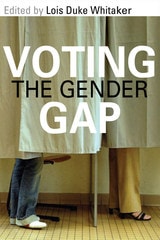
Voting the Gender Gap
Edited by Lois Duke Whitaker
University of Illinois Press, 2007
This book concentrates on the gender gap in voting--the difference in the proportion of women and men voting for the same candidate. Evident in every presidential election since 1980, this polling phenomenon reached a high of 11 percentage points in the 1996 election. The contributors discuss the history, complexity, and ways of analyzing the gender gap; the gender gap in relation to partisanship; motherhood, ethnicity, and the impact of parental status on the gender gap; and the gender gap in races involving female candidates. Voting the Gender Gap analyzes trends in voting while probing how women's political empowerment and gender affect American politics and the electoral process.
Contributors are Susan J. Carroll, Erin Cassese, Cal Clark, Janet M. Clark, M. Margaret Conway, Kathleen A. Dolan, Laurel Elder, Kathleen A. Frankovic, Steven Greene, Leonie Huddy, Mary-Kate Lizotte, Barbara Norrander, Margie Omero, and Lois Duke Whitaker.

Voting
A Study of Opinion Formation in a Presidential CampaignBernard R. Berelson, Paul F. Lazarsfeld, and William N. McPhee
University of Chicago Press, 1986
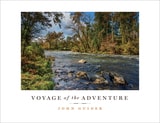
Voyage of the Adventure
Retracing the Donelson Party's Journey to the Founding of NashvilleJohn Guider
Vanderbilt University Press, 2021
This photo book contains more than 120 striking images from the course of the journey, allowing the reader to see how much has changed and how much has remained untouched in the two and a half centuries since Donelson first took to the water. Equally significant, the essays include long-ignored contemporary histories of both the Cherokee whom Donelson encountered and the slaves he brought with him, some of whom did not survive the journey.
Guider, a professional photographer, has created images of every point in the thousand-mile trip from a platform just a few feet above the waterline of three of Tennessee’s most notable rivers.

Vulgar Beauty
Acting Chinese in the Global SensoriumMila Zuo
Duke University Press, 2022
Vulgar Genres
Gay Pornographic Writing and Contemporary FictionSteven Ruszczycky
University of Chicago Press, 2021
Long fixated on visual forms, the field of porn studies is overdue for a book-length study of gay pornographic writing. Steven Ruszczycky delivers with an impressively researched work on the ways gay pornographic writing emerged as a distinct genre in the 1960s and went on to shape queer male subjectivity well into the new millennium.
Ranging over four decades, Ruszczycky draws on a large archive of pulp novels and short fiction, lifestyle magazines and journals, reviews, editorial statements, and correspondence. He puts these materials in conversation with works by a number of contemporary writers, including William Carney, Dennis Cooper, Samuel Delany, John Rechy, and Matthew Stadler. While focused on the years 1966 to 2005, Vulgar Genres reveals that the history of gay pornographic writing during this period informs much of what has happened online over the past twenty years, from cruising to the production of digital pornographic texts. The result is a milestone in porn studies and an important contribution to the history of gay life.
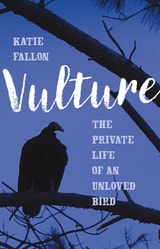
Vulture
The Private Life of an Unloved BirdKatie Fallon
University Press of New England, 2018