104 books match the query 'Animals & Nature' and 5 start with w
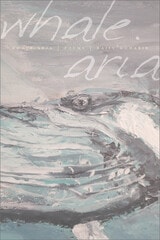
cover of Whale Aria

Whale Aria

Rajiv Mohabir

Four Way Books, 0
“For seasons I was faceless // trying to swallow constellations, / to roll a star-map on my tongue,” recounts Rajiv Mohabir’s speaker in “Boy with Baleen for Teeth.” As formally visionary and acoustically attuned as ever, Mohabir has composed an interspecies opera in Whale Aria. This collection examines the humpback whale as a zoomorphic analog of the queer, brown, migratory speaker breaching these pages; just as a person navigates postcolonial queerness across geopolitical boundaries, traveling from India to Guyana to London to New York to Honolulu, these singular cetaceans wander through disparate waters. Undersea, whales call to one another through their marine music, and, using the documented structure of humpback vocalizations, Mohabir translates the syntax of their songs into poetry. In our search for meaning, in our call and response, kinship resonates; “the echo is amniotic.” “Once you immerse yourself in unending strains / the tones will haunt you: // ghosts spouting sohars you’ve called / since childhood.” Fluid and inexorable as the ocean, Whale Aria articulates the confluence of ecological fate and human history. In “Why Whales Are Back in New York City,” Mohabir notes the coincidence of current events: humpback migration returns to Queens for the first time in a century while the state expedites deportations of undocumented people in the same burrough. The language shared by human and marine creatures in these poems, however, promise that the tides will turn. “Our songs will pierce the dark / fathoms,” Mohabir underscores the eternity of water. “Behold the miracle: // what was once lost / now leaps before you.” 
 
[more]
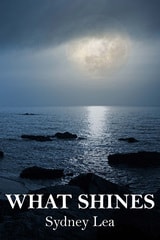
cover of What Shines

What Shines

Sydney Lea

Four Way Books, 0
Retrospective of a long life and already inimitable career in poetry, Sydney Lea’s What Shines asserts and asks in equal measure. In older age, Lea affirms the luster of fruit long labored for: a resilient and happy marriage; the rewards of parenthood and, later, grandchildren; a profound intimacy with northern New England — the environment, the seasons, the people, home, time. But he also transmits the escalating urgency of answering the fundamental question: at this late hour, what light do we have to see by? What light will outlast us? In “1949,” Lea revisits old photographs: one of his parents “both grinning straight at the Kodak, / an elm, not yet blighted to death, at their backs,” another of his mother standing beside a bucket of sunfish. “With what I’ve known, you’d think there’d be chapter on chapter,” he says, everything habitual, familiar. Still he stumbles upon revelation, the visceral novelty of experience, and Lea’s brilliant shock glimmers in the golden hour. “I shouldn’t be,” he disclaims, “and yet somehow I’m stunned: / Even the fish in that yellowed photo are young.” Despite the accelerating onset of autumn, consolations line the path “at the edge / of our late-shorn meadow,” where there lie blackberries that “should have vanished by now.” And so what if a handful will not disarm winter? “Though tiny and poor, it's sweet, / the fruit, even more so / than when I found more.” If we receive this allotment of days once and only once, Lea’s consummate collection urges us to remember the spirit of the lyric itself: although we couldn’t keep it all forever, when we had it, my God, so much of it was sweet.
[more]
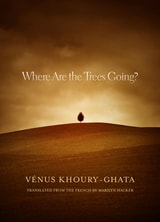
cover of Where Are the Trees Going?

Where Are the Trees Going?

Vénus Khoury-Ghata Translated from the French by Marilyn Hacker

Northwestern University Press, 2014

Longlist finalist, 2015 PEN Award for Poetry in Translation 

Bringing the work of acclaimed poet Venus Khoury-Ghata to a new generation of anglophone readers, renowned award-winning poet and translator Marilyn Hacker has rendered Khoury-Gata's highly praised collection Où vont les arbres? into unforgettable English verse. In it, Khoury-Ghata takes on perennial themes of womanhood, immigration, and cultural conflict. Characters take root in her memory as weathered trees and garden plants, lending grit and body to the imaginative collection. As bracing as the turn of seasons, Where Are the Trees Going? highlights a poet writing with renewed urgency and maturity.

Khoury-Ghata's collection has been translated into fifteen languages. In this special edition, Paris-resident Hacker has also included selections from Khoury-Ghata's short fiction collection La maison aux orties (The House of Nettles). The resulting interplay illuminates the poet’s contrasting and complementary drives toward surreal lyricism and stark narrative exposition.
[more]
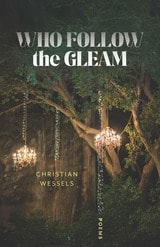
cover of Who Follow the Gleam: Poems

Who Follow the Gleam

Poems

Christian Wessels

University of Massachusetts Press, 2026

A dazzling debut that blends folklore with the everyday

Drifting between the past and present, the material and the otherworldly, Who Follow the Gleam melts lore and magic with history to shape distinctive narratives of childhood, fatherhood, and personhood. In his debut poetry collection, Christian Wessels crosses centuries and takes his readers with him to Germany’s Black Forest, burning hotels, chromatic casinos, and Long Island’s dazing Sound. Uncanny elements of folklore and dreamlike stories are grounded in the atmosphere of the natural world as Wessels turns the sun, moss, and clouds into characters connecting his poems: “maybe I myself am the sun; am / the brilliant silence engraved / in stone; am the arc / through which the future becomes / legible.”

In the world of this collection, intuition, feelings, dreams, and spells mimic cycles, patterns, rules, and structure as the speaker disappears in the magic of language, only to resurface in the everyday. In four sections, Wessels reckons with a changing world, evolving and sometimes unfamiliar, while coming to terms with the uncertain future: “The cloud looks / like me, it looks like me because / the present moves, the present moves.” This collection is a sensitive meditation on the power of passed-down knowledge—personal and collective, factual and mythical—and how such knowledge finds its embodiment in the world.
[more]
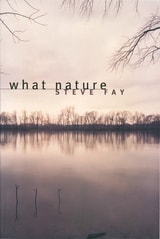
cover of what nature: Poems

what nature

Poems

Steve Fay

Northwestern University Press, 1998

what nature brings a naturalist's attentiveness to poetry. Fay combines a command of the poetic craft with rich descriptive exactness as he describes physical and psychological landscapes, particularly of his native Midwest.
[more]