Results by title
365 books match the query 'Correspondence' and 23 start with w
Walt Whitman
The Correspondence, Volume VIITed Genoways
University of Iowa Press, 2005
Now, more than forty years after the inaugural volume’s original publication, Ted Genoways brings scholars the latest volume in Walt Whitman: The Correspondence. Incorporating all of the letters Miller had collected before his death in 2001 and combining them with more than a hundred previously unknown letters he himself gathered, Genoways’s volume is a perfect accompaniment to Miller’s original work.
Among the more than one hundred fifty letters collected in this volume are numerous correspondences concerning Whitman’s Civil War years, including a letter sending John Hay, the personal secretary to Abraham Lincoln, a manuscript copy of “O Captain, My Captain!” Additional letters address various aspects of the production of Leaves of Grass, the most notable being an extensive correspondence surrounding the Deathbed Edition, gathered by Whitman’s friend Horace Traubel, and reproduced here for the first time. Most significantly, this volume at last incorporates Whitman’s early letters to Abraham Paul Leech, first published by Arthur Golden in American Literature in 1986. The revelations contained in these letters must be considered among the most important discoveries about Whitman’s life made during the last half of the twentieth century.
Regardless of whether their significance is great or small, immediate or long-term, each new piece of Whitman’s correspondence returns us to a particular moment in his life and suggests the limitless directions that remain for Whitman scholarship.
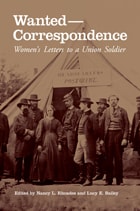
Wanted—Correspondence
Women’s Letters to a Union SoldierNancy L. Rhoades
Ohio University Press, 2009
A unique collection of more than 150 letters written to an Ohio serviceman during the American Civil War that offers glimpses of women’s lives as they waited, worked, and wrote from the Ohio home front. The letters reveal fascinating details of the lives of mostly young, single women—friends, acquaintances, love interests, and strangers who responded to one Union soldier’s advertisement for correspondents. Almost all of the women who responded to Lieutenant Edwin Lewis Lybarger’s lonely-hearts newspaper advertisement lived in Ohio and supported the Union. Lybarger carried the collection of letters throughout three years of military service, preserved them through his life, and left them to be discovered in an attic trunk more than a century after Lee’s surrender.
Women’s letter writing functioned as a form of “war work” that bolstered the spirits of enlisted men and “kinship work” that helped forge romantic relationships and sustain community bonds across the miles. While men’s letters and diaries abound in Civil War history, less readily available are comprehensive collections of letters from middle-class and rural women that survived the weathering of marches, camp life, and battles to emerge unscathed from men’s knapsacks at war’s end.
The collection is accompanied by a detailed editorial introduction that highlights significant themes in the letters. Together, they contribute to the still-unfolding historical knowledge concerning Northern women’s lives and experiences during this significant period in American history.

Wartime Washington
The Civil War Letters of Elizabeth Blair LeeEdited by Virginia Jeans Laas
University of Illinois Press, 1991
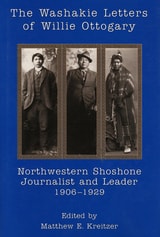
Washakie Letters Of Willie Ottogary
Matthew Kreitzer
Utah State University Press, 2000
Writings by American Indians from the early twentieth century or earlier are rare. Willie Ottogary's letters have the distinction of being firsthand reports of an Indian community's ongoing social life by a community member and leader. The Northwestern Shoshone residing at the Washakie colony in northern Utah descended from survivors of the Bear River Massacre. Most had converted to the Mormon Church and remained in northern Utah rather than moving to a federal Indian reservation. For over twenty years, local newspapers in Utah and southern Idaho regularly published letters from Ottogary reporting happenings-personal milestones and health crises, comings and goings, social events, economic conditions and activities, efforts at political redress-at Washakie and other Shoshone communities in the intermountain West.
Matthew Kreitzer compiled and edited the letters of Ottogary and added historical commentary and appendices, biographical data on individuals Ottogary mentioned, and eighty-five rare historical photographs. Written in a vernacular English and printed unedited in the newspapers, the letters describe a society in cultural transition and present Ottogary's distinctively Shoshone point of view on anything affecting his people. Thus, they provide an unusual picture of Shoshone life through a critical period, a time when many Indian communities reached a historical nadir. While the letters unflinchingly report the many difficulties and challenges the Shoshone faced, they portray a vital and dynamic society, whose members led full lives and actively pursued their own interests. Ottogary lobbied constantly for Shoshone rights, forging alliances with Shoshone throughout the region, visiting Washington D.C., advocating legislation, and participating in Goshute-Western Shoshone draft resistance during World War I.
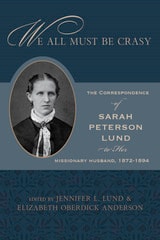
We All Must Be Crasy
The Correspondence of Sarah Peterson Lund to Her Missionary Husband, 1872–1894Jennifer L. Lund and Elizabeth Oberdick Anderson
University of Utah Press, 2026
While Latter-day Saint missionary work has been extensively studied, the experiences of the wives left behind remain relatively absent from the scholarship. We All Must Be Crasy helps fill this gap, offering a glimpse into the lived experiences of Mormon women and families during the late nineteenth century.
Through more than one hundred candid letters to her missionary husband, Sarah (Sanie) Peterson Lund reveals the private costs of missionization: strained marriages, economic hardship, shifting gender roles, and the constant need for community support. Sanie’s correspondence conveys her frustrations, anxieties, and fears alongside her pride in her children, devotion to her family, and longing for her absent husband. Her letters also show daily life in Ephraim, Utah: town gossip, vulnerabilities and ethnic tensions among residents, and reflections on plural marriage. This collection illuminates experiences only previously sketched in broad strokes, enriching our understanding of women, faith, and community in the American West.
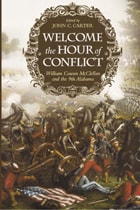
Welcome the Hour of Conflict
William Cowan McClellan and the 9th AlabamaWilliam Cowan McClellan, edited by John C. Carter
University of Alabama Press, 2007
In the Spring of 1861, a 22-year-old Alabamian did what many of his friends and colleagues were doing—he joined the Confederate Army as a volunteer. The first of his family to enlist, William Cowan McClellan, who served as a private in the 9th Alabama Infantry regiment, wrote hundreds of letters throughout the war, often penning for friends who could not write home for themselves. In the letters collected in John C. Carter’s volume, this young soldier comments on his feelings toward his commanding officers, his attitude toward military discipline and camp life, his disdain for the western Confederate armies, and his hopes and fears for the future of the Confederacy.
McClellan’s letters also contain vivid descriptions of camp life, battles, marches, picket duty, and sickness and disease in the army. The correspondence between McClellan and his family dealt with separation due to war as well as with other wartime difficulties such as food shortages, invasion, and occupation. The letters also show the rise and fall of morale on both the home front and on the battlefield, and how they were closely intertwined.
Remarkable for their humor, literacy, and matter-of-fact banter, the letters reveal the attitude a common soldier in the Army of Northern Virginia had toward the day-to-day activity and progression of the war. John C. Carter includes helpful appendixes that list the letters chronologically and offer the regimental roster, casualty/enlistment totals, assignments, and McClellan’s personal military record.
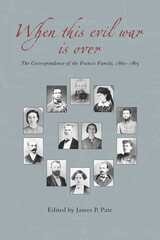
When This Evil War is Over
The Correspondence of the Francis FamilyJames P. Pate
University of Alabama Press, 2006
Six of the seven Francis brothers served in the Confederate army, as did their uncle, four servants, and other kinsmen, and all twelve members of the immediate family of Dr. James Carrington Francis and Amy Ingram Francis—as well as several members of their extended family—are represented in this volume. While the letters refer to the war and the brothers’ military service, they also shed light on this family’s struggle to survive the profound cultural, economic, and political upheaval that ensued.
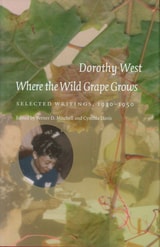
Where the Wild Grape Grows
Selected Writings, 1930–1950Dorothy West. Edited by Cynthia Davis and Verner D. Mitchell
University of Massachusetts Press, 2026
When Where the Wild Grape Grows was published in 2005 by the University of Massachusetts Press, it was the first book-length critical study of Dorothy West. Since then, the publication of more volumes on West and her circle testify to popular and academic interest in under-represented artists of the Harlem Renaissance, many of whom appeared first in West’s literary magazine, Challenge (1934-1937). Challenge included poems by West’s cousin Helene Johnson as well as by her friends Lucia Mae Pitts, Waring Cuney, Pauli Murray, Grace Walker, Mae Cowdery, Marcia Prendergast, and Bessie Calhoun Bird. West also published work by her romantic partner Marian Minus and by Juanita DeShields (the first Black Canadian graduate of McGill University) and the Trinidadian author Alfred Mendes. She included artwork by Mildred Jones and journalism by Eslanda Robeson and Dorothy Peterson. In addition to her editorial activities, West corresponded with important African American musicians including Maud Cuney Hare, Alberta Hunter, and Henry T. Burleigh, and with sculptors Augusta Savage and Richmond Barthé. Just as West mentored others, she was encouraged by such academic luminaries as Columbia Professors Blanche Colton Williams and Dorothy Scarborough, and by the controversial novelist Erskine Caldwell.
The new Introduction to Wild Grape will include fresh research on these individuals, many of whom formed part of West’s social and artistic circle. Lucia Pitts, for example, was a poet who served in the famous WAC (Women’s Army Corps) 6888th Battalion. The work of Marian Minus and Mae Cowdery has received critical attention recently and they also merit closer investigation. The Boston writer and musicologist Maud Cuney Hare was an artistic mentor to West; her cousin Waring Cuney was a close friend: both will receive more attention in the paperback edition. The artist Mildred Jones accompanied West and twenty other young African Americans to Russia in 1932 as participants in an ultimately aborted propaganda film on race relations in America; Jones studied with the important Russian Modernist painter Aleksandr Deyneka.
The original edition of Wild Grape cites two stories about West’s Russian experiences (penned under the pseudonym Mary Christopher in 1934), “Room in Red Square” and “Russian Correspondence,” but the volume does not include the actual stories. The stories are interesting because they shed light on West’s unrequited romance with Langston Hughes and her relationships with other members of the group, and they offer a unique perspective on daily life in the U.S.S.R. Both stories will be published in the new edition, along with a detailed discussion of new research about West’s visit to Russia.
A third uncollected story, “Cook” (1934), written by West under the pseudonym Jane Isaac will also be included. This story is extremely important to West’s oeuvre and her artistic development; it includes characters, themes, tropes, and plot lines that she expanded and developed in her two novels, The Living Is Easy (1948) and The Wedding (1995).
Since 2005, new material has been added to the West archive in Harvard’s Schlesinger Library. The section of Wild Grape devoted to West’s correspondence will include additional unpublished letters which underscore West’s dedication to African American art and culture.
The book includes the Benson-West family tree in Appendix II. Several scholars have expressed appreciation for this information which has not been published elsewhere; the chart will be updated to include the birth of several of West’s descendants.
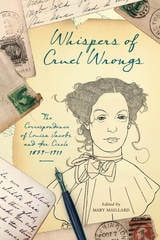
Whispers of Cruel Wrongs
The Correspondence of Louisa Jacobs and Her Circle, 1879-1911Edited by Mary Maillard
University of Wisconsin Press, 2020
New voices call out from the lost world of nineteenth-century African American women in this annotated correspondence. Unidentified for nearly one hundred years, over seventy rare letters from Louisa Jacobs, Annie Purvis, and Charlotte Forten to their friend Eugenie Webb disclose the lives of these educated, resourceful women. Jacobs taught at Howard University, ran her own small business, advocated for civil rights, cared for her ailing mother, and worked for two federal agencies. Purvis, Forten, and Webb were descendants of some of Philadelphia's earliest free black abolitionist families. Sustained by friendship and faith, these women created warm and sympathetic relationships, despite difficult family obligations and the racist strife that marked the post-Reconstruction era in Washington, Philadelphia, and New Jersey.

Widows by the Thousand
The Civil War Correspondence of Theophilus and Harriet Perry, 1862–1864M. Jane Johansson
University of Arkansas Press, 2000
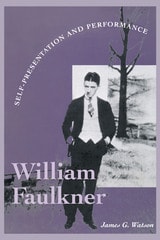
William Faulkner
Self-Presentation and PerformanceBy James G. Watson
University of Texas Press, 2000
In his life and writings, William Faulkner continually created and "performed" selves. Even in letters, he often played a part—gentleman dandy, soldier, farmer—while in his fictions these and other personae are counterpoised against one another to create a world of controlled chaos, made in Faulkner's own protean image and reflective of his own multiple sense of self.
In this groundbreaking book, James Watson draws on the entire Faulkner canon, including letters and photographs, to decipher the complicated ways in which Faulkner put himself forth as the artist he felt himself to be through written performances and displays based on the life he actually lived and the ones he imagined living. The topics Watson treats include the overtly performative aspects of The Sound and the Fury, self-presentation and performance in private records of Faulkner's life, the ways in which his complicated marriage and his relationships to male mentors underlie his fictions' recurring motifs of marriages and fatherhood, Faulkner's readings of Melville, Hawthorne, and Thoreau and the problematics of authorial sovereignty, his artist-as-God creation of a fictional cosmos, and the epistolary relationships with women that lie in the correspondence behind Requiem for a Nun.
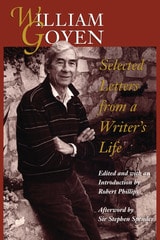
William Goyen
Selected Letters from a Writer’s LifeBy William Goyen
University of Texas Press, 1995
Proclaimed "one of the great American writers of short fiction" by the New York Times Book Review, William Goyen (1915-1983) had a quintessentially American literary career, in which national recognition came only after years of struggle to find his authentic voice, his audience, and an artistic milieu in which to create. These letters, which span the years 1937 to 1983, offer a compelling testament to what it means to be a writer in America.
A prolific correspondent, Goyen wrote regularly to friends, family, editors, and other writers. Among the letters selected here are those to such major literary figures as W. H. Auden, Archibald MacLeish, Joyce Carol Oates, William Inge, Elia Kazan, Elizabeth Spencer, and Katherine Anne Porter.
These letters constitute a virtual autobiography, as well as a fascinating introduction to Goyen's work. They add an important chapter to the study of American and Texas literature of the twentieth century.
Wings of Gold
An Account of Naval Aviation Training in World War II, The Correspondence of Aviation Cadet/Ensign Robert R. ReaWesley Phillips Newton
University of Alabama Press, 1987
Millions of Americans underwent military training during World War II, and contemporary historians and readers have begun to recognize the significance and value of primary sources related not only to combat but also to training and preparedness.
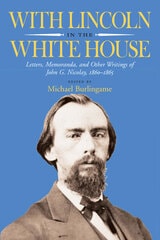
With Lincoln in the White House
Letters, Memoranda, and other Writings of John G. Nicolay, 1860-1865Edited by Michael Burlingame
Southern Illinois University Press, 2000
From the time of Lincoln’s nomination for the presidency until his assassination, John G. Nicolay served as the Civil War president’s chief personal secretary. Nicolay became an intimate of Lincoln and probably knew him as well as anyone outside his own family. Unlike John Hay, his subordinate, Nicolay kept no diary, but he did write several memoranda recording his chief’s conversation that shed direct light on Lincoln. In his many letters to Hay, to his fiancée, Therena Bates, and to others, Nicolay often describes the mood at the White House as well as events there. He also expresses opinions that were almost certainly shaped by the president
For this volume, Michael Burlingame includes all of Nicolay’s memoranda of conversations, all of the journal entries describing Lincoln’s activities, and excerpts from most of the nearly three hundred letters Nicolay wrote to Therena Bates between 1860 and 1865. He includes letters and portions of letters that describe Lincoln or the mood at the White House or that give Nicolay’s personal opinions. He also includes letters written by Nicolay while on troubleshooting missions for the president.
An impoverished youth, Nicolay was an unlikely candidate for the important position he held during the Civil War. It was only over the strong objections of some powerful people that he became Lincoln’s private secretary after Lincoln’s nomination for the presidency in 1860. Prominent Chicago Republican Herman Kreismann found the appointment of a man so lacking in savoir faire
Lacking charm, Nicolay became known at the White House as the “bulldog in the ante-room” with a disposition “sour and crusty.” California journalist Noah Brooks deemed Nicolay a “grim Cerberus of Teutonic descent who guards the last door which opens into the awful presence.” Yet in some ways he was perfectly suited for the difficult job. William O. Stoddard, noting that Nicolay was not popular and could “say 'no'about as disagreeably as any man I ever knew,” still granted that Nicolay served Lincoln well because he was devoted and incorruptible. Stoddard concluded that Nicolay “deserves the thanks of all who loved Mr. Lincoln.”
For his part, Nicolay said he derived his greatest satisfaction “from having enjoyed the privilege and honor of being Mr. Lincoln’s intimate and official private secretary, and of earning his cordial friendship and perfect trust.”
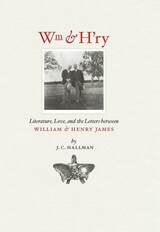
Wm & H'ry
Literature, Love, and the Letters between Wiliam and Henry JamesJ. C. Hallman
University of Iowa Press, 2013
William and Henry James served as each other’s muse and critic. For instance, the event of the death of Mrs. Sands illustrates what H’ry never stated: even if the “matter” of his fiction was light, the minds behind it lived and died as though it was very heavy indeed. He seemed to best understand this himself only after Wm fully fleshed out his system. “I can’t now explain save by the very fact of the spell itself . . . that [Pragmatism] cast upon me,” H’ry wrote in 1907. “All my life I have . . . unconsciously pragmatised.”
Wm was never able to be quite so gracious in return. In 1868, he lashed out at the “every day” elements of two of H’ry’s early stories, and then explained: “I have uttered this long rigmarole in a dogmatic manner, as one speaks, to himself, but of course you will use it merely as a mass to react against in your own way, so that it may serve you some good purpose.” He believed he was doing H’ry a service as he criticized a growing tendency toward “over-refinement” or “curliness” of style. “I think it ought to be of use to you,” he wrote in 1872, “to have any detailed criticism fm even a wrong judge, and you don’t get much fm. any one else.” For the most part, H’ry agreed. “I hope you will continue to give me, when you can, your free impression of my performance. It is a great thing to have some one write to one of one’s things as if one were a 3d person & you are the only individual who will do this.”
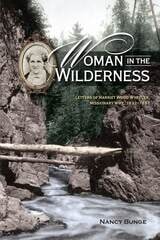
Woman in the Wilderness
Letters of Harriet Wood Wheeler, Missonary Wife, 1832-1892Nancy Bunge
Michigan State University Press, 2010
Harriet's letters reveal her experiences with actors and institutions that played pivotal roles in the history of American women: the nascent literate female work force at the mills in Lowell, Massachusetts; the Ipswich Female Seminary, which was one of the first schools for women teachers; women's associations, especially in churches; and the close and enduring ties that characterized women's relationships in the late nineteenth century.
Harriet's letters also provide an intimate view of the relationships between American Indians and Euro-Americans in the Great Lakes region, where she settled with her Christian missionary husband.
Women Lawyers and the Origins of Professional Identity in America
The Letters of the Equity Club, 1886 to 1890Virginia G. Drachman
University of Michigan Press, 1993

Women Political Prisoners in Germany
Narratives of Self and Captivity, 1915-91Kim Richmond
University of London Press, 2016
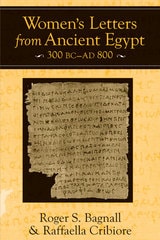
Women's Letters from Ancient Egypt, 300 BC-AD 800
Roger S. Bagnall and Raffaella Cribiore
University of Michigan Press, 2015
More than three hundred letters written in Greek and Egyptian by women in Egypt in the millennium from Alexander the Great to the Arab conquest survive on papyrus and pottery. These letters were written by women from various walks of life and shed light on critical social aspects of life in Egypt after the pharaohs. Roger S. Bagnall and Raffaella Cribiore collect the best preserved of these letters in translation and set them in their paleographic, linguistic, social, and economic contexts. As a result, Women's Letters from Ancient Egypt, 300 BC-AD 800, provides a sense that these women's habits, interests, and means of expression were a product more of their social and economic standing than of specifically gender-related concerns or behavior.
Women's Letters from Ancient Egypt, 300 BC-AD 800, takes the reader through theoretical discussions about the handwriting and language of the letters, the education and culture of the writers, and the writers' everyday concerns and occupations, as well as comparing these letters to similar letters from later historical periods. For each letter, discussion focuses on handwriting, language, and content; in addition, numerous illustrations help the reader to see the variety of handwritings. Most of this material has never been available in English translation before, and the letters have never previously been considered as a single body of material.
Women, Work, and Worship in Lincoln's Country
The Dumville Family LettersEdited by Anne M. Heinz and John P. Heinz
University of Illinois Press, 2016
Writing Home
A Quaker Immigrant on the Ohio Frontier; the Letters of Emma Botham AldersonDonald Ingram Ulin
Bucknell University Press, 2020
Introductions and notes situate the letters in relation to their critical, biographical, literary, and historical contexts. Editor Donald Ulin discusses the relationship between Alderson’s letters and her sister Mary Howitt’s Our Cousins in Ohio (1849), a remarkable instance of transatlantic literary collaboration.
Writing Home offers an unparalleled opportunity for studying immigrant correspondence due to Alderson’s unusually well-documented literary and religious affiliations. The notes and introductions provide background on nearly all the places, individuals, and events mentioned in the letters.
Published by Bucknell University Press. Distributed worldwide by Rutgers University Press.
Writing for Their Lives
Death Row USAEdited by Marie Mulvey-Roberts. Foreword by Jan Arriens
University of Illinois Press, 2007
Exposing little-known facts about the five modes of execution practiced in the United States today, Writing for Their Lives documents the progress of life on death row from a capital trial to execution and beyond, through the testimony of the prisoners themselves as well as those who watch, listen, and write to them. What emerges are stories of the survival of the human spirit under even the most unimaginable circumstances, and the ways in which some prisoners find penitence and peace in the most unlikely surroundings. In spite of the uniformity of their prison life and its nearly inevitable conclusion, prisoners able to read and write letters are shown to retain and develop their individuality and humanity as their letters become poems and stories.
Writing for Their Lives serves ultimately as an affirmation of the value of life and provides bountiful evidence that when a state executes a prisoner, it takes a life that still had something to give.
This edition features an introduction by the editor as well as a foreword by Jan Arriens. Dr. Mulvey-Roberts will be donating her profits from the sale of this volume to the legal charity Amicus, which assists in capital defense in the United States."
Writing in Time
Emily Dickinson's Master HoursMarta L. Werner
Amherst College Press, 2021
For more than half a century, the story of Emily Dickinson’s “Master” documents has been the largely biographical tale of three letters to an unidentified individual. Writing in Time seeks to tell a different story—the story of the documents themselves. Rather than presenting the “Master” documents as quarantined from Dickinson’s larger scene of textual production, Marta Werner’s innovative new edition proposes reading them next to Dickinson’s other major textual experiment in the years between ca. 1858–1861: the Fascicles. In both, Dickinson can be seen testing the limits of address and genre in order to escape bibliographical determination and the very coordinates of “mastery” itself. A major event in Dickinson scholarship, Writing in Time: Emily Dickinson’s Master Hours proposes new constellations of Dickinson’s work as well as exciting new methodologies for textual scholarship as an act of “intimate editorial investigation.”