Results by title
81 books match the query 'Creation' and 4 start with w
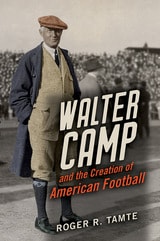
Walter Camp and the Creation of American Football
Roger R Tamte
University of Illinois Press, 2018
Roger R. Tamte tells the engrossing but forgotten life story of Walter Camp, the man contemporaries called "the father of American football." He charts Camp's leadership as American players moved away from rugby and for the first time tells the story behind the remarkably inventive rule change that, in Camp's own words, was "more important than all the rest of the legislation combined." Trials also emerged, as when disputes over forward passing, the ten-yard first down, and other rules became so public that President Theodore Roosevelt took sides. The resulting political process produced losses for Camp as well as successes, but soon a consensus grew that football needed no new major changes. American football was on its way, but as time passed, Camp's name and defining influence became lost to history.
Entertaining and exhaustively researched, Walter Camp and the Creation of American Football weaves the life story of an important sports pioneer with a long-overdue history of the dramatic events that produced the nation's most popular game.
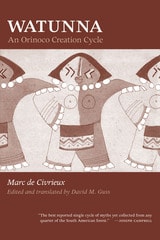
Watunna
An Orinoco Creation CycleBy Marc de Civrieux
University of Texas Press, 1997
Originally published in Spanish in 1970, Watunna is the epic history and creation stories of the Makiritare, or Yekuana, people living along the northern bank of the Upper Orinoco River of Venezuela, a region of mountains and virgin forest virtually unexplored even to the present. The first English edition of this book was published in 1980 to rave reviews. This edition contains a new foreword by David Guss, as well as Mediata, a detailed myth that recounts the origins of shamanism.
What Has Athens to Do with Jerusalem?
Timaeus and Genesis in CounterpointJaroslav Pelikan
University of Michigan Press, 1997

Women Take Their Place in State Legislatures
The Creation of Women's CaucusesAnna Mitchell Mahoney
Temple University Press, 2019
How do women strategically make their mark on state legislatures? Anna Mitchell Mahoney’s book traces the development of women’s state legislative caucuses and the influence both gender and party have on women’s ability to organize collectively. She provides a comprehensive analysis of how and why women organize around their gender identity in state legislatures—or why they do not.
Women Take Their Place in State Legislatures includes a quantitative analysis of institutional-level variables and caucus existence in all 50 states. Case studies of caucus attempts in New Jersey, Colorado, Pennsylvania, and Iowa between 2006 and 2010 examine attempts at creating women’s caucuses that succeeded or failed, and why. Mahoney’s interviews with 180 state legislators and their staff explore the motivations of caucus creators and participants. Ultimately, she finds that women’s organizing is contextual; it demonstrates the dynamic nature of gender.
Mahoney also provides insights into broad questions regarding gendered institutions, collective action, and political party governance. Women Take Their Place in State Legislatures fills a lacuna in the evaluation of women in government.