Results by title
244 books match the query 'Crime' and 5 start with w
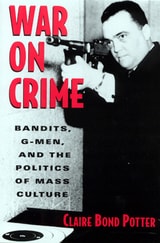
War on Crime
Bandits, G-Men, and the Politics of Mass CulturePotter, Claire Bond
Rutgers University Press, 1998
Anxieties about crime today have become a familiar route for the creation of new government agencies and the extension of state authority. It is important to remember the original "war on crime" in the 1930s-and the opportunities it afforded to New Dealers and established bureaucrats like J. Edgar Hoover-as scholars grapple with the ways states assert influence over populations, local authority, and party politics while they pursue goals such as reducing popular violence and protecting private property.
Wayward Icelanders
Punishment, Boundary Maintenance, And TheHelgi Gunnlaugsson
University of Wisconsin Press, 2000
Wayward Icelanders explores how the threat of crime has affected Icelanders’ collective self-identity, producing an ever greater need for social control. Historically Iceland has provided stiff sanctions for the use and abuse of mind-altering substances. Drunk driving has long been systematically punished, and even beer was prohibited for more than seventy years. The rate of conviction for these crimes is high, even in a democracy that prides itself on protecting civil liberties. Even more troubling, however, is the low rate of convictions for rape cases, which suggests that such crimes receive less attention from the state. Drawing on the classic work of Durkheim as well as Kai Erikson’s Wayward Puritans, Gunnlaugsson and Galliher demonstrate that an escalating war on crime can threaten freedom even in a small, affluent, and relatively nonviolent nation like Iceland with a long-standing commitment to democracy and individual rights.

What is to Be Done About Law and Order?
Crisis in the NinetiesJohn Lea and Jock Young
Pluto Press, 1993
Why We Harm
Presser, Lois
Rutgers University Press, 2013
2014 Choice Outstanding Academic Title
Criminologists are primarily concerned with the analysis of actions that violate existing laws. But a growing number have begun analyzing crimes as actions that inflict harm, regardless of the applicability of legal sanctions. Even as they question standard definitions of crime as law-breaking, scholars of crime have few theoretical frameworks with which to understand the etiology of harmful action.
In Why We Harm, Lois Presser scrutinizes accounts of acts as diverse as genocide, environmental degradation, war, torture, terrorism, homicide, rape, and meat-eating in order to develop an original theoretical framework with which to consider harmful actions and their causes. In doing so, this timely book presents a general theory of harm, revealing the commonalities between actions that impose suffering and cause destruction.
Harm is built on stories in which the targets of harm are reduced to one-dimensional characters—sometimes a dangerous foe, sometimes much more benign, but still a projection of our own concerns and interests. In our stories of harm, we are licensed to do the harmful deed and, at the same time, are powerless to act differently. Chapter by chapter, Presser examines statements made by perpetrators of a wide variety of harmful actions. Appearing vastly different from one another at first glance, Presser identifies the logics they share that motivate, legitimize, and sustain them. From that point, she maps out strategies for reducing harm.

Workin' It
Women Living Through Drugs and CrimeLeon Pettiway
Temple University Press, 1997
These are the words with which Margaret, a thirty-three-year-old cocaine-using prostitute, begins her story. In this book, she and four other women, all inner-city hustlers, describe their lives, how they came to be where they are, and where they hope to go.
Margaret, Charlie, Virginia, Tracy, and Laquita are all drug users who are involved in regular criminal activity: prostitution, burglary, shoplifting, robbery, drug selling, petty theft, and various kinds of fraud. Four of the women are black; one is white and Puerto Rican. While all five have been involved in same-sex relationships, three are primarily straight and two are primarily lesbian. They come from working-class or welfare families; some women characterize their mothers as strict, abusive, intolerant, and distant while other mothers are characterized as being concerned, religious, and loving. The women talk frankly about their drug use, their sexual and criminal activities, their childhoods, their personal relationships with their families of origin, children, partners, their fears and future goals, and the ordinary trappings of their lives.
While these accounts describe lives lived at the margins of society, they also reveal women who practice self-evaluation. These are women who have a deep understanding of individual accountability and responsibility. These accounts are connected by themes of violence and poverty, but they are also connected by the variety and richness of these women's lives. The women also assert a control over their activities and talk of independent judgment in terms that we imagine are reserved for men. There is a tendency in criminology to treat the data generated by research on men as fundamentally true for women as well. By allowing female law-breakers to describe their lives in their own way, Pettiway underlines not only their differences from men but also their differences from each other.
However, their stories also reveal their common humanity and their profound will to survive despite all obstacles. These women manage to live self-defined and self-validated lives in a world even more turbulent than that of their mainstream sisters. They share a web of experiences created out of race and ethnicity, sexual orientation, drug use, and urbanization that provides them with meaning and courage. They speak movingly about guilt and responsibility, about rape and intimacy, and about ambition and despair. Through their stories we can grasp the traumas and turning points that lead us all to make bad decisions as well as those ideals and inspirations that can help to redeem us.