Results by title
193 books match the query 'Cultural & Regional' and 7 start with w
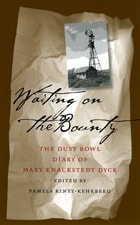
Waiting On The Bounty
Dust Bowl Diary Mary DyckPamela Riney-Kehrberg
University of Iowa Press, 1999
Though she had only a fifth-grade education, Mary Knackstedt Dyck faithfully kept a diary. Written with pencil on lined notebook paper, her daily notations tell the story of farm life on the far western border of Kansas during the grim Dust Bowl years. Manuscript diaries from this era and region are extremely rare, and those written by farm women are even more so. From the point of view of a wife, mother, and partner in the farming enterprise, Dyck recorded the everyday events as well as the frustrations of living with drought and dust storms and the sadness of watching one's children leave the farm.
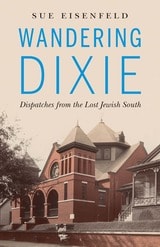
Wandering Dixie
Dispatches from the Lost Jewish SouthSue Eisenfeld
The Ohio State University Press, 2020
From South Carolina to Arkansas, she explores the small towns where Jewish people once lived and thrived. She visits the site of her distant cousin and civil rights activist Andrew Goodman’s murder during 1964’s Freedom Summer. She also talks with the only Jews remaining in some of the “lost” places, from Selma to the Mississippi Delta to Natchitoches, and visits areas with no Jewish community left—except for an old temple or overgrown cemetery. Eisenfeld follows her curiosity about Jewish Confederates and casts an unflinching eye on early southern Jews’ participation in slavery. Her travels become a journey of revelation about our nation’s fraught history and a personal reckoning with the true nature of America.

We Flew over the Bridge
The Memoirs of Faith RinggoldFaith Ringgold
Duke University Press, 2005
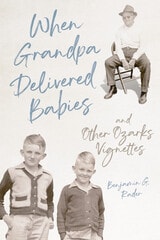
When Grandpa Delivered Babies and Other Ozarks Vignettes
Benjamin G. Rader
University of Illinois Press, 2024
An alluring blend of remembering and reflection, When Grandpa Delivered Babies and Other Ozarks Vignettes provides a vivid portrait of a fading time.
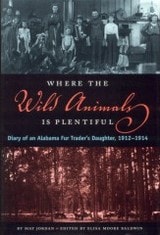
Where the Wild Animals Is Plentiful
Diary of an Alabama Fur Trader's Daughter, 1912-1914May Jordan
University of Alabama Press, 2006
This rare find--a journal of a young backwoods woman--provides a unique picture of rural life in southwestern Alabama early in the 20th century.
"I am a little Alabama girl living on the frontier where the wild animals is plentiful," wrote May Jordan in 1912. During the hunting season her father traveled Washington County buying furs, and May--already 23--accompanied him on two of these trips, cooking meals, helping out with the business, and recording their experiences.
May's diary of these trips from December 1912 to March 1914 describes the routine of the fur trade and provides a vivid portrait of wilderness travel and social customs. Through May's eyes, readers can experience the sights and sounds of pine forests and swamps, the difficulty of wading through waist-deep mud, and the neighborliness of the people living in this isolated area. May also shares both the solace of religious faith and her love of laughter as reflected in the jokes she records.
Elisa Moore Baldwin provides an introduction that traces Jordan family history and describes economic, social, and political conditions during the period. Baldwin also includes annotations based on court records, census rolls, and other primary sources and photographs of many of the characters in May's narrative to provide a vivid picture of the times. Because few first-person accounts exist of the life of poor whites, this diary will be invaluable to students of southern and women's history; no comparable work exists for this part of Alabama during this era. May's journal takes us to another world and teaches us about the lively human spirit in the face of hardship and loneliness.
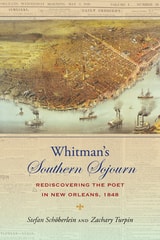
Whitman's Southern Sojourn
Rediscovering the Poet in New Orleans, 1848Stefan Schöberlein
University of Iowa Press, 2025
Far from some brief escape, New Orleans was a significant milestone in Whitman’s development as a political firebrand, as well as a major step for a professional journalist on the rise. Through a wealth of new texts, contexts, and personalities, Stefan Schöberlein and Zachary Turpin paint a vivid picture of a writer on the verge of Leaves of Grass, embracing the contradictions and the multitudes of New Orleans.
Wide Branches, Deep Roots
How Appalachian Wisdom Can Help in the Fight for a Sustainable FutureJessica M Jones
West Virginia University Press, 2026
To be Appalachian is to define oneself in terms of a place. Where we’re from plays a tremendous role in who we are, through storytelling about our homeplaces and the people who have loved them. However, what goes largely unaddressed is how this love of place can contribute to sustainability within the region, which has notoriously faced on-going environmental threats from extraction industries. The reality is that our relationship with the environment is thorny and intertwined with our identities, histories, and economic realities. The authors in the collection get down among the thorns to explore what sustainability means in Appalachia and how we can utilize the power of traditional folkways to achieve it.
This collection of over thirty pieces explores the connections between Appalachia’s stories, traditions, and modern events and the pathway to regional sustainability. The contributors — writers and scholars — examine how our definitions of sustainability have been formed, the power of education to encourage or inhibit it, and what moves are being made toward efficacy in the future. They also offer specific actions readers can take to better understand and build sustainability where they live.
Contributors: Greg Bealer, Luc Biscan-White, David Blackmore, Aysha Bodenhamer, Ivy Brashear, Matthew Calloway, Nicole Drewitz-Crockett, Christina Fisanick, Deborah Fleming, Amanda V. Garner, Karie Gunter-Seymour, Richard Hague, Amanda E. Hayes, Lockie Hunter, Jessica M. Jones, Kristen LeFevers, Sarah Long, Meghan Moore-Hubbard, Barbara Marie Minney, Jessica Radicic, Elizabeth Emmerth Rexroad, Barbara Sabol, Larry Smith, Patrice Stank, Taylor Nasim Stone, Paul Thomas, Elizabeth Tussey, and Betsy Weems.