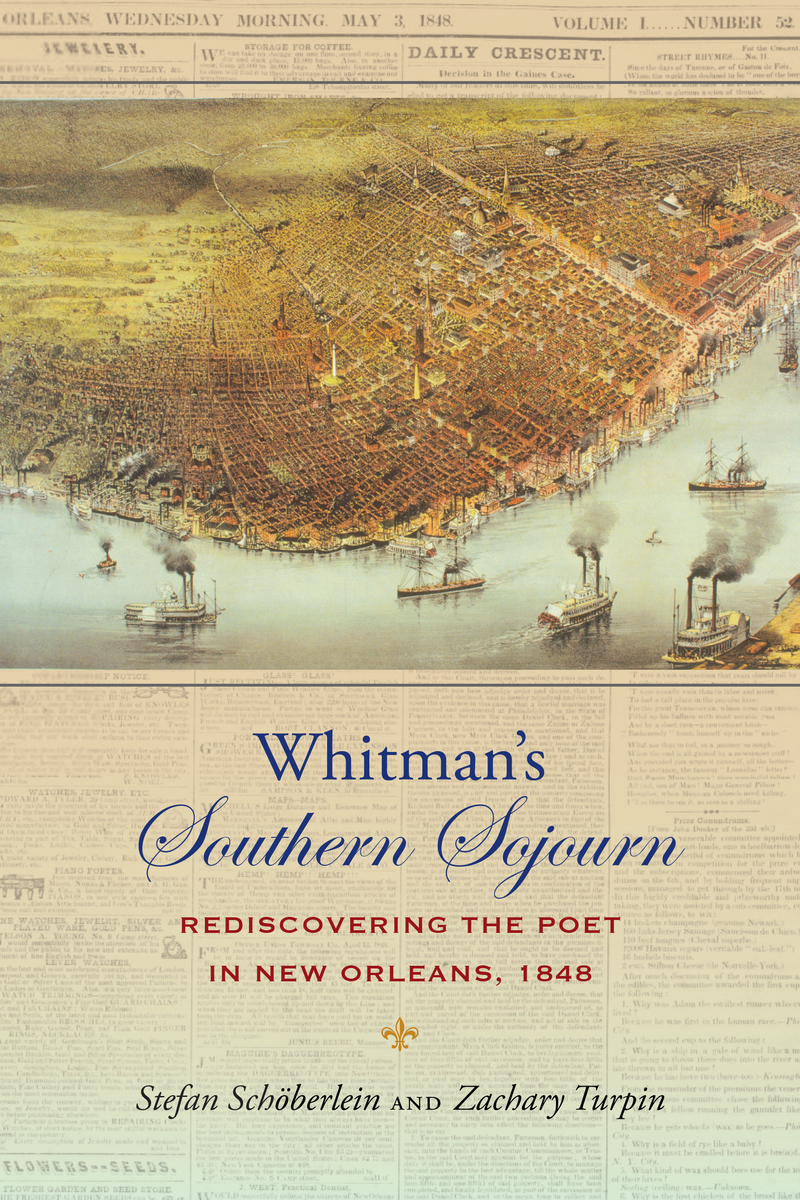
Whitman's Southern Sojourn: Rediscovering the Poet in New Orleans, 1848
University of Iowa Press, 2025
Paper: 978-1-68597-047-5 | eISBN: 978-1-68597-048-2
See other books on: Cultural & Regional | Editors, Journalists, Publishers | New Orleans | Poet | Rediscovering
See other titles from University of Iowa Press
Paper: 978-1-68597-047-5 | eISBN: 978-1-68597-048-2
ABOUT THIS BOOK | AUTHOR BIOGRAPHY | REVIEWS | TOC | REQUEST ACCESSIBLE FILE
ABOUT THIS BOOK
Walt Whitman’s 1848 stint in New Orleans was a crucial moment of development for the poet. Working for The Daily Crescent, a new local newspaper, Whitman spent his days strolling through the multiracial city and turning his impressions into prose sketches, news items, and fiery editorials. While in the southern metropolis, the young journalist brushed shoulders with American soldiers returning from Mexico, cheered on European revolutions in the French Quarter, and explored raunchy performances at the St. Charles Theatre. Yet 1848 was also the year Whitman began lobbying for “Free Soil,” after encountering in New Orleans, Creole citizens, enslaved Black people, and the slaveholder who would become America’s next president.
Far from some brief escape, New Orleans was a significant milestone in Whitman’s development as a political firebrand, as well as a major step for a professional journalist on the rise. Through a wealth of new texts, contexts, and personalities, Stefan Schöberlein and Zachary Turpin paint a vivid picture of a writer on the verge of Leaves of Grass, embracing the contradictions and the multitudes of New Orleans.
Far from some brief escape, New Orleans was a significant milestone in Whitman’s development as a political firebrand, as well as a major step for a professional journalist on the rise. Through a wealth of new texts, contexts, and personalities, Stefan Schöberlein and Zachary Turpin paint a vivid picture of a writer on the verge of Leaves of Grass, embracing the contradictions and the multitudes of New Orleans.
See other books on: Cultural & Regional | Editors, Journalists, Publishers | New Orleans | Poet | Rediscovering
See other titles from University of Iowa Press