Results by title
91 books match the query 'Desire' and 3 start with w
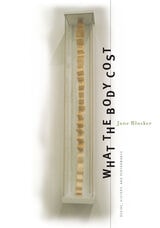
What The Body Cost
Desire, History, And PerformanceJane Blocker
University of Minnesota Press, 2004
Reexamines rebelliousness and desire in the history of performance art
Because performance is by its very nature ephemeral, it elicits a desire for what is lost more than any other form of art making. But what is the nature of that desire, and on what models has it been structured? How has it affected the ways in which the history of performance art gets told?
In What the Body Cost, Jane Blocker revisits key works in performance art by Carolee Schneemann, Vito Acconci, Hannah Wilke, Yves Klein, Ana Mendieta, and others to challenge earlier critiques that characterize performance, or body art, as a purely revolutionary art form and fail to recognize its reactionary—and sometimes damaging—effects. The scholarship to date on performance art has not, she finds, gone far enough in locating the body at the center of the performance, nor has it acknowledged the psychic, emotional, or social costs exacted on that body. Drawing on the work of critical theorists such as Roland Barthes and Catherine Belsey, as well as queer theory and feminism, What the Body Cost reads against patriarchal and heteronormative tendencies in art history while providing a corrective to the established view that performance art is necessarily transgressive. Instead, Blocker suggests that the historiography of performance art is a postmodern lovers’s discourse in which practitioners, historians, and critics alike fervently seek the body while doubting it can ever be found.
When the Lamp is Shattered
Desire and Narrative in CatullusMichaela Janan
Southern Illinois University Press, 1993
The poetry of the Late Roman Republican poet Gaius Valerius Catullus, a rich document of the human heart, is the earliest-known reasonably complete body of erotic verse in the West.
Though approximately 116 poems survive, uncertainties about the condition of the fragmented manuscript and the narrative order of the poems make the Catullan text unusually problematic for the modern critic. Indeed, the poems can be arranged in a number of ways, making a multitude of different plots possible and frustrating the reader’s desire for narrative closure.
Micaela Janan contends that since unsatisfied desire structures both the experience of reading Catullus and its subject matter, critical interpretation of the text demands a "poetics of desire." Furthermore, postmodern critical theory, narratology, and psychoanalysis suggest a flexible concept of the "subject" as a site through which a multitude of social, cultural, and unconscious forces move. Human consciousness, Janan contends, is inherently incomplete and in a continuous process of transformation. She therefore proposes an original and provocative feminist reading of Catullus, a reading informed by theories of consciousness and desire as ancient as Plato and as contemporary as Freud and Lacan.
The Late Roman Republic in which Catullus lived, Janan reminds us, was a time of profound social upheaval when political and cultural institutions that had persisted for centuries were rapidly breaking down—a time not unlike our own. Catullus’ poetry provides an unusually honest look at his culture and its contradictory representations of class, gender, and power. By bringing to the study of this major work of classical literature the themes of consciousness and desire dealt with in postmodern scholarship, Janan’s book invites a new conversation among literary disciplines.
Wild Things
The Disorder of DesireJack Halberstam
Duke University Press, 2020