Results by title
30 books match the query 'Imprisonment'
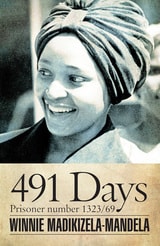
491 Days
Prisoner Number 1323/69Winnie Madikizela-Mandela
Ohio University Press, 2014
On a freezing winter’s night, a few hours before dawn on May 12, 1969, South African security police stormed the Soweto home of Winnie Madikizela-Mandela, activist and wife of the imprisoned Nelson Mandela, and arrested her in the presence of her two young daughters, then aged nine and ten.
Rounded up in a group of other antiapartheid activists under Section 6 of the Terrorism Act, designed for the security police to hold and interrogate people for as long as they wanted, she was taken away. She had no idea where they were taking her or what would happen to her children. For Winnie Mandela, this was the start of 491 days of detention and two trials.
Forty-one years after Winnie Mandela’s release on September 14, 1970, Greta Soggot, the widow of one of the defense attorneys from the 1969–70 trials, handed her a stack of papers that included a journal and notes she had written while in detention, most of the time in solitary confinement. Their reappearance brought back to Winnie vivid and horrifying memories and uncovered for the rest of us a unique and personal slice of South Africa’s history.
491 Days: Prisoner Number 1323/69 shares with the world Winnie Mandela’s moving and compelling journal along with some of the letters written between several affected parties at the time, including Winnie and Nelson Mandela, himself then a prisoner on Robben Island for nearly seven years.
Readers will gain insight into the brutality she experienced and her depths of despair, as well as her resilience and defiance under extreme pressure. This young wife and mother emerged after 491 days in detention unbowed and determined to continue the struggle for freedom.

Big Prisons, Big Dreams
Crime and the Failure of America's Penal SystemMichael J. Lynch
Rutgers University Press, 2007
The American prison system has grown tenfold since the 1970s, but crime rates in the United States have not decreased. This doesn't surprise Michael J. Lynch, a critical criminologist, who argues that our oversized prison system is a product of our consumer culture, the public's inaccurate beliefs about controlling crime, and the government's criminalizing of the poor.
While deterrence and incapacitation theories suggest that imprisoning more criminals and punishing them leads to a reduction in crime, case studies, such as one focusing on the New York City jail system between 1993 and 2003, show that a reduction in crime is unrelated to the size of jail populations. Although we are locking away more people, Lynch explains that we are not targeting the worst offenders. Prison populations are comprised of the poor, and many are incarcerated for relatively minor robberies and violence. America's prison expansion focused on this group to the exclusion of corporate and white collar offenders who create hazardous workplace and environmental conditions that lead to deaths and injuries, and enormous economic crimes. If America truly wants to reduce crime, Lynch urges readers to rethink cultural values that equate bigger with better.
Cadaverland
Inventing a Pathology of Catastrophe for Holocaust Survival [The Limits of Medical Knowledge and Historical Memory in France]Michael Dorland
Brandeis University Press, 2009
Carceral Afterlives
Prisons, Detention, and Punishment in Postcolonial UgandaKatherine Bruce-Lockhart
Ohio University Press, 2022
Challenging the Prison-Industrial Complex
Activism, Arts, and Educational AlternativesEdited by Stephen John Hartnett
University of Illinois Press, 2011
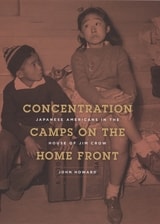
Concentration Camps on the Home Front
Japanese Americans in the House of Jim CrowJohn Howard
University of Chicago Press, 2008
While the basic facts of Japanese-American incarceration are well known, John Howard’s extensive research gives voice to those whose stories have been forgotten or ignored. He highlights the roles of women, first-generation immigrants, and those who forcefully resisted their incarceration by speaking out against dangerous working conditions and white racism. In addition to this overlooked history of dissent, Howard also exposes the government’s aggressive campaign to Americanize the inmates and even convert them to Christianity. After the war ended, this movement culminated in the dispersal of the prisoners across the nation in a calculated effort to break up ethnic enclaves.
Howard’s re-creation of life in the camps is powerful, provocative, and disturbing. Concentration Camps on the Home Front rewrites a notorious chapter in American history—a shameful story that nonetheless speaks to the strength of human resilience in the face of even the most grievous injustices.
Cutting Life Short
A Second Look at Life SentencesDan Fetsco
University of Wyoming Press, 2026
Cutting Life Short challenges the idea that people who commit murder or other serious crimes are incapable of rehabilitation. The book tracks the growing population of people serving life in Wyoming and the US and explores research that indicates that much of the public, including victims of violent crime, support second chances for people who are serving excessive sentences.
Just over 200,000 Americans are now serving life sentences—more than the entire US prison population in 1970—in a cruel and fiscally irresponsible system, even though many inmates have demonstrated sustained rehabilitation over decades. Through individual case studies of Wyoming inmates, ranging from those who deserve release to rare cases like Matthew Shepard’s killer, who should remain imprisoned, the book explores themes of punishment, redemption, and justice reform while examining issues like prosecutorial misconduct, three-strike penalties, and restorative justice programs. Cases include the stories of Darla Rouse (one of Wyoming’s few commutation recipients), Russell Harrison (who claims he had an early release deal), and James Koester (whose investigating detective became his advocate). Drawing from a decade of experience on the Wyoming parole board, where he witnessed hundreds of rehabilitated inmates denied release despite widespread support from corrections officials and sometimes even victims, author Daniel Fetsco advocates creating systematic review processes for lengthy sentences that remove elected officials from clemency decisions, alongside broader reforms like restoring voting rights for former felons and promoting responsible crime reporting over fear-mongering sensationalism.
This forward-looking book argues that most of the people sentenced to life in prison can be, and should have been, safely released into the community and offers recommendations to help alleviate the problems associated with life sentences in Wyoming and across the US criminal justice system. It is of significance to students, scholars, professionals, and the general public invested in law, criminal justice and social justice.
Dialogue with Death
The Journal of a Prisoner of the Fascists in the Spanish Civil WarArthur Koestler
University of Chicago Press, 2011
In 1937 during the Spanish Civil War, Arthur Koestler, a German exile writing for a British newspaper, was arrested by Nationalist forces in Málaga. He was then sentenced to execution and spent every day awaiting death—only to be released three months later under pressure from the British government. Out of this experience, Koestler wrote Darkness at Noon, his most acclaimed work in the United States, about a man arrested and executed in a Communist prison.
Dialogue with Death is Koestler’s riveting account of the fall of Málaga to rebel forces, his surreal arrest, and his three months facing death from a prison cell. Despite the harrowing circumstances, Koestler manages to convey the stress of uncertainty, fear, and deprivation of human contact with the keen eye of a reporter.
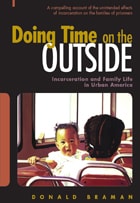
Doing Time on the Outside
Incarceration and Family Life in Urban AmericaDonald Braman
University of Michigan Press, 2004
-Katherine S. Newman
"Doing Time on the Outside brings to life in a compelling way the human drama, and tragedy, of our incarceration policies. Donald Braman documents the profound economic and social consequences of the American policy of massive imprisonment of young African American males. He shows us the link between the broad-scale policy changes of recent decades and the isolation and stigma that these bring to family members who have a loved one in prison. If we want to understand fully the impact of current criminal justice policies, this book should be required reading."
-Mark Mauer, Assistant Director, The Sentencing Project
"Through compelling stories and thoughtful analysis, this book describes how our nation's punishment policies have caused incalculable damage to the fabric of family and community life. Anyone concerned about the future of urban America should read this book."
-Jeremy Travis, The Urban Institute
In the tradition of Elijah Anderson's Code of the Street and Katherine Newman's No Shame in My Game, this startling new ethnography by Donald Braman uncovers the other side of the incarceration saga: the little-told story of the effects of imprisonment on the prisoners' families.
Since 1970 the incarceration rate in the United States has more than tripled, and in many cities-urban centers such as Washington, D.C.-it has increased over five-fold. Today, one out of every ten adult black men in the District is in prison and three out of every four can expect to spend some time behind bars. But the numbers don't reveal what it's like for the children, wives, and parents of prisoners, or the subtle and not-so-subtle effects mass incarceration is having on life in the inner city.
Author Donald Braman shows that those doing time on the inside are having a ripple effect on the outside-reaching deep into the family and community life of urban America. Braman gives us the personal stories of what happens to the families and communities that prisoners are taken from and return to. Carefully documenting the effects of incarceration on the material and emotional lives of families, this groundbreaking ethnography reveals how criminal justice policies are furthering rather than abating the problem of social disorder. Braman also delivers a number of genuinely new arguments.
Among these is the compelling assertion that incarceration is holding offenders unaccountable to victims, communities, and families. The author gives the first detailed account of incarceration's corrosive effect on social capital in the inner city and describes in poignant detail how the stigma of prison pits family and community members against one another. Drawing on a series of powerful family portraits supported by extensive empirical data, Braman shines a light on the darker side of a system that is failing the very families and communities it seeks to protect.
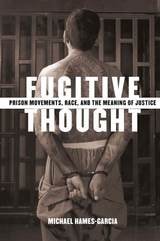
Fugitive Thought
Prison Movements, Race, And The Meaning Of JusticeMichael Hames-Garcia
University of Minnesota Press, 2004
Looks to the philosophy and experience of prisoners to reinvigorate our concepts of justice, solidarity, and freedom
In Fugitive Thought, Michael Hames-García argues that writings by prisoners are instances of practical social theory that seek to transform the world. Unlike other authors who have studied prisons or legal theory, Hames-García views prisoners as political and social thinkers whose ideas are as valuable as those of lawyers and philosophers.
As key moral terms like “justice,” “solidarity,” and “freedom” have come under suspicion in the post–Civil Rights era, political discussions on the Left have reached an impasse. Fugitive Thought reexamines and reinvigorates these concepts through a fresh approach to philosophies of justice and freedom, combining the study of legal theory and of prison literature to show how the critiques and moral visions of dissidents and participants in prison movements can contribute to the shaping and realization of workable ethical conceptions. Fugitive Thought focuses on writings by black and Latina/o lawyers and prisoners to flesh out the philosophical underpinnings of ethical claims within legal theory and prison activism.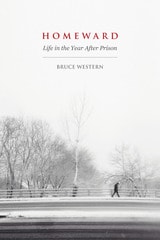
Homeward
Life in the Year After PrisonBruce Western
Russell Sage Foundation, 2018
Western and his research team conducted comprehensive interviews with men and women released from the Massachusetts state prison system who returned to neighborhoods around Boston. Western finds that for most, leaving prison is associated with acute material hardship. In the first year after prison, most respondents could not afford their own housing and relied on family support and government programs, with half living in deep poverty. Many struggled with chronic pain, mental illnesses, or addiction—the most important predictor of recidivism. Most respondents were also unemployed. Some older white men found union jobs in the construction industry through their social networks, but many others, particularly those who were black or Latino, were unable to obtain full-time work due to few social connections to good jobs, discrimination, and lack of credentials. Violence was common in their lives, and often preceded their incarceration. In contrast to the stereotype of tough criminals preying upon helpless citizens, Western shows that many former prisoners were themselves subject to lifetimes of violence and abuse and encountered more violence after leaving prison, blurring the line between victims and perpetrators.
Western concludes that boosting the social integration of former prisoners is key to both ameliorating deep disadvantage and strengthening public safety. He advocates policies that increase assistance to those in their first year after prison, including guaranteed housing and health care, drug treatment, and transitional employment. By foregrounding the stories of people struggling against the odds to exit the criminal justice system, Homeward shows how overhauling the process of prisoner reentry and rethinking the foundations of justice policy could address the harms of mass incarceration.
Imprisoned Minds
Lost Boys, Trapped Men, and Solutions from Within the PrisonErik S. Maloney
Rutgers University Press, 2025
Imprisoning America
The Social Effects of Mass IncarcerationMary Pattillo
Russell Sage Foundation, 2004
Imprisonment in America
Choosing the FutureMichael Sherman and Gordon J. Hawkins
University of Chicago Press, 1983
"This is a serious and enlightened and concerned attempt to fuse liberal and conservative attitudes and values to achieve a breakthrough in American penal policy."—Congressional Staff Journal
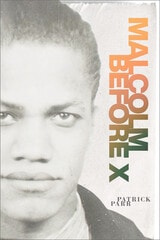
Malcolm Before X
Patrick Parr
University of Massachusetts Press, 2024
A Kirkus Reviews Best Nonfiction Book of 2024
A Spectator Best Book of the Year
Finalist for the 2025 ASALH Book Prize
Drawing upon interviews, correspondence, and nearly 2000 pages of never-before-used prison records, Malcolm Before X is the definitive examination of the prison years of civil rights icon Malcolm X.
In February 1946, when 20-year-old Malcolm Little was sentenced to eight to ten years in a maximum-security prison, he was a petty criminal and street hustler in Boston. By the time he was paroled in August 1952, he had transformed into a voracious reader, joined the Black Muslims, and was poised to become Malcolm X, one of the most prominent and important intellectuals of the civil rights era. While scholars and commentators have exhaustively detailed, analyzed, and debated Malcolm X’s post-prison life, they have not explored these six and a half transformative years in any depth.
Paying particular attention to his time in prison, Patrick Parr’s Malcolm Before X provides a comprehensive and groundbreaking examination of the first twenty-seven years of Malcolm X’s life (1925–1965). Parr traces Malcolm’s African lineage, explores his complicated childhood in the Midwest, and follows him as he moves east to live with his sister Ella in Boston’s Roxbury neighborhood, where he is convicted of burglary and sentenced.
Parr utilizes a trove of previously overlooked documents that include prison files and prison newspapers to immerse the reader into the unique cultures—at times brutal and at times instructional—of Charlestown State Prison, the Concord Reformatory, and the Norfolk Prison Colony. It was at these institutions that Malcolm devoured books, composed poetry, boxed, debated, and joined the Nation of Islam, changing the course of his life and setting the stage for a decade of antiracist activism that would fundamentally reshape American culture.
In this meticulously researched and beautifully written biography, the inspiring story of how Malcolm Little became Malcolm X is finally told.
On the Run
Fugitive Life in an American CityAlice Goffman
University of Chicago Press, 2014
Alice Goffman spent six years living in one such neighborhood in Philadelphia, and her close observations and often harrowing stories reveal the pernicious effects of this pervasive policing. Goffman introduces us to an unforgettable cast of young African American men who are caught up in this web of warrants and surveillance—some of them small-time drug dealers, others just ordinary guys dealing with limited choices. All find the web of presumed criminality, built as it is on the very associations and friendships that make up a life, nearly impossible to escape. We watch as the pleasures of summer-evening stoop-sitting are shattered by the arrival of a carful of cops looking to serve a warrant; we watch—and can’t help but be shocked—as teenagers teach their younger siblings and cousins how to run from the police (and, crucially, to keep away from friends and family so they can stay hidden); and we see, over and over, the relentless toll that the presumption of criminality takes on families—and futures.
While not denying the problems of the drug trade, and the violence that often accompanies it, through her gripping accounts of daily life in the forgotten neighborhoods of America's cities, Goffman makes it impossible for us to ignore the very real human costs of our failed response—the blighting of entire neighborhoods, and the needless sacrifice of whole generations.
Prison and Social Death
Price, Joshua M
Rutgers University Press, 2015
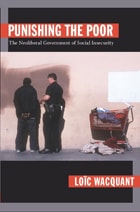
Punishing the Poor
The Neoliberal Government of Social InsecurityLoïc Wacquant
Duke University Press, 2009
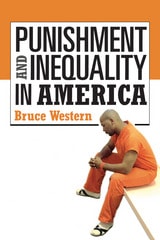
Punishment and Inequality in America
Bruce Western
Russell Sage Foundation, 2006
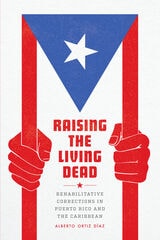
Raising the Living Dead
Rehabilitative Corrections in Puerto Rico and the CaribbeanAlberto Ortiz Díaz
University of Chicago Press, 2023
Raising the Living Dead is a history of Puerto Rico’s carceral rehabilitation system that brings to life the interactions of incarcerated people, their wider social networks, and health care professionals. Alberto Ortiz Díaz describes the ways that multiple communities of care came together both inside and outside of prisons to imagine and enact solution-oriented cultures of rehabilitation from the 1930s to the 1960s. Scientific and humanistic approaches to well-being were deliberately fused to raise the “living dead,” an expression that reemerged in the modern Caribbean to refer to prisoners. These reform groups sought to raise incarcerated people physically, mentally, socially, spiritually, and civically.
The book is based on deep, original archival research into the Oso Blanco (White Bear) penitentiary in Puerto Rico, yet it situates its study within Puerto Rico’s broader carceral archipelago and other Caribbean prisons. The agents of this history include not only physical health professionals, but also psychologists and psychiatrists, social workers, spiritual and religious practitioners, and, of course, the prisoners and their families. By following all these groups and emphasizing the interpersonal exercise of power, Ortiz Díaz tells a story that goes beyond debates about structural and social control.
The book addresses key issues in the history of prisons and the histories of medicine and belief, including how prisoners’ different racial, class, and cultural identities shaped their incarceration and how professionals living in a colonial society dealt with the challenge of rehabilitating prisoners for citizenship.
Raising the Living Dead is not just about convicts, their immediate interlocutors, and their contexts, however, but about how together these open a window into the history of social uplift projects within the (neo)colonial societies of the Caribbean. There is no book like this in Caribbean historiography; few examine these themes in the larger literature on the history of prisons.
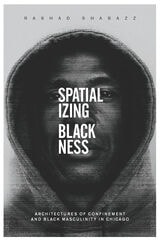
Spatializing Blackness
Architectures of Confinement and Black Masculinity in ChicagoRashad Shabazz
University of Illinois Press, 2015
A geographic study of race and gender, Spatializing Blackness casts light upon the ubiquitous--and ordinary--ways carceral power functions in places where African Americans live. Moving from the kitchenette to the prison cell, and mining forgotten facts from sources as diverse as maps and memoirs, Rashad Shabazz explores the myriad architectures of confinement, policing, surveillance, urban planning, and incarceration. In particular, he investigates how the ongoing carceral effort oriented and imbued black male bodies and gender performance from the Progressive Era to the present. The result is an essential interdisciplinary study that highlights the racialization of space, the role of containment in subordinating African Americans, the politics of mobility under conditions of alleged freedom, and the ways black men cope with--and resist--spacial containment.
A timely response to the massive upswing in carceral forms within society, Spatializing Blackness examines how these mechanisms came to exist, why society aimed them against African Americans, and the consequences for black communities and black masculinity both historically and today.
The Distressed Body
Rethinking Illness, Imprisonment, and HealingDrew Leder
University of Chicago Press, 2016
Leder draws on literary examples, clinical and philosophical sources, his medical training, and his own struggle with chronic pain. He levies a challenge to the capitalist and Cartesian models that rule modern medicine. Similarly, he looks at the root paradigms of our penitentiary and factory farm systems and the way these produce distressed bodies, asking how such institutions can be reformed. Writing with coauthors ranging from a prominent cardiologist to long-term inmates, he explores alternative environments that can better humanize—even spiritualize—the way we treat one another, offering a very different vision of medical, criminal justice, and food systems. Ultimately Leder proposes not just new answers to important bioethical questions but new ways of questioning accepted concepts and practices.
The Marion Experiment
Long-Term Solitary Confinement and the Supermax MovementEdited by Stephen C. Richards
Southern Illinois University Press, 2015
Taking readers into the darkness of solitary confinement, this searing collection of convict experiences, academic research, and policy recommendations shines a light on the proliferation of supermax (super-maximum-security) prisons and the detrimental effects of long-term high-security confinement on prisoners and their families.
Stephen C. Richards, an ex-convict who served time in nine federal prisons before earning his PhD in criminology, argues the supermax prison era began in 1983 at USP Marion in southern Illinois, where the first “control units” were built by the Federal Bureau of Prisons. The Marion Experiment, written from a convict criminology perspective, offers an introduction to long-term solitary confinement and supermax prisons, followed by a series of first-person accounts by prisoners—some of whom are scholars—previously or currently incarcerated in high-security facilities, including some of the roughest prisons in the western world. Scholars also address the widespread “Marionization” of solitary confinement; its impact on female, adolescent, and mentally ill prisoners and families; and international perspectives on imprisonment.
As a bold step toward rethinking supermax prisons, Richards presents the most comprehensive view of the topic to date to raise awareness of the negative aspects of long-term solitary confinement and the need to reevaluate how prisoners are housed and treated.
The Prison
Policy and PracticeGordon J. Hawkins
University of Chicago Press, 1977
"Hawkins devotes a large portion of this relatively short book to a discussion of some of the really crucial policy activities that tend to stifle meaningful reform and then goes on to tell how at least some of these policies can be altered. . . . The book concludes with a chapter devoted to a discussion of impediments to change that should be required reading for all serious students of penology."—Choice
"Hawkins has added a much needed down-to-earch analysis of prison. . . . This is not a pessimistic book. It is a realistic book. It avoids the pitfall of utopian and single-factor solutions to an extremely complex problem."—Graeme R. Newman, Annals of the American Academy of Political and Social Science
The Scale of Imprisonment
Franklin E. Zimring and Gordon J. Hawkins
University of Chicago Press, 1991
"The Scale of Imprisonment has an exceptionally well designed literature review of interest to public policy, criminal justice, and public law scholars. Its careful review, analysis, and critique of research is stimulating and inventive."—American Political Science Review
"The authors fram our thoughts about the soaring use of imprisonment and stimulate our thinking about the best way we as criminologists can conduct rational analysis and provide meaningful advice."—Susan Guarino-Ghezzi, Journal of Quantitative Criminology
"Zimring and Hawkins bring a long tradition of excellent criminological scholarship to the seemingly intractable problems of prisons, prison overcrowding, and the need for alternative forms of punishment."—J. C. Watkins, Jr., Choice
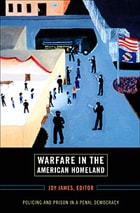
Warfare in the American Homeland
Policing and Prison in a Penal DemocracyJoy James, ed.
Duke University Press, 2007
Contributors consider the interning or policing of citizens of color, the activism of radicals, structural racism, destruction and death in New Orleans following Hurricane Katrina, and the FBI Counterintelligence Program designed to quash domestic dissent. Among the first-person accounts are an interview with Dhoruba Bin Wahad, a Black Panther and former political prisoner; a portrayal of life in prison by a Plowshares nun jailed for her antinuclear and antiwar activism; a discussion of the Puerto Rican Independence Movement by one of its members, now serving a seventy-year prison sentence for sedition; and an excerpt from a 1970 letter by the Black Panther George Jackson chronicling the abuses of inmates in California’s Soledad Prison. Warfare in the American Homeland also includes the first English translation of an excerpt from a pamphlet by Michel Foucault and others. They argue that the 1971 shooting of George Jackson by prison guards was a murder premeditated in response to human-rights and justice organizing by black and brown prisoners and their supporters.
Contributors. Hishaam Aidi, Dhoruba Bin Wahad (Richard Moore), Marilyn Buck, Marshall Eddie Conway, Susie Day, Daniel Defert, Madeleine Dwertman, Michel Foucault, Carol Gilbert, Sirène Harb, Rose Heyer, George Jackson, Joy James, Manning Marable, William F. Pinar, Oscar Lòpez Rivera, Dylan Rodríguez, Jared Sexton, Catherine vön Bulow, Laura Whitehorn, Frank B. Wilderson III
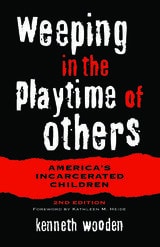
Weeping in the Playtime of Others
America’s Incarcerated Children. 2nd edition.Written by Kenneth Wooden with a foreword by Kathleen M. Heide
The Ohio State University Press, 2000
Kenneth Wooden’s Weeping in the Playtime of Others—first published in 1976 and an enduring work of investigative journalism and criminology that was nominated for a Pulitzer Prize—exposes the harsh realities faced by children in the American juvenile justice system. Wooden’s extensive research and firsthand accounts highlight the systemic abuse, neglect, and violence that incarcerated youth endure. Investigative reporter Wooden journeyed across thirty states to document brutal conditions in juvenile detention centers and training schools. His work revealed in stark detail how these institutions regularly failed to provide the rehabilitation they promised, perpetuating cycles of violence and criminality, and presented a devastating picture of the detrimental effects on of solitary confinement, physical punishment, and inadequate educational and psychological support.
Wooden’s many case studies include that of a young Charles Manson, illustrating how early institutionalization can presage lifelong criminal behavior. Wooden also critiques the political and economic forces that sustain these abusive systems, calling for comprehensive reforms.
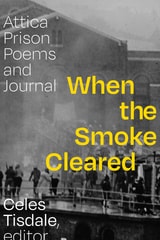
When the Smoke Cleared
Attica Prison Poems and JournalCeles Tisdale, editor
Duke University Press, 2022
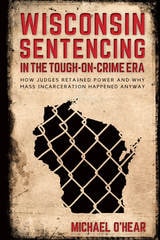
Wisconsin Sentencing in the Tough-on-Crime Era
How Judges Retained Power and Why Mass Incarceration Happened AnywayMichael O'Hear
University of Wisconsin Press, 2021
O'Hear tracks the effects of sentencing laws and politics in Wisconsin from the eve of the imprisonment boom in 1970 up to the 2010s. Drawing on archival research, original public-opinion polling, and interviews with dozens of key policymakers, he reveals important dimensions that have been missed by others. He draws out lessons from the Wisconsin experience for the United States as a whole, where mass incarceration has cost taxpayers billions of dollars and caused untold misery to millions of inmates and their families.
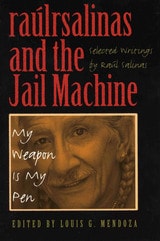
raúlrsalinas and the Jail Machine
My Weapon Is My PenSelected writings by Raúl R. Salinas
University of Texas Press, 2006
Raúl R. Salinas is regarded as one of today's most important Chicano poets and human rights activists, but his passage to this place of distinction took him through four of the most brutal prisons in the country. His singular journey from individual alienation to rage to political resistance reflected the social movements occurring inside and outside of prison, making his story both personal and universal.
This groundbreaking collection of Salinas' journalism and personal correspondence from his years of incarceration and following his release provides a unique perspective into his spiritual, intellectual, and political metamorphosis. The book also offers an insider's view of the prison rebellion movement and its relation to the civil rights and anti-war movements of the 1960s and 1970s. The numerous letters between Salinas and his family, friends, and potential allies illustrate his burgeoning political awareness of the cause and conditions of his and his comrades' incarceration and their link to the larger political and historical web of social relations between dominant and subaltern groups. These collected pieces, as well as two interviews with Salinas—one conducted upon his release from prison in 1972, the second more than two decades later—reveal to readers the transformation of Salinas from a street hipster to a man seeking to be a part of something larger than himself. Louis Mendoza has painstakingly compiled a body of work that is autobiographical, politically insurgent, and representative.