Results by title
115 books match the query 'Elections' and 6 start with w

Waiting for the Cemetery Vote
The Fight to Stop Election Fraud in ArkansasTom Glaze
University of Arkansas Press, 2011
Waiting for the Cemetery Vote begins with an overview chapter of Arkansas election fraud since the nineteenth century and then moves on to more specific examples of fraudulent activities over a dozen or so years that coincide with the onset of the modern progressive era in Arkansas. Author Tom Glaze, who was a trial lawyer battling election fraud during this time, is the ideal chronicler for this topic, bringing a memoirist's intimate insight together with a wealth of historical knowledge. Glaze describes the manipulation of absentee ballots and poll-tax receipts; votes cast by the dead, children, and animals; forgeries of ballots from nursing homes; and threats to body or livelihood made to anyone who would dare question these activities or monitor elections. Deceptive practices used to control election results were disturbingly brazen in the gubernatorial elections in the 1960s and were especially egregious in Conway and Searcy Counties in the 1970s and in special elections for the state senate in Faulkner, Conway, and Van Buren Counties. A clean-election movement began in the early 1970s, led not by party or political leaders but by individual citizens. These vigilant and courageous Arkansans undertook to do what their public institutions persistently failed to: insure that elections for public office were honest and that the will of the people was scrupulously obliged. Prominent and colorful among these groups was a small band of women in Conway County who dubbed themselves the "Snoop Sisters" and took on the long-established corrupt machine of Sheriff Marlin Hawkins. Written with longtime Arkansas political writer Ernie Dumas and illustrated with cartoons from the inimitable George Fisher, Waiting for the Cemetery Vote will be an entertaining and informative read for any Arkansas history and politics buffs.
[more]
Waves of Discontent
Electoral Volatility, Public Policymaking, and the Health of American DemocracyJacob F.H. Smith
University of Michigan Press, 2025
After a period of relative calm in congressional elections prior to 2006, America has experienced a series of highly competitive, volatile national elections. Since then, at least one of the US House, US Senate, and presidency has flipped party control—often with a large House or Senate seat swing—with the exception of the 2012 election. In Waves of Discontent, Jacob F. H. Smith argues that a pervasive feeling of displeasure in the American public has caused this increase in electoral volatility.
Conducting statistical analyses of a wide array of surveys, Smith found that these feelings of displeasure translate to lower turnout among voters from the president’s party and a higher percentage of independents voting for the other party. Subsequently, he conducted a content analysis of New York Times articles to look at the connection between unrest in American society and seat swings in congressional elections, even before the existence of polling. Examining the consequences of volatility in congressional elections reveals that political amateurs are more likely to win in wave years than in normal years. Based on this data, Smith presents a new theory about the policy process—the policy doom loop—in which frustration among voters at both the inability of Congress to pass policy and anger at policies that actually do pass results in even more churn in congressional elections. Waves of Discontent offers some suggestions to promote constructive policymaking efforts in Washington to reduce frustration in the electorate.
Conducting statistical analyses of a wide array of surveys, Smith found that these feelings of displeasure translate to lower turnout among voters from the president’s party and a higher percentage of independents voting for the other party. Subsequently, he conducted a content analysis of New York Times articles to look at the connection between unrest in American society and seat swings in congressional elections, even before the existence of polling. Examining the consequences of volatility in congressional elections reveals that political amateurs are more likely to win in wave years than in normal years. Based on this data, Smith presents a new theory about the policy process—the policy doom loop—in which frustration among voters at both the inability of Congress to pass policy and anger at policies that actually do pass results in even more churn in congressional elections. Waves of Discontent offers some suggestions to promote constructive policymaking efforts in Washington to reduce frustration in the electorate.
[more]
Who Wants to Run?
How the Devaluing of Political Office Drives PolarizationAndrew B. Hall
University of Chicago Press, 2019
The growing ideological gulf between Democrats and Republicans is one of the biggest issues in American politics today. Our legislatures, composed of members from two sharply disagreeing parties, are struggling to function as the founders intended them to. If we want to reduce the ideological gulf in our legislatures, we must first understand what has caused it to widen so much over the past forty years.
Andrew B. Hall argues that we have missed one of the most important reasons for this ideological gulf: the increasing reluctance of moderate citizens to run for office. While political scientists, journalists, and pundits have largely focused on voters, worried that they may be too partisan, too uninformed to vote for moderate candidates, or simply too extreme in their own political views, Hall argues that our political system discourages moderate candidates from seeking office in the first place. Running for office has rarely been harder than it is in America today, and the costs dissuade moderates more than extremists. Candidates have to wage ceaseless campaigns, dialing for dollars for most of their waking hours while enduring relentless news and social media coverage. When moderate candidates are unwilling to run, voters do not even have the opportunity to send them to office. To understand what is wrong with our legislatures, then, we need to ask ourselves the question: who wants to run? If we want more moderate legislators, we need to make them a better job offer.
Andrew B. Hall argues that we have missed one of the most important reasons for this ideological gulf: the increasing reluctance of moderate citizens to run for office. While political scientists, journalists, and pundits have largely focused on voters, worried that they may be too partisan, too uninformed to vote for moderate candidates, or simply too extreme in their own political views, Hall argues that our political system discourages moderate candidates from seeking office in the first place. Running for office has rarely been harder than it is in America today, and the costs dissuade moderates more than extremists. Candidates have to wage ceaseless campaigns, dialing for dollars for most of their waking hours while enduring relentless news and social media coverage. When moderate candidates are unwilling to run, voters do not even have the opportunity to send them to office. To understand what is wrong with our legislatures, then, we need to ask ourselves the question: who wants to run? If we want more moderate legislators, we need to make them a better job offer.
[more]
Why Americans Split Their Tickets
Campaigns, Competition, and Divided GovernmentBarry C. Burden and David C. Kimball
University of Michigan Press, 2004
In Why Americans Split Their Tickets, Barry C. Burden and David C. Kimball argue that divided government is produced unintentionally. Using a new quantitative method to analyze voting in presidential, House, and Senate elections from 1952 to 1996, they reject the dominant explanation for divided government, that ticket splitting is done to balance parties that are far from the center. The ideological positions of candidates do not matter in American elections, but voters favor centrist candidates rather than a mix of extremists. When candidates of opposing parties adopt similar platforms, ticket splitting arises. For voters, ideological differences between the parties blur and other considerations such as candidate characteristics exert a greater influence on their voting decisions. Among their other findings, the authors link changes in congressional campaigns--namely the rise of incumbency advantage and the greater importance of money in the 1960s and 1970s--to ticket splitting and argue, in addition, that the transformation of the South from a Democratic stronghold to a Republican-leaning environment has made regional factors less important.
Burden and Kimball draw upon a diverse and unique range of data as evidence for their argument. Their analyses rely on survey data, aggregate election returns, and new ecological inference estimates for every House and Senate election from 1952 to 1996. This approach allows for the examination of divided voting in traditional ways, such as choosing a Democratic presidential candidate and a Republican House candidate on a single ballot, to less traditional forms, such as voting in a midterm House election and choosing a state's Senate delegation.
Barry C. Burden is Assistant Professor of Government, Harvard University. David C. Kimball is Assistant Professor of Political Science, University of Missouri, St. Louis.
[more]
Why Parties Matter
Political Competition and Democracy in the American SouthJohn H. Aldrich and John D. Griffin
University of Chicago Press, 2017
Since the founding of the American Republic, the North and South have followed remarkably different paths of political development. Among the factors that have led to their divergence throughout much of history are differences in the levels of competition among the political parties. While the North has generally enjoyed a well-defined two-party system, the South has tended to have only weakly developed political parties—and at times no system of parties to speak of.
With Why Parties Matter, John H. Aldrich and John D. Griffin make a compelling case that competition between political parties is an essential component of a democracy that is responsive to its citizens and thus able to address their concerns. Tracing the history of the parties through four eras—the Democratic-Whig party era that preceded the Civil War; the post-Reconstruction period; the Jim Crow era, when competition between the parties virtually disappeared; and the modern era—Aldrich and Griffin show how and when competition emerged between the parties and the conditions under which it succeeded and failed. In the modern era, as party competition in the South has come to be widely regarded as matching that of the North, the authors conclude by exploring the question of whether the South is poised to become a one-party system once again with the Republican party now dominant.
With Why Parties Matter, John H. Aldrich and John D. Griffin make a compelling case that competition between political parties is an essential component of a democracy that is responsive to its citizens and thus able to address their concerns. Tracing the history of the parties through four eras—the Democratic-Whig party era that preceded the Civil War; the post-Reconstruction period; the Jim Crow era, when competition between the parties virtually disappeared; and the modern era—Aldrich and Griffin show how and when competition emerged between the parties and the conditions under which it succeeded and failed. In the modern era, as party competition in the South has come to be widely regarded as matching that of the North, the authors conclude by exploring the question of whether the South is poised to become a one-party system once again with the Republican party now dominant.
[more]
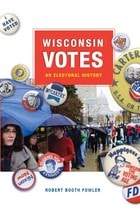
Wisconsin Votes
An Electoral HistoryRobert Booth Fowler
University of Wisconsin Press, 2008
This is the first full history of voting in Wisconsin from statehood in 1848 to the present. Fowler both tells the story of voting in key elections across the years and investigates electoral trends and patterns over the course of Wisconsin’s history. He explores the ways that ethnic and religious groups in the state have voted historically and how they vote today, and he looks at the successes and failures of the two major parties over the years. Highlighting important historical movements, Fowler discusses the great struggle for women’s suffrage and the rich tales of many Wisconsin third parties—the Socialists, Progressives, the Prohibition Party, and others. Here, too, are the famous politicians in Wisconsin history, such as the La Follettes, William Proxmire, and Tommy Thompson.
Winner, Award of Merit for Leadership in History, American Association for State and Local History
[more]