Results by title
615 books match the query 'England' and 14 start with w
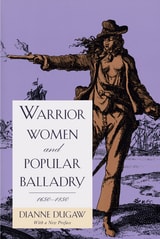
Warrior Women and Popular Balladry, 1650-1850
Dianne Dugaw
University of Chicago Press, 1995
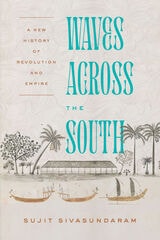
Waves Across the South
A New History of Revolution and EmpireSujit Sivasundaram
University of Chicago Press, 2020
We Are Three Sisters
Self and Family in the Writing of the BrontësDrew Lamonica
University of Missouri Press, 2003
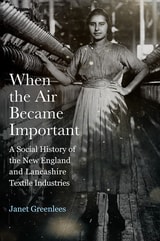
When the Air Became Important
A Social History of the New England and Lancashire Textile IndustriesJanet Greenlees
Rutgers University Press, 2019
Who is Buried in Chaucer's Tomb?
Studies in the Reception of Chaucer's BookJoseph A. Dane
Michigan State University Press, 1998
Wicked Intelligence
Visual Art and the Science of Experiment in Restoration LondonMatthew C. Hunter
University of Chicago Press, 2013
Wife and Widow in Medieval England
Sue Sheridan Walker, Editor
University of Michigan Press, 1993
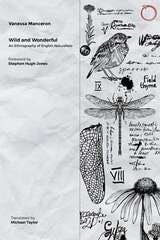
Wild and Wonderful
An Ethnography of English NaturalistsVanessa Manceron
HAU, 2025
In Wild and Wonderful, social anthropologist Vanessa Manceron investigates an understudied but indispensable scientific practice: getting to know and recognize the living worlds around us. Her research takes her to England, where a longstanding naturalist tradition brings together professionals, academics, and amateurs to study the world around them. Observing the natural world here is regarded not as a simple hobby, but as a necessary activity. This is participatory science, an itinerant brand of scholarship that immerses itself in a specific and delimited territory, meticulously documenting the species living there and how they develop and expand their domain or regress and disappear. Manceron leads us through woods and fields, showing us another way of looking, of paying attention to minute differences, sounds, and variations of color. Her book is both a contribution to the anthropology of science and an opportunity to take a fresh look at our relationship with nature, affording us a glimpse of another way of living and living with.
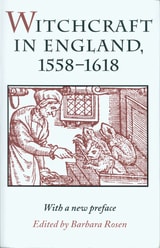
Witchcraft in England, 1558-1618
Barbara Rosen
University of Massachusetts Press, 1991
Anyone interested in manifestations of witchcraft in Elizabethan and Jacobean England will find this book an invaluable source. Barbara Rosen has gathered and edited a rare collection of documents—pamphlets, reports, trial accounts, and other material—that describes the experience, interpretation, and punishment of witchcraft in the late sixteenth and early seventeenth centuries.
In her introduction, Rosen explores the full range of practices and beliefs associated with witchcraft and situates these phenomena in historical context. She explains how ignorance of science and medicine combined with social circumstance and religious ideology to shape popular perceptions and superstitions. Distinguishing between English and Continental forms of witchcraft, she also examines the legal definitions, disciplines, and punishments applied to wizards, witches, wise women, and conjures in the Elizabethan age.
The pamphlets and other original texts have been modernized in certain respects to make them more accessible to general readers. But the book retains its value for scholars: omissions are detailed in the notes and additions marked; obsolete words and grammar are explained in the glossary.
Originally published in England in 1970 under the title Witchcraft, this book appears now for the first time in paperback and includes a new preface by the editor.
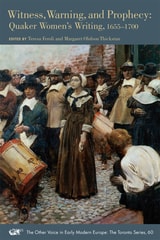
Witness, Warning, and Prophecy
Quaker Women's Writing, 1655-1700Edited by Teresa Feroli and Margaret Olofson Thickstun
Iter Press, 2018
The Other Voice in Early Modern Europe - The Toronto Series: Volume 60

Women, Work, and Representation
Needlewomen in Victorian Art and LiteratureLynn M. Alexander
Ohio University Press, 2003
In Victorian England, virtually all women were taught to sew; needlework was allied with images of domestic economy and with traditional female roles of wife and mother- with home rather than factory. The professional seamstress, however, labored long hours for very small wages creating gowns for the upper and middle classes. In her isolation and helplessness, she provided social reformers with a powerful image of working-class suffering that appealed to the sensibilities of the upper classes and helped galvanize public opinion around the need for reform.
Women, Work, and Representation addresses the use of that image in the reform movement, underscoring the shock to the Victorian public when reports revealed that the profession of needlework was extremely hazardous, even deadly.
Author Lynn M. Alexander traces the development of the symbol of the seamstress through a variety of presentations, drawing from the writings of Charles Dickens, Elizabeth Gaskell, Charlotte Elizabeth Tonna, and George W. M. Reynolds, and on visual representations by Richard Redgrave, Thomas Benjamin Kennington, John Everett Millais, John Leech, John Tenniel, and Hubert von Herkomer.
Written to appeal to Victorian scholars, women's studies scholars, and those interested in semiotics and aestheticism, Women, Work, and Representation includes twenty illustrations, most from periodicals of the day, providing new insights into the lives of working women throughout the Victorian era.
Word Crimes
Blasphemy, Culture, and Literature in Nineteenth-Century EnglandJoss Marsh
University of Chicago Press, 1998
From extensive archival and literary research, Joss Marsh reconstructs a unified and particular account of blasphemy in Victorian England. Rewriting English history from the bottom up, she tells the forgotten stories of more than two hundred working-class "blasphemers," like Foote, whose stubborn refusal to silence their "hooligan" voices helped secure our rights to speak and write freely today. The new standards of criminality used to judge their "word crimes" rewrote the terms of literary judgment, demoting the Bible to literary masterpiece and raising Literature as the primary standard of Victorian cultural value.
Work and the Carceral State
Jon Burnett
Pluto Press, 2022
During 2019-20 in England and Wales, over 17 million hours of labor were carried out by more than 12,500 people incarcerated in prisons, while many people in immigration detention centers were also put to work. These people constitute a sub-waged, captive workforce who are frequently discarded by the state when done with.
Work and the Carceral State examines these forms of work as part of a broader exploration of the relationship between criminalization, criminal justice, immigration policy and labor, tracing their lineage through the histories of transportation and banishment, of houses of correction and prisons, to the contemporary production of work.
Criminalization has been used to enforce work and to discipline labor throughout the history of England and Wales. This book demands that we recognise the carceral state as operating at the frontier of labor control in the 21st century.
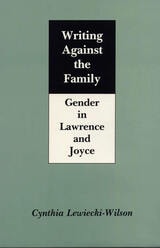
Writing Against the Family
Gender in Lawrence and JoyceCynthia Lewiecki-Wilson
Southern Illinois University Press, 1994
This first feminist book-length comparison of D. H. Lawrence and James Joyce offers striking new readings of a number of the novelists’ most important works, including Lawrence’s Man Who Died and Joyce’s Finnegans Wake.
Cynthia Lewiecki-Wilson argues that a feminist reader must necessarily read with and against theories of psychoanalysis to examine the assumptions about gender embedded within family relations and psychologies of gender found in the two authors’ works. She challenges the belief that Lawrence and Joyce are opposites, inhabiting contrary modernist camps; instead they are on a continuum, with both engaged in a reimagination of gender relations.
Lewiecki-Wilson demonstrates that both Lawrence and Joyce write against a background of family material using family plots and family settings. While previous discussions of family relations in literature have not questioned assumptions about the family and about sex roles within it, Lewiecki-Wilson submits the systems of meaning by which gender is construed to a feminist analysis. She reexamines Lawrence and Joyce from the point of view of feminist psychoanalysis, which, she argues, is not a set of beliefs or a single theory but a feminist practice that analyzes how systems of meaning construe gender and produce a psychology of gender.
Lewiecki-Wilson argues against a theory of representation based on gender, however, concluding that Lawrence’s and Joyce’s texts, in different ways, test the idea of a female aesthetic. She analyzes Lawrence’s portrait of family relations in Sonsand Lovers, The Rainbow, and Women in Love and compares Joyce’s Portrait of the Artist as a Young Man with Lawrence’s autobiographical text. She then shows that Portrait begins a deconstruction of systems of meaning that continues and increases in Joyce’s later work, including Ulysses.
Lewiecki-Wilson concludes by showing that Lawrence, Joyce, and Freud relate family material to Egyptian myth in their writings. She identifies Freud’s essay "Leonardo da Vinci and a Memory of Childhood" as an important source for Joyce’s Finnegans Wake, which portrays beneath the gendered individual a root androgyny and asserts an unfixed, evolutionary view of family relations.