Results by title
1049 books match the query 'English, Irish, Scottish, Welsh' and 40 start with w

WORKS OF APHRA BEHN
VOLUME I, POEMSAphra Behn
The Ohio State University Press, 1992
WORKS OF APHRA BEHN
VOLUME II, LETTERS BETWEEN A NOBLEMAN ANAPHRA BEHN
The Ohio State University Press, 1993
WORKS OF APHRA BEHN
VOLUME IV, SENECA UNMASQUEDAphra Behn
The Ohio State University Press, 1994
WORKS OF APHRA BEHN
Volume V, the Plays, 1671–1677Aphra Behn
The Ohio State University Press, 1996
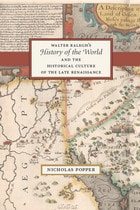
Walter Ralegh's "History of the World" and the Historical Culture of the Late Renaissance
Nicholas Popper
University of Chicago Press, 2012
Nicholas Popper uses Ralegh’s History as a touchstone in this lively exploration of the culture of history writing and historical thinking in the late Renaissance. From Popper we learn why early modern Europeans ascribed heightened value to the study of the past and how scholars and statesmen began to see historical expertise as not just a foundation for political practice and theory, but as a means of advancing their power in the courts and councils of contemporary Europe. The rise of historical scholarship during this period encouraged the circulation of its methods to other disciplines, transforming Europe’s intellectual—and political—regimes. More than a mere study of Ralegh’s History of the World, Popper’s book reveals how the methods that historians devised to illuminate the past structured the dynamics of early modernity in Europe and England.
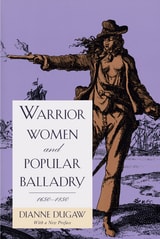
Warrior Women and Popular Balladry, 1650-1850
Dianne Dugaw
University of Chicago Press, 1995
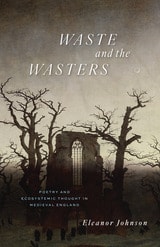
Waste and the Wasters
Poetry and Ecosystemic Thought in Medieval EnglandEleanor Johnson
University of Chicago Press, 2023
While the scale of today’s crisis is unprecedented, environmental catastrophe is nothing new. Waste and the Wasters studies the late Middle Ages, when a convergence of land contraction, soil depletion, climate change, pollution, and plague subsumed Western Europe. In a culture lacking formal scientific methods, the task of explaining and coming to grips with what was happening fell to medieval poets. The poems they wrote used the terms “waste” or “wasters” to anchor trenchant critiques of people’s unsustainable relationships with the world around them and with each other. In this book, Eleanor Johnson shows how poetry helped medieval people understand and navigate the ecosystemic crises—both material and spiritual—of their time.
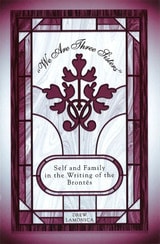
We Are Three Sisters
Self and Family in the Writing of the BrontësDrew Lamonica
University of Missouri Press, 2003
We-Narratives
Collective Storytelling in Contemporary FictionNatalya Bekhta
The Ohio State University Press, 2020
Natalya Bekhta’s We-Narratives: Collective Storytelling in Contemporary Fiction analyzes a storytelling form shaped by the pronoun “we,” probing the tensions between individuality and collectivity in more recent narratives in English. Despite a growing interest in collective characters and the we-form in narratology and beyond, narrative theory has not yet done justice to the plural voice in fiction. In fact, the formulation of a poetics of collective expression needs clear theoretical conventions and a reassessment of established concepts in order to approach plural voices and agents on their own terms. We-Narratives addresses this demand by distinguishing between indicative and performative uses of the first-person plural pronoun in fiction and by identifying formal and rhetorical possibilities of stories told by group narrators.
What does it mean for a multitude to speak as one? How can a truly collective narrative voice be achieved or lost? What are its aesthetic and political repercussions? In order to tackle these questions, Bekhta reads a range of contemporary novels and short stories by Jeffrey Eugenides, Joshua Ferris, Toby Litt, Zakes Mda, Joyce Carol Oates, and Julie Otsuka. She also focuses on narrative innovation by Margaret Atwood, William Faulkner, and Susan Sontag. These narratives feature group protagonists and narrators and therefore offer insight into collective narrative discourse and focalization, construction of communal knowledge and unreliability. We-narrative, taken as a distinct storytelling form, illuminates fiction’s expressive potential and nuances models of narrative analysis.
Wild Colonial Girl
Essays on Edna O'BrienEdited by Lisa Colletta and Maureen O'Connor
University of Wisconsin Press, 2006
Wild Colonial Girl situates O'Brien in Irish contexts that allow for an appraisal of her significant contribution to a specifically Irish women's literary tradition while attesting to the potency of writing against patriarchal conventions. Each chapter's clear and detailed readings of O'Brien's fiction build a convincing case for her literary, political, and cultural importance, providing an invaluable critical guide for an enriched appreciation of O'Brien and her work.
Wilfred Owen
An Illustrated LifeJane Potter
Bodleian Library Publishing, 2014
This generously illustrated book tells the story of Owen’s life and work, from his birth in 1893 to his tragic death just one week before the signing of the armistice that would end the war. The shocking realism of poems such as “Strange Meeting” and the angry disillusionment of “Anthem for Doomed Youth” reveal Owen’s transformation from a romantic youth steeped in the poetry of Keats to a mature soldier awakened to the horrors of the Western Front.
Drawing on numerous manuscripts, artifacts, and family photographs, this book gives a comprehensive view of the relationship between the poet’s lived experience and his writing that will appeal equally to both those well-versed in Owen’s work and those seeking a well-researched, accessible introduction.
Wilkie Collins and Copyright
Sundeep Bisla
The Ohio State University Press, 2013
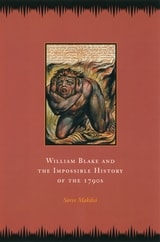
William Blake and the Impossible History of the 1790s
Saree Makdisi
University of Chicago Press, 2003
William Warner's Syrinx
or, A Sevenfold HistoryWilliam Warner, edited with introduction and notes by Wallace A. Bacon
Northwestern University Press, 1950
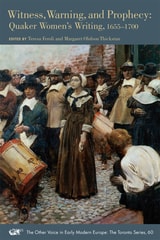
Witness, Warning, and Prophecy
Quaker Women's Writing, 1655-1700Edited by Teresa Feroli and Margaret Olofson Thickstun
Iter Press, 2018
The Other Voice in Early Modern Europe - The Toronto Series: Volume 60
Women and Comedy
Rewriting the British Theatrical TraditionSusan Carlson
University of Michigan Press, 1991
Women and Music in the Age of Austen
Linda Zionkowski
Bucknell University Press, 2024
Published by Bucknell University Press. Distributed worldwide by Rutgers University Press.
Women as Translators in Early Modern England
Deborah Uman
University of Delaware Press, 2012
Women as Translators in Early Modern England offers a feminist theory of translation that considers both the practice and representation of translation in works penned by early modern women. It argues for the importance of such a theory in changing how we value women’s work. Because of England’s formal split from the Catholic Church and the concomitant elevation of the written vernacular, the early modern period presents a rich case study for such a theory. This era witnessed not only a keen interest in reviving the literary glories of the past, but also a growing commitment to humanist education, increasing literacy rates among women and laypeople, and emerging articulations of national sentiment. Moreover, the period saw a shift in views of authorship, in what it might mean for individuals to seek fame or profit through writing. Until relatively recently in early modern scholarship, women were understood as excluded from achieving authorial status for a number of reasons—their limited education, the belief that public writing was particularly scandalous for women, and the implicit rule that they should adhere to the holy trinity of “chastity, silence, and obedience.”
While this view has changed significantly, women writers are still understood, however grudgingly, as marginal to the literary culture of the time. Fewer women than men wrote, they wrote less, and their “choice” of genres seems somewhat impoverished; add to this the debate over translation as a potential vehicle of literary expression and we can see why early modern women’s writings are still undervalued. This book looks at how female translators represent themselves and their work, revealing a general pattern in which translation reflects the limitations women faced as writers while simultaneously giving them the opportunity to transcend these limitations. Indeed, translation gave women the chance to assume an authorial role, a role that by legal and cultural standards should have been denied to them, a role that gave them ownership of their words and the chance to achieve profit, fame, status and influence.
Published by University of Delaware Press. Distributed worldwide by Rutgers University Press.
Women at Odds
Indifference, Antagonism, and Progress in Late Victorian LiteratureRiya Das
The Ohio State University Press, 2024
In Women at Odds, Riya Das demonstrates the limitations of female solidarity for the New Woman in Victorian society. On the one hand, feminist antagonism disrupts the status quo in unanticipated ways, and it helps open new domestic and professional pathways for women. On the other hand, the urban professional New Woman’s rhetoric recycles distinctly sexist, racist, and classist conventions, thereby bringing middle-class Englishwomen dialectically—what Das terms “retro-progressively”—into the labor pool of the British empire.
While foregrounding the figure of the New Woman as a white imperialist reformer, Das illustrates how the New Woman movement detaches itself from the domestic politics of female friendship. In works by George Eliot, George Gissing, Olive Schreiner, Bram Stoker, and others, antagonism and indifference enable the fin de siècle New Woman to transcend traditionally defined roles and fashion social progress for herself at the expense of femininities she excludes as “other.” By contesting the critical notion of solidarity as the only force that brings Victorian women’s narratives to fruition, Women at Odds reveals the troubled but effective role of antagonistic and indifferent reformist politics in loosening rigid social structures for privileged populations.
Women's Household Drama
Loves Victorie, A Pastorall, and The concealed FansyesMary Wroth, Jane Cavendish, and Elizabeth Brackley
Iter Press, 2018
Volume 66 in the Other Voice in Early Modern Europe - The Chicago Series
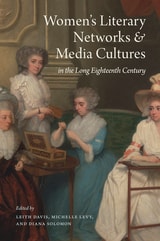
Women's Literary Networks and Media Cultures in the Long Eighteenth Century
Leith Davis
Bucknell University Press, 2027
This pathbreaking collection features original essays by leading scholars working at the intersections of women’s literary history, book history, and media cultures. Drawing on underexplored archives and innovative methodologies—from feminist bibliography to digital humanities—the contributors generate new narratives about the long eighteenth century and the centrality of gender to its literary production. Moving beyond a narrow focus on authorship, the chapters recover women as writers and readers, editors and curators, printers and book owners, scholars, preachers, and political actors. Across print, manuscript, and oral cultures, they illuminate the collaborative networks and material conditions shaping cultural production and circulation. Organized into sections on print histories, manuscript cultures, and new methodological approaches, this collection reshapes eighteenth-century studies while modeling ethically engaged archival research. Accessible and wide-ranging, it will appeal to scholars and students in literary studies, women’s and gender studies, and book history alike.
Published by Bucknell University Press. Distributed worldwide by Rutgers University Press.
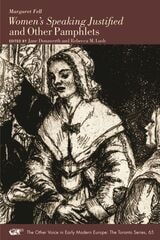
Women's Speaking Justified and Other Pamphlets
Margaret Fell
Iter Press, 2018
The Other Voice in Early Modern Europe - The Toronto Series, volume 65
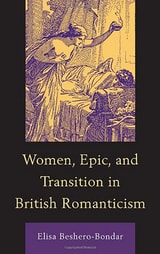
Women, Epic, and Transition in British Romanticism
Elisa Beshero-Bondar
University of Delaware Press, 2011
Women, Epic, and Transition in British Romanticism argues that early nineteenth-century women poets contributed some of the most daring work in modernizing the epic genre. The book examines several long poems to provide perspective on women poets working with and against men in related efforts, contributing together to a Romantic movement of large-scale genre revision. Women poets challenged longstanding categorical approaches to gender and nation in the epic tradition, and they raised politically charged questions about women’s importance in moments of historical crisis.
While Romantic epics did not all engage in radical questioning or undermining of authority, this study calls attention to some of the more provocative poems in their approach to gender, culture, and history. This study prioritizes long poems written by and about women during the Romantic era, and does so in context with influential epics by male contemporaries. The book takes its cue from a dramatic increase in the publication of epics in the early nineteenth-century. At their most innovative, Romantic epics provoked questions about the construction of ideological meaning and historical memory, and they centralized women’s experiences in entirely new ways to reflect on defeat, loss, and inevitable transition. For the first time the epic became an attractive genre for ambitious women poets.
The book offers a timely response to recent groundbreaking scholarship on nineteenth-century epic by Herbert Tucker and Simon Dentith, and should be of interest to Romanticists and scholars of 18th- and 19th-century literature and history, gender and genre, and women’s studies.
Published by University of Delaware Press. Distributed worldwide by Rutgers University Press.

Women, Work, and Representation
Needlewomen in Victorian Art and LiteratureLynn M. Alexander
Ohio University Press, 2003
In Victorian England, virtually all women were taught to sew; needlework was allied with images of domestic economy and with traditional female roles of wife and mother- with home rather than factory. The professional seamstress, however, labored long hours for very small wages creating gowns for the upper and middle classes. In her isolation and helplessness, she provided social reformers with a powerful image of working-class suffering that appealed to the sensibilities of the upper classes and helped galvanize public opinion around the need for reform.
Women, Work, and Representation addresses the use of that image in the reform movement, underscoring the shock to the Victorian public when reports revealed that the profession of needlework was extremely hazardous, even deadly.
Author Lynn M. Alexander traces the development of the symbol of the seamstress through a variety of presentations, drawing from the writings of Charles Dickens, Elizabeth Gaskell, Charlotte Elizabeth Tonna, and George W. M. Reynolds, and on visual representations by Richard Redgrave, Thomas Benjamin Kennington, John Everett Millais, John Leech, John Tenniel, and Hubert von Herkomer.
Written to appeal to Victorian scholars, women's studies scholars, and those interested in semiotics and aestheticism, Women, Work, and Representation includes twenty illustrations, most from periodicals of the day, providing new insights into the lives of working women throughout the Victorian era.
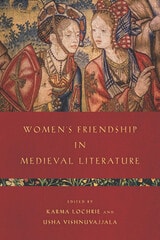
Women’s Friendship in Medieval Literature
Edited by Karma Lochrie and Usha Vishnuvajjala
The Ohio State University Press, 2022
Contributors:
Penelope Anderson, Andrea Boffa, Jennifer N. Brown, Christine Chism, Melissa Ridley Elmes, Laurie Finke, Carissa M. Harris, Lydia Yaitsky Kertz, Clare A. Lees, Karma Lochrie, Gillian R. Overing, Alexandra Verini, Usha Vishnuvajjala, Stella Wang
Word Crimes
Blasphemy, Culture, and Literature in Nineteenth-Century EnglandJoss Marsh
University of Chicago Press, 1998
From extensive archival and literary research, Joss Marsh reconstructs a unified and particular account of blasphemy in Victorian England. Rewriting English history from the bottom up, she tells the forgotten stories of more than two hundred working-class "blasphemers," like Foote, whose stubborn refusal to silence their "hooligan" voices helped secure our rights to speak and write freely today. The new standards of criminality used to judge their "word crimes" rewrote the terms of literary judgment, demoting the Bible to literary masterpiece and raising Literature as the primary standard of Victorian cultural value.

Words on the Air
Essays on Language, Manners, Morals, and LawsJohn Sparrow
University of Chicago Press, 1981
Wordsworth in His Major Lyrics
The Art and Psychology of Self-RepresentationLeon Waldoff
University of Missouri Press, 2001
Wordsworth in His Major Lyrics explores the identity, role, and subjectivity of the speaker in Wordsworth's finest and best-known longer lyrics—"Tintern Abbey," "Resolution and Independence," "Ode: Intimations of Immortality," and "Elegiac Stanzas." Because Wordsworth is the most autobiographical poet of the Romantic period, and perhaps in the English language, readers naturally take the speaker to be the poet himself or, as Wordsworth says in his prefaces and essays, "the poet in his own person."
Some readers allow for a fictional dimension in the characterization of the speaker and refer to him as a persona; others treat him as a biographical self, defined in literary, political, historical, or cultural terms. Leon Waldoff examines the critical issues posed by these different understandings of the speaker's identity and argues for a conception of Wordsworth's lyrical "I" that deals with the dramatic and psychological complexities of the speaker's act of self-representation.
Taking concepts from Freud and Winnicott, this book presents a psychoanalytic model for defining the speaker and conceptualizing his subjectivity. Waldoff suggests that the lyrical "I" in each poem is a transitional self of the poet. The poem offers, in the suspended moment and cultural space of lyrical form, a self-dramatization in which the speaker attempts to act out, in the sense of both performing and attempting to achieve, a reconstitution and transformation of the self.
In a series of close readings that provide formalistic and psychological analysis, the book shows that the major lyrics contain compelling evidence that Wordsworth devoted much of his poetic art to each speaker's act of self-dramatization. The various strategies that each speaker employs and the self- dramatizing character of his utterance are theorized and assimilated into an understanding of the subjectivity he represents.
Waldoff concludes that Wordsworth's lyrical "I" requires a conception of subjectivity that gives greater recognition to its individual, psychological dimensions and to the art of self-representation in each poem than recent Wordsworth criticism has provided. This important new work will be appreciated by anyone interested in Wordsworth or in Romantic poetry.
Wordsworth's Fun
Matthew Bevis
University of Chicago Press, 2019
Wordsworth’s Fun explores the writer’s debts to the ludic and the ludicrous in classical tradition; his reworkings of Ariosto, Erasmus, and Cervantes; his engagement with forms of English poetic humor; and his love of comic prose. Combining close reading with cultural analysis, Bevis travels many untrodden ways, studying Wordsworth’s interest in laughing gas, pantomime, the figure of the fool, and the value of play. Intrepid, immersive, and entertaining, Wordsworth’s Fun sheds fresh light on how one poet’s strange humor helped to shape modern literary experiment.
Wordsworth's Second Nature
A Study of the Poetry and PoliticsJames Chandler
University of Chicago Press, 1984
Central to the discussion, which restores Wordsworth to both the French and English contexts in which he matured, is a consideration of his relation to Rousseau and Burke. Chandler maintains that by the time Wordsworth set forth his "program for poetry" in 1798, he had turned away from the Rousseauist idea of nature that had informed his early republican writings. He had already become a poet of what Burke called "second nature"–human nature cultivated by custom, habit, and tradition–and an opponent of the quest for first principles that his friend Coleridge could not forsake. In his analysis of the poetry, Chandler suggests that even Wordsworth's most apparently private moments, the lyrical "spots of time," ideologically embodied the uncalculated habits of an oral narrative discipline and a native English mind.
Working Fictions
A Genealogy of the Victorian NovelCarolyn Lesjak
Duke University Press, 2006
Lesjak demonstrates how the ideological work of the literature of the Victorian era, the “golden age of the novel,” revolved around separating the domains of labor and pleasure and emphasizing the latter as the proper realm of literary representation. She reveals how the utopian works of Morris and Wilde grapple with this divide and attempt to imagine new relationships between work and pleasure, relationships that might enable a future in which work is not the antithesis of pleasure. In Working Fictions, Lesjak argues for the contemporary relevance of the “labor novel,” suggesting that within its pages lie resources with which to confront the gulf between work and pleasure that continues to characterize our world today.
Woven Shades of Green
An Anthology of Irish Nature LiteratureTim Wenzell
Bucknell University Press, 2019
Published by Bucknell University Press. Distributed worldwide by Rutgers University Press.
Writing Lives in the Eighteenth Century
Tanya M. Caldwell
Bucknell University Press, 2020
Published by Bucknell University Press. Distributed worldwide by Rutgers University Press.
Writing Maternity
Medicine, Anxiety, Rhetoric, and GenreDara Rossman Regaignon
The Ohio State University Press, 2021
Writing against War
Literature, Activism, and the British Peace MovementCharles Andrews
Northwestern University Press, 2017
The cataclysm of the First World War gave rise to the British Peace Movement, a spectrum of pacifist, internationalist, and antiwar organizations and individuals. Antiwar sentiments found expression not only in editorials, criticism, and journalism but also in novels and other works of literature. Writing against War examines the work of Aldous Huxley, Storm Jameson, Siegfried Sassoon, Rose Macaulay, and Virginia Woolf to analyze the effects of their attempts to employ fiction in the service of peace activism. It further traces how Huxley, Woolf, and others sought to reconcile their antiwar beliefs with implacable military violence.
The British Peace Movement's failure to halt the rise of fascism and the Second World War continues to cast a shadow over contemporary pacifist movements. Writing about War will fascinate scholars of peace studies and literature and offers valuable insights for current-day peace activists and artists who seek to integrate creativity with activism.
Writing the Thames
Christina Hardyment
Bodleian Library Publishing, 2016
Beautifully illustrated with seventy full-color illustrations, this book tells the river’s remarkable story through art, poetry, and prose, while celebrating the writers who helped form its enduring legacy.
Writing through Boyhood in the Long Eighteenth Century
Age, Gender, and WorkChantel Lavoie
University of Delaware Press, 2024
Writings of a Well-Learned Gentlewoman
Margaret More Roper
Iter Press, 2024
Margaret More Roper (1505–44) was, at the age of nineteen, the first early modern woman writer in Tudor England and the first nonroyal woman to have a book printed in the English language. As the eldest daughter of Sir Thomas More, Roper received a cutting-edge education in Latin and Greek that was virtually unprecedented for a woman. Besides gaining an international reputation for her outstanding erudition, Roper served as More’s confidante during his imprisonment. Her correspondence from this period offers valuable insight into a key moment in English history.
This Other Voice series edition recognizes Margaret More Roper as a notable historical figure in her own right and as one of the most learned women of her time. It publishes all her extant writings in modernized spelling, with annotations, a glossary, and a current bibliography of studies about her.

Wuthering Heights on Film and Television
A Journey Across Time and CulturesValérie V. Hazette
Intellect Books, 2015
Wuthering Heights
A StudyU.C. Knoepflmacher
Ohio University Press, 1994