Results by title
99 books match the query 'Environment' and 5 start with w

Waterscapes
Reservoirs, Environment and Identity in Modern England and WalesAndrew McTominey
University of London Press, 2025
Carving vast lakes into the countryside, reservoirs have long reshaped the landscapes and communities of England and Wales. Waterscapes evaluates how these feats of engineering transformed rural and urban environments between the late nineteenth and early twentieth centuries, altering local ecologies and economies. Through studies of Leeds’s Washburn Valley, Liverpool’s Vyrnwy Reservoir, and Birmingham’s Elan Reservoir, Andrew McTominey addresses the environmental consequences of dam construction and the surprising ways in which reservoirs became sites of leisure and tourism.
McTominey explains that water management has never been a simple question of supply and demand, but a story of contested landscapes and the complex interplay between nature and human ambition. Drawing on environmental history and urban studies, Waterscapes demystifies the reservoirs that continue to shape Britain’s countryside and city life.
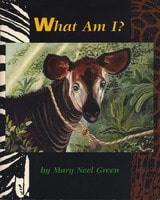
What Am I?
By Mary Neel Green
University of Texas Press, 1999
In the dense, shady rain forest, it's easy for a little guy to get lost from his mother. When a young okapi wanders away from his mom, he discovers the world of people and learns that he is a very special animal, different from all the rest. But still he misses his mother and their home in the forest. How can he get back?
This heartwarming tale with a happy ending introduces children from ages three to eight to the okapi, a graceful, elusive animal native to the Ituri Forest of Congo-Zaire. Based on the true story of an okapi calf that escaped from captivity, it is sure to delight young animal lovers, while teaching them basic facts about the family life of the okapi. A brief afterword provides more information for parents and older children.
Wild Fictions
Essays on Literature, Empire, and the EnvironmentAmitav Ghosh
University of Chicago Press, 2025
A collection of essays on themes central to Ghosh’s work: imperialism and decolonization, climate change, and the stories of ordinary people making lives amid these historical forces.
Wild Fictions brings together Amitav Ghosh’s extraordinary writings on subjects that have obsessed him over the last twenty-five years: literature and language; climate change and the environment; and human lives, travel, and discoveries. Threaded throughout the collection are his reflections on the spaces that we inhabit and how we occupy them. From the significance of the commodification of the clove to the diversity of the mangrove forests in Bengal and the radical fluidity of multilingualism, Wild Fictions is a powerful refutation of imperial violence, a fascinating exploration of the fictions we weave to absorb history, and a reminder of the importance of sensitivity and empathy.
With the combination of moral passion, intellectual curiosity, and literary elegance that defines his writing, Ghosh makes readers understand the world in new and urgent ways. Together, the pieces in Wild Fictions chart a course that allows us to heal our relationships and restore the delicate balance with the volatile landscapes to which we all belong.
Women’s Perspectives on Human Security
Violence, Environment, and SustainabilityRichard Matthew; Patricia A. Weitsman; Gunhild Hoogensen Gjørv; Nora Davis; Tera Dornfeld
Ohio University Press, 2020
Violent conflict, climate change, and poverty present distinct threats to women worldwide. Importantly, women are leading the way creating and sharing sustainable solutions.
Women’s security is a valuable analytical tool as well as a political agenda insofar as it addresses the specific problems affecting women’s ability to live dignified, free, and secure lives. First, this collection focuses on how conflict impacts women’s lives and well-being, including rape and gendered constructions of ethnicity, race, and religion. The book’s second section looks beyond the scope of large-scale violence to examine human security in terms of environmental policy, food, water, health, and economics.
Multidisciplinary in scope, these essays from new and established contributors draw from gender studies, international relations, criminology, political science, economics, sociology, biological and ecological sciences, and planning.
Writing the Goodlife
Mexican American Literature and the EnvironmentPriscilla Solis Ybarra
University of Arizona Press, 2016
Goodlife writing has existed for at least the past century, Ybarra contends, but Chicana/o literary history’s emphasis on justice and civil rights eclipsed this tradition and hidden it from the general public’s view. Likewise, in ecocriticism, the voices of people of color most often appear in deliberations about environmental justice. The quiet power of goodlife writing certainly challenges injustice, to be sure, but it also brings to light the decolonial environmentalism heretofore obscured in both Chicana/o literary history and environmental literary studies.
Ybarra’s book takes on two of today’s most discussed topics—the worsening environmental crisis and the rising Latino population in the United States—and puts them in literary-historical context from the U.S.-Mexico War up to today’s controversial policies regarding climate change, immigration, and ethnic studies. This book uncovers 150 years’ worth of Mexican American and Chicana/o knowledge and practices that inspire hope in the face of some of today’s biggest challenges.