Results by title
733 books match the query 'Environmental Conservation & Protection' and 49 start with w
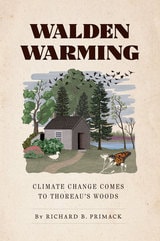
Walden Warming
Climate Change Comes to Thoreau's WoodsRichard B. Primack
University of Chicago Press, 2014
In Walden Warming, Richard B. Primack uses Thoreau and Walden, icons of the conservation movement, to track the effects of a warming climate on Concord’s plants and animals. Under the attentive eyes of Primack, the notes that Thoreau made years ago are transformed from charming observations into scientific data sets. Primack finds that many wildflower species that Thoreau observed—including familiar groups such as irises, asters, and lilies—have declined in abundance or have disappeared from Concord. Primack also describes how warming temperatures have altered other aspects of Thoreau’s Concord, from the dates when ice departs from Walden Pond in late winter, to the arrival of birds in the spring, to the populations of fish, salamanders, and butterflies that live in the woodlands, river meadows, and ponds.
Primack demonstrates that climate change is already here, and it is affecting not just Walden Pond but many other places in Concord and the surrounding region. Although we need to continue pressuring our political leaders to take action, Primack urges us each to heed the advice Thoreau offers in Walden: to “live simply and wisely.” In the process, we can each minimize our own contributions to our warming climate.
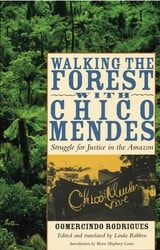
Walking the Forest with Chico Mendes
Struggle for Justice in the AmazonBy Gomercindo Rodrigues, Edited and translated by Linda Rabben
University of Texas Press, 2007
A close associate of Chico Mendes, Gomercindo Rodrigues witnessed the struggle between Brazil's rubber tappers and local ranchers—a struggle that led to the murder of Mendes. Rodrigues's memoir of his years with Mendes has never before been translated into English from the Portuguese. Now, Walking the Forest with Chico Mendes makes this important work available to new audiences, capturing the events and trends that shaped the lives of both men and the fragile system of public security and justice within which they lived and worked.
In a rare primary account of the celebrated labor organizer, Rodrigues chronicles Mendes's innovative proposals as the Amazon faced wholesale deforestation. As a labor unionist and an environmentalist, Mendes believed that rain forests could be preserved without ruining the lives of workers, and that destroying forests to make way for cattle pastures threatened humanity in the long run. Walking the Forest with Chico Mendes also brings to light the unexplained and uninvestigated events surrounding Mendes's murder.
Although many historians have written about the plantation systems of nineteenth-century Brazil, few eyewitnesses have captured the rich rural history of the twentieth century with such an intricate knowledge of history and folklore as Rodrigues.
Walking to the Sun
A Journey through America's Energy LandscapesTom Haines
University Press of New England, 2018
Walking with Muir across Yosemite
Thomas R. Vale
University of Wisconsin Press, 1998
Illustrated with drawings by John Muir and drawings and photos by the Vales, Walking with Muir across Yosemite emphasizes that current visitors to Yosemite—indeed to any national park—can still experience the solitude, wildness, and romanticism of nature. They believe, however, that this modern exploration would benefit from a national parks policy that actively promotes nature study and encourages a more profound interaction between humans and the natural world.
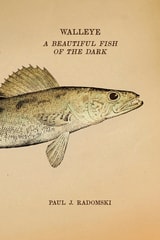
Walleye
A Beautiful Fish of the DarkPaul J. Radomski
University of Minnesota Press, 2022
Walleye, the holy grail of game fish: on catching them, understanding their biology and history, and ensuring their survival
Among the more than 34,000 species of fish, few have the walleye’s following—among anglers and diners, states conferring official status on the fish, and towns battling for recognition as the Walleye Capital of the World. And among those passionate fans, few know the walleye as well as Paul J. Radomski does—a fisheries biologist, lake ecology scientist, and old fisherman. In Walleye: A Beautiful Fish of the Dark he unspools the mysteries of this fascinating fish.
Radomski looks at walleye from every angle, with something to say to the curious naturalist, committed ecologist, and avid fishing enthusiast. People who view walleye as the “lion of the lakes” might be surprised to learn that rivers are their ancestral habitat. Some might wonder about the name “wall-eye,” a nod to an evolutionary adaptation to dark water environments. Others might simply ask: why walleye? What are they, where do they exist, how do they survive, and how have people come to depend on them? Radomski discusses the principles and pitfalls of managing this predator of the twilight (and the history and methods of doing so) and shares his informed perspective on when and where stocking is prudent. Finally, he explores three of the best walleye lakes: Winnebago, the largest inland walleye fishery in Wisconsin, and Mille Lacs and Red Lake in Minnesota.
From the simple pleasures of fishing for walleye to the most pressing questions about how this species survives, this book is the best word on this beautiful fish of the dark.
Waste and Abundance
The Measure of Consumption: Special Issue of SubStance, Issue 116, 37:2 (2008)Susan Cahill
University of Wisconsin Press, 2008
This collection of articles relates to a research area currently developing in the Humanities, which calls for philosophical and historical approaches to questions of sustainable development and waste management. The title of the issue reflects the central questions raised by all contributors: how are waste and abundance represented, how may we conceptualize these representations, and what ethical problems do they raise?
Particular attention is paid to the cultural and moral factors that condition our attitudes to waste and the ways in which literature addresses the problematic relationship that binds production, consumption and waste to social and political systems.
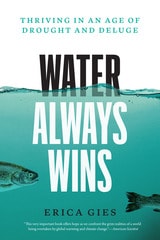
Water Always Wins
Thriving in an Age of Drought and DelugeErica Gies
University of Chicago Press, 2022
Nearly every human endeavor on the planet was conceived and constructed with a relatively stable climate in mind. But as new climate disasters remind us every day, our world is not stable—and it is changing in ways that expose the deep dysfunction of our relationship with water. Increasingly severe and frequent floods and droughts inevitably spur calls for higher levees, bigger drains, and longer aqueducts. But as we grapple with extreme weather, a hard truth is emerging: our development, including concrete infrastructure designed to control water, is actually exacerbating our problems. Because sooner or later, water always wins.
In this quietly radical book, science journalist Erica Gies introduces us to innovators in what she calls the Slow Water movement who start by asking a revolutionary question: What does water want? Using close observation, historical research, and cutting-edge science, these experts in hydrology, restoration ecology, engineering, and urban planning are already transforming our relationship with water.
Modern civilizations tend to speed water away, erasing its slow phases on the land. Gies reminds us that water’s true nature is to flex with the rhythms of the earth: the slow phases absorb floods, store water for droughts, and feed natural systems. Figuring out what water wants—and accommodating its desires within our human landscapes—is now a crucial survival strategy. By putting these new approaches to the test, innovators in the Slow Water movement are reshaping the future.
Water Politics in Northern Nevada
A Century of Struggle, Second EditionLeah J. Wilds
University of Nevada Press, 2014
Water Politics in Northern Nevada examines the Newlands Project, its unintended consequences, and decades of litigation over the abatement of these problems and fair allocation of water. Negotiations and federal legislation brought about the Truckee River Operating Agreement in 2008. This revised edition brings the reader up to date on the implementation of the agreement, including ongoing efforts to preserve and enhance Pyramid Lake. The second edition now also includes a discussion of the Walker River basin, following a major project undertaken to address concerns about the health and viability of Walker Lake. The approaches taken to save these two desert treasures, Pyramid Lake and Walker Lake, are offered as models for resolving similar water-resource conflicts in the West.
Leah J. Wilds’s study is crucial reading for students and scholars of water politics and environmental issues, not just in Nevada but throughout the western United States.

Water in the West
A High Country News ReaderChar Miller
Oregon State University Press, 2000
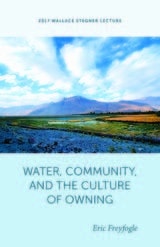
Water, Community, and the Culture of Owning
Eric T. Freyfogle
University of Utah Press, 2018
Building on these cultural critiques, Freyfogle takes up the issue of private property rights, highlighting the longstanding flexibility of this key American institution as well as the moral imperative to ensure that property rights aren’t used in ways that harm communities. Outdated understandings about private property, he concludes, have further confused our understanding and made sensible solutions to water problems even harder to imagine. Water-policy reform won’t happen, Freyfogle argues, until we reconsider how we understand nature and take charge of the institution of ownership, recasting it so as to increase the benefits it generates for everyone. If we can do that, solutions to water troubles could prove easier than we expect. The work concludes with an original, sweeping policy proposal to resolve the West’s water shortages and meet environmental needs in ways fair to all.
This lecture was presented on March 22, 2017, at the 22nd annual symposium sponsored by the Wallace Stegner Center for Land, Resources and the Environment at the S. J. Quinney College of Law, University of Utah.
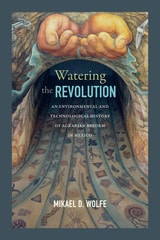
Watering the Revolution
An Environmental and Technological History of Agrarian Reform in MexicoMikael D. Wolfe
Duke University Press, 2017
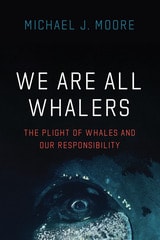
We Are All Whalers
The Plight of Whales and Our ResponsibilityMichael J. Moore
University of Chicago Press, 2021
Relating his experiences caring for endangered whales, a veterinarian and marine scientist shows we can all share in the salvation of these imperiled animals.
The image most of us have of whalers includes harpoons and intentional trauma. Yet eating commercially caught seafood leads to whales’ entanglement and slow death in rope and nets, and the global shipping routes that bring us readily available goods often lead to death by collision. We—all of us—are whalers, marine scientist and veterinarian Michael J. Moore contends. But we do not have to be.
Drawing on over forty years of fieldwork with humpback, pilot, fin, and, in particular, North Atlantic right whales—a species whose population has declined more than 20 percent since 2017—Moore takes us with him as he performs whale necropsies on animals stranded on beaches, in his independent research alongside whalers using explosive harpoons, and as he tracks injured whales to deliver sedatives. The whales’ plight is a complex, confounding, and disturbing one. We learn of existing but poorly enforced conservation laws and of perennial (and often failed) efforts to balance the push for fisheries profit versus the protection of endangered species caught by accident.
But despite these challenges, Moore’s tale is an optimistic one. He shows us how technologies for ropeless fishing and the acoustic tracking of whale migrations make a dramatic difference. And he looks ahead with hope as our growing understanding of these extraordinary creatures fuels an ever-stronger drive for change.
For more information on Moore’s book and research, please visit his webpage at the Woods Hole Oceanographic Institution.
We Are All Whalers
The Plight of Whales and Our ResponsibilityMichael J. Moore
University of Chicago Press, 2021
Relating his experiences caring for endangered whales, a veterinarian and marine scientist shows we can all share in the salvation of these imperiled animals.
The image most of us have of whalers includes harpoons and intentional trauma. Yet eating commercially caught seafood leads to whales’ entanglement and slow death in rope and nets, and the global shipping routes that bring us readily available goods often lead to death by collision. We—all of us—are whalers, marine scientist and veterinarian Michael J. Moore contends. But we do not have to be.
Drawing on over forty years of fieldwork with humpback, pilot, fin, and, in particular, North Atlantic right whales—a species whose population has declined more than 20 percent since 2017—Moore takes us with him as he performs whale necropsies on animals stranded on beaches, in his independent research alongside whalers using explosive harpoons, and as he tracks injured whales to deliver sedatives. The whales’ plight is a complex, confounding, and disturbing one. We learn of existing but poorly enforced conservation laws and of perennial (and often failed) efforts to balance the push for fisheries profit versus the protection of endangered species caught by accident.
But despite these challenges, Moore’s tale is an optimistic one. He shows us how technologies for ropeless fishing and the acoustic tracking of whale migrations make a dramatic difference. And he looks ahead with hope as our growing understanding of these extraordinary creatures fuels an ever-stronger drive for change.
For more information on Moore’s book and research, please visit his webpage at the Woods Hole Oceanographic Institution.
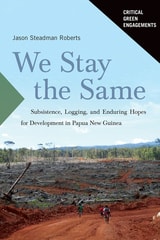
We Stay the Same
Subsistence, Logging, and Enduring Hopes for Development in Papua New GuineaJason Steadman Roberts
University of Arizona Press, 2024
Following a long history of smaller-scale and largely unsuccessful resource development efforts, New Hanover became the site of three multinational-controlled special agricultural and business leases (SABLs) that combined to cover over 75 percent of the island for ninety-nine-year lease terms. These agroforestry projects were part of a national effort to encourage “sustainable” rural development by tapping into the growing global demand for agricultural lands and crops like oil palm and biofuels. They were supposed to succeed where the smaller-scale projects of the past had failed. Unfortunately, these SABLs resulted in significant forest loss and livelihood degradation, while doing little to promote the type of economic development that many Lavongai had been hoping for.
It is within this context that We Stay the Same grounds questions of hope for transformative economic change within Lavongai assessments of the inequitable relationships between global processes of resource development and the local lives that have become increasingly defined by the necessities and failures of these processes. Written in a clear and relatable style for students, We Stay the Same combines ethnographic and ecological research to show how the Lavongai continue to survive and make meaningful lives in a situation where their own hopes for a better future have often been used against them as a mechanism of a more distantly profitable dispossession.
Wetland and Riparian Areas of the Intermountain West
Ecology and ManagementEdited by Mark C. McKinstry, Wayne A. Hubert, and Stanley H. Anderson
University of Texas Press, 2004
Wetlands and riparian areas between the Rocky Mountains and the Sierra Nevada are incredibly diverse and valuable habitats. More than 80 percent of the wildlife species in this intermountain region depend on these wetlands—which account for less than 2 percent of the land area—for their survival. At the same time, the wetlands also serve the water needs of ranchers and farmers, recreationists, vacation communities, and cities. It is no exaggeration to call water the "liquid gold" of the West, and the burgeoning human demands on this scarce resource make it imperative to understand and properly manage the wetlands and riverine areas of the Intermountain West.
This book offers land managers, biologists, and research scientists a state-of-the-art survey of the ecology and management practices of wetland and riparian areas in the Intermountain West. Twelve articles examine such diverse issues as laws and regulations affecting these habitats, the unique physiographic features of the region, the importance of wetlands and riparian areas to fish, wildlife, and livestock, the ecological function of these areas, their value to humans, and the methods to evaluate these habitats. The authors also address the human impacts on the land from urban and suburban development, mining, grazing, energy extraction, recreation, water diversions, and timber harvesting and suggest ways to mitigate such impacts.
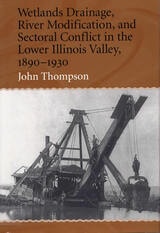
Wetlands Drainage, River Modification, and Sectoral Conflict in the Lower Illinois Valley, 1890-1930
John Thompson
Southern Illinois University Press, 2002
Thompson examines the history of the land drainage movement and the inevitable environmental changes caused by the intensification of urban and rural land use in the Midwest between sixty and one hundred years ago. He shows how institutions of land drainage were organized and operated and how the nascent drainage engineering and contracting sectors functioned. Focusing on the lower valley, Thompson also deals with drainage as it affects the nation, the Midwest, Chicago, and downstate Illinois.
Thompson is the first to address the array of interrelated physical, economic, and political circumstances caused by the development of competing and incompatible uses for the waters and the floodplain of the Illinois River when large-scale land reclamation and great volumes of water from Lake Michigan and Chicago changed land and water relationships, destroyed a major riverine fishing industry, and severely damaged renowned waterfowl hunting grounds.
Wetlands in Your Pocket
A Guide to Common Plants and Animals of Midwestern WetlandsMuller, Mark
University of Iowa Press, 2005
What Kind of Ancestor Do You Want to Be?
Edited by John Hausdoerffer, Brooke Parry Hecht, Melissa K. Nelson, and Katherine Kassouf Cummings
University of Chicago Press, 2021
What the River Carries
Encounters with the Mississippi, Missouri, and PlatteLisa Knopp
University of Missouri Press, 2012
Because Knopp was born and raised just a few blocks away, she considers the Mississippi from the perspective of a native resident, a “dweller in the land.” She revisits places she has long known: Nauvoo, Illinois, the site of two nineteenth-century utopias, one Mormon, one Icarian; Muscatine, Iowa, once the world’s largest manufacturer of pearl (mussel shell) buttons; and the mysterious prehistoric bird- and bear-shaped effigy mounds of northeastern Iowa. On a downriver trip between the Twin Cities and St. Louis, she meditates on what can be found in Mississippi river water—state lines, dissolved oxygen, smallmouth bass, corpses, family history, wrecked steamboats, mayfly nymphs, toxic perfluorinated chemicals, philosophies.
Knopp first encountered the Missouri as a tourist and became acquainted with it through literary and historical documents, as well as stories told by longtime residents. Her journey includes stops at Fort Bellefontaine, where Lewis and Clark first slept on their sojourn to the Pacific; Little Dixie, Missouri’s slaveholding, hemp-growing region, as revealed through the life of Jesse James’s mother; Fort Randall Dam and Lake Francis Case, the construction of which destroyed White Swan on the Yankton Sioux Reservation; and places that produced unique musical responses to the river, including Native American courting flutes, indie rock, Missouri River valley fiddling, Prohibition-era jazz jam sessions, and German folk music.
Knopp’s relationship with the Platte is marked by intentionality: she settled nearby and chose to develop deep and lasting connections over twenty years’ residence. On this adventure, she ponders the half-million sandhill cranes that pass through Nebraska each spring, the ancient varieties of Pawnee corn growing at the Great Platte River Road Archway Monument, a never-broken tract of tallgrass prairie, the sugar beet industry, and the changes in the river brought about by the demands of irrigation.
What's Nature Worth
Terre Satterfield
University of Utah Press, 2004
When the White Pine Was King
A History of Lumberjacks, Log Drives, and Sawdust Cities in WisconsinJerry Apps
Wisconsin Historical Society Press, 2020
For more than half a century, logging, lumber production, and affiliated enterprises in Wisconsin’s Northwoods provided jobs for tens of thousands of Wisconsinites and wealth for many individuals. The industry cut through the lives of nearly every Wisconsin citizen, from an immigrant lumberjack or camp cook in the Chippewa Valley to a Suamico sawmill operator, an Oshkosh factory worker to a Milwaukee banker.
When the White Pine Was King tells the stories of the heyday of logging: of lumberjacks and camp cooks, of river drives and deadly log jams, of sawmills and lumber towns and the echo of the ax ringing through the Northwoods as yet another white pine crashed to the ground. He explores the aftermath of the logging era, including efforts to farm the cutover (most of them doomed to fail), successful reforestation work, and the legacy of the lumber and wood products industries, which continue to fuel the state’s economy.
Enhanced with dozens of historic photos, When the White Pine Was King transports readers to the lumber boom era and reveals how the lessons learned in the vast northern forestlands continue to shape the region today.
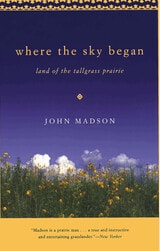
Where The Sky Began
Land of the Tallgrass PrairieJohn Madson
University of Iowa Press, 2004
Originally published in 1982, Where the Sky Began, John Madson’s landmark publication, introduced readers across the nation to the wonders of the tallgrass prairie, sparking the current interest in prairie restoration. Now back in print, this classic tome will serve as inspiration to those just learning about the heartland’s native landscape and rekindle the passion of long-time prairie enthusiasts.
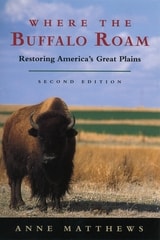
Where the Buffalo Roam
Restoring America's Great PlainsAnne Matthews
University of Chicago Press, 2002
This edition includes a new foreword by environmental historian Donald Worster. Matthews's new afterword describes how with growing support from Native Americans and private groups like the Nature Conservancy, the Poppers' dream of a Buffalo Commons is becoming a reality.
"An admirably crafted book, as poignant and entertaining as it is informative."—Seattle Times
"A priceless piece of Americana."—The Boston Globe
"Matthew's delightful account of the Poppers, their proposal and the controversy surrounding it does focus new attention on the region and its problems."—The Philadelphia Inquirer
"Bright, active, effective journalism. . . . An extremely savvy overlook of the dilemmas of the Great Plains."—Wallace Stegner
Where the Wild Books Are
A Field Guide to EcofictionJim Dwyer
University of Nevada Press, 2010
As interest in environmental issues grows, many writers of fiction have embraced themes that explore the connections between humans and the natural world. Ecologically themed fiction ranges from profound philosophical meditations to action-packed entertainments. Where the Wild Books Are offers an overview of nearly 2,000 works of nature-oriented fiction. The author includes a discussion of the precursors and history of the genre, and of its expansion since the 1970s. He also considers its forms and themes, as well as the subgenres into which it has evolved, such as speculative fiction, ecodefense, animal stories, mysteries, ecofeminist novels, cautionary tales, and others. A brief summary and critical commentary of each title is included. Dwyer’s scope is broad and covers fiction by Native American writers as well as ecofiction from writers around the world. Far more than a mere listing of books, Where the Wild Books Are is a lively introduction to a vast universe of engaging, provocative writing. It can be used to develop book collections or curricula. It also serves as an introduction to one of the most fertile areas of contemporary fiction, presenting books that will offer enjoyable reading and new insights into the vexing environmental questions of our time.
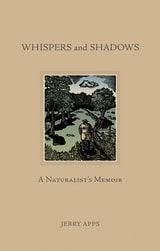
Whispers and Shadows
A Naturalist’s MemoirJerry Apps
Wisconsin Historical Society Press, 2015
Combining his signature lively storytelling and careful observations of nature, Apps draws on a lifetime of experiences, from his earliest years growing up on a central Wisconsin farm to his current ventures as gardener, tree farmer, and steward of wetlands, prairies, and endangered Karner blue butterflies. He also takes inspiration from the writings of Aldo Leopold, Annie Dillard, Henry David Thoreau, Sigurd Olson, Ralph Waldo Emerson, John Muir, Barbara Kingsolver, Wendell Berry, Richard Louv, and Rachel Carson. With these eloquent essays, Jerry Apps reminds us to slow down, turn off technology, and allow our senses to reconnect us to the natural world. For it is there, he writes, that “I am able to return to a feeling I had when I was a child, a feeling of having room to stretch my arms without interfering with another person, a feeling of being a small part of something much larger than I was, and I marvel at the idea.”
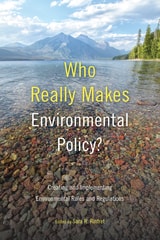
Who Really Makes Environmental Policy?
Creating and Implementing Environmental Rules and RegulationsEdited by Sara R. Rinfret
Temple University Press, 2021
The United States Congress appears to be in perpetual gridlock on environmental policy, notes Sara Rinfret, editor of the significant collection, Who Really Makes Environmental Policy? As she and her contributors explain, however, most environmental policy is not made in the halls of Congress. Instead, it is created by agency experts in federal environmental agencies and it is implemented at the state level. These individuals have been delegated the authority to interpret vague congressional legislation and write rules—and these rules carry the same weight as congressional law.
Who Really Makes Environmental Policy? brings together top scholars to provide an explanation of rulemaking processes and regulatory policy, and to show why this context is important for U.S. environmental policy. Illustrative case studies about oil and gas regulations in Colorado and the regulation of coal ash disposal in southeastern states apply theory to practice. Ultimately, the essays in this volume advance our understanding of how U.S. environmental policy is made and why understanding regulatory policy matters for its future.
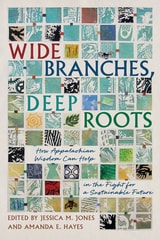
Wide Branches, Deep Roots
How Appalachian Wisdom Can Help in the Fight for a Sustainable FutureJessica M Jones
West Virginia University Press, 2026
To be Appalachian is to define oneself in terms of a place. Where we’re from plays a tremendous role in who we are, through storytelling about our homeplaces and the people who have loved them. However, what goes largely unaddressed is how this love of place can contribute to sustainability within the region, which has notoriously faced on-going environmental threats from extraction industries. The reality is that our relationship with the environment is thorny and intertwined with our identities, histories, and economic realities. The authors in the collection get down among the thorns to explore what sustainability means in Appalachia and how we can utilize the power of traditional folkways to achieve it.
This collection of over thirty pieces explores the connections between Appalachia’s stories, traditions, and modern events and the pathway to regional sustainability. The contributors — writers and scholars — examine how our definitions of sustainability have been formed, the power of education to encourage or inhibit it, and what moves are being made toward efficacy in the future. They also offer specific actions readers can take to better understand and build sustainability where they live.
Contributors: Greg Bealer, Luc Biscan-White, David Blackmore, Aysha Bodenhamer, Ivy Brashear, Matthew Calloway, Nicole Drewitz-Crockett, Christina Fisanick, Deborah Fleming, Amanda V. Garner, Karie Gunter-Seymour, Richard Hague, Amanda E. Hayes, Lockie Hunter, Jessica M. Jones, Kristen LeFevers, Sarah Long, Meghan Moore-Hubbard, Barbara Marie Minney, Jessica Radicic, Elizabeth Emmerth Rexroad, Barbara Sabol, Larry Smith, Patrice Stank, Taylor Nasim Stone, Paul Thomas, Elizabeth Tussey, and Betsy Weems.
Wild Fictions
Essays on Literature, Empire, and the EnvironmentAmitav Ghosh
University of Chicago Press, 2025
A collection of essays on themes central to Ghosh’s work: imperialism and decolonization, climate change, and the stories of ordinary people making lives amid these historical forces.
Wild Fictions brings together Amitav Ghosh’s extraordinary writings on subjects that have obsessed him over the last twenty-five years: literature and language; climate change and the environment; and human lives, travel, and discoveries. Threaded throughout the collection are his reflections on the spaces that we inhabit and how we occupy them. From the significance of the commodification of the clove to the diversity of the mangrove forests in Bengal and the radical fluidity of multilingualism, Wild Fictions is a powerful refutation of imperial violence, a fascinating exploration of the fictions we weave to absorb history, and a reminder of the importance of sensitivity and empathy.
With the combination of moral passion, intellectual curiosity, and literary elegance that defines his writing, Ghosh makes readers understand the world in new and urgent ways. Together, the pieces in Wild Fictions chart a course that allows us to heal our relationships and restore the delicate balance with the volatile landscapes to which we all belong.
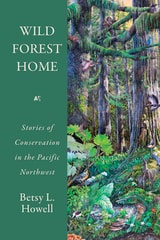
Wild Forest Home
Stories of Conservation in the Pacific NorthwestBetsy L. Howell
University of Utah Press, 2024
The twenty-five essays in Wild Forest Home chronicle Howell’s career and personal experiences studying the wildlife of the Pacific Northwest during the litigious listing of the northern spotted owl and marbled murrelet under the Endangered Species Act and the Clinton administration’s adoption of the seminal 1994 Northwest Forest Plan. Meanwhile, Howell toiled on fire crews, searched for rare species, helped to monitor fishers reintroduced to the Olympic Peninsula, tested amphibians for deadly diseases, became a writer, and mourned the deaths of her parents. This captivating memoir seamlessly blends story and science to reveal a unique portrait of the struggles and joys of one wildlife biologist.
Wild Hope
On the Front Lines of Conservation SuccessAndrew Balmford
University of Chicago Press, 2012
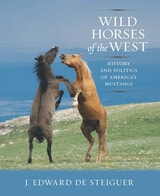
Wild Horses of the West
History and Politics of America's MustangsJ. Edward de Steiguer
University of Arizona Press, 2011
In Wild Horses of the West, J. Edward de Steiguer provides an entertaining and well-researched look at one of the most controversial animal welfare issues of our time—the protection of free-roaming horses on the West’s public lands. This is the first book in decades to include the entire story of these magnificent animals, from their evolution and biology to their historical integration into conquistador, Native American, and cowboy cultures. And the story isn’t over. De Steiguer goes on to address the modern issues— ecology, conservation, and land management—surrounding wild horses in the West today.
Featuring stunning color photographs of wild horses, this extremely thorough and engaging blend of history, science, and politics will appeal to students of the American West, conservation activists, and anyone interested in the beauty and power of these striking animals.
Wild Plants of the Sierra Nevada
Ray S. Vizgirdas
University of Nevada Press, 2009
Wild Sea
Eco-Wars and Surf Stories from the Coast of the CaliforniasSerge Dedina
University of Arizona Press, 2011
Dedina grew up in Imperial Beach, California, just north of the Mexican border, and he feels equally at home in Mexico and the States. An expert on gray whales, he eloquently describes the fight he helped to lead against the Mitsubishi Corporation, whose plan to build a salt-processing plant in the San Ignacio Lagoon in Baja California would have destroyed the world’s last undeveloped gray whale lagoon. With similar fervor, Dedina describes helping to construct the unlikely coalition that succeeded in defeating a proposed toll road that would have decimated a legendary California surf spot.
In between, he writes about the first surfers in Baja, the Great Baja Land Rush of the 1990s, Tijuana’s punk music scene, the pop-culture wrestling phenomenon lucha libre, the reasons why ocean pollution must be stopped, and the way HBO took over his hometown. Anyone interested in what’s happening to our natural places or just yearning to read about someone really making a difference in the world will find this a book worth sinking their teeth into.
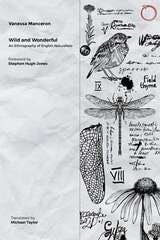
Wild and Wonderful
An Ethnography of English NaturalistsVanessa Manceron
HAU, 2025
In Wild and Wonderful, social anthropologist Vanessa Manceron investigates an understudied but indispensable scientific practice: getting to know and recognize the living worlds around us. Her research takes her to England, where a longstanding naturalist tradition brings together professionals, academics, and amateurs to study the world around them. Observing the natural world here is regarded not as a simple hobby, but as a necessary activity. This is participatory science, an itinerant brand of scholarship that immerses itself in a specific and delimited territory, meticulously documenting the species living there and how they develop and expand their domain or regress and disappear. Manceron leads us through woods and fields, showing us another way of looking, of paying attention to minute differences, sounds, and variations of color. Her book is both a contribution to the anthropology of science and an opportunity to take a fresh look at our relationship with nature, affording us a glimpse of another way of living and living with.
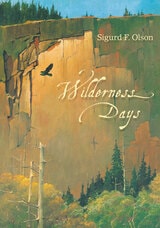
Wilderness Days
Sigurd F. Olson
University of Minnesota Press, 2012
In the evocative words of one of America’s best-loved nature writers, Wilderness Days brings together the essence of the magnificent wilderness with which he so deeply identifies. Sigurd F. Olson collects from his writings those moments that most vividly depict the turn of the seasons in the great woodlands and waters of the legendary Quetico–Superior region overlapping the Ontario–Minnesota border.
Wilderness Tapestry
An Eclectic Approach To PreservationVause Zeveloff
University of Nevada Press, 1992
To further understanding of the meanings and values of wilderness, this volume explores wilderness and its significance to humans from myriad viewpoints, based on a meeting of the North American Interdisciplinary Wilderness Conference.

Wilderness Within
The Life of Sigurd F. OlsonDavid Backes
University of Minnesota Press, 1999
The critically acclaimed biography of this venerable naturalist and writer.
The first biography of this venerable naturalist and writer.
Sigurd Olson (1899-1982) was acknowledged during his lifetime as a leader of the American environmental movement, an emblematic figure for an entire generation of activists. A Wilderness Within is the first biography of this writer, teacher, and activist who was a harbinger of the opening of America’s ecological consciousness.From opposing the building of roads in the wilderness to preserving America’s most treasured wild rivers, Olson was involved in fierce battles over the environment throughout his life. He testified before Congress, spoke at town meetings, and was once even hanged in effigy.But Olson is best known for his many essays that express the wonder, awe, and peace he found in the wilderness. The lyricism and evocative beauty of his prose became a model for nature writers like Barry Lopez and Annie Dillard. Olson’s popular books, including The Singing Wilderness, Listening Point, and Reflections from the North Country, are beloved by generations of readers, with over 300,000 copies sold. A Wilderness Within looks beyond the environmental battles and books to expose the inner forces that drove Sigurd Olson. He rejected his father’s path as a minister and agonized over his own spiritual life, struggled with school and work. Backes details Olson’s painful path to becoming a writer, and the physical and emotional tolls that his activism and writing took of him. For this biography, Backes conducted interviews with Olson’s family and had complete access to Olson’s papers, diaries, correspondence, and photographs. This research is what makes A Wilderness Within the authoritative portrait of one of the greatest environmentalists of the twentieth century.A stunning look at a man with a vision for the natural world and a vision for himself, A Wilderness Within will be essential reading for Olson fans, historians, and outdoors people around the country.David Backes is the author of Canoe Country: An Embattled Wilderness (1991) and The Wilderness Companion (1992).424 pages Translation Rights: University of Minnesota Press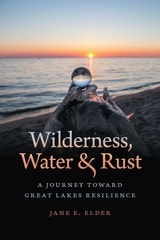
Wilderness, Water, and Rust
A Journey toward Great Lakes ResilienceJane Elder
Michigan State University Press, 2024
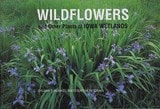
Wildflowers and Other Plants of Iowa Wetlands
Sylvan T. Runkel
University of Iowa Press, 1999
Wildland Sentinel
Field Notes from an Iowa Conservation OfficerErika Billerbeck
University of Iowa Press, 2020
Wildlife Conservation in a Changing Climate
Edited by Jedediah F. Brodie, Eric S. Post, and Daniel F. Doak
University of Chicago Press, 2012
Wildlife Crime
From Theory to PracticeWilliam D.Moreto
Temple University Press, 2018
The editors and contributors to Wildlife Crime examine topical issues from extinction to trafficking in order to understand the ecological, economic, political, and social costs and consequences of these crimes. Drawing from diverse theoretical perspectives, empirical and methodological developments, and on-the-ground experiences of practitioners, this comprehensive volume looks at how conservationists and law enforcement grapple with and combat environmental crimes and the profitable market for illegal trade.
Chapters cover criminological perspectives on species poaching, unregulated fishing, the trading of ivory and rhino horns, the adoption of conservation technologies, and ranger workplaces and conditions. The book includes firsthand experiences and research from China, Indonesia, Kenya, Madagascar, Morocco, Peru, Russia, South Africa, Tanzania, and the United States. The result is a significant book about the causes of and response to wildlife crime.
Contributors include: Johan Bergenas, Avi Brisman, Craig Forsyth, Meredith Gore, Georg Jaster, Alex Killion, Kasey Kinnard, Antony C. Leberatto, Barney Long, Nerea Marteache, Gohar Petrossian, Jonah Ratsimbazafy, Gary Roloff, Viviane Seyranian, Louise Shelley, Rohit Singh, Nicole Sintov, Nigel South, Milind Tambe, Daan van Uhm, Greg Warchol, Rodger Watson, Rob White, Madelon Willemsen, and the editor.
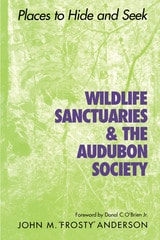
Wildlife Sanctuaries and the Audubon Society
Places to Hide and SeekBy John M. "Frosty" Anderson
University of Texas Press, 2000
National Audubon Society sanctuaries across the United States preserve the unique combinations of plants, climates, soils, and water that endangered birds and other animals require to survive. Their success stories include the recovery of the common and snowy egrets, wood storks, Everglade kites, puffins, and sandhill cranes, to name only a few.
In this book, Frosty Anderson describes the development of fifteen NAS sanctuaries from Maine to California and from the Texas coast to North Dakota. Drawn from the newsletter "Places to Hide and Seek," which he edited during his tenure as Director/Vice President of the Wildlife Sanctuary Department of the NAS, these profiles offer a personal, often humorous look at the daily and longer-term activities involved in protecting bird habitats. Collectively, they record an era in conservation history in which ordinary people, without benefit of Ph.Ds, became stewards of the habitats in which they had lived all their lives. It's a story worth preserving, and it's entertainingly told here by the man who knows it best.
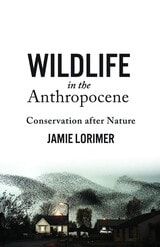
Wildlife in the Anthropocene
Conservation after NatureJamie Lorimer
University of Minnesota Press, 2015
Elephants rarely breed in captivity and are not considered domesticated, yet they interact with people regularly and adapt to various environments. Too social and sagacious to be objects, too strange to be human, too captive to truly be wild, but too wild to be domesticated—where do elephants fall in our understanding of nature?
In Wildlife in the Anthropocene, Jamie Lorimer argues that the idea of nature as a pure and timeless place characterized by the absence of humans has come to an end. But life goes on. Wildlife inhabits everywhere and is on the move; Lorimer proposes the concept of wildlife as a replacement for nature. Offering a thorough appraisal of the Anthropocene—an era in which human actions affect and influence all life and all systems on our planet— Lorimer unpacks its implications for changing definitions of nature and the politics of wildlife conservation. Wildlife in the Anthropocene examines rewilding, the impacts of wildlife films, human relationships with charismatic species, and urban wildlife. Analyzing scientific papers, policy documents, and popular media, as well as a decade of fieldwork, Lorimer explores the new interconnections between science, politics, and neoliberal capitalism that the Anthropocene demands of wildlife conservation.
Imagining conservation in a world where humans are geological actors entangled within and responsible for powerful, unstable, and unpredictable planetary forces, this work nurtures a future environmentalism that is more hopeful and democratic.
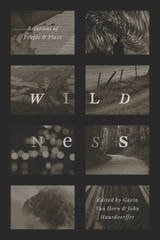
Wildness
Relations of People and PlaceEdited by Gavin Van Horn and John Hausdoerffer
University of Chicago Press, 2017
This book charts a different path. Exploring how people can become attuned to the wild community of life and also contribute to the well-being of the wild places in which we live, work, and play, Wildness brings together esteemed authors from a variety of landscapes, cultures, and backgrounds to share their stories about the interdependence of everyday human lifeways and wildness. As they show, far from being an all or nothing proposition, wildness exists in variations and degrees that range from cultivated soils to multigenerational forests to sunflowers pushing through cracks in a city alley. Spanning diverse geographies, these essays celebrate the continuum of wildness, revealing the many ways in which human communities can nurture, adapt to, and thrive alongside their wild nonhuman kin.
From the contoured lands of Wisconsin’s Driftless region to remote Alaska, from the amazing adaptations of animals and plants living in the concrete jungle to indigenous lands and harvest ceremonies, from backyards to reclaimed urban industrial sites, from microcosms to bioregions and atmospheres, manifestations of wildness are everywhere. With this book, we gain insight into what wildness is and could be, as well as how it might be recovered in our lives—and with it, how we might unearth a more profound, wilder understanding of what it means to be human.
Wildness: Relations of People and Place is published in association with the Center for Humans and Nature, an organization that brings together some of the brightest minds to explore and promote human responsibilities to each other and the whole community of life. Visit the Center for Humans and Nature's Wildness website for upcoming events and a series of related short films.
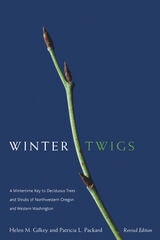
Winter Twigs, Revised Edition
A Wintertime Key to Deciduous Trees and Shrubs of Northwestern Oregon and Western WashingtonHelen Gilkey
Oregon State University Press, 2001
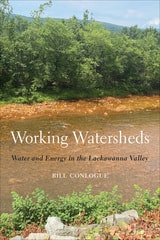
Working Watersheds
Water and Energy in the Lackawanna ValleyWilliam Conlogue
Temple University Press, 2025
Offering a fresh way to think about the Anthropocene, this distinctive history of water and coal in the Lackawanna Valley discusses how both water abundance and scarcity might play out as global temperatures rise. Working Watersheds is designed to trigger debates about the nature of history, the significance of literature, and the importance of linking person, place, and planet in an era of climate change.
Working on Earth
Class and Environmental JusticeChristina Robertson
University of Nevada Press, 2015
The authors challenge prevailing cultural narratives that separate ecological and human health from the impacts of modern industrial capitalism. Essay themes range from how human survival is linked to nature to how the use and abuse of nature benefit the wealthy elite at the expense of working-class people and the working poor as well as how climate change will affect cultures deeply rooted in the land.
Ultimately, Working on Earth calls for a working-class ecology as an integral part of achieving just and sustainable human development.
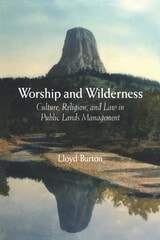
Worship and Wilderness
Culture, Religion, and Law in Public Lands ManagementLloyd Burton
University of Wisconsin Press, 2002
Questions about land use, conservation, and preservation—already so perplexing and contentious—take on a new complexity and greater urgency when the land in question is understood as sacred. This is a view increasingly held, as adherents of mainstream religions come to recognize what indigenous peoples knew centuries ago—that the sacred inheres in nature itself. What such a trend means and how it involves the forces of culture, religion, and constitutional law (especially First Amendment clauses concerning the free exercise of religion) are considered with a remarkable breadth and depth of understanding in this important new work.
Drawing on case studies of national parks and monuments, national forests, and other public lands and resources, Lloyd Burton gives a clear and comprehensive account of how the intertwining influences of culture, religion, and law have affected the management of public lands and resources in the recent past and how they may do so in the future. In a unique and unprecedented way, his book weaves together teachings on nature and the sacred among indigenous and immigrant culture groups in the United States; the relevant constitutional history of religion and government action; and analysis of contemporary conflicts over culture, religion, and public lands management. As such, Worship and Wilderness is essential reading not only for public land managers and environmental policy makers but also for anyone interested in the growing significance of religious interests in the use of resources that constitute our national commons and our common natural heritage.