Results by title
2706 books match the query 'European' and 90 start with w
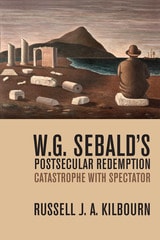
W. G. Sebald’s Postsecular Redemption
Catastrophe with SpectatorRussell J. A. Kilbourn
Northwestern University Press, 2018
Alongside Sebald studies' traditional subjects, which include memory, historiography, Sebald's critique of an image-based culture, and his highly intermedial poetics, W. G. Sebald's Postsecular Redemption demonstrates Sebald's relevance for affect theory, new materialism, and the posthuman turn. It critiques the possibility of metaphysical or eroto-salvific models of redemption, arguing against the temptation of psychoanalytic interpretations, as Sebald's work of memory rejects the discourse of redemption in favor of restitution.
In its consideration of Sebald's place in twentieth-century literature and after, Kilbourn's book engages with such predecessors as Nabokov, Kafka, Conrad, and Beckett, concluding with comparisons with contemporaries Claudio Magris and Alice Munro.

WORKS OF APHRA BEHN
VOLUME I, POEMSAphra Behn
The Ohio State University Press, 1992
WORKS OF APHRA BEHN
VOLUME II, LETTERS BETWEEN A NOBLEMAN ANAPHRA BEHN
The Ohio State University Press, 1993
WORKS OF APHRA BEHN
VOLUME IV, SENECA UNMASQUEDAphra Behn
The Ohio State University Press, 1994
WORKS OF APHRA BEHN
Volume V, the Plays, 1671–1677Aphra Behn
The Ohio State University Press, 1996
Walker Percy, Fyodor Dostoevsky, and the Search for Influence
Jessica Hooten Wilson
The Ohio State University Press, 2017
From Dostoevsky, Percy learned how to captivate his non-Christian readership with fiction saturated by a Christian vision of reality. Not only was his method of imitation in line with this Christian faith but also the aesthetic mode and very content of his narratives centered on his knowledge of Christ. The influence of Dostoevsky on Percy, then, becomes significant as a modern case study for showing the illusion of artistic autonomy and long-held, Romantic assumptions about artistic originality. Ultimately, Wilson suggests, only by studying the good that came before can one translate it in a new voice for the here and now.
Walter Benjamin for Children
An Essay on His Radio YearsJeffrey Mehlman
University of Chicago Press, 1993
Now in paperback, an insightful analysis of the great theorist's most unusual work: a diverse collection of radio broadcasts for children.
In light of the legendary difficulty of Walter Benjamin's works, it is a strange and intriguing fact that from 1929 to 1933, the great critic and cultural theorist wrote—and broadcast—numerous scripts, on the order of fireside chats, for children. Invited to speak on whatever subject he considered appropriate, Benjamin talked to the children of Frankfurt and Berlin about the destruction of Pompeii, an earthquake in Lisbon, and a railroad disaster at the Firth of Tay. He spoke about bootlegging and swindling, cataclysm and suicide, Faust and Cagliostro. In this first sustained analysis of the thirty surviving scripts, Jeffrey Mehlman demonstrates how Benjamin used the unlikely forum of children's radio to pursue some of his central philosophical and theological concerns.
In Walter Benjamin for Children, readers will encounter a host of intertextual surprises: an evocation of the flooding of the Mississippi informed by the argument of "The Task of the Translator;" a discussion of scams in stamp-collecting that turns into "The Work of Art in the Age of Mechanical Reproduction;" a tale of bootlegging in the American South that converges with the best of Benjamin's essays on fiction. Mehlman superimposes a dual series of texts dealing with catastrophe, on the one hand, and fraud, on the other, that resonate with the false-messianic theology of Sabbatianism as it came to focus the attention and enthusiasm of Benjamin's friend Gershom Scholem during the same years. The radio scripts for children, that is, offer an unexpected byway, on the eve of the apocalypse, into Benjamin's messianic preoccupations.
A child's garden of deconstruction, these twenty-minute talks—from the perspective of childhood, before an invisible audience, on whatever happened to cross the critic's mind—are also by their very nature the closest we may ever come to a transcript of a psychoanalysis of Walter Benjamin. Particularly alive to that circumstance, Mehlman explores the themes of the radio broadcasts and brilliantly illuminates their hidden connections to Benjamin's life and work.
This lucid analysis brings to light some of the least researched and understood aspects of Walter Benjamin's thought. It will interest and provoke literary theorists and philosophers of culture, as well as anyone who hopes to understand one of this century's most suggestive and perplexing critics.
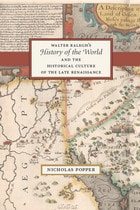
Walter Ralegh's "History of the World" and the Historical Culture of the Late Renaissance
Nicholas Popper
University of Chicago Press, 2012
Nicholas Popper uses Ralegh’s History as a touchstone in this lively exploration of the culture of history writing and historical thinking in the late Renaissance. From Popper we learn why early modern Europeans ascribed heightened value to the study of the past and how scholars and statesmen began to see historical expertise as not just a foundation for political practice and theory, but as a means of advancing their power in the courts and councils of contemporary Europe. The rise of historical scholarship during this period encouraged the circulation of its methods to other disciplines, transforming Europe’s intellectual—and political—regimes. More than a mere study of Ralegh’s History of the World, Popper’s book reveals how the methods that historians devised to illuminate the past structured the dynamics of early modernity in Europe and England.
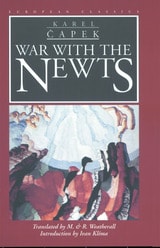
War with the Newts
Karel Capek
Northwestern University Press, 1996
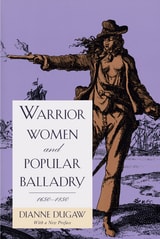
Warrior Women and Popular Balladry, 1650-1850
Dianne Dugaw
University of Chicago Press, 1995
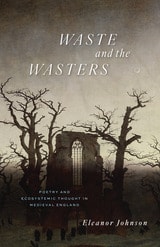
Waste and the Wasters
Poetry and Ecosystemic Thought in Medieval EnglandEleanor Johnson
University of Chicago Press, 2023
While the scale of today’s crisis is unprecedented, environmental catastrophe is nothing new. Waste and the Wasters studies the late Middle Ages, when a convergence of land contraction, soil depletion, climate change, pollution, and plague subsumed Western Europe. In a culture lacking formal scientific methods, the task of explaining and coming to grips with what was happening fell to medieval poets. The poems they wrote used the terms “waste” or “wasters” to anchor trenchant critiques of people’s unsustainable relationships with the world around them and with each other. In this book, Eleanor Johnson shows how poetry helped medieval people understand and navigate the ecosystemic crises—both material and spiritual—of their time.
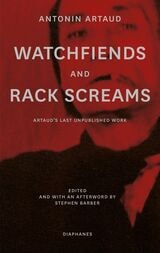
Watchfiends and Rack Screams
Artaud’s Last Unpublished WorkAntonin Artaud
Diaphanes, 2024
Antonin Artaud’s last large-scale work, published in its complete form in English for the first time.
Drawings on texts and letters dating from 1946, some of them written while he was still confined at the Rodez psychiatric hospital, Artaud devoted the months of November 1946 to February 1947 to completing his book through a long series of vocal improvisations titled Interjections, dictated at his pavilion on the edge of Paris. He cursed the assassins he believed were on their way there to steal his semen, to make his brain go “up in smoke as under the action of one of those machines created to suck up filth from the floor,” and finally to erase him. The publisher who had commissioned the book, Louis Broder, was horrified at reading its incandescent, fiercely obscene, and anti-religious manuscript and refused to publish it. Ambitious and experimental in scale, fragmentary and ferocious in intent, it was not published until 1978, in an edition prepared by Artaud’s close friend Paule Thévenin. Artaud commented that it was an “impossible” book, and that “nobody has ever read it from end to end, not even its own author.”
Clayton Eshleman, together with his translation collaborators such as David Rattray, began to work soon after 1978 on an English-language edition, with extracts appearing especially in Eshleman’s poetry magazine, Sulfur. This volume presents his translations with additional ones by Paul Buck, and Catherine Petit it in its complete form in English for the first time.
Water Lilies
An Anthology of Spanish Women Writers from the Fifteenth through the Nineteenth CenturyAmy Kaminsky
University of Minnesota Press, 1995
Poetry and prose by Spanish women presented here in both English and Spanish.
A dazzling sampler, Water Lilies brings to light a rich and until now largely invisible version of Spanish literary history. These hard-to-find works, most translated for the first time, are printed on facing pages in Spanish and English and located within a critical, biographical, and historical overview.
Here are five centuries of writing by Spanish women, the unknown recovered from obscurity, the well-known seen as they rarely have been-in the context of a women’s literary history. Some of these writers, like Rosalía de Castro in “The Bluestockings” and Teresa de Cartagena in Wonder at the Work of God, question the relationship between the woman writer and the act of writing. Some, like the poet Carolina Coronado in “The Twin Geniuses: Sappho and Saint Teresa of Jesus,” overtly seek a literary tradition. Others, like Saint Teresa in her Life and Luisa Sigea in her poetry, provide touchstones for women in search of such a tradition.Legends and stories of women’s friendships, the inconstancy of men, and the love of God; Spain’s first autobiographical text; secular and religious poetry from medieval through recent times; an excerpt from one of the few chivalresque novels written by a woman; a full-length Golden Age comedia: this is the wide range of works Water Lilies comprises. Brought together for the first time, the writers articulate their resistance to, and their complicity in, a literary history that, until now, has tried to exclude them.
Waterlings
Veno Taufer
Northwestern University Press, 2000
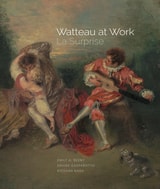
Watteau at Work
La SurpriseEmily A. Beeny
J. Paul Getty Trust, The, 2022
The painting La Surprise by Jean Antoine Watteau (1684–1721) belongs to a new genre of painting invented by the artist himself—the fête galante. These works, which show graceful open-air gatherings filled with scenes of courtship, music and dance, strolling lovers, and actors, do not so much tell a story as set a mood: one of playful, wistful, nostalgic reverie. Esteemed by collectors in Watteau’s day as a work that showed the artist at the height of his skill and success, La Surprise vanished from public view in 1848, not to reemerge for more than a century and a half. Acquired by the Getty Museum in 2017, it has never before been the subject of a dedicated publication. Marking the three hundredth anniversary of Watteau’s death, this book considers La Surprise within the context of the artist’s oeuvre and discusses the surprising history of collecting Watteau in Los Angeles.
This volume is published to accompany an exhibition on view at the J. Paul Getty Museum at the Getty Center from November 23, 2021, to February 20, 2022.
We Are Three Sisters
Self and Family in the Writing of the BrontësDrew Lamonica
University of Missouri Press, 2003
We-Narratives
Collective Storytelling in Contemporary FictionNatalya Bekhta
The Ohio State University Press, 2020
Natalya Bekhta’s We-Narratives: Collective Storytelling in Contemporary Fiction analyzes a storytelling form shaped by the pronoun “we,” probing the tensions between individuality and collectivity in more recent narratives in English. Despite a growing interest in collective characters and the we-form in narratology and beyond, narrative theory has not yet done justice to the plural voice in fiction. In fact, the formulation of a poetics of collective expression needs clear theoretical conventions and a reassessment of established concepts in order to approach plural voices and agents on their own terms. We-Narratives addresses this demand by distinguishing between indicative and performative uses of the first-person plural pronoun in fiction and by identifying formal and rhetorical possibilities of stories told by group narrators.
What does it mean for a multitude to speak as one? How can a truly collective narrative voice be achieved or lost? What are its aesthetic and political repercussions? In order to tackle these questions, Bekhta reads a range of contemporary novels and short stories by Jeffrey Eugenides, Joshua Ferris, Toby Litt, Zakes Mda, Joyce Carol Oates, and Julie Otsuka. She also focuses on narrative innovation by Margaret Atwood, William Faulkner, and Susan Sontag. These narratives feature group protagonists and narrators and therefore offer insight into collective narrative discourse and focalization, construction of communal knowledge and unreliability. We-narrative, taken as a distinct storytelling form, illuminates fiction’s expressive potential and nuances models of narrative analysis.
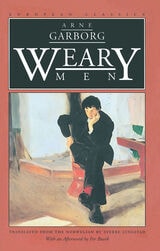
Weary Men
Arne Garborg, translated by Sverre Lyngstad, and afterword by Per Buvik
Northwestern University Press, 1999
Originally published in 1891, Weary Men introduces a bachelor nearly middle age named Gabriel Gram, who suffers an existential crisis, considers suicide, but finally finds solace in a religious conversion of questionnable sincerity. Garborg depicts Gram's Kristiania (present day Oslo) in fascinating detail as Gram divides his time between male friends and "new women," a new generation of Norwegian women embolded to walk freely with men in public but who continue to rebuff Gram's sexual advances.
West-Eastern Divan
Complete, annotated new translation (bilingual edition)Johann Wolfgang von Goethe
Gingko, 2019
The West-Eastern Divan is one of the world’s great works of literature, an inspired masterpiece, and a poetic linking of European and Persian traditions. This new bilingual edition expertly presents the wit, intelligence, humor, and technical mastery of the poetry in Goethe’s Divan. In order to preserve the work’s original power, Eric Ormsby has created this translation in clear contemporary prose rather than in rhymed verse, which tends to obscure the works sharpness. This edition is also accompanied by explanatory notes of the verse in German and in English and a translation of Goethe’s own commentary, the “Notes and Essays for a Better Understanding of the West-Eastern Divan.” This edition not only bring this classic collection to English-language readers, but also, at a time of renewed Western unease about the other, to open up the rich cultural world of Islam.
What Now Is Now Is Now
Selected PoemsNóra Ružicková
Seagull Books, 2025
A selection of poems that blend raw imagery with experimental forms, offering a vivid exploration of the body, language and shifting identities.
Nóra Ružičková’s poetry merges bodily experience with linguistic experimentation, evolving from self-reflection to an exploration of the complexities of gender and Central European identity. Her work deftly weaves personal narratives with political and social commentary, forging poems that are both intellectually provocative and deeply embodied.
This selection spans nearly 25 years, tracing her work from a late-millennium debut to her latest, most socially engaged collection, which explores novelty within the grand narratives of modern history and critiques humanity's obsession with progress. Through her poems, she challenges the boundaries of language, blending physicality with abstraction through a combination of potent imagery and philosophical reflection. Her poetry treats the body as a space where meaning is simultaneously created and dismantled, probing themes of identity, existence and the instability of interpretation. By experimenting with materiality, bodily experience and the ever-changing mediascape, Ružičková captures the complexities of contemporary human life and dissolves the divide between language and physical reality. In its concluding section, the selection confronts pivotal historical moments and humanity’s relentless pursuit of progress, making for a powerful, thought-provoking engagement with the present.
What Sex Is Death?
Dario Bellezza, Selected and Translated by Peter Covino
University of Wisconsin Press, 2025
Where Are the Trees Going?
Vénus Khoury-Ghata Translated from the French by Marilyn Hacker
Northwestern University Press, 2014
Longlist finalist, 2015 PEN Award for Poetry in Translation
Bringing the work of acclaimed poet Venus Khoury-Ghata to a new generation of anglophone readers, renowned award-winning poet and translator Marilyn Hacker has rendered Khoury-Gata's highly praised collection Où vont les arbres? into unforgettable English verse. In it, Khoury-Ghata takes on perennial themes of womanhood, immigration, and cultural conflict. Characters take root in her memory as weathered trees and garden plants, lending grit and body to the imaginative collection. As bracing as the turn of seasons, Where Are the Trees Going? highlights a poet writing with renewed urgency and maturity.
Khoury-Ghata's collection has been translated into fifteen languages. In this special edition, Paris-resident Hacker has also included selections from Khoury-Ghata's short fiction collection La maison aux orties (The House of Nettles). The resulting interplay illuminates the poet’s contrasting and complementary drives toward surreal lyricism and stark narrative exposition.
Where Currents Meet
Frontiers of Memory in Post-Soviet Fiction of Kharkiv, UkraineTanya Zaharchenko
Central European University Press, 2016
Where Currents Meet, Tanya Zaharchenko’s path-breaking study of literature and cultural memory, moves decisively beyond the simplistic view of a post-Soviet Ukraine divided between east and west. It positions the Ukrainian and Russian components of cultural experience in the country’s east as elements of a complex continuum. Combining insights from memory studies and border studies, Zaharchenko analyzes a generation of younger riters in the city of Kharkiv—a “doubletake generation” that came of age at the time of the Soviet Union’s collapse and now revisits this experience through fiction. In the works of Serhiy Zhadan, Andreĭ Krasniashchikh, Yuri Tsaplin, Oleh Kotsarev, and others the author reveals how borderlands and frontiers, both geographical and conceptual, acquire zonal qualities of their own as these writers navigate the historical legacy they have inherited.

Which Socialism, Whose Detente?
West European Communism and the Czechoslovak Crisis of 1968Maud Bracke
Central European University Press, 2007
White Decimal
Jean Daive
Omnidawn, 2017

Whitman in Poland
The Reception and Role of the American Poet in Polish National CultureMarta A. Skwara
University of Iowa Press, 2020
Poland; how and why the mid-1950s saw the greatest flourish of interest in Whitman as he was read in terms of “socialist realism” in accordance with the political indoctrination of the era; how Whitman’s image in Poland evolved from his first Polish translators and enthusiasts on through modernist poets’ responses; and how reading multiple Polish translations of the same Whitman poem by different translators allows us to see changing cultural and comparative contexts. Readers will get a full picture of how Whitman has functioned as a presence in Polish prose and poetry, and even in cinema and television.
Why Kosovo Matters
Denis MacShane
Haus Publishing, 2011
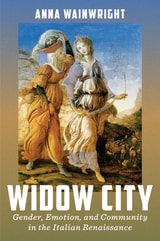
Widow City
Gender, Emotion, and Community in the Italian RenaissanceAnna Wainwright
University of Delaware Press, 2025
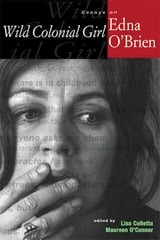
Wild Colonial Girl
Essays on Edna O'BrienEdited by Lisa Colletta and Maureen O'Connor
University of Wisconsin Press, 2006
Wild Colonial Girl situates O'Brien in Irish contexts that allow for an appraisal of her significant contribution to a specifically Irish women's literary tradition while attesting to the potency of writing against patriarchal conventions. Each chapter's clear and detailed readings of O'Brien's fiction build a convincing case for her literary, political, and cultural importance, providing an invaluable critical guide for an enriched appreciation of O'Brien and her work.
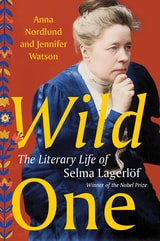
Wild One
The Literary Life of Selma LagerlöfAnna Nordlund
University of Minnesota Press, 2027
The definitive English-language biography of Sweden’s most celebrated novelist
Wild One details the captivating life of Selma Lagerlöf (1858–1940), the most celebrated Swedish novelist of her time and the first woman to win the Nobel Prize for Literature. Best known for her classic books The Saga of Gösta Berling and The Wonderful Adventures of Nils, Lagerlöf wrote dozens of acclaimed works and used her fame to advocate for women’s rights, humanitarian causes, and international peace. During her lifetime, however, even though she introduced Neo-Romanticism to Scandinavian literature, the male-dominated literary establishment strategically tried to downplay her as a modest spinster who reworked old stories and folktales from her rural Swedish province of Värmland.
Anna Nordlund and Jennifer Watson describe how, behind the old-fashioned public image placed on her, Lagerlöf was always on the front line, a forward-looking innovator whose writing is distinguished by inventive structures and a deep understanding of modern psychology. A savvy promoter of her own career, she utilized the new medium of radio, invested in the nascent Swedish film industry as adaptations of her novels became international sensations, and closely tracked translations of her work. After winning the Nobel Prize in 1909, Lagerlöf became even more vocal in her support for women’s rights and suffrage.
Drawing on a wide range of sources, including private letters, Nordlund and Watson offer new insights into Lagerlöf’s remarkable personal life, including her passionate love for her frequent traveling companion, Sophie Elkan, and for fellow suffragette Valborg Olander. As Wild One makes clear, through her written works and social activism Lagerlöf embodied her own famous quotation: “I want to set the world in motion.”
Retail e-book files for this title are screen-reader friendly with images accompanied by short alt text and/or extended descriptions.
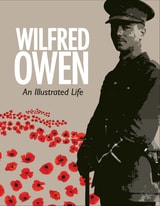
Wilfred Owen
An Illustrated LifeJane Potter
Bodleian Library Publishing, 2014
This generously illustrated book tells the story of Owen’s life and work, from his birth in 1893 to his tragic death just one week before the signing of the armistice that would end the war. The shocking realism of poems such as “Strange Meeting” and the angry disillusionment of “Anthem for Doomed Youth” reveal Owen’s transformation from a romantic youth steeped in the poetry of Keats to a mature soldier awakened to the horrors of the Western Front.
Drawing on numerous manuscripts, artifacts, and family photographs, this book gives a comprehensive view of the relationship between the poet’s lived experience and his writing that will appeal equally to both those well-versed in Owen’s work and those seeking a well-researched, accessible introduction.
Wilhelm Tell
Friedrich von Schiller
University of Chicago Press, 1973
Schiller based his play on chronicles of the Swiss liberation movement, in which Wilhelm Tell played a major role. Since Tell's existence has never been proven, Schiller, a historian by profession, felt he had to devise a figure who would bring the uncertainties and contradictions of the various Swiss chronicles into focus. Respected for his courage and skill with a bow, for his peaceable nature and his integrity, Schiller's archer—while always ready to aid his fellows—habitually seeks solitude. In the midst of political turmoil Wilhelm Tell is the nonpolitical man of action.
Keenly interested in the problematic interplay of history and legend, Schiller turned it to be dramatic advantage. He constructed his play to illustrate the greatest possible development of the character traits suggested for Tell by the chronicles. The result of Schiller's supreme achievement in historical drama.
Wilkie Collins and Copyright
Sundeep Bisla
The Ohio State University Press, 2013
William Blake and the Impossible History of the 1790s
Saree Makdisi
University of Chicago Press, 2003
William Warner's Syrinx
or, A Sevenfold HistoryWilliam Warner, edited with introduction and notes by Wallace A. Bacon
Northwestern University Press, 1950
Winter Dialogue
Tomas Venclova
Northwestern University Press, 1999
Winter Journey
Jaume Cabré
Swan Isle Press, 2009
Richly allusive with its themes and motifs of music and art, Winter Journey will continue to provoke questions long after the reader has closed the book. This edition represents the first translation of Cabré’s work into English and an invitation to many more readers to come along for the ride.
With or Without
Reading Postwar German Women PoetsCharlotte Ann Melin
Northwestern University Press, 2013
With or Without explores the role of German women’s poetry in the contemporary literary discourse of the latter half of the twentieth century. Melin highlights the significant role that women played in the shaping of postwar German poetry as a whole and also their deep engagement with the broader issues of modernism, postmodernism, and related discourses about the relationship between individual experience, communal ideals, and interpersonal expression. Melin shows that for German writers poetry became the genre that had the capacity to project subjectivity, voice, and authenticity.
Witness, Warning, and Prophecy
Quaker Women's Writing, 1655-1700Edited by Teresa Feroli and Margaret Olofson Thickstun
Iter Press, 2018
The Other Voice in Early Modern Europe - The Toronto Series: Volume 60
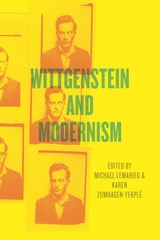
Wittgenstein and Modernism
Edited by Michael LeMahieu and Karen Zumhagen-Yekplé
University of Chicago Press, 2016
Michael LeMahieu Karen Zumhagen-Yekplé bring together scholars in both twentieth-century philosophy and modern literary studies to put Wittgenstein into dialogue with some of modernism’s most iconic figures, including Samuel Beckett, Saul Bellow, Walter Benjamin, Henry James, James Joyce, Franz Kafka, Adolf Loos, Robert Musil, Wallace Stevens, and Virginia Woolf. The contributors touch on two important aspects of Wittgenstein’s work and modernism itself: form and medium. They discuss issues ranging from Wittgenstein and poetics to his use of numbered propositions in the Tractatus as a virtuoso performance of modernist form; from Wittgenstein’s persistence metaphoric use of religion, music, and photography to an exploration of how he and Henry James both negotiated the relationship between the aesthetic and the ethical.
Covering many other fascinating intersections of the philosopher and the arts, this book offers an important bridge across the disciplinary divides that have kept us from a fuller picture of both Wittgenstein and the larger intellectual and cultural movement of which he was a part.
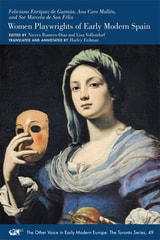
Women Playwrights of Early Modern Spain
Feliciana Enríquez de Guzmán, Ana Caro Mallén, and Sor Marcela de San Félix
Iter Press, 2016
This volume presents ten plays by three leading women playwrights of Spain’s Golden Age. Included are four bawdy and outrageous comic interludes; a full-length comedy involving sorcery, chivalry, and dramatic stage effects; and five short religious plays satirizing daily life in the convent. A critical introduction to the volume positions these women and their works in the world of seventeenth-century Spain.

Women Poets of Spain, 1860-1990
TOWARD A GYNOCENTRIC VISIONJohn C. Wilcox
University of Illinois Press, 1997

Women Political Prisoners in Germany
Narratives of Self and Captivity, 1915-91Kim Richmond
University of London Press, 2016
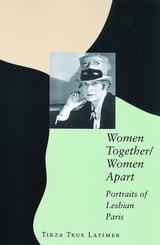
Women Together/Women Apart
Portraits of Lesbian ParisLatimer, Tirza True
Rutgers University Press, 2005
What does it mean to look like a lesbian? Though it remains impossible to conjure a definitive image that captures the breadth of this highly nuanced term, today at least we are able to consider an array of visual representations that have been put into circulation by lesbians themselves over the last six or seven decades. In the early twentieth century, though, no notion of lesbianism as a coherent social or cultural identity yet existed.
In Women Together/Women Apart, Tirza True Latimer explores the revolutionary period between World War I and World War II when lesbian artists working in Paris began to shape the first visual models that gave lesbians a collective sense of identity and allowed them to recognize each other. Flocking to Paris from around the world, artists and performers such as Romaine Brooks, Claude Cahun, Marcel Moore, and Suzy Solidor used portraiture to theorize and visualize a "new breed" of feminine subject. The book focuses on problems of feminine and lesbian self-representation at a time and place where the rights of women to political, professional, economic, domestic, and sexual autonomy had yet to be acknowledged by the law. Under such circumstances, same-sex solidarity and relative independence from men held important political implications.
Combining gender theory with visual, cultural, and historical analysis, Latimer draws a vivid picture of the impact of sexual politics on the cultural life of Paris during this key period. The book also illuminates the far-reaching consequences of lesbian portraiture on contemporary constructions of lesbian identity.
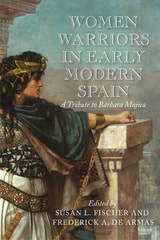
Women Warriors in Early Modern Spain
A Tribute to Barbara MujicaSusan L. Fischer
University of Delaware Press, 2019
Published by University of Delaware Press. Distributed worldwide by Rutgers University Press.
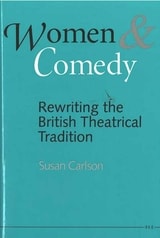
Women and Comedy
Rewriting the British Theatrical TraditionSusan Carlson
University of Michigan Press, 1991
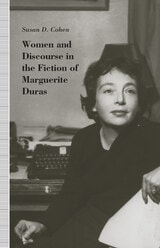
Women and Discourse in the Fiction of Marguerite Duras
Love, Legends, LanguageSusan D. Cohen
University of Massachusetts Press, 1993
One of the most famous living French writers, Marguerite Duras is renowned for her provocative and hauntingly beautiful works of fiction, drama, and cinema. This book offers the first comprehensive study of the narrative and stylistic characteristics of Duras's fiction. Susan D. Cohen examines the entire range of Duras's works, combining close textual analyses with a more general discussion of narrativity and its connections with gender, class, and race. The focus throughout is on language, representation, and difference, which Duras explores on every structural level.
Cohen shows how Duras's writings, even the controversial “erotic” works, expose and subvert the repression of women in traditional, dominant discourse and at the same time present an alternative, nonrepressive discursive model. She formulates a concept of creative “ignorance,” which she identifies as the generative principle of Duras's textual production and the approach to language it proposes. Cohen also explores the distinctive features of Duras's prose, describing how the writer achieves the ritual, legendary aura that characterizes her work.
Women and Laughter in Medieval Comic Literature
Lisa Perfetti
University of Michigan Press, 2003
This study is the first to investigate women's laughter as a particular kind of "talking back" to medieval discourse on women, the subject of recent feminist medievalist studies. Female characters openly embrace women's laughter, associated with the body and castigated for its unruliness in conduct literature. Acknowledging that comic works were grounded in antifeminist traditions and that their female characters were in fact targets of laughter for male authors, this study argues that female characters who laugh and tell jokes also offer traces of how women might have used their laughter to respond to negative pronouncements about women in medieval culture. Both laughable and laughing, the female protagonists studied in this book will engage modern readers with their witty, sometimes bawdy jokes, allowing us to imagine the pleasures that medieval comic literature, so often labeled misogynous, offered to women as well as to men.
Lisa Perfetti is Assistant Professor of French, Muhlenberg College.
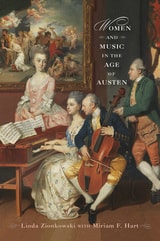
Women and Music in the Age of Austen
Linda Zionkowski
Bucknell University Press, 2024
Published by Bucknell University Press. Distributed worldwide by Rutgers University Press.
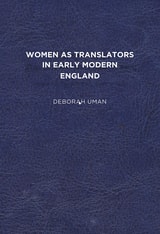
Women as Translators in Early Modern England
Deborah Uman
University of Delaware Press, 2012
Women as Translators in Early Modern England offers a feminist theory of translation that considers both the practice and representation of translation in works penned by early modern women. It argues for the importance of such a theory in changing how we value women’s work. Because of England’s formal split from the Catholic Church and the concomitant elevation of the written vernacular, the early modern period presents a rich case study for such a theory. This era witnessed not only a keen interest in reviving the literary glories of the past, but also a growing commitment to humanist education, increasing literacy rates among women and laypeople, and emerging articulations of national sentiment. Moreover, the period saw a shift in views of authorship, in what it might mean for individuals to seek fame or profit through writing. Until relatively recently in early modern scholarship, women were understood as excluded from achieving authorial status for a number of reasons—their limited education, the belief that public writing was particularly scandalous for women, and the implicit rule that they should adhere to the holy trinity of “chastity, silence, and obedience.”
While this view has changed significantly, women writers are still understood, however grudgingly, as marginal to the literary culture of the time. Fewer women than men wrote, they wrote less, and their “choice” of genres seems somewhat impoverished; add to this the debate over translation as a potential vehicle of literary expression and we can see why early modern women’s writings are still undervalued. This book looks at how female translators represent themselves and their work, revealing a general pattern in which translation reflects the limitations women faced as writers while simultaneously giving them the opportunity to transcend these limitations. Indeed, translation gave women the chance to assume an authorial role, a role that by legal and cultural standards should have been denied to them, a role that gave them ownership of their words and the chance to achieve profit, fame, status and influence.
Published by University of Delaware Press. Distributed worldwide by Rutgers University Press.