234 books match the query 'Families' and 7 start with w

cover of When the World Explodes: Essays

When the World Explodes

Essays

Amy Lee Scott

The Ohio State University Press, 2025
How do you survive when your world explodes? By the time she was seven, Amy Lee Scott had seen her world end twice: first as an infant, when adoption brought her from Korea to Ohio, and again when her adoptive mother died of cancer. Orphaned twice over, Scott confronts her personal chaos by investigating a litany of historic catastrophes and the disruptions that followed. Witnessing a Cabbage Patch Kid “born” at BabyLand General Hospital inspires a meditation on the history of Korean adoption and her own origins. Recalling her miscarriage as the streets of her Detroit neighborhood flooded, she asks what it means to mourn what would have been. And she remembers her mother’s illness and death amid the 1992 Los Angeles riots. In this haunting debut, Scott gets to the heart of what it means to wrestle with the grief, rage, and anxiety seething in this tender world. Ferocious and true, When the World Explodes probes the space between personal and global calamities—from Krakatoa to the emotional perils of motherhood—to unearth the sharp ridge of hope that hides beneath the rubble.
[more]
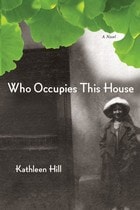
cover of Who Occupies This House: A Novel

Who Occupies This House

A Novel

Kathleen Hill

Northwestern University Press, 2011

Kathleen Hill’s finely wrought novel tells the story of four generations of an Irish-American family that has lived in the same house for almost a century. Grieving the death of her mother and the imminent sale of the house, the narrator sets out to re-create the hidden, intimate lives of those who came before. Through a series of vignettes she conjures a family devastated in each generation by the loss of a child. 

The narrator’s project, inspired at the outset by silences that extend backward to the untold story of the Famine, turns into a vast exploration of loss, inheritance, and the nature of memory. In a voice both stark and lyrical, the narrator calls up transformative, often tragic, moments in lives that have shaped her own. Remembering a past she never knew, she hopes to release from its sway the vanishing present.

Who Occupies This House is a strikingly beautiful account of the difficult reckoning with one’s family legacy that every adult faces. Punctuated by photographs and images that bring the narrative into sharp focus, it will draw comparisons to such divergent writers as W.G. Sebald and Kate O’Brien.
[more]
cover of Who's Watching?: Daily Practices of Surveillance among Contemporary Families

Who's Watching?

Daily Practices of Surveillance among Contemporary Families

Margaret K. Nelson

Vanderbilt University Press, 2009
Although family members sometime engage in monitoring as an extension of governmental surveillance, they also monitor each other, other families, and their own borders to preserve norms about what a family should be and what family members should do. Whether it is the seemingly benign surveillance of using baby monitors, the more obviously intrusive use of home drug tests on teenagers, or the way people in public feel free to judge and comment on the family composition of others, monitoring goes on all the time -- and even (or maybe especially) when there seems to be no monitoring going on at all.
[more]
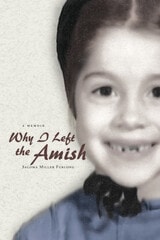
cover of Why I Left the Amish: A Memoir

Why I Left the Amish

A Memoir

Saloma Miller Furlong

Michigan State University Press, 2011

There are two ways to leave the Amish—one is through life and the other through death. When Saloma Miller Furlong’s father dies during her first semester at Smith College, she returns to the Amish community she had left twenty four years earlier to attend his funeral. Her journey home prompts a flood of memories. Now a mother with grown children of her own, Furlong recalls her painful childhood in a family defined by her father’s mental illness, her brother’s brutality, her mother’s frustration, and the austere traditions of the Amish—traditions Furlong struggled to accept for years before making the difficult decision to leave the community. In this personal and moving memoir, Furlong traces the genesis of her desire for freedom and education and chronicles her conflicted quest for independence. Eloquently told, Why I Left the Amish is a revealing portrait of life within—and without—this frequently misunderstood community.
[more]
cover of Women, Family, and Ritual in Renaissance Italy

Women, Family, and Ritual in Renaissance Italy

Christiane Klapisch-Zuber

University of Chicago Press, 1987
Christiane Klapisch-Zuber, a brilliant historian of the Annales school, skillfully uncovers the lives of ordinary Italians of the fourteenth and fifteenth centuries, Tuscans in particular, young and old, rich, middle-class, and poor. From the extraordinarily detailed records kept by Florentine tax collectors and the equally precise ricordanze (household accounts with notations of events great and small), Klapisch-Zuber draws a living picture of the Tuscan household. We learn, for example, how children were named, how wet nurses were engaged, how marriages were negotiated and celebrated. A wealth of other sources are tapped—including city statutes, private letters, philosophical works on marriage, paintings—to determine the social status of women. Klapisch-Zuber reveals how women, in their roles as daughters, wives, sisters, and mothers, were largely subject to a family system that needed them but valued them little.
[more]
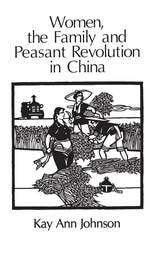
cover of Women, the Family, and Peasant Revolution in China

Women, the Family, and Peasant Revolution in China

Kay Ann Johnson

University of Chicago Press, 1983

Kay Ann Johnson provides much-needed information about women and gender equality under Communist leadership. She contends that, although the Chinese Communist Party has always ostensibly favored women's rights and family reform, it has rarely pushed for such reforms. In reality, its policies often have reinforced the traditional role of women to further the Party's predominant economic and military aims.

Johnson's primary focus is on reforms of marriage and family because traditional marriage, family, and kinship practices have had the greatest influence in defining and shaping women's place in Chinese society. Conversant with current theory in political science, anthropology, and Marxist and feminist analysis, Johnson writes with clarity and discernment free of dogma. Her discussions of family reform ultimately provide insights into the Chinese government's concern with decreasing the national birth rate, which has become a top priority. Johnson's predictions of a coming crisis in population control are borne out by the recent increase in female infanticide and the government abortion campaign.
[more]
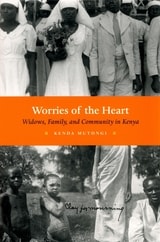
cover of Worries of the Heart: Widows, Family, and Community in Kenya

Worries of the Heart

Widows, Family, and Community in Kenya

Kenda Mutongi

University of Chicago Press, 2007

Growing up in the Maragoli community in Kenya, Kenda Mutongi encountered a perplexing contradiction. While the young teachers at her village school railed against colonialism, many of her elders, including her widowed mother, praised their former British masters. In this moving book, Mutongi explores how both the challenges and contradictions of colonial rule and the frustrations and failures of independence shaped the lives of Maragoli widows and their complex relations with each other, their families, and the larger community.
            Throughout the twentieth century and into the twenty-first, rates of widowhood have been remarkably high in Kenya. Yet despite their numbers, widows and their families exist at the margins of society, and their lives act as a barometer for the harsh realities of rural Kenya. Mutongi here argues that widows survive by publicly airing their social, economic, and political problems, their “worries of the heart.” Initially aimed at the men in their community, and then their colonial rulers, this strategy changed after independence as widows increasingly invoked the language of citizenship to demand their rights from the new leaders of Kenya—leaders whose failure to meet the needs of ordinary citizens has led to deep disenchantment and altered Kenyans’ view of their colonial past. An innovative blend of ethnography and historical research, Worries of the Heart is a poignant narrative rich with insights into postcolonial Africa.
[more]