Results by title
527 books match the query 'Feminism & Feminist Theory' and 32 start with w
War & Terror
Feminist PerspectivesEdited by Karen Alexander and Mary Hawkesworth
University of Chicago Press, 2008
We Can Do Better
Feminist Manifestos for Media and CommunicationLinda Steiner
Rutgers University Press, 2025
Webbed Connectivities
The Imperial Sociology of Sex, Gender, and SexualityVrushali Patil
University of Minnesota Press, 2022
Constructing a new approach for centering empire in productions of racialized, gendered, and sexualized difference
One of the oldest, most persistent issues in gender and sexuality studies is the dominance of white, northern theorizing and its consequences for what we know about sex, gender, and sexuality. There is an ongoing neglect of the significance of histories of empire and coloniality, particularly in U.S. sociology, where the United States and its theoretical productions are routinely sanitized of such histories. In Webbed Connectivities, Vrushali Patil offers a global historical sociology that reembeds the United States within histories of empire, situating the emergence of northern and U.S.-based concepts and frameworks squarely within these histories.
Webbed Connectivities intercepts the political economy of knowledge production within the social sciences to argue for the work of centering the role of imperial hierarchies in knowledge production and circulation. Patil develops a new approach—webbed connectivities—which tracks imperial processes and impacts across borders, shifting from an emphasis on particular experiences and identities to the constitution and creation of the categories themselves.
A sociologist of feminist thought and gender and sexuality studies, Patil explores the theoretical spaces that spotlighting imperial hierarchies within knowledge production might open, including making productive and essential connections across sites of the global south and north.

Welcome to the Dreamhouse
Popular Media and Postwar SuburbsLynn Spigel
Duke University Press, 2001
The volume considers not only how the media portrayed suburban family life, but also how both middle-class ideals and a perceived division between private and public worlds helped to shape the visual forms, storytelling practices, and reception of postwar media and consumer culture. Spigel also explores those aspects of suburban culture that media typically render invisible. She looks at the often unspoken assumptions about class, nation, ethnicity, race, and sexual orientation that underscored both media images (like those of 1960s space missions) and social policies of the mass-produced suburb. Issues of memory and nostalgia are central in the final section as Spigel considers how contemporary girls use television reruns as a source for women’s history and then analyzes the current nostalgia for baby boom era family ideals that runs through contemporary images of new household media technologies.
Containing some of Spigel’s well-known essays on television’s cultural history as well as new essays on a range of topics dealing with popular visual culture, Welcome to the Dreamhouse is important reading for students and scholars of media and communications studies, popular culture, American studies, women’s studies, and sociology.
Wet
On Painting, Feminism, and Art CultureMira Schor
Duke University Press, 1997
Bridging the gap between art practice, artwork, and critical theory, Wet includes some of Schor’s most influential essays that have made a significant contribution to debates over essentialism. Articles range from discussions of contemporary women artists Ida Applebroog, Mary Kelly, and the Guerrilla Girls, to "Figure/Ground," an examination of utopian modernism’s fear of the "goo" of painting and femininity. From the provocative "Representations of the Penis," which suggests novel readings of familiar images of masculinity and introduces new ones, to "Appropriated Sexuality," a trenchant analysis of David Salle’s depiction of women, Wet is a fascinating and informative collection.
Complemented by over twenty illustrations, the essays in Wet reveal Schor’s remarkable ability to see and to make others see art in a radically new light.
What Comes after Entanglement?
Activism, Anthropocentrism, and an Ethics of ExclusionEva Haifa Giraud
Duke University Press, 2019
When Biometrics Fail
Gender, Race, and the Technology of IdentityShoshana Amielle Magnet
Duke University Press, 2011
When Time Warps
The Lived Experience of Gender, Race, and Sexual ViolenceMegan Burke
University of Minnesota Press, 2019
An inquiry into the phenomenology of “woman” based in the relationship between lived time and sexual violence
Feminist phenomenologists have long understood a woman’s life as inhibited, confined, and constrained by sexual violence. In this important inquiry, author Megan Burke both builds and expands on this legacy by examining the production of normative womanhood through racist tropes and colonial domination. Ultimately, Burke charts a new feminist phenomenology based in the relationship between lived time and sexual violence.
By focusing on time instead of space, When Time Warps places sexualized racism at the center of the way “woman” is lived. Burke transports questions of time and gender outside the realm of the historical, making provocative new insights into how gendered individuals live time, and how their temporal existence is changed through particular experiences.
Providing a potent reexamination of the theory of Simone de Beauvoir—while also bringing to the fore important women of color theorists and engaging in the temporal aspects of #MeToo—When Time Warps makes a necessary, lasting contribution to our understanding of gender, race, and sexual violence.

Whether a Christian Woman Should Be Educated and Other Writings from Her Intellectual Circle
Anna Maria van Schurman
University of Chicago Press, 1998
Gathered here in meticulous translation are Anna Maria van Schurman's defense of women's education, her letters to other learned women, and her own account of her early life, as well as responses to her work from male contemporaries, and rare writings by Schurman's mentor, Voetius. This volume will interest the general reader as well as students of women's, religious, and social history.
Why Stories Matter
The Political Grammar of Feminist TheoryClare Hemmings
Duke University Press, 2011

Why We Lost the Sex Wars
Sexual Freedom in the #MeToo EraLorna N. Bracewell
University of Minnesota Press, 2021
Reexamining feminist sexual politics since the 1970s—the rivalries and the remarkable alliances
Since the historic #MeToo movement materialized in 2017, innumerable survivors of sexual assault and misconduct have broken their silence and called out their abusers publicly—from well-known celebrities to politicians and high-profile business leaders. Not surprisingly, conservatives quickly opposed this new movement, but the fact that “sex positive” progressives joined in the opposition was unexpected and seldom discussed. Why We Lost the Sex Wars explores how a narrow set of political prospects for resisting the use of sex as a tool of domination came to be embraced across this broad swath of the political spectrum in the contemporary United States.
To better understand today’s multilayered sexual politics, Lorna N. Bracewell offers a revisionist history of the “sex wars” of the 1970s, ’80s, and ’90s. Rather than focusing on what divided antipornography and sex-radical feminists, Bracewell highlights significant points of contact and overlap between these rivals, particularly the trenchant challenges they offered to the narrow and ambivalent sexual politics of postwar liberalism. Bracewell leverages this recovered history to illuminate in fresh and provocative ways a range of current phenomena, including recent controversies over trigger warnings, the unimaginative politics of “sex-positive” feminism, and the rise of carceral feminism. By foregrounding the role played by liberal concepts such as expressive freedom and the public/private divide as well as the long-neglected contributions of Black and “Third World” feminists, Bracewell upends much of what we think we know about the sex wars and makes a strong case for the continued relevance of these debates today.
Why We Lost the Sex Wars provides a history of feminist thinking on topics such as pornography, commercial sex work, LGBTQ+ identities, and BDSM, as well as discussions of such notable figures as Patrick Califia, Alan Dershowitz, Andrea Dworkin, Elena Kagan, Audre Lorde, Catharine MacKinnon, Cherríe Moraga, Robin Morgan, Gayle Rubin, Nadine Strossen, Cass Sunstein, and Alice Walker.

Willful Subjects
Sara Ahmed
Duke University Press, 2014
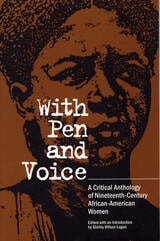
With Pen and Voice
A Critical Anthology of Nineteenth-Century African-American WomenShirley Wilson Logan
Southern Illinois University Press, 1995
"Owoman, woman! upon you I call; for upon your exertions almost entirely depends whether the rising generation shall be any thing more than we have been or not. Owoman, woman! your example is powerful, your influence great."—Maria W. Stewart, "An Address Delivered Before the Afric-American Female Intelligence Society of Boston" (1832)
Here—in the only collection of speeches by nineteenth-century African-American women—is the battle of words these brave women waged to address the social ills of their century. While there have been some scattered references to the unique roles these early "race women" played in effecting social change, until now few scholars have considered the rhetorical strategies they adopted to develop their powerful arguments.
In this chronological anthology, Shirley Wilson Logan highlights the public addresses of these women, beginning with Maria W. Stewart’s speech at Franklin Hall in 1832, believed to be the first delivered to an audience of men and women by an American-born woman. In her speech, she focused on the plight of the Northern free black. Sojourner Truth spoke in 1851 at the Akron, Ohio, Women’s Rights Convention not only for the rights of black women but also for the rights of all oppressed nineteenth-century women. Frances Ellen Watkins Harper struggled with the conflict between universal suffrage and suffrage for black men. Anna Julia Cooper chastised her unique audience of black Episcopalian clergy for their failure to continue the tradition of the elevation of womanhood initiated by Christianity and especially for their failure to support the struggling Southern black woman. Ida B. Wells’s rhetoric targeted mob violence directed at Southern black men. Her speech was delivered less than a year after her inaugural lecture on this issue—following a personal encounter with mob violence in Memphis. Fannie Barrier Williams and Victoria Earle Matthews advocated social and educational reforms to improve the plight of Southern black women. These speeches—all delivered between 1832 and 1895—are stirring proof that, despite obstacles of race and gender, these women still had the courage to mount the platform in defense of the oppressed.
Introductory essays focus on each speaker’s life and rhetoric, considering the ways in which these women selected evidence and adapted language to particular occasions, purposes, and audiences in order to persuade. This analysis of the rhetorical contexts and major rhetorical tactics in the speeches aids understanding of both the speeches and the skill of the speakers. A rhetorical timeline serves as a point of reference.
Historically grounded, this book provides a black feminist perspective on significant events of the nineteenth century and reveals how black women of that era influenced and were influenced by the social problems they addressed.
"A government which can protect and defend its citizens from wrong and outrage and does not is vicious. A government which would do itand cannot is weak; and where human life is insecure through either weakness or viciousness in the administration of law, there must be a lack of justice, and where this is wanting nothing can make up the deficiency."—Frances Ellen Watkins Harper, "Duty to Dependent Races," National Council of Women of the United States, Washington, D.C. (1891)
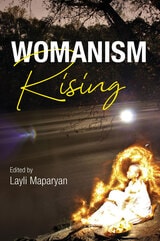
Womanism Rising
Edited by Layli Maparyan
University of Illinois Press, 2025
Maparyan organizes the contributions around five key ideas. The first section looks at womanist self-care as a life-saving strategy. The second examines healing the Earth as a prerequisite to healing ourselves. In Part Three, the essays illuminate how womanism’s politics of invitation provides a strategy for enlarging humanity’s circle of inclusion, while Part Four considers womanism as both a challenge and antidote to dehumanization. The final section delves into womanism’s potential for constructing worlds and futures. In addition, Maparyan includes a section of works by womanist visual artists.
Defiant and far-sighted, Womanism Rising takes readers on a journey into a new generation of concepts, ideas, and strategies for womanist studies.
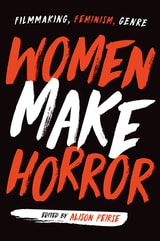
Women Make Horror
Filmmaking, Feminism, GenreAlison Peirse
Rutgers University Press, 2020
Winner of the the 2021 Best Edited Collection Award from BAFTSS
Winner of the 2021 British Fantasy Award in Best Non-Fiction
Finalist for the 2020 Bram Stoker Award® for Superior Achievement in Non-Fiction
Runner-Up for Book of the Year in the 19th Annual Rondo Halton Classic Horror Awards
“But women were never out there making horror films, that’s why they are not written about – you can’t include what doesn’t exist.”
“Women are just not that interested in making horror films.”
This is what you get when you are a woman working in horror, whether as a writer, academic, festival programmer, or filmmaker. These assumptions are based on decades of flawed scholarly, critical, and industrial thinking about the genre. Women Make Horror sets right these misconceptions. Women have always made horror. They have always been an audience for the genre, and today, as this book reveals, women academics, critics, and filmmakers alike remain committed to a film genre that offers almost unlimited opportunities for exploring and deconstructing social and cultural constructions of gender, femininity, sexuality, and the body.
Women Make Horror explores narrative and experimental cinema; short, anthology, and feature filmmaking; and offers case studies of North American, Latin American, European, East Asian, and Australian filmmakers, films, and festivals. With this book we can transform how we think about women filmmakers and genre.
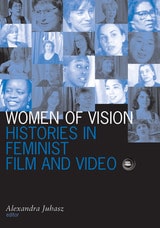
Women Of Vision
Histories in Feminist Film and VideoAlexandra Juhasz
University of Minnesota Press, 2001
Legends and rising stars of feminist film and video tell their stories.
Alexandra Juhasz asked twenty-one women to tell their stories-women whose names make up a who is (and who will be) who of independent and experimental film and video. What emerged in the resulting conversations is a compelling (and previously underdocumented) history of feminism and feminist film and video, from its origins in the fifties and sixties to its apex in the seventies, to today.
Women of Vision is a companion piece to Juhasz’s 1998 documentary of the same name. The book presents the complete interviews, allowing readers to hear directly the voices of these articulate, passionate women in an interactive remembering of feminist media history. Juhasz’s introduction provides a historical, theoretical, and aesthetic context for the interviews. These subjects have all shaped late twentieth-century film and video in fundamental ways, either as artists, producers, distributors, critics, or scholars, and they all believe that media are the most powerful tools for effecting change. Yet they are a very diverse group, with widely varying personal and professional backgrounds. By presenting their interviews together, Juhasz shows the differences among those involved in feminist media, but also the connections among them, and the way in which the field has been enriched by their sharing of knowledge and power. In the end, Juhasz not only records these women’s careers, she broadens our understanding of feminism and shows how feminist history and documentary are made.Interviewees: Pearl Bowser; Margaret Caples; Michelle Citron; Megan Cunningham; Cheryl Dunye; Vanalyne Green; Barbara Hammer; Kate Horsfield; Carol Leigh; Susan Mogul; Juanita Mohammed; Frances Negrón-Muntaner; Eve Oishi; Constance Penley; Wendy Quinn; Julia Reichert; Carolee Schneemann; Valerie Soe; Victoria Vesna; and Yvonne Welbon.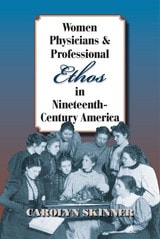
Women Physicians and Professional Ethos in Nineteenth-Century America
Carolyn Skinner
Southern Illinois University Press, 2014
Women physicians in nineteenth-century America faced a unique challenge in gaining acceptance to the medical field as it began its transformation into a professional institution. The profession had begun to increasingly insist on masculine traits as signs of competency. Not only were these traits inaccessible to women according to nineteenth-century gender ideology, but showing competence as a medical professional was not enough. Whether women could or should be physicians hinged mostly on maintaining their femininity while displaying the newly established standard traits of successful practitioners of medicine.
Women Physicians and Professional Ethos provides a unique example of how women influenced both popular and medical discourse. This volume is especially notable because it considers the work of African American and American Indian women professionals. Drawing on a range of books, articles, and speeches, Carolyn Skinner analyzes the rhetorical practices of nineteenth-century American women physicians. She redefines ethos in a way that reflects the persuasive efforts of women who claimed the authority and expertise of the physician with great difficulty.
Descriptions of ethos have traditionally been based on masculine communication and behavior, leaving women’s rhetorical situations largely unaccounted for. Skinner’s feminist model considers the constraints imposed by material resources and social position, the reciprocity between speaker and audience, the effect of one rhetor’s choices on the options available to others, the connections between ethos and genre, the potential for ethos to be developed and used collectively by similarly situated people, and the role ethos plays in promoting social change. Extending recent theorizations of ethos as a spatial, ecological, and potentially communal concept, Skinneridentifies nineteenth-century women physicians’ rhetorical strategies and outlines a feminist model of ethos that gives readers a more nuanced understanding of how this mode of persuasion operates for all speakers and writers.
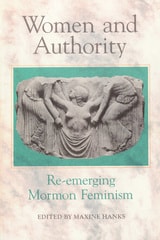
Women and Authority
Re-emerging Mormon FeminismHanks, Maxine
Signature Books, 1992
In 1842, founder Joseph Smith foresaw the LDS Women's Relief Society as "a kingdom of Priests," that he "would ordain them to preside over the society...just the Presidency preside over the church." Originally, the LDS Women's Relief Society paralleled the LDS men's priesthood quorums. Women were "ordained" to various positions, as well as set apart to be healers "with power to rebuke diseases."
In the 19th-century, Mormon theology also spoke of a Mother God, having "all power and glory" with the Father in Heaven. Mormon doctrine also hinted at the divine status of Eve, Mary, and Mary Magdalene.
The 19th-century Woman's Exponent, published by the LDS Women's Relief Society, editorialized in favor of "equal rights before the law, equal pay for equal work, equal political rights." The magazine's masthead read, "The Rights of the Women of Zion and the Rights of Women of All Nations."
One Relief Society founder, Sarah Kimball, referred to herself as "a woman's rights woman," while another leader, Bathsheba Smith, was called on a Relief Society mission in 1870 to preach "woman's rights" throughout southern Utah. According to the Woman's Exponent, a woman's place was not just "in the nursery" but "in the library, the laboratory, the observatory."
Women were encouraged to pursue formal education and career opportunities, study medicine and involve themselves in politics. Mormon women were assured that "when men see that women can exist without them, it will perhaps take a little of the conceit out of some of them."
Women who served inside LDS temples were termed "priestesses," while LDS Women's Relief Society president Eliza R. Snow was known as a "prophetess." Snow discouraged women from confiding their personal issues to male bishops, saying that such matters "should be referred to the Relief Society president and her counselors."
In 1875, LDS Women's Relief Society president, Emmeline B. Wells, could say with confidence: "Let woman speak for herself; she has the right of freedom of speech. Women are too slow in moving forward, afraid of criticism, of being called unwomanly, of being thought masculine. What of it? If men are so much superior to women, the nearer we come up to the manly standard the higher we elevate ourselves."
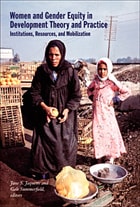
Women and Gender Equity in Development Theory and Practice
Institutions, Resources, and MobilizationJane S. Jaquette and Gale Summerfield, eds.
Duke University Press, 2006
Highlighting key institutional issues, contributors analyze the two approaches that dominate the field: women in development (WID) and gender and development (GAD). They assess the results of gender mainstreaming, the difficulties that development agencies have translating gender rhetoric into equity in practice, and the conflicts between gender and the reassertion of indigenous cultural identities. Focusing on resource allocation, contributors explore the gendered effects of land privatization, the need to challenge cultural traditions that impede women’s ability to assert their legal rights, and women’s access to bureaucratic levers of power. Several essays consider women’s mobilizations, including a project to provide Internet access and communications strategies to African NGOs run by women. In the final essay, Irene Tinker, one of the field’s founders, reflects on the interactions between policy innovation and women’s organizing over the three decades since women became a focus of development work. Together the contributors bridge theory and practice to point toward productive new strategies for women and gender in development.
Contributors. Maruja Barrig, Sylvia Chant, Louise Fortmann, David Hirschmann, Jane S. Jaquette, Diana Lee-Smith, Audrey Lustgarten, Doe Mayer, Faranak Miraftab, Muadi Mukenge, Barbara Pillsbury, Amara Pongsapich, Elisabeth Prügl, Kirk R. Smith, Kathleen Staudt, Gale Summerfield, Irene Tinker, Catalina Hinchey Trujillo

Women and Politics
An International PerspectiveVicky Randall
University of Chicago Press, 1988
Women and Work
Feminism, Labour, and Social ReproductionSusan Ferguson
Pluto Press, 2019
Feminism is once again on the political agenda. Across the world women are taking to the streets to protest unfair working conditions, abortion laws, and sexual violence. They are demanding decent wages, better schools and free childcare.
But why do some feminists choose to fight for more women CEOs, while others fight for a world without CEOs?
To understand these divergent approaches, Susan Ferguson looks at the ideas that have inspired women to protest, exploring the ways in which feminists have placed work at the center of their struggle for emancipation. Two distinct trajectories emerge: “equality feminism” and “social reproduction feminism.” Ferguson argues that socialists have too often embraced the “liberal” tendencies of equality feminism, while neglecting the insights of social reproduction feminism. Engaging with feminist anti-work critiques, She proposes that women's emancipation depends upon a radical reimagining of all labor and advocates for a renewed social reproduction framework as a powerful basis for an inclusive feminist politics. Chapters here include;
*The Rational-Humanist Roots of Equality Feminism
*Socialist Feminism: Two Approaches to Understanding Women's Work
*Equal Work for and against Capital
*Anti-Racist Feminism and Women's Work
*A Political Economy of 'Women's Work': Producing Patriarchal Capitalism
*Renewing Social Reproduction Feminism
*The Social Reproduction Strike: Life-Making Beyond Capitalism
Women and Work offers a timely and important look at the intersectionality of feminism and workers rights. Scholars and students will both find valuable insights into the history of feminist theory and social movement.
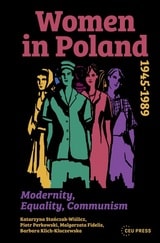
Women in Poland, 1945–1989
Modernity, Equality, CommunismKatarzyna Stanczak-Wislicz
Central European University Press, 2026
Women on the Defensive
Living through Conservative TimesSylvia Bashevkin
University of Chicago Press, 1998
Prevailing accounts of the fate of women's movements in that decade ascribe their hardships to a postfeminist ideology or the result of a "backlash" against women, particularly in America. Sylvia Bashevkin's study excavates, however, a much more complex situation. By identifying the policies and goals held in common by feminists in all three countries and tracing their collision course with the conservative policies of the three administrations, she is able to document setbacks but also some progress, despite the right-of-center leaders. She also challenges the assumption that organized interests in the United States are less vulnerable in hard times than those in parliamentary systems, finding that the elections of Ronald Reagan, Brian Mulroney, and Margaret Thatcher had similar effects on both sides of the Atlantic. Her comparative analysis reveals that the policies of current leaders, while marginally better than their predecessors, will not allow women and women's movements to regain lost ground.
Organized thematically, rather than by country, Women on the Defensive describes the difficult relationship between feminists and conservatives during a time of bitter ideological and policy battles when the vibrant social movements of the 1960s and 1970s were seriously threatened.
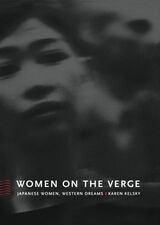
Women on the Verge
Japanese Women, Western DreamsKaren Kelsky
Duke University Press, 2001
In exploring the promises, limitations, and contradictions of these “occidental longings,” Women on the Verge exposes the racial and erotic politics of transnational mobility. Kelsky shows how female cosmopolitanism recontextualizes the well-known Western male romance with the Orient: Japanese women are now the agents, narrating their own desires for the “modern” West in ways that seem to defy Japanese nationalism as well as long-standing relations of power not only between men and women but between Japan and the West. While transnational movement is not available to all Japanese women, Kelsky shows that the desire for the foreign permeates many Japanese women’s lives. She also reveals how this feminine allegiance to the West—and particularly to white men—can impose its own unanticipated hegemonies of race, sexuality, and capital.
Combining ethnography and literary analysis, and bridging anthropology and cultural studies, Women on the Verge will also appeal to students and scholars of Japan studies, feminism, and global culture.
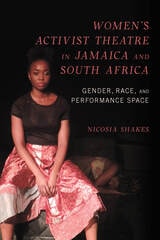
Women's Activist Theatre in Jamaica and South Africa
Gender, Race, and Performance SpaceNicosia M. Shakes
University of Illinois Press, 2023
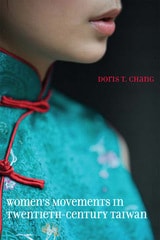
Women's Movements in Twentieth-Century Taiwan
Doris Chang
University of Illinois Press, 2008
This book is the first in English to consider women's movements and feminist discourses in twentieth-century Taiwan. Doris T. Chang examines the way in which Taiwanese women in the twentieth century selectively appropriated Western feminist theories to meet their needs in a modernizing Confucian culture. She illustrates the rise and fall of women's movements against the historical backdrop of the island's contested national identities, first vis-à-vis imperial Japan (1895-1945) and later with postwar China (1945-2000).
In particular, during periods of soft authoritarianism in the Japanese colonial era and late twentieth century, autonomous women's movements emerged and operated within the political perimeters set by the authoritarian regimes. Women strove to replace the "Good Wife, Wise Mother" ideal with an individualist feminism that meshed social, political, and economic gender equity with the prevailing Confucian family ideology. However, during periods of hard authoritarianism from the 1930s to the 1960s, the autonomous movements collapsed.
The particular brand of Taiwanese feminism developed from numerous outside influences, including interactions among an East Asian sociopolitical milieu, various strands of Western feminism, and even Marxist-Leninist women's liberation programs in Soviet Russia. Chinese communism appears not to have played a significant role, due to the Chinese Nationalists' restriction of communication with the mainland during their rule on post-World War II Taiwan.
Notably, this study compares the perspectives of Madame Chiang Kai-shek, whose husband led as the president of the Republic of China on Taiwan from 1949 to 1975, and Hsiu-lien Annette Lu, Taiwan's vice president from 2000 to 2008. Delving into period sources such as the highly influential feminist monthly magazine Awakening as well as interviews with feminist leaders, Chang provides a comprehensive historical and cross-cultural analysis of the struggle for gender equality in Taiwan.
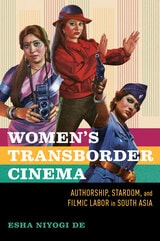
Women's Transborder Cinema
Authorship, Stardom, and Filmic Labor in South AsiaEsha Niyogi De
University of Illinois Press, 2024
Can we write women’s authorial roles into the history of industrial cinema in South Asia? How can we understand women’s creative authority and access to the film business infrastructure in this postcolonial region? Esha Niyogi De draws on rare archival and oral sources to explore these questions from a uniquely comparative perspective, delving into examples of women holding influential positions as stars, directors, and producers across the film industries in India, Pakistan, and Bangladesh.
De uses film tropes to examine the ways women directors and film entrepreneurs claim creative control within the contexts of anti-colonial nationalism and global capitalism. The region’s fictional cinemas have become staging grounds for postcolonialism, with colonial and local hierarchies merged into new imperial formations. De’s analysis shows how the gendered intersections of inequity and opportunity shape women’s fiction filmmaking while illuminating the impact of state and market formations on the process.
Innovative and essential, Women’s Transborder Cinema examines the works of South Asia’s women filmmakers from a regional perspective.
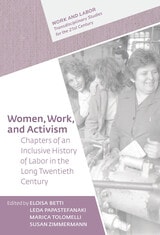
Women, Work, and Activism
Chapters of an Inclusive History of Labor in the Long Twentieth CenturyEloisa Betti
Central European University Press, 2022
The thirteen critical and well-documented chapters of Women, Work and Activism examine women’s labor struggle from late nineteenth-century Portuguese mutual societies to Yugoslav peasant women’s work in the 1930s, and from the Catalan labor movement under the Franco dictatorship to workplace democracy in the United States. The authors portray women's labor activism in a wide variety of contexts. This includes spontaneous resistance to masculinist trade unionism, the feminist engagement of women workers, the activism of communist wives of workers, and female long-distance migration, among others. The chapters address the gendered involvement of working people in multiple and often precarious and unstable labor relations and in unpaid labor, as well as the role of the state and other institutions in shaping the history of women’s labor.
The book is an innovative contribution to both the new labor history and feminist history. It fully integrates the conceptual advances made by gender historians in the study of labor activism, driving home critiques of Eurocentric historiographies of labor to Europe while simultaneously contributing to an inclusive history of women’s labor-related activism wherever to be found. Examining women’s activism in male-dominated movements and institutions, and in women’s networks and organizations, the authors make a case for a new direction in gender history.
Women’s Political Representation in Central and Eastern Europe
Enduring Legacies and Complex Realities Amid the Promise of ProgressAnja Vojvodic
Central European University Press, 2026
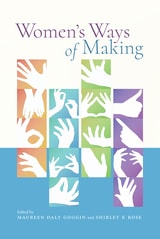
Women’s Ways of Making
Maureen Daly Goggin
Utah State University Press, 2021
Since the Enlightenment, embodied knowledge creation has been overlooked, ignored, or disparaged as inferior to other forms of expression or thinking that seem to leave the material world behind. Privileging the hand over the eye, as the work in this collection does, thus problematizes the way in which the eye has been co-opted by thinkers as the mind’s tool of investigation. Contributors to this volume argue that other senses—touch, taste, smell, hearing—are keys to knowing one’s materials. Only when all these ways of knowing are engaged can making be understood as a rhetorical practice.
In Women’s Ways of Making contributors explore ideas of making that run the gamut from videos produced by beauty vloggers to zine production and art programs at women’s correctional facilities. Bringing together senior scholars, new voices, and a fresh take on material rhetoric, this book will be of interest to a broad range of readers in composition and rhetoric.
Contributors: Angela Clark-Oates, Jane L. Donawerth, Amanda Ellis, Theresa M. Evans, Holly Fulton-Babicke, Bre Garrett, Melissa Greene, Magdelyn Hammong Helwig, Linda Hanson, Jackie Hoermann, Christine Martorana, Aurora Matzke, Jill McCracken, Karen S. Neubauer, Daneryl Nier-Weber, Sherry Rankins-Roberson, Kathleen J. Ryan, Rachael Ryerson, Andrea Severson, Lorin Shellenberger, Carey Smitherman-Clark, Emily Standridge, Charlese Trower, Christy I. Wenger, Hui Wu, Kathleen Blake Yancey

Working in Music on the Semiperiphery
Local Cultural Production and Global CapitalismEmília Barna
Central European University Press, 2025
This book embraces the widest possible range of workers in the music industry. It deals with all music genres from high-flying to commercial and observes various workers in the production chain beyond musicians. Niche segments of the sector, such as YouTube-based commercial hip hop, are given special treatment. Using a variety of empirical research methods, the study examines the trends as workers are pushed towards digital entrepreneurship and platform work, on the one hand, and live performance, on the other. The focus on domestic work and informality offers a feminist analysis of work in music. This approach sheds light on gendered divisions of labor and forms of (self-)exploitation that usually remain invisible. The book proposes a new model of cultural autonomy that takes account of the semiperipheral relationship of music industry workers and institutions to both the market and the state.
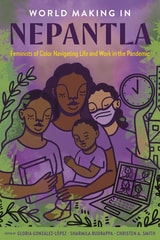
World Making in Nepantla
Feminists of Color Navigating Life and Work in the PandemicGloria González-LópezSharmila RudrappaChristen A. Smith
University of Texas Press, 2025
Writings from feminist scholars of color about their experiences during the pandemic.
Bringing uncertainty, fear, and change, the COVID-19 pandemic shook the world, altered people’s lives, and sparked a wave of introspection. Underserved communities—people of color, women, and queer people among them—were affected the most, and their experiences, in turn, reflected hope and opportunities to reinvent themselves individually and collectively. Drawing on Gloria Anzaldúa’s use of nepantla—the Náhuatl word meaning “in-between space,” the en medio and a liminal space between worlds imbued with change—World Making in Nepantla collects writings about the hurdles feminist scholars of color faced during the pandemic years.
Contributors explore how COVID affected feminist scholars of color while recognizing the ways in which inequality influences experience and also celebrating the resilience of communities all over the world. Dispatches from classrooms and quarantined homes and introspective essays on disability, mutual aid, and borders are included among the essays here. These pieces serve as a concrete record, capturing an ephemeral time already being lost to memory. Created during the heart of the pandemic, World Making in Nepantla is an honest and intimate recording of how feminist scholars of color navigated struggles and found strength during an era that forever changed the modern world.