Results by title
1726 books match the query 'Film' and 56 start with w
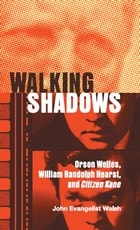
Walking Shadows
Orson Welles, William Randolph Hearst, and Citizen KaneJohn Evangelist Walsh
University of Wisconsin Press, 2004
Citizen Kane portrayed the ruthless career of an all-powerful magnate bearing (not accidentally) a striking resemblance to Hearst, who immediately tried to kill the picture. John Evangelist Walsh here illuminates the conflict between these two outsize personalities and for the first time brings Hearst’s vengeful anti-Kane campaign to the fore. Walsh provides thorough documentation, supplemental notes, and an extended bibliography.
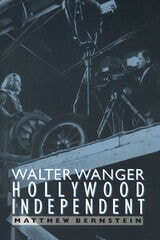
Walter Wanger, Hollywood Independent
Matthew Bernstein
University of Minnesota Press, 2000
A portrait of the trailblazing film producer whose career spanned five decades.
The long, colorful career of Walter Wanger (1894-1968) is one of Hollywood’s greatest untold stories. An intellectual and a socially conscious movie executive who produced provocative message movies and glittering romantic melodramas, Wanger’s career started at Paramount studios in the 1920s and led him to work at virtually every major studio as either a contract producer or an independent. He produced a series of American film classics, including Queen Christina, Stagecoach, Foreign Correspondent, and Invasion of the Body Snatchers, as well as a few notable flops, such as Cleopatra. This comprehensive biography brings to life a distinctive film personality and offers a new appreciation of the role of the producer in the history of American cinema.
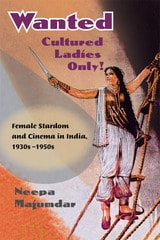
Wanted Cultured Ladies Only!
Female Stardom and Cinema in India, 1930s-1950sNeepa Majumdar
University of Illinois Press, 2008
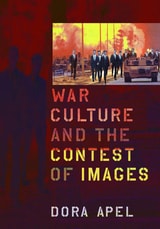
War Culture and the Contest of Images
Apel, Dora
Rutgers University Press, 2012
War Culture and the Contest of Images analyzes the relationships among contemporary war, documentary practices, and democratic ideals. Dora Apel examines a wide variety of images and cultural representations of war in the United States and the Middle East, including photography, performance art, video games, reenactment, and social media images. Simultaneously, she explores the merging of photojournalism and artistic practices, the effects of visual framing, and the construction of both sanctioned and counter-hegemonic narratives in a global contest of images.
As a result of the global visual culture in which anyone may produce as well as consume public imagery, the wide variety of visual and documentary practices present realities that would otherwise be invisible or officially off-limits. In our digital era, the prohibition and control of images has become nearly impossible to maintain. Using carefully chosen case studies—such as Krzysztof Wodiczko’s video projections and public works in response to 9/11 and the wars in Iraq and Afghanistan, the performance works of Coco Fusco and Regina Galindo, and the practices of Israeli and Palestinian artists—Apel posits that contemporary war images serve as mediating agents in social relations and as a source of protection or refuge for those robbed of formal or state-sanctioned citizenship.
While never suggesting that documentary practices are objective translations of reality, Apel shows that they are powerful polemical tools both for legitimizing war and for making its devastating effects visible. In modern warfare and in the accompanying culture of war that capitalism produces as a permanent feature of modern society, she asserts that the contest of images is as critical as the war on the ground.
War Games
Jonna Eagle
Rutgers University Press, 2020
This Quick Take considers how various war games and simulations shape the ways we imagine war. Paradoxically, these games grant us a sense of mastery and control as we strategize and scrutinize the enemy, yet also allow us the thrilling sense of being immersed in the carnage and chaos of battle. But as simulations of war become more integrated into both popular culture and military practice, how do they shape our apprehension of the traumatic realities of warfare?
Covering everything from chess to football, from Saving Private Ryan to American Sniper, and from Call of Duty to drone interfaces, War Games is an essential guide for anyone seeking to understand the militarization of American culture, offering a compact yet comprehensive look at how we play with images of war.
Warhol's Working Class
Pop Art and EgalitarianismAnthony E. Grudin
University of Chicago Press, 2017
Having propelled himself from an impoverished childhood in Pittsburgh to the heights of Madison Avenue, Warhol knew both sides of this equation: the intense appeal that popular culture held for working-class audiences and the ways in which the advertising industry hoped to harness this appeal in the face of growing middle-class skepticism regarding manipulative marketing. Warhol was fascinated by these promises of egalitarian individualism and mobility, which could be profound and deceptive, generative and paralyzing, charged with strange forms of desire. By tracing its intersections with various forms of popular culture, including film, music, and television, Grudin shows us how Warhol’s work disseminated these promises, while also providing a record of their intricate tensions and transformations.
Washed in Blood
Male Sacrifice, Trauma, and the CinemaKing, Claire S
Rutgers University Press, 2012
Will Smith in I Am Legend. Leonardo DiCaprio in Titanic. Charlton Heston in just about everything.
Viewers of Hollywood action films are no doubt familiar with the sacrificial victim-hero, the male protagonist who nobly gives up his life so that others may be saved. Washed in Blood argues that such sacrificial films are especially prominent in eras when the nation—and American manhood—is thought to be in crisis. The sacrificial victim-hero, continually imperiled and frequently exhibiting classic symptoms of post-traumatic stress disorder, thus bears the trauma of the nation.
Claire Sisco King offers an in-depth study of three prominent cycles of Hollywood films that follow the sacrificial narrative: the early–to–mid 1970s, the mid–to–late 1990s, and the mid–to–late 2000s. From Vietnam-era disaster movies to post-9/11 apocalyptic thrillers, she examines how each film represents traumatized American masculinity and national identity. What she uncovers is a cinematic tendency to position straight white men as America’s most valuable citizens—and its noblest victims.

Watching Films
New Perspectives on Movie-Going, Exhibition and ReceptionEdited by Albert Moran and Karina Aveyard
Intellect Books, 2013
Watching the Traffic Go By
Transportation and Isolation in Urban AmericaBy Paul Mason Fotsch
University of Texas Press, 2007
2007 — Jane Jacobs Urban Communication Publication Award – Urban Communication Foundation
As twentieth-century city planners invested in new transportation systems to deal with urban growth, they ensured that the automobile rather than mass transit would dominate transportation. Combining an exploration of planning documents, sociological studies, and popular culture, Paul Fotsch shows how our urban infrastructure developed and how it has shaped American culture ever since.
Watching the Traffic Go By emphasizes the narratives underlying our perceptions of innovations in transportation by looking at the stories we have built around these innovations. Fotsch finds such stories in the General Motors "Futurama" exhibit at the 1939 World's Fair, debates in Munsey's magazine, films such as Double Indemnity, and even in footage of the O. J. Simpson chase along Los Angeles freeways.
Juxtaposed with contemporaneous critiques by Lewis Mumford, Theodor Adorno, and Max Horkheimer, Fotsch argues that these narratives celebrated new technologies that fostered stability for business and the white middle class. At the same time, transportation became another system of excluding women and the poor, especially African Americans, by isolating them in homes and urban ghettos.
A timely, interdisciplinary analysis, Watching the Traffic Go By exposes the ugly side of transportation politics through the seldom-used lens of popular culture.
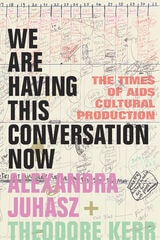
We Are Having This Conversation Now
The Times of AIDS Cultural ProductionAlexandra Juhasz and Theodore Kerr
Duke University Press, 2022
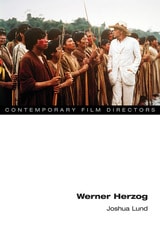
Werner Herzog
Joshua Lund
University of Illinois Press, 2020
Joshua Lund offers the first systematic interpretation of Werner Herzog's Americas-themed works, illuminating the director's career as a political filmmaker—a label Herzog himself rejects. Lund draws on materialist and post-colonial approaches to argue that Herzog's American work confronts us with the circulation, distribution, accumulation, application, and negotiation of power that resides, quietly, at the center of his films. By operating beyond conventional ideological categories, Herzog renders political ideas in radically unfamiliar ways while fearlessly confronting his viewers with questions of world-historical significance. His maddeningly opaque viewpoint challenges us to rethink discovery and conquest, migration and exploitation, resource extraction, slavery, and other foundational traumas of the contemporary human condition.
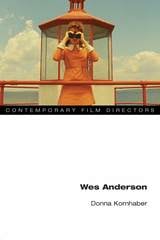
Wes Anderson
Donna Kornhaber
University of Illinois Press, 2017
Donna Kornhaber approaches Anderson's style as the necessary product of the narrative and thematic concerns that define his body of work. Using Anderson's focus on collecting, Kornhaber situates the director as the curator of his filmic worlds, a prime mover who artfully and conscientiously arranges diverse components into cohesive collections and taxonomies. Anderson peoples each mise-en-scéne in his ongoing ""Wesworld"" with characters orphaned, lost, and out of place amidst a riot of handmade clutter and relics. Within, they seek a wholeness and collective identity they manifestly lack, with their pain expressed via an ordered emotional palette that, despite being muted, cries out for attention. As Kornhaber shows, Anderson's films offer nothing less than a fascinating study in the sensation of belonging--told by characters who possess it the least.
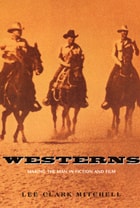
Westerns
Making the Man in Fiction and FilmLee Clark Mitchell
University of Chicago Press, 1996
Few genres are so closely identified with America as the Western. In this wide-ranging examination of the Western and its appeal, Lee Clark Mitchell ranges from the novels of James Fenimore Cooper to Louis L'Amour, and from classic films like Stagecoach to spaghetti Westerns like A Fistful of Dollar to show how Westerns helped assuage a series of crises in American culture. This landmark book shows that the Western owes its perennial appeal not to unchanging conventions but to the deftness with which it responds to the obsessions and fears of its audience. And no obsession, Lee Mitchell argues, has figured more prominently in the Western than what it means to be a man.
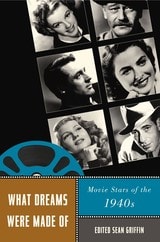
What Dreams Were Made Of
Movie Stars of the 1940sGriffin, Sean
Rutgers University Press, 2011
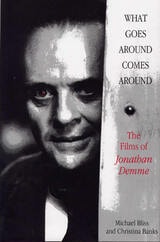
What Goes Around Comes Around
The Films of Jonathan DemmeMichael Bliss and Christina Banks
Southern Illinois University Press, 1996
This first book on the director of The Silence of the Lambs and Philadelphia is comprehensive, analyzing each of Jonathan Demme’s thirteen films.
Demme received the 1980 New York Film Critics Award as Best Director for Melvin and Howard. Subsequent Demme films such as Something Wild and the Talking Heads concert film Stop Making Sense, which won the National Society of Film Critics Award for Best Documentary, made Demme a cult favorite in the league of Roger Corman.
With 199l’s The Silence of the Lambs, Demme moved into a different league. The top-grossing film of the year, Silence won five Academy Awards, becoming the first film to sweep the Best Director, Actor, Actress, and Picture categories since 1975’s One Flew Over the Cuckoo’s Nest. Philadelphia also has been a top-grossing film, with Tom Hanks winning 1994’s Best Actor Oscar.
Michael Bliss and Christina Banks include a wealth of biographical and critical data; an exclusive interview with Demme; the only on-set report on the filming of The Silence of the Lambs; an interview with Craig McKay, Demme’s Emmy-winning film editor; a bibliography; and a Demme filmography. Many of the book’s movie still illustrations have never been published.
What Have They Built You to Do?
The Manchurian Candidate and Cold War AmericaMatthew Frye Jacobson
University of Minnesota Press, 2006
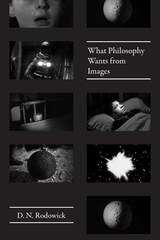
What Philosophy Wants from Images
D. N. Rodowick
University of Chicago Press, 2017
Rodowick here explores work by artists such as Ken Jacobs, Ernie Gehr, Victor Burgin, Harun Farocki, and others—artists who are creating forms that express a new historical consciousness of images. These forms acknowledge a complex relationship to the disappearing past even as they point toward new media that will challenge viewers’ confidence in what the images they see are or are becoming. What philosophy wants from images, Rodowick shows, is to renew itself conceptually through deep engagement with new forms of aesthetic experience.
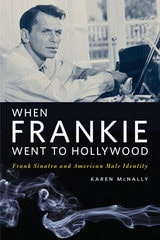
When Frankie Went to Hollywood
Frank Sinatra and American Male IdentityKaren McNally
University of Illinois Press, 2007
This first in-depth study of Frank Sinatra’s film career explores his iconic status in relation to his many performances in postwar Hollywood cinema. When Frankie Went to Hollywood considers how Sinatra’s musical acts, television appearances, and public commentary impacted his screen performances in Pal Joey, The Tender Trap, Some Came Running, The Man with the Golden Arm, and other hits. A lively discussion of sexuality, class, race, ethnicity, and male vulnerability in postwar American culture illuminates Karen McNally’s investigation into Sinatra’s cinematic roles and public persona. This entertainment luminary, she finds, was central in shaping debates surrounding definitions of American male identity in the 1940s and ’50s.
When Movies Mattered
Reviews from a Transformative DecadeDave Kehr
University of Chicago Press, 2011
If you have ever wanted to dig around in the archives for that perfect Sunday afternoon DVD and first turned to a witty weekly column in the New York Times, then you are already familiar with one of our nation’s premier film critics. If you love movies—and the writers who engage them—and just happen to have followed two of the highest circulating daily papers in the country, then you probably recognize the name of the intellectually dazzling writer who has been penning pieces on American and foreign films for over thirty years. And if you called the City of the Big Shoulders home in the 1970s or 1980s and relied on those trenchant, incisive reviews from the Chicago Reader and the Chicago Tribune to guide your moviegoing delight, then you know Dave Kehr.
When Movies Mattered presents a wide-ranging and illuminating selection of Kehr’s criticism from the Reader—most of which is reprinted here for the first time—including insightful discussions of film history and his controversial Top Ten lists. Long heralded by his peers for both his deep knowledge and incisive style, Kehr developed his approach to writing about film from the auteur criticism popular in the ’70s. Though Kehr’s criticism has never lost its intellectual edge, it’s still easily accessible to anyone who truly cares about movies. Never watered down and always razor sharp, it goes beyond wry observations to an acute examination of the particular stylistic qualities that define the work of individual directors and determine the meaning of individual films.
From current releases to important revivals, from classical Hollywood to foreign fare, Kehr has kept us spellbound with his insightful critical commentaries. When Movies Mattered will secure his place among our very best writers about all things cinematic.
When the Cock Crows
A History of the Pathé ExchangeRichard Lewis Ward
Southern Illinois University Press, 2016
Ward traces the company’s turbulent evolution from its roots as an American distributor for Pathé Frères, its French parent studio, through its many subsequent changes in ownership, to its final years under the controversial leadership of Joseph P. Kennedy and the eventual merger of the company’s production department with RKO. Included are the stories of the unlikely survival of Pathé’s nonproduction assets, such as Pathé Industries, Inc., Pathé-America Distributing Co., Inc., and Pathé Communications Corporation, which continued to operate as part of the industry long after the Exchange had ceased to exist. Ward also provides a fascinating glimpse into the silent movie era and the business and creative decisions that led the Exchange to fail.
Film historians have largely ignored the Pathé Exchange, despite its having produced some of the most famous early serials (including the series that began with The Perils of Pauline) and distributed the first films of comedy legends Harold Lloyd, Harry Langdon, Laurel and Hardy, and Our Gang. When the Cock Crows reveals the promise and peril of early Hollywood and establishes the company’s vital place in film history, creating a more vivid picture of this era.
Where Does It Happen
John Cassavetes And Cinema At The Breaking PointGeorge Kouvaros
University of Minnesota Press, 2004
Where Histories Reside
India as Filmed SpacePriya Jaikumar
Duke University Press, 2019
Where No Black Woman Has Gone Before
Subversive Portrayals in Speculative Film and TVBy Diana Adesola Mafe
University of Texas Press, 2018
When Lieutenant Uhura took her place on the bridge of the Starship Enterprise on Star Trek, the actress Nichelle Nichols went where no African American woman had ever gone before. Yet several decades passed before many other black women began playing significant roles in speculative (i.e., science fiction, fantasy, and horror) film and television—a troubling omission, given that these genres offer significant opportunities for reinventing social constructs such as race, gender, and class. Challenging cinema’s history of stereotyping or erasing black women on-screen, Where No Black Woman Has Gone Before showcases twenty-first-century examples that portray them as central figures of action and agency.
Writing for fans as well as scholars, Diana Adesola Mafe looks at representations of black womanhood and girlhood in American and British speculative film and television, including 28 Days Later, AVP: Alien vs. Predator, Children of Men, Beasts of the Southern Wild, Firefly, and Doctor Who: Series 3. Each of these has a subversive black female character in its main cast, and Mafe draws on critical race, postcolonial, and gender theories to explore each film and show, placing the black female characters at the center of the analysis and demonstrating their agency. The first full study of black female characters in speculative film and television, Where No Black Woman Has Gone Before shows why heroines such as Lex in AVP and Zoë in Firefly are inspiring a generation of fans, just as Uhura did.
Where Social Identities Converge
Latin American and Latinx Youth on ScreenTraci Roberts-Camps
Vanderbilt University Press, 2024
White Heat
Edited, with an introduction by Patrick McGilligan; Tino T. Balio, Series Editor
University of Wisconsin Press, 1984
Among the countless gangster films produced by Hollywood, few are as haunting, complex, or ingeniously crafted as White Heat (1948). Students of film history and screen writing will appreciate this treatment—an engaging study of teh various artistic elements that turned what might have been just another gangster film into an innovative classic of the genre and a model of cooperative filmmaking at its best.
Crucial to White Heat's success, McGilligan stresses, was the rare manner in which every aspect of production coalesced: studio, script, cast, crew, and director.
Whitewashing the Movies
Asian Erasure and White Subjectivity in U.S. Film CultureDavid C Oh
Rutgers University Press, 2022
Who's Who in Research
Film StudiesIntellect Books
Intellect Books, 2013
Whom God Wishes to Destroy . . .
Francis Coppola and the New HollywoodJon Lewis
Duke University Press, 1995
Whose Lives Are They Anyway?
The Biopic as Contemporary Film GenreBingham, Dennis
Rutgers University Press, 2010
Whose Lives Are They Anyway? boldly proves a critical point: The biopic is a genuine, dynamic genre and an important one—it narrates, exhibits, and celebrates a subject's life and demonstrates, investigates, or questions his or her importance in the world; it illuminates the finer points of a personality; and, ultimately, it provides a medium for both artist and spectator to discover what it would be like to be that person, or a certain type of person.
Through detailed analyses and critiques of nearly twenty biopics, Dennis Bingham explores what is at their core—the urge to dramatize real life and find a version of the truth within it. The genre's charge, which dates back to the salad days of the Hollywood studio era, is to introduce the biographical subject into the pantheon of cultural mythology and, above all, to show that he or she belongs there. It means to discover what we learn about our culture from the heroes who rise and the leaders who emerge from cinematic representations.
Bingham also zooms in on distinctions between cinematic portrayals of men and women. Films about men have evolved from celebratory warts-and-all to investigatory to postmodern and parodic. At the same time, women in biopics have been burdened by myths of suffering, victimization, and failure from which they are only now being liberated.
To explore the evolution and lifecycle changes of the biopic and develop an appreciation for subgenres contained within it, there is no better source than Whose Lives Are They Anyway?
Why Docudrama?
Fact-Fiction on Film and TVEdited by Alan Rosenthal
Southern Illinois University Press, 1999
When the 1990 English docudrama Who Bombed Birmingham? cast serious doubt on the guilt of six men convicted of bombing two British pubs in 1974, Prime Minister Margaret Thatcher declared that a "television program alters nothing." But, as Alan Rosenthal concludes, Thatcher was wrong. The film engendered a new inquiry that led to the release of the convicted men.
Rosenthal notes that docudrama wields more influence than the average documentary and that "reality-based stories taken from topical journalism are the most popular drama genre on U.S. and British television today." This three-part collection of diverse and provocative essays addresses the dominant questions and controversies the genre poses.
Defining and examining the rationale of docudrama, the nine essayists in the first part discuss the history and development of docudrama on TV and in film; they also consider the place of truth in docudrama, the main critiques of the form, and the audience's susceptibilities and expectations. In investigating the actual filmmaking process, the eight essays in the second part focus on how "docudrama as a 'commodity' is created in the United States and England." Part essay, part case study, and part interview, this section also explores how Hollywood and the commercial networks as well as producers and writers work and think. The final part presents an in-depth critique of a number of controversial docudramas that have helped form and shape public opinion, including Battleship Potemkin, Roots, Reds, JFK, Mississippi Burning, Schindler's List, and In the Name of the Father.
In addition to Rosenthal, the contributors are John Corner, George F. Custen, David Edgar, Leslie Fishbein, George MacDonald Fraser, Todd Gitlin, Douglas Gomery, Richard Grenier, Sumiko Higashi, Tom W. Hoffer, Jerry Kuehl, Steve Lipkin, Yosefa Loshitsky, Ian McBride, Richard Alan Nelson, Conor Cruise O'Brien, Derek Paget, Robert A. Rosenstone, Betsy Sharkey, Irene Shubik, Jeff Silverman, D. J. Wenden, Sita Williams, and Leslie Woodhead.
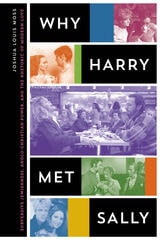
Why Harry Met Sally
Subversive Jewishness, Anglo-Christian Power, and the Rhetoric of Modern LoveBy Joshua Louis Moss
University of Texas Press, 2017
From immigrant ghetto love stories such as The Cohens and the Kellys (1926), through romantic comedies including Meet the Parents (2000) and Knocked Up (2007), to television series such as Transparent (2014–), Jewish-Christian couplings have been a staple of popular culture for over a century. In these pairings, Joshua Louis Moss argues, the unruly screen Jew is the privileged representative of progressivism, secular modernism, and the cosmopolitan sensibilities of the mass-media age. But his/her unruliness is nearly always contained through romantic union with the Anglo-Christian partner. This Jewish-Christian meta-narrative has recurred time and again as one of the most powerful and enduring, although unrecognized, mass-culture fantasies.
Using the innovative framework of coupling theory, Why Harry Met Sally surveys three major waves of Jewish-Christian couplings in popular American literature, theater, film, and television. Moss explores how first-wave European and American creators in the early twentieth century used such couplings as an extension of modernist sensibilities and the American “melting pot.” He then looks at how New Hollywood of the late 1960s revived these couplings as a sexually provocative response to the political conservatism and representational absences of postwar America. Finally, Moss identifies the third wave as emerging in television sitcoms, Broadway musicals, and “gross-out” film comedies to grapple with the impact of American economic globalism since the 1990s. He demonstrates that, whether perceived as a threat or a triumph, Jewish-Christian couplings provide a visceral, easily graspable, template for understanding the rapid transformations of an increasingly globalized world.
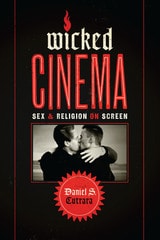
Wicked Cinema
Sex and Religion on ScreenBy Daniel Cutrara
University of Texas Press, 2014
From struggles over identity politics in the 1990s to current concerns about a clash of civilizations between Islam and Christianity, culture wars play a prominent role in the twenty-first century. Movies help to define and drive these conflicts by both reflecting and shaping cultural norms, as well as showing what violates those norms. In this pathfinding book, Daniel S. Cutrara employs queer theory, cultural studies, theological studies, and film studies to investigate how cinema represents and often denigrates religion and religious believers—an issue that has received little attention in film studies, despite the fact that faith in its varied manifestations is at the heart of so many cultural conflicts today.
Wicked Cinema examines films from the United States, Europe, and the Middle East, including Crimes and Misdemeanors, The Circle, Breaking the Waves, Closed Doors, Agnes of God, Priest, The Last Temptation of Christ, and Dogma. Central to all of the films is their protagonists’ struggles with sexual transgression and traditional belief systems within Christianity, Judaism, or Islam—a struggle, Cutrara argues, that positions believers as the Other and magnifies the abuses of religion while ignoring its positive aspects. Uncovering a hazardous web of ideological assumptions informed by patriarchy, the spirit/flesh dichotomy, and heteronormativity, Cutrara demonstrates that ultimately these films emphasize the “Otherness” of the faithful through a variety of strategies commonly used to denigrate the queer, from erasing their existence, to using feminization to make them appear weak, to presenting them as dangerous fanatics.
Without Model
Parva AestheticaTheodor W. Adorno
Seagull Books, 2023
Essays by Theodor W. Adorno on art and cinema.
In Without Model, Theodor W. Adorno strikingly demonstrates the intellectual range for which he is known. Taking the premise of the title as his guiding principle, that artistic and philosophical thought must eschew preconceptions and instead adapt itself to its time, circumstances, and object, Adorno presents a series of essays reflecting on culture at different levels, from the details of individual products to the social conditions of their production. He shows his more nostalgic side in the childhood reminiscences of ‘Amorbach’, but also his acute sociocultural analysis of the central topic of the culture industry. He criticizes attempts to maintain tradition in music and visual art, arguing against a restorative approach by stressing the modernity and individuality of historical works in the context of their time. In all of these essays, available for the first time in English, Adorno displays the remarkable thinking of one both steeped in tradition and dedicated to seeing beyond it.
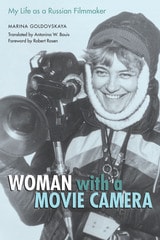
Woman with a Movie Camera
My Life as a Russian FilmmakerBy Marina Goldovskaya
University of Texas Press, 2006
Marina Goldovskaya is one of Russia's best-known documentary filmmakers. The first woman in Russia (and possibly the world) to combine being a director, writer, cinematographer, and producer, Goldovskaya has made over thirty documentary films and more than one hundred programs for Russian, European, Japanese, and American television. Her work, which includes the award-winning films The House on Arbat Street, The Shattered Mirror, and Solovky Power, has garnered international acclaim and won virtually every prize given for documentary filmmaking.
In Woman with a Movie Camera, Goldovskaya turns her lens on her own life and work, telling an adventurous, occasionally harrowing story of growing up in the Stalinist era and subsequently documenting Russian society from the 1960s, through the Thaw and Perestroika, to post-Soviet Russia. She recalls her childhood in a Moscow apartment building that housed famous filmmakers, being one of only three women students at the State Film School, and working as an assistant cameraperson on the first film of Andrei Tarkovsky, Russia's most celebrated director. Reviewing her professional filmmaking career, which began in the 1960s, Goldovskaya reveals her passion for creating films that presented a truthful picture of Soviet life, as well as the challenges of working within (and sometimes subverting) the bureaucracies that controlled Russian film and television production and distribution. Along the way, she describes a host of notable figures in Russian film, theater, art, and politics, as well as the technological evolution of filmmaking from film to video to digital media.
A compelling portrait of a woman who broke gender and political barriers, as well as the eventful four decades of Russian history she has documented, Woman with a Movie Camera will be fascinating reading for a wide audience.
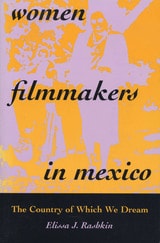
Women Filmmakers in Mexico
The Country of Which We DreamBy Elissa J. Rashkin
University of Texas Press, 2001
Women filmmakers in Mexico were rare until the 1980s and 1990s, when women began to direct feature films in unprecedented numbers. Their films have won acclaim at home and abroad, and the filmmakers have become key figures in contemporary Mexican cinema. In this book, Elissa Rashkin documents how and why women filmmakers have achieved these successes, as she explores how the women's movement, film studies programs, governmental film policy, and the transformation of the intellectual sector since the 1960s have all affected women's filmmaking in Mexico.
After a historical overview of Mexican women's filmmaking from the 1930s onward, Rashkin focuses on the work of five contemporary directors—Marisa Sistach, Busi Cortés, Guita Schyfter, María Novaro, and Dana Rotberg. Portraying the filmmakers as intellectuals participating in the public life of the nation, Rashkin examines how these directors have addressed questions of national identity through their films, replacing the patriarchal images and stereotypes of the classic Mexican cinema with feminist visions of a democratic and tolerant society.
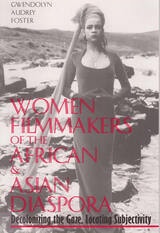
Women Filmmakers of the African & Asian Diaspora
Decolonizing the Gaze, Locating SubjectivityGwendolyn Audrey Foster
Southern Illinois University Press, 1997
Black women filmmakers not only deserve an audience, Gwendolyn Audrey Foster asserts, but it is also imperative that their voices be heard as they struggle against Hollywood’s constructions of spectatorship, ownership, and the creative and distribution aspects of filmmaking.
Foster provides a voice for Black and Asian women in the first detailed examination of the works of six contemporary Black and Asian women filmmakers. She also includes a detailed introduction and a chapter entitled "Other Voices," documenting the work of other Black and Asian filmmakers.
Foster analyzes the key films of Zeinabu irene Davis, "one of a growing number of independent Black women filmmakers who are actively constructing [in the words of bell hooks] ‘an oppositional gaze’"; British filmmaker Ngozi Onwurah and Julie Dash, two filmmakers working with time and space; Pratibha Parmar, a Kenyan/Indian-born British Black filmmaker concerned with issues of representation, identity; cultural displacement, lesbianism, and racial identity; Trinh T. Minh-ha, a Vietnamese-born artist who revolutionized documentary filmmaking by displacing the "voyeuristic gaze of the ethnographic documentary filmmaker"; and Mira Nair, a Black Indian woman who concentrates on interracial identity.
Women Make Horror
Filmmaking, Feminism, GenreAlison Peirse
Rutgers University Press, 2020
Winner of the the 2021 Best Edited Collection Award from BAFTSS
Winner of the 2021 British Fantasy Award in Best Non-Fiction
Finalist for the 2020 Bram Stoker Award® for Superior Achievement in Non-Fiction
Runner-Up for Book of the Year in the 19th Annual Rondo Halton Classic Horror Awards
“But women were never out there making horror films, that’s why they are not written about – you can’t include what doesn’t exist.”
“Women are just not that interested in making horror films.”
This is what you get when you are a woman working in horror, whether as a writer, academic, festival programmer, or filmmaker. These assumptions are based on decades of flawed scholarly, critical, and industrial thinking about the genre. Women Make Horror sets right these misconceptions. Women have always made horror. They have always been an audience for the genre, and today, as this book reveals, women academics, critics, and filmmakers alike remain committed to a film genre that offers almost unlimited opportunities for exploring and deconstructing social and cultural constructions of gender, femininity, sexuality, and the body.
Women Make Horror explores narrative and experimental cinema; short, anthology, and feature filmmaking; and offers case studies of North American, Latin American, European, East Asian, and Australian filmmakers, films, and festivals. With this book we can transform how we think about women filmmakers and genre.
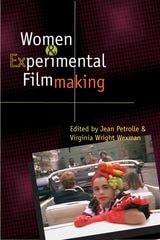
Women and Experimental Filmmaking
Edited by Jean Petrolle and Virginia Wright Wexman
University of Illinois Press, 2005
The introduction sets out by addressing the basic difficulties of both historiography and definition before providing a historical overview of how these particular filmmakers have helped shape moviemaking traditions. The essays explore the major theoretical controversies that have arisen around the work of groundbreaking women such as Leslie Thornton, Su Friedrich, Nina Menkes, and Faith Hubley. With the filmmakers re-presentations of women's subjectivity ranging across film, video, digital media, ethnography, animation, and collage, Women and Experimental Filmmaking represents the full spectrum of genres, techniques, and modes. Taken together, these essays comprise a sustained analysis of the conjunction of aesthetics and politics in the work of both pioneer and contemporary experimental women filmmakers.
Women and New Hollywood
Gender, Creative Labor, and 1970s American CinemaAaron Hunter
Rutgers University Press, 2023
Women and New Hollywood revises our understanding of this important era in American film by examining the contributions that women made not only as directors, but also as screenwriters, editors, actors, producers, and critics. Including essays on film history, film texts, and the decade’s film theory and criticism, this collection showcases the rich and varied cinematic products of women’s creative labor, as well as the considerable barriers they faced. It considers both women working within and beyond the Hollywood film industry, reconceptualizing New Hollywood by bringing it into dialogue with other American cinemas of the 1970s. By valuing the many forms of creative labor involved in film production, this collection offers exciting alternatives to the auteurist model and new ways of appreciating the themes and aesthetics of 1970s American film.
Women at Work in Twenty-First-Century European Cinema
Barbara Mennel
University of Illinois Press, 2019
Barbara Mennel delves into the ways these films about female labor capture the tension between feminist advances and their appropriation by capitalism in a time of ongoing transformation. Looking at independent and genre films from a cross-section of European nations, Mennel sees a focus on economics and work adapted to the continent's varied kinds of capitalism and influenced by concepts in second-wave feminism. More than ever, narratives of work put female characters front and center--and female directors behind the camera. Yet her analysis shows that each film remains a complex mix of progressive and retrogressive dynamics as it addresses the changing nature of work in Europe.
Women in Hollywood's Dream Factory
Tales of Inequality, Abuse, and ResistanceEdited by Karen McNally
University of Illinois Press, 2026
The #MeToo revelations put a twenty-first-century stamp on the age-old story of women’s mistreatment in Hollywood. Karen McNally edits a collection focused on examining and revising film history in the aftermath of the women’s stories, past and present, that have come to light.
The collection begins with essays on the interplay between reality and imagination in narratives and representations of women’s experiences of unequal treatment. In Part 2, contributors discuss how the gendered attitudes of the media’s stories enable inequality in Hollywood and look at the forces that arise whenever women resist these media assaults. The next section addresses the structures that built the inequalities and mistreatment while Part 4 revisits established narratives to challenge, renew, and expand upon our understanding of film history through women’s stories. Essays in the final section address the combination of inequality and resistance that defines women’s experiences in Hollywood.
Piercing and astute, Women in Hollywood’s Dream Factory confronts our perception of Hollywood as a mythological land of dreams.
Contributors: Alicia Byrnes, Anna M. Dempsey, Harriet Fletcher, Amanda Konkle, Tamar Jeffers McDonald, Kerry McElroy, Adrienne L. McLean, Karen McNally, Donna Peberdy, Melanie Piper, Victoria K. Pistivsek, Sarah Polley, Ina C. Seethaler, Gabrielle Stecher, and Jennifer Voss
Women in Iberian Filmic Culture
A Feminist Approach to Cinemas in Portugal and SpainEdited by Elena Cordero Hoyo and Begoña Soto Vásquez
Intellect Books, 2020
Focusing on Portuguese and Spanish cinema, this collection brings together research about women and their status in relation to Iberian visual culture. The volume contributes to ongoing debates about the position of women in the cinemas of Portugal and Spain through a revision of feminist theory as well as new accounts of film history. It also aims to promote comparisons between Iberian cinemas and visual culture from different regions, a topic that is almost unexplored in academia, despite the similar histories of the two Iberian countries, particularly throughout the twentieth century.
Women's Cinema, World Cinema
Projecting Contemporary FeminismsPatricia White
Duke University Press, 2015
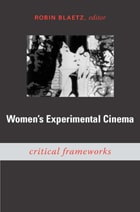
Women's Experimental Cinema
Critical FrameworksRobin Blaetz, ed.
Duke University Press, 2007
The contributors examine the work of Marie Menken, Joyce Wieland, Gunvor Nelson, Yvonne Rainer, Carolee Schneemann, Barbara Rubin, Amy Greenfield, Barbara Hammer, Chick Strand, Marjorie Keller, Leslie Thornton, Abigail Child, Peggy Ahwesh, Su Friedrich, and Cheryl Dunye. The essays highlight the diversity in these filmmakers’ forms and methods, covering topics such as how Menken used film as a way to rethink the transition from abstract expressionism to Pop Art in the 1950s and 1960s, how Rubin both objectified the body and investigated the filmic apparatus that enabled that objectification in her film Christmas on Earth (1963), and how Dunye uses film to explore her own identity as a black lesbian artist. At the same time, the essays reveal commonalities, including a tendency toward documentary rather than fiction and a commitment to nonhierarchical, collaborative production practices. The volume’s final essay focuses explicitly on teaching women’s experimental films, addressing logistical concerns (how to acquire the films and secure proper viewing spaces) and extending the range of the book by suggesting alternative films for classroom use.
Contributors. Paul Arthur, Robin Blaetz, Noël Carroll, Janet Cutler, Mary Ann Doane, Robert A. Haller, Chris Holmlund, Chuck Kleinhans, Scott MacDonald, Kathleen McHugh, Ara Osterweil, Maria Pramaggiore, Melissa Ragona, Kathryn Ramey, M. M. Serra, Maureen Turim, William C. Wees
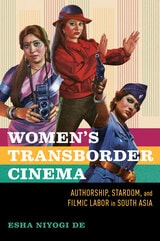
Women's Transborder Cinema
Authorship, Stardom, and Filmic Labor in South AsiaEsha Niyogi De
University of Illinois Press, 2024
Can we write women’s authorial roles into the history of industrial cinema in South Asia? How can we understand women’s creative authority and access to the film business infrastructure in this postcolonial region? Esha Niyogi De draws on rare archival and oral sources to explore these questions from a uniquely comparative perspective, delving into examples of women holding influential positions as stars, directors, and producers across the film industries in India, Pakistan, and Bangladesh.
De uses film tropes to examine the ways women directors and film entrepreneurs claim creative control within the contexts of anti-colonial nationalism and global capitalism. The region’s fictional cinemas have become staging grounds for postcolonialism, with colonial and local hierarchies merged into new imperial formations. De’s analysis shows how the gendered intersections of inequity and opportunity shape women’s fiction filmmaking while illuminating the impact of state and market formations on the process.
Innovative and essential, Women’s Transborder Cinema examines the works of South Asia’s women filmmakers from a regional perspective.
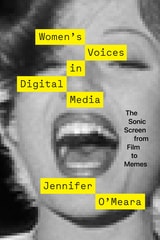
Women's Voices in Digital Media
The Sonic Screen from Film to MemesJennifer O'Meara
University of Texas Press, 2022
2023 Publication Award Honorable Mention, British Association for Film, Television and Screen Studies
An examination of the sound and silence of women in digital media.
In today’s digital era, women’s voices are heard everywhere—from smart home devices to social media platforms, virtual reality, podcasts, and even memes—but these new forms of communication are often accompanied by dated gender politics. In Women’s Voices in Digital Media, Jennifer O’Meara dives into new and well-established media formats to show how contemporary screen media and cultural practices police and fetishize women’s voices, but also provide exciting new ways to amplify and empower them.
As she travels through the digital world, O’Meara discovers newly acknowledged—or newly erased—female voice actors from classic films on YouTube, meets the AI and digital avatars in Her and The Congress, and hears women’s voices being disembodied in new ways via podcasts and VR voice-overs. She engages with dialogue that is spreading with only the memory of a voice, looking at how popular media like Clueless and The Simpsons have been mined for feminist memes, and encounters vocal ventriloquism on RuPaul’s Drag Race that queers and valorizes the female voice. Through these detailed case studies, O’Meara argues that the digital proliferation of screens alters the reception of sounds as much as that of images, with substantial implications for women’s voices.
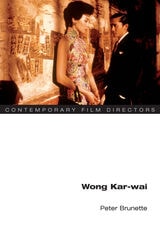
Wong Kar-wai
Peter Brunette
University of Illinois Press, 2005
Called the leading heir to the great directors of post-WWII Europe and lavished with awards, Wong Kar-wai has redefined perceptions of Hong Kong's film industry. Wong's visual brilliance and emphasis on atmosphere over action have set him apart from peers while earning him an admiring international audience. In the Mood for Love regularly appears on lists of the twenty-first century's greatest films while critics and filmgoers recognize works like Chungking Express and Happy Together as modern classics.
Peter Brunette describes the ways in which Wong's supremely haunting visual films create a new form of cinema by telling a story with stunning, suggestive visual images and audio tracks rather than character, dialogue, and plot. As he shows, Wong's early background in genre film offers fascinating insights on his more studied later works. He also delves into Wong's perennial themes of time, love, and loss and examines the political implications of his films, especially concerning the handover of former British colony Hong Kong to the People's Republic of China.
Woody on Rye
Jewishness in the Films and Plays of Woody AllenEdited by Vincent Brook and Marat Grinberg
Brandeis University Press, 2013
Work of Teaching Writing
Learning from Fiction, Film, and DramaJoseph Harris
Utah State University Press, 2020
Each chapter examines a fictional representation of writing classes—as portrayed in Dead Poets Society, Up the Down Staircase, Educating Rita, Push, and more—and shifts the conversation from how these works portray teachers to how they dramatize the actual work of teaching. Harris considers scenes of instruction from different stages of the writing process and depictions of students and teachers at work together to highlight the everyday aspects of teaching writing.
In the writing classroom the ideas of teachers come to life in the work of their students. The Work of Teaching Writing shows what fiction, film, and drama can convey about the moment of exchange between teacher and student as they work together to create new insights into writing. It will interest both high school and undergraduate English teachers, as well as graduate students and scholars in composition and rhetoric, literary studies, and film studies.
Working Like a Homosexual
Camp, Capital, CinemaMatthew Tinkcom
Duke University Press, 2002
With a special emphasis on the tensions between high and low forms of culture and between good and bad taste, Matthew Tinkcom offers a new vision of queer politics and aesthetics that is critically engaged with Marxist theories of capitalist production. He argues that camp—while embracing the cheap, the scorned, the gaudy, the tasteless, and what Warhol called “the leftovers” of artistic production—is a mode of intellectual production and a critical philosophy of modernity as much as it is an expression of a dissident sex/gender difference. From Minnelli’s musicals and the “everyday glamour” of Warhol’s films to Anger’s experimental films and Waters’s “trash aesthetic,” Tinkcom demonstrates how camp allowed these gay men to design their own relationship to labor and to history in a way that protected them from censure even as they struggled to forge a role for themselves within a system of “value” that failed to recognize them.