Results by title
75 books match the query 'Folk & Traditional' and 3 start with w
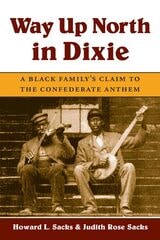
Way Up North in Dixie
A Black Family's Claim to the Confederate AnthemHoward L. Sacks and Judith Rose Sacks
University of Illinois Press, 2003
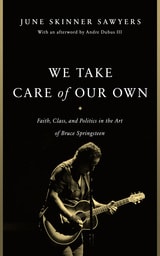
We Take Care of Our Own
Faith, Class, and Politics in the Art of Bruce SpringsteenJune Skinner Sawyers
Rutgers University Press, 2024
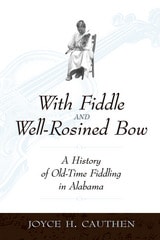
With Fiddle and Well-Rosined Bow
A History of Old-Time Fiddling In AlabamaJoyce H. Cauthen
University of Alabama Press, 2001
Relying on extensive archival research and on sixty interviews with fiddlers and their families and friends, Cauthen tells the rich, full story of old-time fiddling in Alabama.
Writing of life in the Alabama Territory in the late 1700s, A. J. Pickett, the state's first historian, noted that the country abounded in fiddlers, of high and low degree. After the defeat of the Creek Indians at the Battle of Horseshoe Bend in 1813, the number of fiddlers swelled as settlers from the southern states surrounding Alabama claimed the land. The music they played was based on tunes brought from Ireland, Scotland, and England, but in Alabama they developed their own southern accent as their songs became the music of celebration and relaxation for the state's pioneers. Early in the 20th century such music began to be called "old-time fiddling," to distinguish it from the popular music of the day, and the term is still used to distinguish that style from more modern bluegrass and country fiddle styles.
In With Fiddle and Well-Rosined Bow, Cauthen focuses on old-time fiddling in Alabama from the settlement of the state through World War II. Cauthen shows the effects of events, inventions, ethnic groups, and individuals upon fiddlers' styles and what they played. Cauthen gives due weight to the "modest masters of fiddle and bow" who were stars only to their families and communities. The fiddlers themselves tell why they play, how they learned without formal instruction and written music, and how they acquired their instruments and repertoires. Cauthen also tells the stories of "brag" fiddlers such as D.Dix Hollis, Y. Z. Hamilton, Charlie Stripling, "Fiddling" Tom Freeman,"Monkey" Brown, and the Johnson Brothers whose reputations spread beyond their communities through commercial recordings and fiddling contests. Described in vivid detail are the old-style square dances, Fourth of July barbeques and other celebrations, and fiddlers' conventions that fiddler shave reigned over throughout the state's history.