Results by title
130 books match the query 'Gay men' and 5 start with w
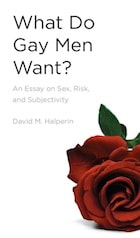
What Do Gay Men Want?
An Essay on Sex, Risk, and SubjectivityDavid M. Halperin
University of Michigan Press, 2010
“Compelling, timely, and provocative. The writing is sleek and exhilarating. It doesn’t waste time telling us what it will do or what it has just done—it just does it.”
—Don Kulick, Professor of Anthropology, New York University
How we can talk about sex and risk in the age of barebacking—or condomless sex—without invoking the usual bogus and punitive clichés about gay men’s alleged low self-esteem, lack of self-control, and other psychological “deficits”? Are there queer alternatives to psychology for thinking about the inner life of homosexuality? What Do Gay Men Want? explores some of the possibilities.
Unlike most writers on the topic of gay men and risky sex, David Halperin liberates gay male subjectivity from psychology, demonstrating the insidious ways in which psychology’s defining opposition between the normal and the pathological subjects homosexuality to medical reasoning and revives a whole set of unexamined moral assumptions about “good” sex and “bad” sex.
In particular, Halperin champions neglected traditions of queer thought, including both literary and popular discourses, by drawing on the work of well-known figures like Jean Genet and neglected ones like Marcel Jouhandeau. He shows how the long history of of gay men’s uses of “abjection” can offer an alternative, nonmoralistic model for thinking about gay male subjectivity, something which is urgently needed in the age of barebacking.
Anyone searching for nondisciplinary ways to slow the spread of HIV/AIDS among gay men—or interested in new modes of thinking about gay male subjectivity—should read this book.
David M. Halperin is W. H. Auden Collegiate Professor of the History and Theory of Sexuality, Professor of English, Professor of Women’s Studies, Professor of Comparative Literature, and Adjunct Professor of Classical Studies at the University of Michigan.
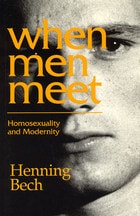
When Men Meet
Homosexuality and ModernityHenning Bech
University of Chicago Press, 1997
Gay society has persevered, even flourished, in this highly charged urban environment, aestheticizing and sexualizing the spaces, both public and private, where men meet. With profound insight and honesty, Bech details this world, candidly reflecting on sex, friendship, love, and life as manifest in the homosexual form of existence. He convincingly demonstrates that, in the face of modern alienation, successful coping strategies developed by gay men are gradually being adopted by mainstream heterosexual society.
These adaptations are often masked by what Bech calls an "absent homosexuality, " in which sublimated themes of homosexuality and masculine love surface, only to be disavowed in expressions of social anxiety. This "absent homosexuality" acts as a kind of cultural filter, allowing key traits of gay life to be absorbed by the mainstream, while shielding heterosexual males from their own homophobic anxieties. Ultimately, Bech foresees, a postmodern convergence of hetero- and homosexual forms of exisce emergent from this urban landscape and, with it, a new masculine synthesis.
Certain to ignite immediate controversy, When Men Meet offers both a penetrating scholarly analysis of the modern homosexual condition and an unflinching cultural vision of the masculine in transition.
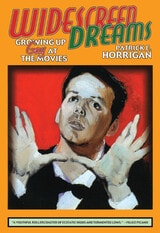
Widescreen Dreams
Growing Up Gay at the MoviesPatrick E. Horrigan
University of Wisconsin Press, 2001

Wolf Act
AJ Romriell
University of Wisconsin Press, 2025
Through linked personal essays crafted in lyric, fabulist, and fragmented forms, Wolf Act charts a young man’s transformation. Weaving together wolfish fairy tales and mythology, Mormon theology and practice, piercings and tattoos, cave explorations, ghost stories, and more, Romriell explores a childhood of hiding, a familial reckoning, a religious exodus, and an effort to understand one’s life as worth saving—even when the meaning of the word “saving” must be reimagined.
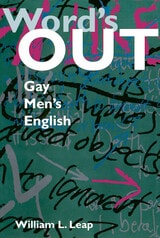
Word’s Out
Gay Men’s EnglishWilliam Leap
University of Minnesota Press, 1996
The first book-length analysis of the language used by gay men.
Do gay men communicate with each other differently than they do with straight people? If they do, how is “gay men’s English” different from “straight English”? In Word’s Out, William Leap addresses these questions in an entertaining account that looks at gay men’s English as a cultural and a linguistic phenomenon.
Whereas previous studies of “gay language” have centered almost entirely on vocabulary, word history, and folklore, Word's Out focuses on the linguistic practices-cooperation, negotiation, and risk taking-that underlie gay men’s conversations, storytelling, verbal dueling, self-description, and construction of outrageous references. Leap “reads” conversations for covert and overt signs of gay men's English, using anecdotes drawn from gay dinner parties, late-night airplane flights, restaurants, department stores, and gourmet shops, and from other all-gay and gay/straight settings. He incorporates material from life-story narratives and other interviews and discussions with gay men, from gay magazines, newspapers, and books, and from events in his own life. The topics addressed include establishing the gay identities of “suspect gays,” recollections of gay childhood, erotic negotiation in health club locker rooms, and gay men’s language of AIDS. Leap shows how gay English speakers use language to create gay-centered spaces within public places, to protect themselves when speaking with strangers, and to establish common interests when speaking with “suspect gays,” and explores why learning gay English is a critical component in gay men’s socialization and entry into gay culture. Provocative and potentially controversial, Word's Out provides fascinating insight into the politics of gay experience by exploring the connections between language and daily experience in gay men's lives.