Results by title
54 books match the query 'Great Plains' and 4 start with w
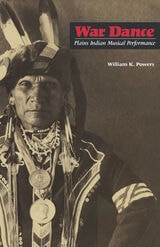
War Dance
Plains Indian Musical PerformanceWilliam K. Powers
University of Arizona Press, 1990
The Indian powwow, with its colorful war dance, is among the most vital aspects of American Indian culture. William Powers has witnessed both the traditions and trends in Plains Indian music and dance over the past thirty years, and here encapsulates his long career in what may be the first book that deals with Plains Indian musical culture as a unit. After providing background material on the study of American Indian music, Powers gives a full description of the popular war dance, discusses the powwow as the context in which the war dance appears, and describes associated dances. While observing that a fascination with "pan-Indianism" temporarily misdirected the study of Plains Indian music and dance by focusing too sharply on what many believed was a nationalization of American Indians, Powers notes that individual tribes continue to be concerned with maintaining their ethnic identities through their styles of music and dance. In the balance of the book, Powers offers essays describing Plains songs available on disc and tape, including notes on the history and culture of tribes and some translations of Lakota songs. A concluding essay offers some observations of why Plains Indian music and dance have received the interest they have and why they will continue to symbolize a burgeoning contemporary American Indian culture--not only on the Plains, but in every corner of the world where American Indians are respected, admired, and imitated.
[more]
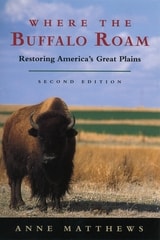
Where the Buffalo Roam
Restoring America's Great PlainsAnne Matthews
University of Chicago Press, 2002
In 1987 Frank and Deborah Popper proposed a bold solution to the decline of America's Great Plains: create a vast nature preserve by returning 139,000 square miles in ten states to prairie and reintroducing the buffalo that once roamed there. In Where the Buffalo Roam, Anne Matthews follows the Poppers from Montana to Texas as they try to sell their idea called the Buffalo Commons; in the process, she introduces us to the people who love these arid windswept lands.
This edition includes a new foreword by environmental historian Donald Worster. Matthews's new afterword describes how with growing support from Native Americans and private groups like the Nature Conservancy, the Poppers' dream of a Buffalo Commons is becoming a reality.
"An admirably crafted book, as poignant and entertaining as it is informative."—Seattle Times
"A priceless piece of Americana."—The Boston Globe
"Matthew's delightful account of the Poppers, their proposal and the controversy surrounding it does focus new attention on the region and its problems."—The Philadelphia Inquirer
"Bright, active, effective journalism. . . . An extremely savvy overlook of the dilemmas of the Great Plains."—Wallace Stegner
[more]
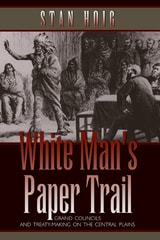
White Man's Paper Trail
Grand Councils and Treaty-Making on the Central PlainsStan Hoig
University Press of Colorado, 2006
White Man's Paper Trail presents a poignant history of the U.S. government's attempts to peacefully negotiate treaties with tribes in Arkansas, the Dakotas, Kansas, Oklahoma, Texas, Colorado, and Wyoming.
Stan Hoig shows how treaty-making - once considered a viable method of peaceably resolving conflicts - degenerated into a deeply flawed system sullied by political deceptions and broken promises.
Stan Hoig shows how treaty-making - once considered a viable method of peaceably resolving conflicts - degenerated into a deeply flawed system sullied by political deceptions and broken promises.
White Man's Paper Trail illuminates the pivotal role of treaty negotiations in the buildup to the Plains Indian wars, in American Indians' loss of land and self-determination, and in Euro-American westward expansion.
[more]
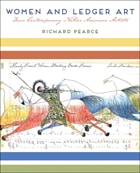
Women and Ledger Art
Four Contemporary Native American ArtistsRichard Pearce
University of Arizona Press, 2013
Ledger art has traditionally been created by men to recount the lives of male warriors on the Plains. During the past forty years, this form has been adopted by Native female artists, who are turning previously untold stories of women’s lifestyles and achievements into ledger-style pictures. While there has been a resurgence of interest in ledger art, little has been written about these women ledger artists.
Women and Ledger Art calls attention to the extraordinary achievements of these strong women who have chosen to express themselves through ledger art. Author Richard Pearce foregrounds these contributions by focusing on four contemporary women ledger artists: Sharron Ahtone Harjo (Kiowa), Colleen Cutschall (Oglala Lakota), Linda Haukaas (Sicangu Lakota), and Dolores Purdy Corcoran (Caddo). Pearce spent six years in continual communication with the women, learning about their work and their lives. Women and Ledger Art examines the artists and explains how they expanded Plains Indian history.
With 46 stunning images of works in various mediums—from traditional forms on recovered ledger pages to simulated quillwork and sculpture, Women in Ledger Art reflects the new life these women have brought to an important transcultural form of expression.
[more]