Results by title
715 books match the query 'Higher' and 43 start with w
WPAing in a Pandemic and Beyond
Revision, Innovation, and AdvocacyTodd Ruecker
Utah State University Press, 2025
The chapters in this collection include a variety of voices who have been involved in writing program administration in recent years to reflect on the work done in this moment of crisis. Through both short vignettes and longer chapters, this book explores the complicated interactions between WPA work and navigating times of crisis to provide insights for moving forward. Authors explore a variety of topics including professional development, curricular change, advocating in the face of intransigent administrations and others, caring for students, and taking time for self-care. Pointing to specific actions for continued advocacy, WPAing in a Pandemic and Beyond will be of great interest to WPAs and writing studies scholars.
Wannabe U
Inside the Corporate UniversityGaye Tuchman
University of Chicago Press, 2009
Based on years of observation at a large state university, Wannabe U tracks the dispiriting consequences of trading in traditional educational values for loyalty to the market. Aping their boardroom idols, the new corporate administrators at such universities wander from job to job and reductively view the students there as future workers in need of training. Obsessed with measurable successes, they stress auditing and accountability, which leads to policies of surveillance and control dubiously cloaked in the guise of scientific administration. In this eye-opening exposé of the modern university, Tuchman paints a candid portrait of the corporatization of higher education and its impact on students and faculty.
Like the best campus novelists, Tuchman entertains with her acidly witty observations of backstage power dynamics and faculty politics, but ultimately Wannabe U is a hard-hitting account of how higher education’s misguided pursuit of success fails us all.
Wasted Education
How We Fail Our Graduates in Science, Technology, Engineering, and MathJohn D. Skrentny
University of Chicago Press, 2023
An urgent reality check for America’s blinkered fixation on STEM education.
We live in an era of STEM obsession. Not only do tech companies dominate American enterprise and economic growth while complaining of STEM shortages, but we also need scientific solutions to impending crises. As a society, we have poured enormous resources—including billions of dollars—into cultivating young minds for well-paid STEM careers. Yet despite it all, we are facing a worker exodus, with as many as 70% of STEM graduates opting out of STEM work. Sociologist John D. Skrentny investigates why, and the answer, he shows, is simple: the failure of STEM jobs.
Wasted Education reveals how STEM work drives away bright graduates as a result of “burn and churn” management practices, lack of job security, constant training for a neverending stream of new—and often socially harmful—technologies, and the exclusion of women, people of color, and older workers. Wasted Education shows that if we have any hope of improving the return on our STEM education investments, we have to change the way we’re treating the workers on whom our future depends.
Wasted Education
How We Fail Our Graduates in Science, Technology, Engineering, and MathJohn D. Skrentny
University of Chicago Press, 2023
This is an auto-narrated audiobook version of this book.
An urgent reality check for America’s blinkered fixation on STEM education.
We live in an era of STEM obsession. Not only do tech companies dominate American enterprise and economic growth while complaining of STEM shortages, but we also need scientific solutions to impending crises. As a society, we have poured enormous resources—including billions of dollars—into cultivating young minds for well-paid STEM careers. Yet despite it all, we are facing a worker exodus, with as many as 70% of STEM graduates opting out of STEM work. Sociologist John D. Skrentny investigates why, and the answer, he shows, is simple: the failure of STEM jobs.
Wasted Education reveals how STEM work drives away bright graduates as a result of “burn and churn” management practices, lack of job security, constant training for a neverending stream of new—and often socially harmful—technologies, and the exclusion of women, people of color, and older workers. Wasted Education shows that if we have any hope of improving the return on our STEM education investments, we have to change the way we’re treating the workers on whom our future depends.
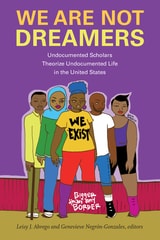
We Are Not Dreamers
Undocumented Scholars Theorize Undocumented Life in the United StatesLeisy J. Abrego and Genevieve Negrón-Gonzales, editors
Duke University Press, 2020
Contributors. Leisy J. Abrego, Gabrielle Cabrera, Gabriela Garcia Cruz, Lucía León, Katy Joseline Maldonado Dominguez, Grecia Mondragón, Gabriela Monico, Genevieve Negrón-Gonzales, Maria Liliana Ramirez, Joel Sati, Audrey Silvestre, Carolina Valdivia
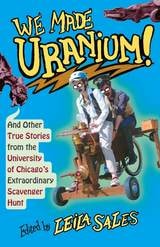
We Made Uranium!
And Other True Stories from the University of Chicago's Extraordinary Scavenger HuntEdited by Leila Sales
University of Chicago Press, 2018
Item #74: Enter a lecture class in street clothes. Receive loud phone call. Shout “I NEED TO GO, THE CITY NEEDS ME!” Remove street clothes to reveal superhero apparel. Run out for the good of the land.
Item #293: Hypnotizing a chicken seems easy, but if the Wikipedia article on the practice is to be believed, debate on the optimal method is heated. Do some trials on a real chicken and submit a report . . . for science of course.
Item #234: A walking, working, people-powered but preferably wind-powered Strandbeest.
Item #188: Fattest cat. Points per pound.
The University of Chicago’s annual Scavenger Hunt (or “Scav”) is one of the most storied college traditions in America. Every year, teams of hundreds of competitors scramble over four days to complete roughly 350 challenges. The tasks range from moments of silliness to 1,000-mile road trips, and they call on participants to fully embrace the absurd. For students it is a rite of passage, and for the surrounding community it is a chance to glimpse the lighter side of a notoriously serious university.
We Made Uranium! shares the stories behind Scav, told by participants and judges from the hunt’s more than thirty-year history. The twenty-three essays range from the shockingly successful (a genuine, if minuscule, nuclear reaction created in a dorm room) to the endearing failures (it’s hard to build a carwash for a train), and all the chicken hypnotisms and permanent tattoos in between. Taken together, they show how a scavenger hunt once meant for blowing off steam before finals has grown into one of the most outrageous annual traditions at any university. The tales told here are absurd, uplifting, hilarious, and thought-provoking—and they are all one hundred percent true.
West Virginia University
Symbol of Unity in a Sectionalized StateWilliam T. Doherty, Jr
West Virginia University Press, 2013
What Do You Think, Mr. Ramirez?
The American Revolution in EducationGeoffrey Galt Harpham
University of Chicago Press, 2017
That, says Harpham, was the midcentury promise of American education, the deep current of commitment and aspiration that undergirded the educational system that was built in the postwar years, and is under extended assault today. The United States was founded, he argues, on the idea that interpreting its foundational documents was the highest calling of opinion, and for a brief moment at midcentury, the country turned to English teachers as the people best positioned to train students to thrive as interpreters—which is to say as citizens of a democracy. Tracing the roots of that belief in the humanities through American history, Harpham builds a strong case that, even in very different contemporary circumstances, the emphasis on social and cultural knowledge that animated the midcentury university is a resource that we can, and should, draw on today.
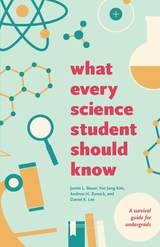
What Every Science Student Should Know
Justin L. Bauer, Yoo Jung Kim, Andrew H. Zureick, and Daniel K. Lee
University of Chicago Press, 2016
In 2012, the White House put out a call to increase the number of STEM graduates by one million. Since then, hundreds of thousands of science students have started down the path toward a STEM career. Yet, of these budding scientists, more than half of all college students planning to study science or medicine leave the field during their academic careers.
What Every Science Student Should Know is the perfect personal mentor for any aspiring scientist. Like an experienced lab partner or frank advisor, the book points out the pitfalls while providing encouragement. Chapters cover the entire college experience, including choosing a major, mastering study skills, doing scientific research, finding a job, and, most important, how to foster and keep a love of science.
This guide is a distillation of the authors’ own experiences as recent science graduates, bolstered by years of research and interviews with successful scientists and other science students. The authorial team includes former editors-in-chief of the prestigious Dartmouth Undergraduate Journal of Science. All have weathered the ups and downs of undergrad life—and all are still pursuing STEM careers. Forthright and empowering, What Every Science Student Should Know is brimming with insider advice on how to excel as both a student and a scientist.
What We Hold in Trust
Rediscovering the Purpose of Catholic Higher EducationDon Briel
Catholic University of America Press, 2021
What We Really Value
Beyond Rubrics in Teaching and Assessing WritingBob Broad
Utah State University Press, 2003
What We Really Value traces the origins of traditional rubrics within the theoretical and historical circumstances out of which they emerged, then holds rubrics up for critical scrutiny in the context of contemporary developments in the field. As an alternative to the generic character and decontextualized function of scoring guides, he offers dynamic criteria mapping, a form of qualitative inquiry by which writing programs (as well as individual instructors) can portray their rhetorical values with more ethical integrity and more pedagogical utility than rubrics allow.
To illustrate the complex and indispensable insights this method can provide, Broad details findings from his study of eighty-nine distinct and substantial criteria for evaluation at work in the introductory composition program at "City University." These chapters are filled with the voices of composition instructors debating and reflecting on the nature, interplay, and relative importance of the many criteria by which they judged students' texts. Broad concludes his book with specific strategies that can help writing instructors and programs to discover, negotiate, map, and express a more robust truth about what they value in their students' rhetorical performances.

What We Teach When We Teach DH
Digital Humanities in the ClassroomBrian Croxall
University of Minnesota Press, 2023
Exploring how DH shapes and is in turn shaped by the classroom
How has the field of digital humanities (DH) changed as it has moved from the corners of academic research into the classroom? And how has our DH praxis evolved through interactions with our students? This timely volume explores how DH is taught and what that reveals about the field of DH. While institutions are formally integrating DH into the curriculum and granting degrees, many instructors are still almost as new to DH as their students. As colleagues continue to ask what digital humanities is, we have the opportunity to answer them in terms of how we teach DH.
The contributors to What We Teach When We Teach DH represent a wide range of disciplines, including literary and cultural studies, history, art history, philosophy, and library science. Their essays are organized around four critical topics at the heart of DH pedagogy: teachers, students, classrooms, and collaborations. This book highlights how DH can transform learning across a vast array of curricular structures, institutions, and education levels, from high schools and small liberal arts colleges to research-intensive institutions and postgraduate professional development programs.
Contributors: Kathi Inman Berens, Portland State U; Jing Chen, Nanjing U; Lauren Coats, Louisiana State U; Scott Cohen, Stonehill College; Laquana Cooke, West Chester U; Rebecca Frost Davis, St. Edward’s U; Catherine DeRose; Quinn Dombrowski, Stanford U; Andrew Famiglietti, West Chester U; Jonathan D. Fitzgerald, Regis College; Emily Gilliland Grover, Notre Dame de Sion High School; Gabriel Hankins, Clemson U; Katherine D. Harris, San José State U; Jacob Heil, Davidson College; Elizabeth Hopwood, Loyola U Chicago; Hannah L. Jacobs, Duke U; Alix Keener, Stanford U; Alison Langmead, U of Pittsburgh; Sheila Liming, Champlain College; Emily McGinn, Princeton U; Nirmala Menon, Indian Institute of Technology; James O’Sullivan, U College Cork; Harvey Quamen, U of Alberta; Lisa Marie Rhody, CUNY Graduate Center; Kyle Roberts, Congregational Library and Archives; W. Russell Robinson, Alabama State U; Chelcie Juliet Rowell, Tufts U; Dibyadyuti Roy, U of Leeds; Asiel Sepúlveda, Simmons U; Andie Silva, York College, CUNY; Victoria Szabo, Duke U; Lik Hang Tsui, City U of Hong Kong; Annette Vee, U of Pittsburgh; Brandon Walsh, U of Virginia; Kalle Westerling, The British Library; Kathryn Wymer, North Carolina Central U; Claudia E. Zapata, UCLA; Benjun Zhu, Peking U.
Retail e-book files for this title are screen-reader friendly.

What's Next?
Jim Agutter
A2RU Intervals, 2018
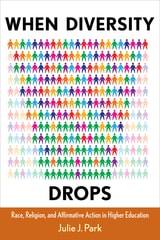
When Diversity Drops
Race, Religion, and Affirmative Action in Higher EducationPark, Julie J.
Rutgers University Press, 2013
The story documents IVCF’s evolution from a predominantly white group that rarely addressed race to the most racially diverse campus fellowship at the university. However, its ability to maintain its multiethnic membership was severely hampered by the drop in black enrollment at California University following the passage of Proposition 209, a statewide affirmative action ban.
Park demonstrates how the friendships that students have—or do not have—across racial lines are not just a matter of personal preference or choice; they take place in the contexts that are inevitably shaped by the demographic conditions of the university. She contends that a strong organizational commitment to diversity, while essential, cannot sustain racially diverse student subcultures. Her work makes a critical contribution to our understanding of race and inequality in collegiate life and is a valuable resource for educators and researchers interested in the influence of racial politics on students’ lives.
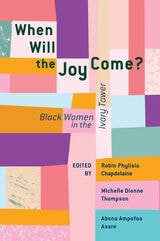
When Will the Joy Come?
Black Women in the Ivory TowerEdited by Robin Phylisia Chapdelaine, Michelle Dionne Thompson, and Abena Ampofoa Asare
University of Massachusetts Press, 2023
How do Black women in higher education create, experience, and understand joy? What sustains them? While scholars have long documented sexism, racism, and classism in the academy, one topic has been conspicuously absent from the literature—how Black women academics have found joy in the midst of adversity. Moving beyond questions of resilience, labor for others, and coping, When Will the Joy Come? focuses on the journeys of over thirty Black women at various stages of their careers.
Joy is a mixture of well-being, pleasure, alignment, and purpose that can be elusive for Black women scholars. With racial reckoning and a global pandemic as context, this volume brings together honest and vital essays that ponder how Black women balance fatigue and frustrations in the halls of the ivory tower, and explore where, when, and if joy enters their lives. By carefully contemplating the emotional, physical, and material consequences of their labor, this collection demonstrates that joy is a tactical and strategic component of Black women’s struggle.
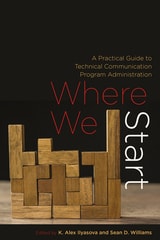
Where We Start
A Practical Guide to Technical Communication Program AdministrationK. Alex Ilyasova
Utah State University Press, 2026
Providing practical, pragmatic guidance for current and aspiring administrators, Where We Start is the first book in technical communication that professionalizes administrativework and practices, offering practical advice on curricular, undergraduate, and graduate program development.
Where We Start teaches by example with each chapter combining personal knowledge with published research to direct readers toward their own practices. Some ofthe most experienced program leaders in technical communication share strategies for program design, curriculum development, assessment, inclusivity, and external partnerships. The collection is divided into three main sections: Programmatic Development and Planning, which focuses on the foundational aspects of strategic planning, curriculum development, and programmatic assessment; Developing Differently, which highlights approaches to inclusivity, diversity, and unconventional career paths in program administration; and Building Beyond, which discusses strategies for expanding technical communication programs through partnerships with industry and international institutions.
A resource for administrators as well as graduate students and early-career faculty looking to understand the intricacies of program management, Where We Start fills a critical gap, offering insights from a uniquely technical communication perspective, where programmatic resources are scarce.
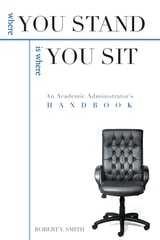
Where You Stand Is Where You Sit
An Academic Administrator's HandbookRobert V. Smith
University of Arkansas Press, 2006
This handbook addresses the three key responsibilities of academic officers: inspiration, evaluation, and representation. “Getting a Good Start” deals with the promise of a new position, communicating with supervisors, and “getting around.” “Offering Inspiration and Direction” looks at the integrated scholar and “academic intrapreneurs”; diversity; the joys, challenges, and failure of professional life; and dealing with tragedies. “Guidance to Various Academic Administrators and Support Staff” examines the development, roles, and responsibilities of academic officers and institutional planning and budgeting. Reviewing the state of the institution and its personnel is covered in “Assessments and Evaluations,” and “Policies and Partnerships” deals with ethics-based policies, academic consortia and partnerships, and international outreach.
Throughout this valuable handbook, Smith offers background, advice, and examples that will interest both the novice and seasoned administrator as he takes us on a tour of success stories, challenges, and foibles.
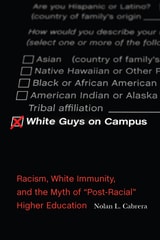
White Guys on Campus
Racism, White Immunity, and the Myth of "Post-Racial" Higher EducationCabrera, Nolan L
Rutgers University Press, 2019
On April 22, 2015, Boston University professor Saida Grundy set off a Twitter storm with her provocative question: “Why is white America so reluctant to identify white college males as a problem population?” White Guys on Campus is a critical examination of race in higher education, centering Whiteness, in an effort to unveil the frequently unconscious habits of racism among White male undergraduates. Nolan L. Cabrera moves beyond the “few bad apples” frame of contemporary racism, and explores the structures, policies, ideologies, and experiences that allow racism to flourish. This book details many of the contours of contemporary, systemic racism, while engaging the possibility of White students to participate in anti-racism. Ultimately, White Guys on Campus calls upon institutions of higher education to be sites of social transformation instead of reinforcing systemic racism, while creating a platform to engage and challenge the public discourse of “post- racialism.”

Whither College Sports
Amateurism, Athlete Safety, and Academic IntegrityAndrew Zimbalist
Rutgers University Press, 2022
Who Owns Religion?
Scholars and Their Publics in the Late Twentieth CenturyLaurie L. Patton
University of Chicago Press, 2019
Taking the reader through several compelling case studies, Patton identifies two trends of the ’80s and ’90s that fueled that rise: the growth of multicultural identity politics, which enabled a form of volatile public debate she terms “eruptive public space,” and the advent of the internet, which offered new ways for religious groups to read scholarship and respond publicly. These controversies, she shows, were also fundamentally about something new: the very rights of secular, Western scholarship to interpret religions at all.
Patton’s book holds out hope that scholars can find a space for their work between the university and the communities they study. Scholars of religion, she argues, have multiple masters and must move between them while writing histories and speaking about realities that not everyone may be interested in hearing.
Whose Goals Whose Aspirations
Learning to Teach Underprepared Writers across the CurriculumStephen M. Fishman and Lucille McCarthy
Utah State University Press, 2002
Ever since Horace Mann promoted state supported schooling in the 1850s, the aims of U.S. public education have been the subject of heated national debate. Whose Goals? Whose Aspirations? joins this debate by exploring clashing educational aims in a discipline-based university classroom and the consequences of these clashes for "underprepared" writers.
In this close-up look at a White middle-class teacher and his ethnically diverse students, Fishman and McCarthy examine not only the role of Standard English in college writing instruction but also the underlying and highly charged issues of multiculturalism, race cognizance, and social class.
Why Are You Here and Not Somewhere Else
Selected EssaysHarry L. Davis
University of Chicago Press, 2013
On the occasion of the fiftieth anniversary of Davis’s arrival at the Booth School, Why Are You Here and Not Somewhere Else offers seven essays by Davis that offer new perspectives and contribute to a more well-rounded understanding of business education. Adapted from convocation addresses given by Davis at different points during his five-decade career, the essays encapsulate the spirit of business education at the Booth School, while at the same time providing encouraging, invaluable wisdom for those about to embark on business careers or take on leadership positions. Topics addressed range from the role of the university in the business world to the crucial role of intangible values in shaping one’s career.
Davis has been a formative influence on more executives and leaders than perhaps any other business educator living today, and Why Are You Here and Not Somewhere Else provides a unique and valuable perspective on how leaders in business and elsewhere can shape and define their careers in new ways.
Why Public Higher Education Should Be Free
How to Decrease Cost and Increase Quality at American UniversitiesSamuels, Robert
Rutgers University Press, 2013
In Why Public Higher Education Should Be Free, Robert Samuels argues that many institutions of higher education squander funds and mislead the public about such things as average class size, faculty-to-student ratios, number of faculty with PhDs, and other indicators of educational quality. Parents and students seem to have little knowledge of how colleges and universities have been restructured over the past thirty years.
Samuels shows how research universities have begun to function as giant investment banks or hedge funds that spend money on athletics and administration while increasing tuition costs and actually lowering the quality of undergraduate education. In order to fight higher costs and lower quality, Samuels suggests, universities must reallocate these misused funds and concentrate on their core mission of instruction and related research.
Throughout the book, Samuels argues that the future of our economy and democracy rests on our ability to train students to be thoughtful participants in the production and analysis of knowledge. If leading universities serve only to grant credentials and prestige, our society will suffer irrevocable harm. Presenting the problem of how universities make and spend money, Samuels provides solutions to make these important institutions less expensive and more vital. By using current resources in a more effective manner, we could even, he contends, make all public higher education free.
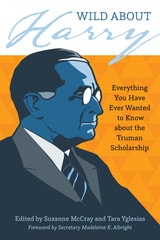
Wild about Harry
Everything You Have Ever Wanted to Know about the Truman ScholarshipSuzanne McCray
University of Arkansas Press, 2021
Women in Academe
Progress and ProspectsMariam K. Chamberlain
Russell Sage Foundation, 1988
Women's Studies on Its Own
A Next Wave Reader in Institutional ChangeRobyn Wiegman, ed.
Duke University Press, 2002
Since the 1970s, Women's Studies has grown from a volunteerist political project to a full-scale academic enterprise. Women's Studies on Its Own assesses the present and future of the field, demonstrating how institutionalization has extended a vital, ongoing intellectual project for a new generation of scholars and students.
Women’s Studies on Its Own considers the history, pedagogy, and curricula of Women’s Studies programs, as well as the field’s relation to the managed university. Both theoretically and institutionally grounded, the essays examine the pedagogical implications of various divisions of knowledge—racial, sexual, disciplinary, geopolitical, and economic. They look at the institutional practices that challenge and enable Women’s Studies—including interdisciplinarity, governance, administration, faculty review, professionalism, corporatism, fiscal autonomy, and fiscal constraint. Whether thinking about issues of academic labor, the impact of postcolonialism on Women’s Studies curricula, or the relation between education and the state, the contributors bring insight and wit to their theoretical deliberations on the shape of a transforming field.
Contributors. Dale M. Bauer, Kathleen M. Blee, Gloria Bowles, Denise Cuthbert, Maryanne Dever, Anne Donadey, Laura Donaldson, Diane Elam, Susan Stanford Friedman, Judith Kegan Gardiner, Inderpal Grewal, Sneja Gunew, Miranda Joseph, Caren Kaplan, Rachel Lee, Devoney Looser, Jeanette McVicker, Minoo Moallem, Nancy A. Naples, Jane O. Newman, Lindsey Pollak, Jean C. Robinson, Sabina Sawhney, Jael Silliman, Sivagami Subbaraman, Robyn Warhol, Marcia Westkott, Robyn Wiegman, Bonnie Zimmerman
Women's Studies on the Edge
Joan Wallach Scott, ed.
Duke University Press, 2008
The contributors to Women’s Studies on the Edge embrace feminism not as a set of prescriptions but as a critical stance, one that seeks to interrogate and disrupt prevailing systems of gender. Refusing to perpetuate and protect orthodoxies, they ask tough questions about the impact of institutionalization on the once radical field of women’s studies; about the ongoing difficulties of articulating women’s studies with ethnic, queer, and race studies; and about the limits of liberal concepts of emancipation for understanding non-Western women. They also question the viability of continuing to ground women’s studies in identity politics authorized by personal experience. The multiple interpretations in Women’s Studies on the Edge sometimes overlap and sometimes stand in opposition to one another. The result is a collection that embodies the best aspects of critique: the intellectual and political stance that the contributors take to be feminism’s ethos and its aim.
Contributors
Wendy Brown
Beverly Guy-Sheftall
Evelynn M. Hammonds
Saba Mahmood
Biddy Martin
Afsaneh Najmabadi
Ellen Rooney
Gayle Salamon
Joan Wallach Scott
Robyn Wiegman
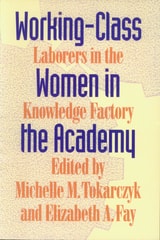
Working-Class Women in the Academy
Laborers in the Knowledge FactoryMichelle M. Tokarczyk
University of Massachusetts Press, 1993
The voices of 20 women from working-class backgrounds are heard in this collection of essays. Each of the women has lived through the process of academic socialization—as both student and teacher—and each has thought long and deeply about her experiences from an explicitly feminist perspective.
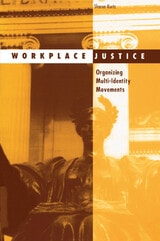
Workplace Justice
Organizing Multi-Identity MovementsSharon Kurtz
University of Minnesota Press, 2002
An unheralded union battle offers new insight into identity politics.
In 1991, Columbia University’s one thousand clerical workers launched a successful campaign for justice in their workplace. This diverse union-two-thirds black and Latina, three-fourths women-was committed to creating an inclusive movement organization and to fighting for all kinds of justice. How could they address the many race and gender injustices members faced, avoid schism, and maintain the unity needed to win? Sharon Kurtz, an experienced union activist and former clerical worker herself, was welcomed into the union and pursued these questions. Using this case study and secondary studies of sister clerical unions at Yale and Harvard, she examines the challenges and potential of identity politics in labor movements.
With the Columbia strike as a point of departure, Kurtz argues that identity politics are valuable for mobilizing groups, but often exclude members and their experiences of oppression. However, Kurtz believes that identity politics should not be abandoned as a component in building movements, but should be reframed-as multi-identity politics. In the end she shows an approach to organizing with great potential impact not only for labor unions but for any social movement.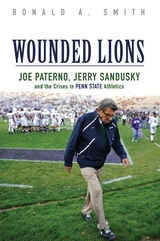
Wounded Lions
Joe Paterno, Jerry Sandusky, and the Crises in Penn State AthleticsRonald A. Smith
University of Illinois Press, 2016
In Wounded Lions, acclaimed sport historian and longtime Penn State professor Ronald A. Smith heavily draws from university archives to answer the How? and Why? at the heart of the scandal. The Sandusky case was far from the first example of illegal behavior related to the football program or the university's attempts to suppress news of it. As Smith shows, decades of infighting among administrators, alumni, trustees, faculty, and coaches established policies intended to protect the university, and the football team considered synonymous with its name, at all costs. If the habits predated Paterno, they also became sanctified during his tenure. Smith names names to show how abuses of power warped the "Penn State Way" even with hires like women's basketball coach Rene Portland, who allegedly practiced sexual bias against players for decades. Smith also details a system that concealed Sandusky's horrific acts just as deftly as it whitewashed years of rules violations, coaching malfeasance, and player crime while Paterno set records and raised hundreds of millions of dollars for the university.
A myth-shattering account of misplaced priorities, Wounded Lions charts the intertwined history of an elite university, its storied sports program, and the worst scandal in collegiate athletic history.
Wrecked
Deinstitutionalization and Partial Defenses in State Higher Education PolicyBarrett J. Taylor
Rutgers University Press, 2022
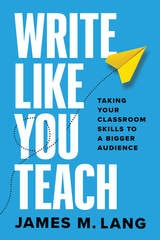
Write Like You Teach
Taking Your Classroom Skills to a Bigger AudienceJames M. Lang
University of Chicago Press, 2025
After years spent cultivating their expertise and passion for a subject, scholars are uniquely positioned to write great books. Yet, accustomed to writing for an audience of their peers, many scholars find it challenging to adapt their writing to a style that is accessible and engaging to the general public. James M. Lang argues that academics are regularly called on to pitch their research to a general audience: their undergraduates. If only there were a way to translate the skills they use in the classroom into their writing. . . .
In Write Like You Teach, Lang—a veteran writer and teacher—distills the elements of good classroom teaching into guidelines for writing for a general audience. He encourages authors to pay attention to how their readers learn and to embrace exploration, experimentation, and creativity in their writing. Lang asks his readers to consider the questions that all great teachers ask themselves: How will I get the attention of my students? How do I make them curious about the subject? What stories or examples will illustrate the more difficult concepts or theories in the course? When will I pause in the class and give students a break from hard thinking? What will I do at the end of the class to remind students about my key messages and leave them wanting to know more?
Write Like You Teach includes examples from successful writers and useful anecdotes from Lang’s own classroom and writing career. Indeed, Lang takes his own advice to heart: like a good teacher, he varies the form of each chapter, making sure to introduce some surprises to keep the reader engaged. Each chapter ends with writing prompts to help readers practice their newly acquired skills, and an appendix provides additional advice on publishing and promoting one’s work. Teachers who follow Lang’s suggestions will find new ways to connect with their readers—and like any good student, they will never approach writing the same way again.
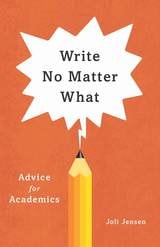
Write No Matter What
Advice for AcademicsJoli Jensen
University of Chicago Press, 2017
Jensen begins by busting the myth that universities are supportive writing environments. She points out that academia, an arena dedicated to scholarship, offers pressures that actually prevent scholarly writing. She shows how to acknowledge these less-than-ideal conditions, and how to keep these circumstances from draining writing time and energy. Jensen introduces tools and techniques that encourage frequent, low-stress writing. She points out common ways writers stall and offers workarounds that maintain productivity. Her focus is not on content, but on how to overcome whatever stands in the way of academic writing.
Write No Matter What draws on popular and scholarly insights into the writing process and stems from Jensen’s experience designing and directing a faculty writing program. With more than three decades as an academic writer, Jensen knows what really helps and hinders the scholarly writing process for scholars in the humanities, social sciences,and sciences.
Cut down the academic sword of Damocles, Jensen advises. Learn how to write often and effectively, without pressure or shame. With her encouragement, writers of all levels will find ways to create the writing support they need and deserve.
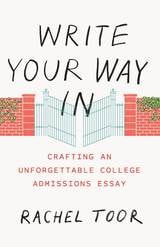
Write Your Way In
Crafting an Unforgettable College Admissions EssayRachel Toor
University of Chicago Press, 2017
The good news? You already have the “secret sauce” for crafting a compelling personal essay: your own experiences and your unique voice.
More than twenty million students apply to college every year; many of them look similar in terms of test scores, grades, courses taken, extracurricular activities. Admissions officers wade through piles of files. As an applicant, you need to think about what will interest an exhausted reader. What can you write that will make her argue to admit you instead of the thousands of other applicants?
A good essay will be conversational and rich in vivid details, and it could only be written by one person—you. This book will help you figure out how to find and present the best in yourself. You’ll acquire some useful tools for writing well—and may even have fun—in the process.
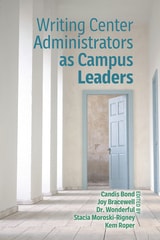
Writing Center Administrators as Campus Leaders
Candis Bond
Utah State University Press, 2026
Writing Center Administrators as Campus Leaders challenges the current erasure of the WCA role within discourse on campus leadership by highlighting the various ways these leaders have had transformative impacts on their institutions, emphasizing the wide range of knowledge, skills, and added value that WCAs bring to the university ecosystem.
Contributors from diverse institutions, institutional contexts, identity formations, and career paths theorize different forms of leadership from within and beyond writing centers. The first section brings together perspectives on leadership theory and practice, focusing on the practical gains offered and challenges afforded via writing center professional pathways. The second section emphasizes partnerships and networks forged through intentional and creative leadership models. In the final section, contributors consider the emotional and affective dimensions of WCA labor, offering multiple roadmaps for WCAs to transition their experiences into more recognition, resources, and broader administrative roles while underscoring the potential of inclusive, community-focused leadership for current and aspiring WCAs.
Providing key insights and practical examples, Writing Center Administrators as Campus Leaders validates and inspires current and future WCAs and informs university administrators on the ways that WCAs can and do impact higher education as true campus leaders.
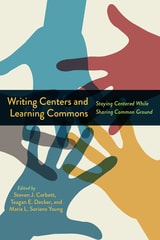
Writing Centers and Learning Commons
Staying Centered While Sharing Common GroundSteven J. Corbett
Utah State University Press, 2022
The chapters comprehensively examine the ways writing centers make the most of sharing common ground. Directors, coordinators, administrators, and stakeholders draw on past and present attention to writing center studies to help shape the future of the learning commons and narrate their substantial collective experience with collaborative efforts to stay centered while empowering colleagues and student writers at their institutions. The contributors explore what is gained and lost by affiliating writing centers with learning commons, how to create sound pedagogical foundations that include writing center philosophies, how writing center practices evolved or have been altered by learning center affiliations, and more.
Writing Centers and Learning Commons is for all stakeholders of writing in and across campuses collaborating on (by choice or edict), or wishing to explore the possibilities of, a learning commons enterprise.
Contributors: Alice Batt, Cassandra Book, Charles A. Braman, Elizabeth Busekrus Blackmon, Virginia Crank, Celeste Del Russo, Patricia Egbert, Christopher Giroux, Alexis Hart, Suzanne Julian, Kristen Miller, Robby Nadler, Michele Ostrow, Helen Raica-Klotz, Kathleen Richards, Robyn Rohde, Nathalie Singh-Corcoran, David Stock
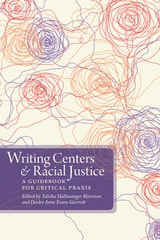
Writing Centers and Racial Justice
A Guidebook for Critical PraxisTalisha Haltiwanger Morrison
Utah State University Press, 2023
In five thematically organized sections—Countering Racism and Colonialism in Higher Education; Recruitment, Hiring, and Retention; Tutor Education and Professional Development; Engaging with Campus and Community; and Holding Our Professional Organizations Accountable—scholars from a variety of institutions, both large and small, public and private, present critical reflection and concrete guidance on anti-racist writing center administrative policies and practices. Several chapters include sample materials, such as course syllabi, consultant education activities, and recruitment materials, to help current and aspiring writing center administrators implement changes in their own contexts.
Writing Centers and Racial Justice is the first book to offer clear and actionable advice on how writing centers and their staff can take up racial or social justice work that will result in real sustainable change. Writing center directors, professionals, and tutors, as well as administrators and decision makers at the institutional level, will benefit from this thoughtful and effective text.
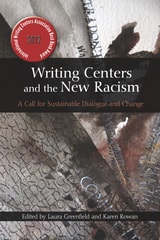
Writing Centers and the New Racism
A Call for Sustainable Dialogue and ChangeLaura Greenfield and Karen Rowan
Utah State University Press, 2011
Laura Greenfield and Karen Rowan have created a rich resource for writing center tutors, administrators, and scholars. Motivated by a scholarly interest in race, literacy, and pedagogy, and by an ethical commitment to antiracism work, contributors address a series of related questions: How does institutionalized racism in American education shape the culture of literacy and language education in the writing center? How does racism operate in the discourses of writing center scholarship and lore, and in what ways are writing centers unwittingly complicit in racist practices? How can they meaningfully operationalize antiracist work? How do they persevere through the difficulty and messiness of negotiating race and racism in their daily practice?
The conscientious, nuanced attention to race in Writing Centers and the New Racism is meant to model what it means to be bold in engagement with these hard questions and to spur the kind of sustained, productive, multivocal, and challenging dialogue that, with a few important exceptions, has been absent from the field.
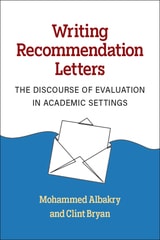
Writing Recommendation Letters
The Discourse of Evaluation in Academic SettingsMohammed Albakry and Clint Bryan
University of Michigan Press, 2024
Key Features
- Readers will learn the theoretical context that defines the genre of letters of recommendation.
- The book highlights the similarities and differences between the three different types of letters of recommendation: letters written for graduate admission, letters written in support of fellowship applications, and letters written to support obtaining a faculty position.
- Chapters on different aspects of linguistic and rhetorical features discuss presenting the applicants' credentials, highlighting the strengths of their character, accentuating and downplaying certain traits, as well as the pros and cons of boilerplate language and the use of customary frames for opening and closing.
- Readers will see real-world examples of actual letters of recommendation to see how seasoned faculty build the case for the applicant.

Writing in Disguise
Academic Life in SubordinationTerry Caesar
Ohio University Press, 1998
All of these texts have in common the imperative of disguise, represented as the most crucial consequence of dominant discourse, within which subordination might speak only by knowing its place, and write only by producing hidden transcripts.
Caustic, pointed, satiric, Writing in Disguise is an engaging critique of aspects of academia involving the misuse, misappropriation, and misappreciation of verbal communication in its many guises.
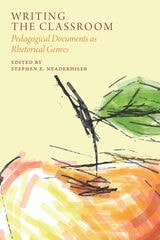
Writing the Classroom
Pedagogical Documents as Rhetorical Genresedited by Stephen E. Neaderhiser
Utah State University Press, 2022
The contributors to this unique collection employ a wide range of methodological frameworks to demonstrate how pedagogical genres—even ones as seemingly straightforward as the class syllabus—have lives extending well beyond the classroom as they become part of how college teachers represent their own academic identities, advocate for pedagogical values, and negotiate the many external forces that influence the act of teaching. Writing the Classroom shines a light on genres that are often treated as two-dimensional, with purely functional purposes, arguing instead that genres like assignment prompts, course proposals, teaching statements, and policy documents play a fundamental role in constructing the classroom and the broader pedagogical enterprise within academia.
Writing the Classroom calls on experienced teachers and faculty administrators to critically consider their own engagement with pedagogical genres and offers graduate students and newer faculty insight into the genres that they may only now be learning to inhabit as they seek to establish their personal teacherly identities. It showcases the rhetorical complexity of the genres written in the service of pedagogy not only for students but also for the many other audiences within academia that have a role in shaping the experience of teaching.
Contributors: Michael Albright, Lora Arduser, Lesley Erin Bartlett, Logan Bearden, Lindsay Clark, Dana Comi, Zack K. De Piero, Matt Dowell, Amy Ferdinandt Stolley, Mark A. Hannah, Megan Knight, Laura R. Micciche, Cindy Mooty, Dustin Morris, Kate Navickas, Kate Nesbit, Jim Nugent, Lori A. Ostergaard, Cynthia Pengilly, Jessica Rivera-Mueller, Christina Saidy, Megan Schoen, Virginia Schwarz, Christopher Toth
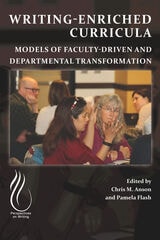
Writing-Enriched Curricula
Models of Faculty-Driven and Departmental Transformationedited by Chris M. Anson, and Pamela Flash
University Press of Colorado, 2022
Writing-Intensive
Becoming W-Faculty in a New Writing CurriculumWendy Strachan
Utah State University Press, 2008
Wendy Strachan documents this campus cultural transformation, exploring successes and impasses with equal interest. The study identifies factors to be considered to avoid isolating the teaching of writing in writing-intensive courses; to engender a university-wide culture that naturalizes writing as a vital part of learning across all disciplines; and to keep the teaching of writing organic and reflected upon in a scholarly manner across campus.
A valuable case history for scholars in writing studies, WAC/WID, and curricular change studies.