Results by title
438 books match the query 'Hispanic & Latino' and 25 start with w
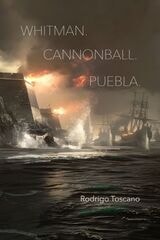
WHITMAN. CANNONBALL. PUEBLA.
Rodrigo Toscano
Omnidawn, 2025
This four-part collection of poetic fables engages the emerging field of global-poetics through Hispano-Americano lenses. Amid global crises between states, and cultural destabilization manifesting across mass popular culture and literature, WHITMAN. CANNONBALL. PUEBLA. sets out to invigorate conversation about how the United States might adapt to a wider hemispheric consciousness. Toscano’s poems present a cultural landscape where the Anglo-capitalist outlook is tempered—if not subsumed—by a Greater Americas “Salamanca Humanism,” which was the basis for the 1948 United Nations Universal Declaration of Human Rights.
The book is divided into four sections that develop the idea of a Greater Americas as hinging on negotiation between Anglo and Hispano values, consider a potential catastrophic Anglo-American imperialism, imagine life in a Post-Empire crisis, and compose allegories about the historical consciousness of a people oversaturated with media.
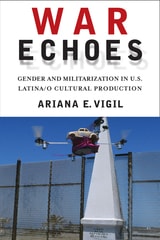
War Echoes
Gender and Militarization in U.S. Latina/o Cultural ProductionVigil, Ariana E
Rutgers University Press, 2014
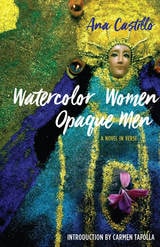
Watercolor Women Opaque Men
A Novel in VerseAna Castillo, introduction by Carmen Tafolla
Northwestern University Press, 2017
In this updated edition of Ana Castillo’s celebrated novel in verse, featuring a new introduction by Poet Laureate of Texas Carmen Tafolla, we revisit the story’s spirited heroine, known only as “Ella” or “She,” as she takes us through her own epic journey of self-actualization as an artist and a woman. With a remarkable combination of tenderness, lyricism, wicked humor, and biting satire, Castillo dramatizes Ella’s struggle through poverty as a Chicano single mother at the threshold of the twenty-first century, fighting for upward mobility while trying to raise her son to be independent and self-sufficient. Urged on by the gods of the ancients, Ella’s life interweaves with those of others whose existences are often neglected, even denied, by society’s status quo. Castillo’s strong rhythmic voice and exploration of such issues as love, sexual orientation, and cultural identity will resonate with readers today as much as they did upon the book’s original publication more than ten years ago. This expanded edition also includes a short preface by the author, as well as a glossary, a reader’s guide, and a list of additional suggested readings.
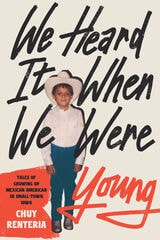
We Heard It When We Were Young
Renteria, Chuy
University of Iowa Press, 2021
Renteria looks past the public celebrations of diversity to dive into the private tensions of a community reflecting the changing American landscape. There are culture clashes, breakdancing battles, fistfights, quinceañeras, vandalism, adventures on bicycles, and souped-up lowriders, all set to an early 2000s soundtrack. Renteria and his friends struggle to find their identities and reckon with intergenerational trauma and racism in a town trying to do the same. A humorous and poignant reflection on coming of age, We Heard It When We Were Young puts its finger on a particular cultural moment at the turn of the millennium.
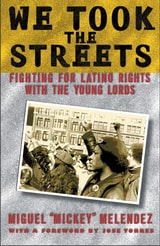
We Took the Streets
Fighting for Latino Rights with the Young LordsMiguel "Mickey" Melendez
Rutgers University Press, 0
In this memoir, Melendez describes with the unsparing eye of an insider the idealism, anger, and vitality of the Lords as they rose to become the most respected and powerful voice of Puerto Rican empowerment in the country. He also traces the internal ideological disputes that led the group, but not the mission, to fracture in 1972. Written with passion and compelling detail, We Took the Streets tells the story of how one group took on the establishment—and won.
In 1968 Miguel “Mickey” Melendez was a college student, developing pride in his Cuban and Puerto Rican cultural identity and becoming increasingly aware of the effects of social inequality on Latino Americans. Joining with other like-minded student activists, Melendez helped form the central committee of the New York branch of the Young Lords, one of the most provocative and misunderstood radical groups to emerge during the 1960s. Incorporating techniques of direct action and community empowerment, the Young Lords became a prominent force in the urban northeast. From their storefront offices in East Harlem, they defiantly took back the streets of El Barrio. In addition to running clothing drives, day-care centers, and food and health programs, they became known for their media-savvy tactics and bold actions, like the takeovers of the First People’s Church and Lincoln Hospital.
Western Avenue and Other Fictions
Fred Arroyo
University of Arizona Press, 2012
In these engaging and often gripping short stories, Fred Arroyo takes us into the lives of working-class Hispanic migrants and immigrants, who are often invisible while they work in plain sight across America. As characters intertwine and evolve across stories, Arroyo creates a larger narrative that dramatizes the choices we make to create identity, make meaning, and deal with hardships and loss. His stories are linked by a concern with borders, both real and imagined, and the power that memory and imagination have to shape and structure our lives.
Through his characters and their true-to-life situations, Arroyo makes visible both internal and external conflicts that are deeply rooted in—and affected by—place. A bodega, a university town, a factory, a Chicago street, some dusty potato fields: here is where we encounter ordinary people who work, dream, love, and persist in the face of violence, bereavement, disappointment, and loss—particularly the loss of mothers, fathers, and loved ones.
Arroyo's characters experience a strange wonder as the midwestern United States increasingly appears to be a place created by the Latinas and Latinos who remain out of the sight and minds of Anglos. In lyrical language weighted by detail, exquisite imagery, and evocative story, Arroyo imagines characters who confront the tattered connections between memory and longing, generations and geographies, place and displacement, as they begin to feel their own longings, "breathing in whatever was offered, feeling, deep in the small and fragile borders of my heart," as one character puts it, "that it came with a sorrow I could never betray."
What Night Brings
Carla Trujillo
Northwestern University Press, 2003
What Others Say About Us
StoriesJonathan Ayala
University of Arizona Press, 2027
A man is visited by his now famous ex-boyfriend, and he ponders a life that might have been. A new roommate destabilizes the close friendship between two twenty-somethings. A homesick immigrant plans an eightieth birthday party for the neighborhood grouch. A grisly crime sweeps up an unassuming history teacher, throwing him into the role of outcast.
El Paso serves as a backdrop for many of stories in this deeply human debut collection by Jonathan Ayala. Offering a portrait of contemporary gay Chicano lives, Ayala’s characters contend with the complexities found in navigating belonging, homecoming, falling in love, falling out of love, friendship, and what it means to be Mexican American in the United States today.
These thirteen emotionally rich, character-driven stories are filled with humor, tenderness, and insight into love, friendship, and community.
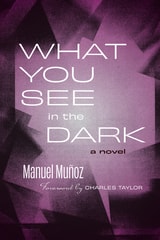
What You See in the Dark
A NovelManuel Muñoz and Charles Taylor
Northwestern University Press, 2025
A doomed love story unfolds alongside the production of Psycho in 1950s Bakersfield, California
Muñoz’s debut novel tells the story of Teresa, an aspiring singer too far away from Los Angeles to share the city’s glamour. In Dan Watson, the most desirable man in town, she believes she has found someone to help her realize those dreams. But when a famous actress arrives from Hollywood with a legendary director in tow, local gossip about Teresa and Dan turns to speculation about the celebrity visitors there to work on what will become an iconic, groundbreaking film of madness and murder at a roadside motel: Alfred Hitchcock’s Psycho. Framed by a foreword from film critic Charles Taylor, Muñoz’s haunting tale reflects “the slow winding down of everything that once seemed certain.”
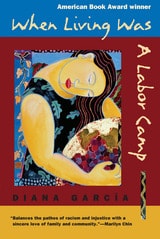
When Living Was a Labor Camp
Diana García
University of Arizona Press, 2000
"I write what I eat and smell," says Diana García, and her words are a bountiful harvest. Her poems color the page with the vibrancy and sweetness of figs, the freshness of tortillas, and the sensuality of language.
In this, García's first collection of poems, she takes a bittersweet look back at the migrant labor camps of California and offers a tribute to the people who toiled there. Writing from the heart of California's San Joaquin Valley, she catapults the reader into the lives of the campesinos with their daily joys and sorrows.
Bold, political, and familial, García's poems gift the reader with a sense of earth, struggle, and pride—each line filled with the sounds of agrarian music, from mariachi melodies to repatriation revolts. Embodied with such spirit, her poems rise with the convictions of power and equality
When We Arrive
A New Literary History of Mexican AmericaJosé F. Aranda Jr.
University of Arizona Press, 2003
In this bold new look at the American canon, Aranda weaves the threads of Mexican American literature into the broader tapestry of Anglo American writing, especially its Puritan origins, by pointing out common ties that bind the two traditions: narratives of persecution, of immigration, and of communal crises, alongside chronicles of the promise of America. Examining texts ranging from María Amparo Ruiz de Burton's 1872 critique of the Civil War, Who Would Have Thought It?, through the contemporary autobiographies of Richard Rodriguez and Cherríe Moraga, he surveys Mexican American history, politics, and literature, locating his analyses within the context of Chicano/a cultural criticism of the last four decades.
When We Arrive integrates Early American Studies and Chicano/a Studies into a comparative cultural framework by using the Puritan connection to shed new light on dominant images of Chicano/a narrative, such as Aztlán and the borderlands. Aranda explores the influence of a nationalized Puritan ethos on nineteenth- and twentieth-century writers of Mexican descent, particularly upon constructions of ethnic identity and aesthetic values. He then frames the rise of contemporary Chicano/a literature within a critical body of work produced from the 1930s through the 1950s, one that combines a Puritan myth of origins with a literary history in which American literature is heralded as the product and producer of social and political dissent.
Aranda's work is a virtual sourcebook of historical figures, texts, and ideas that revitalizes both Chicano/a studies and American literary history. By showing how a comparative study of two genres can produce a more integrated literary history for the United States, When We Arrive enables critics and readers alike to see Mexican American literature as part of a broader tradition and establishes for its writers a more deserving place in the American literary imagination.
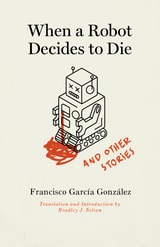
When a Robot Decides to Die and Other Stories
Francisco García González
Vanderbilt University Press, 2021
With a scholarly introduction by translator Bradley J. Nelson that introduces García González's oeuvre to contemporary readers and scholars of Spanish-language literature, this science fiction collection introduces Anglophones to this unique author.
García González turns a black mirror on contemporary society and its relation both to history and to the future. His insightfulness and relevance draw comparisons with Margaret Atwood, Neal Stephenson, and China Miéville, though his verbal economy and elegance are more akin to Cormac McCarthy, producing both disturbingly uncanny violence and unexpected comedy.
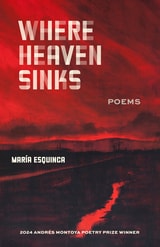
Where Heaven Sinks
PoemsMaría Esquinca
University of Nevada Press, 2025
María Esquinca delivers a searing collection of poems that traverse borders—both physical and emotional. Set against the backdrop of El Paso and Ciudad Juárez, these experimental works weave fragmented verses, striking imagery, and bold typography to confront the brutal realities of immigration and identity. With the precision of a journalist and the heart of a storyteller, Esquinca exposes injustice while celebrating resilience and hope. Her work is shaped by the intersection of cultures, histories, and experiences found in the US-Mexico borderlands. Each poem is a tribute to those who have endured and a call to challenge the systems that oppress. Where Heaven Sinks is a love letter, a memorial for those lost, and a testament to the transformative power of language.
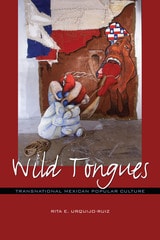
Wild Tongues
Transnational Mexican Popular CultureBy Rita E. Urquijo-Ruiz
University of Texas Press, 2012
Tracing the configuration of the slapstick, destitute Peladita/Peladito and the Pachuca/Pachuco (depicted in flashy zoot suits) from 1928 to 2004, Wild Tongues is an ambitious, extensive examination of social order in Mexican and Chicana/o cultural productions in literature, theater, film, music, and performance art.
From the use of the Peladita and the Peladito as stock characters who criticized various aspects of the Mexican government in the 1920s and 1930s to contemporary performance art by María Elena Gaitán and Dan Guerrero, which yields a feminist and queer-studies interpretation, Rita Urquijo-Ruiz emphasizes the transnational capitalism at play in these comic voices. Her study encompasses both sides of the border, including the use of the Pachuca and the Pachuco as anti-establishment, marginal figures in the United States. The result is a historically grounded, interdisciplinary approach that reimagines the limitations of nation-centered thinking and reading.
Beginning with Daniel Venegas’s 1928 novel, Las aventuras de don Chipote o Cuando los pericos mamen, Rita Urquijo-Ruiz’s Wild Tongues demonstrates early uses of the Peladito to call attention to the brutal physical demands placed on the undocumented Mexican laborer. It explores Teatro de Carpa (tent theater) in-depth as well, bringing to light the experience of Mexican Peladita Amelia Wilhelmy, whose “La Willy” was famous for portraying a cross-dressing male soldier who criticizes the failed Revolution. In numerous other explorations such as these, the political, economic, and social power of creativity continually takes center stage.
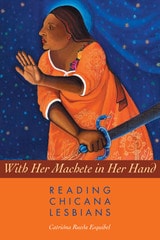
With Her Machete in Her Hand
Reading Chicana LesbiansBy Catrióna Rueda Esquibel
University of Texas Press, 2006
With the 1981 publication of the groundbreaking anthology This Bridge Called My Back: Writings by Radical Women of Color, Cherríe Moraga and Gloria Anzaldúa ushered in an era of Chicana lesbian writing. But while these two writers have achieved iconic status, observers of the Chicana/o experience have been slow to perceive the existence of a whole community—lesbian and straight, male as well as female—who write about the Chicana lesbian experience. To create a first full map of that community, this book explores a wide range of plays, novels, and short stories by Chicana/o authors that depict lesbian characters or lesbian desire.
Catrióna Rueda Esquibel starts from the premise that Chicana/o communities, theories, and feminisms cannot be fully understood without taking account of the perspectives and experiences of Chicana lesbians. To open up these perspectives, she engages in close readings of works centered around the following themes: La Llorona, the Aztec Princess, Sor Juana Inés de la Cruz, girlhood friendships, rural communities and history, and Chicana activism. Her investigation broadens the community of Chicana lesbian writers well beyond Moraga and Anzaldúa, while it also demonstrates that the histories of Chicana lesbians have had to be written in works of fiction because these women have been marginalized and excluded in canonical writings on Chicano life and experience.
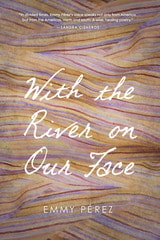
With the River on Our Face
Emmy Pérez
University of Arizona Press, 2016
Pérez reveals the strengths and nuances of a universe where no word is “foreign.” Her fast-moving, evocative words illuminate the prayers, gasps, touches, and gritos born of everyday discoveries and events. Multiple forms of reference enrich the poems in the form of mantra: ecologist’s field notes, geopolitical and ecofeminist observations, wildlife catalogs, trivia, and vigil chants.
“What is it to love / within viewing distance of night / vision goggles and guns?” is a question central to many of these poems.
The collection creates a poetic confluence of the personal, political, and global forces affecting border lives. Whether alluding to El Valle as a place where toxins now cross borders more easily than people or wildlife, or to increased militarization, immigrant seizures, and twenty-first-century wall-building, Pérez’s voice is intimate and urgent. She laments, “We cannot tattoo roses / On the wall / Can’t tattoo Gloria Anzaldúa’s roses / On the wall”; yet, she also reaffirms Anzaldúa’s notions of hope through resilience and conocimiento.
With the River on Our Face drips deep like water, turning into amistad—an inquisition into human relationships with planet and self.
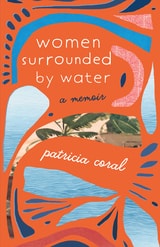
Women Surrounded by Water
A MemoirPatricia Coral
The Ohio State University Press, 2024
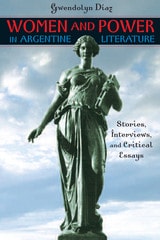
Women and Power in Argentine Literature
Stories, Interviews, and Critical EssaysBy Gwendolyn Díaz
University of Texas Press, 2007
The astonishing talent of Argentine women writers belies the struggles they have faced—not merely as overlooked authors, but as women of conviction facing oppression. The patriarchal pressures of the Perón years, the terror of the Dirty War, and, more recently, the economic collapse that gripped the nation in 2001 created such repressive conditions that some writers, such as Luisa Valenzuela, left the country for long periods. Not surprisingly, power has become an inescapable theme in Argentine women's fiction, and this collection shows how the dynamics of power capture not only the political world but also the personal one. Whether their characters are politicians and peasants, torturers and victims, parents and children, or lovers male and female, each writer explores the effects of power as it is exercised by or against women.
The fifteen writers chosen for Women and Power in Argentine Literature include famous names such as Valenzuela, as well as authors anthologized for the first time, most notably María Kodama, widow of Jorge Luis Borges. Each chapter begins with a "verbal portrait," editor Gwendolyn Díaz's personal impression of the author at ease, formed through hours of conversation and interviews. A biographical essay and critical commentary follow, with emphasis on the work included in this anthology. Díaz's interviews, translated from Spanish, and finally the stories themselves—only three of which have been previously published in English—complete the chapters. The extraordinary depth of these chapters reflects the nuanced, often controversial portrayals of power observed by Argentine women writers. Inspiring as well as insightful, Women and Power in Argentine Literature is ultimately about women who, in Díaz's words, "choose to speak their truth regardless of the consequences."
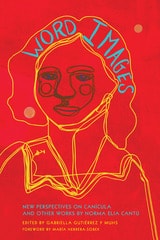
Word Images
New Perspectives on Canícula and Other Works by Norma Elia CantúEdited by Gabriella Gutiérrez y Muhs; Foreword by María Herrera-Sobek
University of Arizona Press, 2017
Contributors:
Steven W. Bender
Aurora Chang
Vanessa Fonseca
Gabriella Gutiérrez y Muhs
María Herrera-Sobek
Ellen McCracken
María Esther Quintana Millamoto
Aldo Ulisses Reséndiz Ramírez
Rose Rodríguez-Rabin
Jesús Rosales
Carlos Sibaja García
María Socorro Tabuenca
Juan Velasco
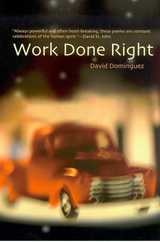
Work Done Right
David Dominguez
University of Arizona Press, 2003
I pulled into Galdini Sausage at noon.
The workers walked out of production
and swatted away the flies desperate for pork.
Pork gripped the men and was everywhere,
in the form of blood, in the form of fat,
and in pink meat that stuck to the workers' shoes.
Work Done Right is a sequence of narrative poems, told with a lyricist's tenderness and an eye for detail, that address the human condition in unexpected ways. David Dominguez explores Abraham's struggle to maintain personal dignity in harsh circumstances, juxtaposing bleak images of the sausage factory with the hope of finding one's true place in the world. Through his sensuously textured words, he pays tribute to people and place as he takes readers on a mystic journey toward redemption.
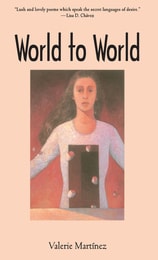
World to World
Valerie Martínez
University of Arizona Press, 2004
Martínez explores the dynamic of creation/dissolution in original and intriguing ways. Here are the strange and provocative landscapes of the body and its disappearance . . . of matter and the absence of matter . . . of what is formed and what is falling from form. Throughout this compelling cycle, her deft manipulations of poetic structure disclose the boundaries where flesh, matter, and language become spirit, space, and "cataractical brilliance."
In charting the relationships between time, form, body, language, and emptiness, World to World maps the territories where the visible and the invisible meet, offering unexpected discoveries for discerning readers.
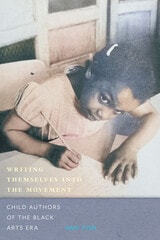
Writing Themselves into the Movement
Child Authors of the Black Arts EraAmy Fish
University of Massachusetts Press, 2024
Between 1967 and 1972, a previously obscure group of authors entered the US cultural spotlight. During this five-year period, at least thirty anthologies of poetry and prose by African American, Latinx, Asian American, and Native American children came out of adult-led workshops, classrooms, and sites of juvenile incarceration. Mass-market publishers, independent imprinters, and local mimeograph machines produced volumes with titles such as I Am Somebody! and The Me Nobody Knows: Children’s Voices from the Ghetto. These young writers actively participated in the Black Arts Movement, and some collaborated with well-known adult authors, most prominently June Jordan. Their anthologies gained national media coverage, occasionally became bestsellers, were quoted by James Baldwin, and even inspired a hit Broadway musical. While writings by children had long attracted adult attention, this flurry of youth writing and publishing was distinguished by the widespread belief that children of color from poor and working-class neighborhoods were uniquely able to speak truth about American racism and inequality.
Focusing on Black and Latinx youth authorship within New York City, and using deep archival research and elegant close readings, Amy Fish examines child-authored texts of this era within the context of their literary production and reception. These young writers were often supervised and edited by white adults, raising concerns about the authenticity and agency of their voices. Fish contends that young authors themselves shared these concerns and that they employed savvy rhetorical strategies of address, temporality, and trope to self-consciously interrogate the perils and possibilities of their adult-influenced work. Young writers thus contributed to the era’s important debates about the nature of authorship and readership within a racist society, while also using their writing as an intimate occasion of self-discovery.
Writing across the Color Line
U.S. Print Culture and the Rise of Ethnic Literature, 1877-1920Lucas A. Dietrich
University of Massachusetts Press, 2020
Writing across the Color Line details how this body of literature was selected for publication, edited, manufactured, advertised, and distributed, even as it faced hostile criticism and frequent misinterpretation by white readers. Shedding light on the transformative potential of multiethnic literature and the tenacity of racist attitudes that dominated the literary marketplace, Dietrich proves that Native American, African American, Latinx, Asian American, and Irish American writers of the period relied on self-caricature, tricksterism, and the careful control of authorial personae to influence white audiences.
Writing the Goodlife
Mexican American Literature and the EnvironmentPriscilla Solis Ybarra
University of Arizona Press, 2016
Goodlife writing has existed for at least the past century, Ybarra contends, but Chicana/o literary history’s emphasis on justice and civil rights eclipsed this tradition and hidden it from the general public’s view. Likewise, in ecocriticism, the voices of people of color most often appear in deliberations about environmental justice. The quiet power of goodlife writing certainly challenges injustice, to be sure, but it also brings to light the decolonial environmentalism heretofore obscured in both Chicana/o literary history and environmental literary studies.
Ybarra’s book takes on two of today’s most discussed topics—the worsening environmental crisis and the rising Latino population in the United States—and puts them in literary-historical context from the U.S.-Mexico War up to today’s controversial policies regarding climate change, immigration, and ethnic studies. This book uncovers 150 years’ worth of Mexican American and Chicana/o knowledge and practices that inspire hope in the face of some of today’s biggest challenges.
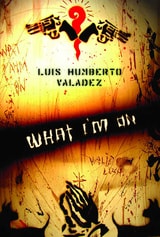
what I'm on
Luis Humberto Valadez
University of Arizona Press, 2009
José García
put a thirty-five to me
my mother was in the other room
He would have done us both
if not for the lust of my fear
This new Mexican American/Chicano voice is all at once arresting, bracing, shocking, and refreshing. This is not the poetry you learned in school. It owes as much to hip hop as it does to the canon. But Valadez has paid his academic dues, and he certainly knows how to craft a poem. It’s just that he does it his way.
i anagram and look and subject to deformation and reconfiguring . . .
it ain’t events or blocks that ahm jettisoning through this process
it be layers of meaning, identity, narrative, and ego that gets peeled off
i can only increase my own understanding