Results by title
884 books match the query 'Historical' and 31 start with w
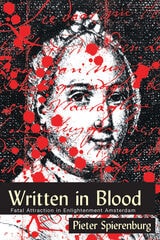
WRITTEN IN BLOOD
FATAL ATTRACTION IN ENLIGHTENMENT AMSTERDAMPieter Spierenburg
The Ohio State University Press, 2004
Pieter Spierenburg narrates two sensational murder cases among intimates in eighteenth-century Amsterdam. The cases recounted here both resulted from fatal attraction. They represented the darker side of the eighteenth-century revolution in love. This period witnessed great cultural changes affecting personal relationships and emotions. The new ideal of love demanded that couples spend much of their time together and explore each other’s feelings. But this new ideal was meant for married and engaged couples only; for others it meant disaster. Love gone wrong was the theme of the sentimental novels of the age, but it also happened to real people, with fatal consequences.
Written in Blood traces the lives and ultimate fate of Nathaniel Donker, who, together with the help of his mistress, brutally murders and dismembers the wife. The second tale focuses on J. B. F. van Gogh, who falls in love with a prostitute; she later rejects him and, when a letter written with his own blood fails to change her mind, he stabs her to death in a fit of passionate rage.
In Written in Blood, the reader gets two stories for the price of one. And, whereas earlier microhistories have been situated in a village or a small town, the scene here is Amsterdam and its canals. Spierenburg reveals in detail what concepts like honor and gender roles came down to in individual lives. He also shows that these murders produced a strange mixture of modern romantic feelings and traditional notions of honor and shame.
Wallis's War
A Novel of Diplomacy and IntrigueKate Auspitz
University of Chicago Press, 2015
The facts: reviled by the British as a social-climbing seductress even as Time magazine named her its 1936 Woman of the Year, Simpson was the American socialite whose affair with King Edward VIII led him to abdicate the throne on the eve of WWII. In this fanciful novel written in the form of a fictional memoir, Auspitz imagines an alternative history in which Simpson was encouraged by Allied statesmen to remove defeatist, pro-German Edward from the throne, forever altering the course of the war. A comically unreliable narrator who knows more than she realizes, and reveals more than she knows, Simpson leads us from historic treaties and military campaigns to dinner parties and cruises as she describes encounters with everyone from Duff and Diana Cooper to Charles Lindbergh, Coco Chanel, and Hitler—all the while acting as a willing but seemingly oblivious pawn of international intrigue.
A rare blend of diplomacy and dalliance, fashion and fascists, this meticulously researched satire offers witty and erudite entertainment and leaves us speculating: who really brought about the abdication and—always—what were they wearing?
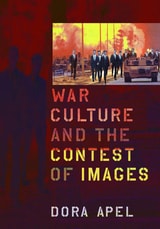
War Culture and the Contest of Images
Apel, Dora
Rutgers University Press, 2012
War Culture and the Contest of Images analyzes the relationships among contemporary war, documentary practices, and democratic ideals. Dora Apel examines a wide variety of images and cultural representations of war in the United States and the Middle East, including photography, performance art, video games, reenactment, and social media images. Simultaneously, she explores the merging of photojournalism and artistic practices, the effects of visual framing, and the construction of both sanctioned and counter-hegemonic narratives in a global contest of images.
As a result of the global visual culture in which anyone may produce as well as consume public imagery, the wide variety of visual and documentary practices present realities that would otherwise be invisible or officially off-limits. In our digital era, the prohibition and control of images has become nearly impossible to maintain. Using carefully chosen case studies—such as Krzysztof Wodiczko’s video projections and public works in response to 9/11 and the wars in Iraq and Afghanistan, the performance works of Coco Fusco and Regina Galindo, and the practices of Israeli and Palestinian artists—Apel posits that contemporary war images serve as mediating agents in social relations and as a source of protection or refuge for those robbed of formal or state-sanctioned citizenship.
While never suggesting that documentary practices are objective translations of reality, Apel shows that they are powerful polemical tools both for legitimizing war and for making its devastating effects visible. In modern warfare and in the accompanying culture of war that capitalism produces as a permanent feature of modern society, she asserts that the contest of images is as critical as the war on the ground.
War Diary
Ingeborg Bachmann
Seagull Books, 2011
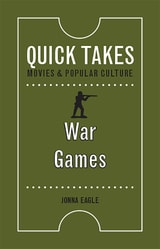
War Games
Jonna Eagle
Rutgers University Press, 2020
This Quick Take considers how various war games and simulations shape the ways we imagine war. Paradoxically, these games grant us a sense of mastery and control as we strategize and scrutinize the enemy, yet also allow us the thrilling sense of being immersed in the carnage and chaos of battle. But as simulations of war become more integrated into both popular culture and military practice, how do they shape our apprehension of the traumatic realities of warfare?
Covering everything from chess to football, from Saving Private Ryan to American Sniper, and from Call of Duty to drone interfaces, War Games is an essential guide for anyone seeking to understand the militarization of American culture, offering a compact yet comprehensive look at how we play with images of war.
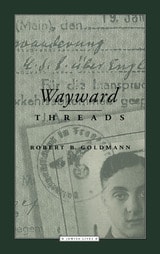
Wayward Threads
Robert Goldmann
Northwestern University Press, 1998
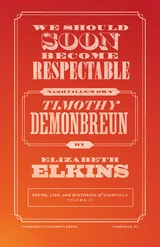
We Should Soon Become Respectable
Nashville's Own Timothy DemonbreunElizabeth Elkins
Vanderbilt University Press, 2022
Lightly called a "fur trader," he came to the city to make his fortune and fame, much like songwriters today. Looking back, it would be easy to call Demonbreun, the son of French Canadian near-royalty and brother to two nuns, a spoiled child who did what he wanted, a classic-case misogynist and polygamist, a conceited adventurer. He was a man who conned the Spanish governor out of a war, carried on graceful correspondence with Thomas Jefferson and Alexander Hamilton, owned several slaves, may have served as a spy, and was a decorated veteran. He fought in the Revolutionary War, extraordinarily so it seems, given the number of land grants he received across Kentucky and Tennessee.
He's also known around Nashville as the guy who lived in a cave.
Author Elizabeth Elkins sorts through the legends and nails down the facts in order to present the true story of "Nashville's First Citizen."
We Should Soon Become Respectable
Nashville's Own Timothy DemonbreunElizabeth Elkins
Vanderbilt University Press, 2022
Lightly called a "fur trader," he came to the city to make his fortune and fame, much like songwriters today. Looking back, it would be easy to call Demonbreun, the son of French Canadian near-royalty and brother to two nuns, a spoiled child who did what he wanted, a classic-case misogynist and polygamist, a conceited adventurer. He was a man who conned the Spanish governor out of a war, carried on graceful correspondence with Thomas Jefferson and Alexander Hamilton, owned several slaves, may have served as a spy, and was a decorated veteran. He fought in the Revolutionary War, extraordinarily so it seems, given the number of land grants he received across Kentucky and Tennessee.
He's also known around Nashville as the guy who lived in a cave.
Author Elizabeth Elkins sorts through the legends and nails down the facts in order to present the true story of "Nashville's First Citizen."
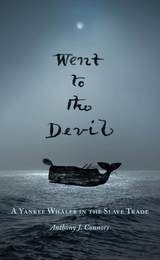
Went to the Devil
A Yankee Whaler in the Slave TradeAnthony J. Connors
University of Massachusetts Press, 2019
In this riveting biography, Anthony J. Connors explores this question by detailing not only the troubled, adventurous life of this man but also the turbulent times in which he lived. Set in an era of social and political fragmentation and impending civil war, when changes in maritime law and the economics of whaling emboldened slaving agents to target captains and their vessels for the illicit trade, Davoll's story reveals the deadly combination of greed and racial antipathy that encouraged otherwise principled Americans to participate in the African slave trade.
What We Don't Talk About
James Janko
University of Wisconsin Press, 2022
The town’s most adventurous woman, Cassie Zeul, is an outcast because she has no husband and takes an occasional lover. Her son, Gus, guided by Sister Damien, aspires to be a priest, but he is increasingly overwhelmed by his infatuation with Pat Lemkey—who is herself drawn to Jenny Biel, considered by many to be the most beautiful girl in town. Gus’s best friend, Fenza Ryzchik Jr., a somewhat notorious bully desperate for his father’s attention, hates “colored people,” doesn’t think he knows any, and is certain he can convince Jenny to marry him one day—without realizing that her devout mother has been passing for white her entire life. Events come to a head when a visiting nun from the South brings an African American friend with her to Midnight Mass one Christmas Eve.
The dreams and desires of these characters collide and intersect as they navigate life and coming of age in the rural Midwest. In Janko’s masterful hands, the darkness—of prejudice, privilege, and power—that they don’t even recognize threatens to overwhelm their lives and their plans for the future. This novel forces us, as well as its characters, to acknowledge the cost of hiding our true selves, and of judging others based on the color of their skin or the longing of their hearts.
What You See in the Dark
A NovelManuel Muñoz and Charles Taylor
Northwestern University Press, 2025
A doomed love story unfolds alongside the production of Psycho in 1950s Bakersfield, California
Muñoz’s debut novel tells the story of Teresa, an aspiring singer too far away from Los Angeles to share the city’s glamour. In Dan Watson, the most desirable man in town, she believes she has found someone to help her realize those dreams. But when a famous actress arrives from Hollywood with a legendary director in tow, local gossip about Teresa and Dan turns to speculation about the celebrity visitors there to work on what will become an iconic, groundbreaking film of madness and murder at a roadside motel: Alfred Hitchcock’s Psycho. Framed by a foreword from film critic Charles Taylor, Muñoz’s haunting tale reflects “the slow winding down of everything that once seemed certain.”
Wheat Flour Messiah
Eric Jansson of Bishop HillPaul Elmen
Southern Illinois University Press, 1997
Wheat Flour Messiah follows the career of Eric Jansson from his boyhood on a farm near Biskopskulla (Bishop’s Hill) in Sweden until his murder in Illinois by a crazed follower in 1850. He was an untutored but brilliant charismatic leader, who by sheer insolence and self-confidence defied both the Swedish state church and the secular government and persuaded some twelve hundred of his wheat flour customers to throw in their lot with him. The essence of his teaching was that anyone who so desired could receive the grace of God in such rich measure that he would instantly be freed of sin and live in angelic innocence from then on. This doctrine was an imperfectly understood version of Methodist perfectionism, held without Wesleyan safeguards, and it doomed his followers to civil war against the Lutheran church.
Jansson went north to Hälsingland in Sweden to sell wheat flour, but his deeper intention was to hold large religious services in the farmyards of followers. On three occasions he and his followers burned all the allegedly heretical books written by such men as Luther, Nohrborg, and Arndt, singing hymns while the flames "destroyed the works of the Devil." Jansson was jailed six times, and six times he was freed. After his last trial, as he was being escorted to jail, he escaped and later arranged passage to America. His disciples followed him in a series of Atlantic crossings during 1847–49 and settled the utopian colony of Bishop Hill, 150 miles west of Chicago. They built impressive buildings, plowed the virgin prairie, and began some successful industry making wagons and weaving rugs.
Two fateful events spelled the doom of this utopian dream. The first, the cholera epidemic of 1849,killed over two hundred of the colonists. The other was the arrival of John Root, who subsequently married Jansson’s cousin, Charlotte, and who, after a series of altercations with Jansson over Charlotte, shot him to death in Cambridge, Illinois. The colony did not long survive without its Prophet, and ten years later the utopian dream ended. Today Bishop Hill remains little changed from a century ago—a colorful memory of American beginnings, a vivid reminder of its fascinating past.
Dr. Elmen’s book tells for the first time the life story of a folk hero, Eric Jansson. The Bishop Hill Colony was clearly the lengthened shadow of this extraordinary man. Students of utopian colonies, teachers and students of American history and religious movements will find here a definitive account of this piece of the American past. Any reader interested in the American Dream will enjoy this account of a vanished people who thought they could find somewhere on earth a great, good place, and who had to learn after much suffering that one cannot express in waking reality the character of man in his dreams.
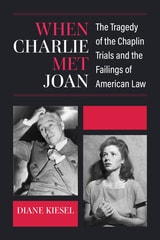
When Charlie Met Joan
The Tragedy of the Chaplin Trials and the Failings of American LawDiane Kiesel
University of Michigan Press, 2025
A 2026 PROSE Award Category Winner for Biography and Autobiography
Charlie Chaplin, the silent screen’s “Little Tramp,” was beloved by millions of movie fans until he starred in a series of salacious, real-life federal courtroom dramas. The 1944 trial was described by ace New York Daily News reporter Florabel Muir as “the best show in town.” The leading lady was a woman under contract to his studio—red-haired ingénue Joan Barry, Chaplin’s protégée and former mistress. Although he beat the federal criminal trial, Chaplin lost a paternity case and had to pay child support despite blood type evidence that proved he was not the child’s father.
A decade later during the Cold War, the U.S. government used the Barry trials as an excuse to bar the left-leaning, sexually adventurous, British-born comic from the country he had called home for forty years. Not only did these trials have a lasting impact on law; they also raise concerns about the power of celebrity, Cold War politics, the media frenzy surrounding high-profile court proceedings, and the sorry history of the casting couch. When Charlie Met Joan examines these trials from the perspective of both parties, asking whether Chaplin was unfairly persecuted by the government because of his left-leaning political beliefs, or if he should have been held more accountable for his cavalier treatment of Barry and other women in his life.
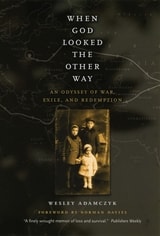
When God Looked the Other Way
An Odyssey of War, Exile, and RedemptionWesley Adamczyk
University of Chicago Press, 2004
Adamczyk was a young Polish boy when he was deported with his mother and siblings from their comfortable home in Luck to Soviet Siberia in May of 1940. His father, a Polish Army officer, was taken prisoner by the Red Army and eventually became one of the victims of the Katyn massacre, in which tens of thousands of Polish officers were slain at the hands of the Soviet secret police. The family's separation and deportation in 1940 marked the beginning of a ten-year odyssey in which the family endured fierce living conditions, meager food rations, chronic displacement, and rampant disease, first in the Soviet Union and then in Iran, where Adamczyk's mother succumbed to exhaustion after mounting a harrowing escape from the Soviets. Wandering from country to country and living in refugee camps and the homes of strangers, Adamczyk struggled to survive and maintain his dignity amid the horrors of war.
When God Looked the Other Way is a memoir of a boyhood lived in unspeakable circumstances, a book that not only illuminates one of the darkest periods of European history but also traces the loss of innocence and the fight against despair that took root in one young boy. It is also a book that offers a stark picture of the unforgiving nature of Communism and its champions. Unflinching and poignant, When God Looked the Other Way will stand as a testament to the trials of a family during wartime and an intimate chronicle of episodes yet to receive their historical due.
“A finely wrought memoir of loss and survival.”—Publishers Weekly
“Adamczyk’s unpretentious prose is well-suited to capture that truly awful reality.” —Andrew Wachtel, Chicago Tribune Books
“Mr. Adamczyk writes heartfelt, straightforward prose. . . . This book sheds light on more than one forgotten episode of history.”—Gordon Haber, New York Sun
“One of the most remarkable World War II sagas I have ever read. It is history with a human face.”—Andrew Beichman, Washington Times
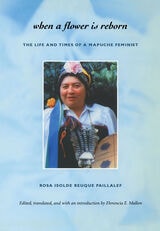
When a Flower Is Reborn
The Life and Times of a Mapuche FeministRosa Isolde Reuque Paillalef, Edited, translated, and with an introduction by Florencia E. Mallon
Duke University Press, 2002
A leading activist during the Pinochet dictatorship, Reuque—a woman, a Catholic, and a Christian Democrat—often felt like an outsider within the male-dominated, leftist Mapuche movement. This sense of herself as both participant and observer allows for Reuque’s trenchant, yet empathetic, critique of the Mapuche ethnic movement and of the policies regarding indigenous people implemented by Chile’s post-authoritarian government. After the 1990 transition to democratic rule, Reuque collaborated with the government in the creation of the Indigenous Development Corporation (CONADI) and the passage of the Indigenous Law of 1993. At the same time, her deepening critiques of sexism in Chilean society in general, and the Mapuche movement in particular, inspired her to found the first Mapuche feminist organization and participate in the 1996 International Women’s Conference in Beijing. Critical of the democratic government’s inability to effectively address indigenous demands, Reuque reflects on the history of Mapuche activism, including its disarray in the early 1990s and resurgence toward the end of the decade, and relates her hopes for the future.
An important reinvention of the testimonial genre for Latin America’s post-authoritarian, post-revolutionary era, When a Flower Is Reborn will appeal to those interested in Latin America, race and ethnicity, indigenous people’s movements, women and gender, and oral history and ethnography.
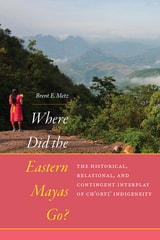
Where Did the Eastern Mayas Go?
The Historical, Relational, and Contingent Interplay of Ch’orti’ Indigeneityby Brent E. Metz
University Press of Colorado, 2022
Copublished with the Institute for Mesoamerican Studies, University of Albany
In Where Did the Eastern Mayas Go? Brent E. Metz explores the complicated issue of who is Indigenous by focusing on the sociohistorical transformations over the past two millennia of the population currently known as the Ch’orti’ Maya. Epigraphers agree that the language of elite writers in Classic Maya civilization was Proto-Ch’olan, the precursor of the Maya languages Ch’orti’, Ch’olti’, Ch’ol, and Chontal. When the Spanish invaded in the early 1500s, the eastern half of this area was dominated by people speaking various dialects of Ch’olti’ and closely related Apay (Ch’orti’), but by the end of the colonial period (1524–1821) only a few pockets of Ch’orti’ speakers remained.
From 2003 to 2018 Metz partnered with Indigenous leaders to conduct a historical and ethnographic survey of Ch’orti’ Maya identity in what was once the eastern side of the Classic period lowland Maya region and colonial period Ch’orti’-speaking region of eastern Guatemala, western Honduras, and northwestern El Salvador. Today only 15,000 Ch’orti’ speakers remain, concentrated in two municipalities in eastern Guatemala, but since the 1990s nearly 100,000 impoverished farmers have identified as Ch’orti’ in thirteen Guatemalan and Honduran municipalities, with signs of Indigenous revitalization in several Salvadoran municipalities as well. Indigenous movements have raised the ethnic consciousness of many non-Ch’orti’-speaking semi-subsistence farmers, or campesinos. The region’s inhabitants employ diverse measures to assess identity, referencing language, history, traditions, rurality, “blood,” lineage, discrimination, and more.
Where Did the Eastern Mayas Go? approaches Indigenous identity as being grounded in historical processes, contemporary politics, and distinctive senses of place. The book is an engaged, activist ethnography not on but, rather, in collaboration with a marginalized population that will be of interest to scholars of the eastern lowland Maya region, indigeneity generally, and ethnographic experimentation.
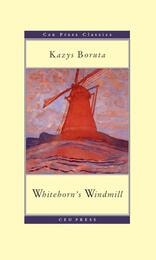
Whitehorn's Windmill
Kazys Boruta
Central European University Press, 2009
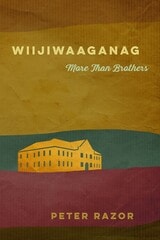
Wiijiwaaganag
More Than BrothersPeter Razor
Michigan State University Press, 2022
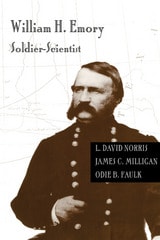
William H. Emory
Soldier-ScientistL. David Norris, James C. Milligan, and Odie B. Faulk
University of Arizona Press, 1998
Born in Maryland in 1811, Emory was a West Point graduate who resigned his commission to become a civil engineer and join the newly formed Corps of Topographical Engineers. After working along the Canadian boundary, he was selected to accompany Stephen Watts Kearny and the Army of the West in their trek to California in 1846, and his map from that expedition helped guide Forty-Niners bound for the goldfields.
Emory worked for nine years on the new border between the United States and Mexico after the Treaty of Guadalupe Hidalgo and the Gadsden Purchase and was responsible for the survey and marking of the boundary. When the Civil War broke out, Emory refused a commission in the Confederate Army, instead commanding a regiment defending Washington, D.C. Later he saw action at Manassas, in the Red River campaign, and in the Shenandoah Valley, where he served under Phil Sheridan.
This biography draws on Emory’s personal papers to reveal other significant episodes of his life. While commanding a cavalry unit in Indian Territory, he was the only officer to bring an entire command out of insurrectionary territory. In hostile action of a different kind, he was a major witness in the impeachment trial of Andrew Johnson and offered testimony that helped save the president.
William H. Emory: Soldier-Scientist is an important resource for scholars of western expansion and the Civil War. More than that, it is a rousing story of an unsung but distinguished hero of his time.
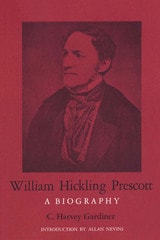
William Hickling Prescott
A BiographyBy C. Harvey Gardiner
University of Texas Press, 1969
This biography of a distinguished historian and man of letters is the first study of William Hickling Prescott (1796–1859) to be written by a historian who has worked with the very themes explored by Prescott. And it is the first to treat him not only as creative historian but also as family man, as traveler and clubman, as investor and humanitarian, and as private citizen with strong political preferences.
Prescott the socialite and Prescott the introvert writer emerge in the round as the magnificent amateur who helped establish canons that have enriched American historical scholarship ever since. Blending history and literature, his multivolume works won Prescott the first significant international reputation to be accorded to an American historian.
Working despite persistent obstacles of health and against a penchant for society and leisure that was always part of his personality, Prescott came to be considered the finest interpreter of the Hispanic world produced by the Anglo-Saxon world. His Conquest of Mexico and Conquest of Peru were pronounced classics.
C. Harvey Gardiner takes the reader back to the nineteenth century in style and in subject to present William Hickling Prescott, gentleman and scholar, firmly fixed in relationship to his community and his times. But Gardiner's Victorian stance and respect for nineteenth-century historiography do not prevent his presenting Prescott as a whole man, viewed in retrospect, stripped of myth, and evaluated for moderns.
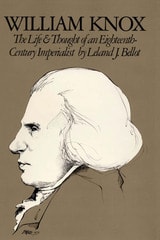
William Knox
The Life and Thought of an Eighteenth-Century ImperialistBy Leland J. Bellot
University of Texas Press, 1977
Colonial expert and pamphleteer William Knox has received attention in virtually every major study of the American Revolution, yet this is the first biography of Knox ever written.
Knox is best known as undersecretary of state in the American Department of the British government from 1770 to 1782. A prolific and candid commentator, he also made a reputation as a pamphleteer, defending the imperial cause during the decade preceding the Revolution. It had been his experience as provost marshal in Georgia from 1757 to 1762 that convinced Knox of the danger to the empire of the growing "democratic" forces in the American colonies.
While numerous historical works have focused on this or that aspect of Knox's career and thought, such treatment has produced at best a jigsaw portrait. Bellot's comprehensive narrative reveals Knox as a person—one whose Calvinist heritage and Scots-Irish upbringing profoundly influenced his view of empire—and as a historical actor and witness. Here is a look at the events of the revolutionary period through the eyes of a British bureaucrat who had a significant role in both the formation and the execution of British policy. This perspective also provides an excellent case study of the operation of the eighteenth-century British bureaucracy.
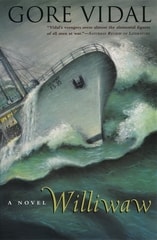
Williwaw
A NovelGore Vidal
University of Chicago Press, 2003
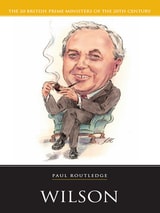
Wilson
Paul Routledge
Haus Publishing, 2006
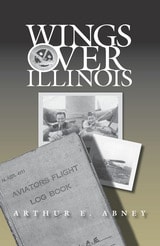
Wings Over Illinois
Arthur E. Abney
Southern Illinois University Press, 2007
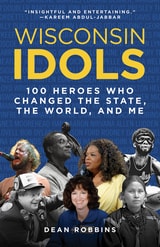
Wisconsin Idols
100 Heroes Who Changed the State, the World, and MeDean Robbins
Wisconsin Historical Society Press, 2025
Discover intriguing true tales of legends and trailblazers with Wisconsin connections who left their mark on the world, including the Beatles, Georgia O’Keeffe, Kareem Abdul-Jabbar, Harrison Ford, Joni Mitchell, Abraham Lincoln, Oprah Winfrey, Bob Dylan, Jackie Robinson, Orson Welles, and many more. Marvel at Elvis Presley’s miracle on the streets of Madison, applaud the award-winning acting of Reedsburg’s Agnes Moorehead, follow fearless quarterback Bart Starr to the gates of hell in Green Bay, and join Joshua Glover in Racine on his daring escape from enslavers. These brief narratives—whether poignant or humorous—also offer personal reflections on the impact of each featured idol.
Author Dean Robbins has spent a lifetime researching and revering these prominent figures and visiting exhibits, shrines, historic homes, and other sites dedicated to their achievements. Wisconsin Idols gathers all of Robbins’s obsessions into one collection, enhanced by dozens of photographs. Taken together, these stories of musicians, activists, artists, athletes, actors, and great thinkers irrefutably establish Wisconsin as a crossroads for extraordinary people who changed the world.
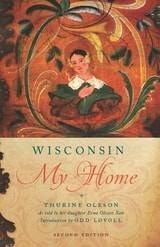
Wisconsin My Home
Thurine Oleson; As told to her daughter Erna Oleson Xan; Introduction by Odd Lovoll
University of Wisconsin Press, 2012
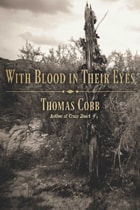
With Blood in Their Eyes
Thomas Cobb
University of Arizona Press, 2013
Winner, Spur Award for Best Western Long Novel (Western Writers of America) and Southwest Book Award (Border Regional Library Association)
On February 10, 1918, John Power woke to the sound of bells and horses’ hooves. He was sharing a cabin near the family mine with his brother Tom and their father Jeff; hired man Tom Sisson was also nearby. Then gunfire erupted, and so began the day when the Power brothers engaged the Graham County Sheriff’s Department in the bloodiest shootout in Arizona history.
Now Thomas Cobb, author of Crazy Heart and Shavetail, has taken up the story in this powerful and meticulously researched nonfiction novel. What seems at first a simple tale of crime and pursuit takes on much greater meaning and complexity as the story traces the past lives of the main characters and interconnects them—all leading back to the deadly confrontation that begins the book. Cobb cunningly weaves the story of the Power brothers’ escape with flashbacks of the boys’ father’s life and his struggle to make a living ranching, logging, and mining in the West around the turn of the century. Deftly drawn characters and cleverly concealed motivations work seamlessly to blend a compelling family history with a desperate story of the brothers as they attempt to escape.
Grappling with themes of loyalty, masculinity, technology, and honor, this sweeping saga reveals the passion and brutality of frontier life in Arizona a hundred years ago. Richly authentic and beautifully written, With Blood in Their Eyes breathes dramatic new life into this nearly forgotten episode of the American West.
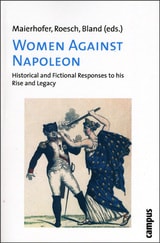
Women Against Napoleon
Historical and Fictional Responses to his Rise and LegacyEdited by Waltraud Maierhofer, Gertrud Roesch, and Caroline Bland
Campus Verlag, 2007
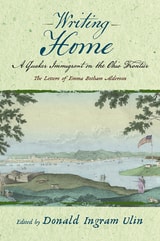
Writing Home
A Quaker Immigrant on the Ohio Frontier; the Letters of Emma Botham AldersonDonald Ingram Ulin
Bucknell University Press, 2020
Introductions and notes situate the letters in relation to their critical, biographical, literary, and historical contexts. Editor Donald Ulin discusses the relationship between Alderson’s letters and her sister Mary Howitt’s Our Cousins in Ohio (1849), a remarkable instance of transatlantic literary collaboration.
Writing Home offers an unparalleled opportunity for studying immigrant correspondence due to Alderson’s unusually well-documented literary and religious affiliations. The notes and introductions provide background on nearly all the places, individuals, and events mentioned in the letters.
Published by Bucknell University Press. Distributed worldwide by Rutgers University Press.
Writings of Warner Mifflin
Forgotten Quaker Abolitionist of the Revolutionary EraGary B. Nash
University of Delaware Press, 2021
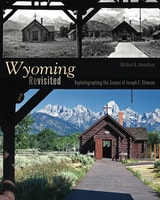
Wyoming Revisited
Rephotographing the Scenes of Joseph E. StimsonMichael A. Amundson
University Press of Colorado, 2014
The 117 locations feature street views of Wyoming towns and cities, as well as views from the state's famous natural landmarks like Yellowstone National Park, Grand Teton National Park, Devil's Tower National Monument, Hot Springs State Park, and Big Horn and Shoshone National Forests. In addition, Amundson provides six in-depth essays that explore the life of Joseph E. Stimson, the rephotographic process and how it has evolved, and how repeat photography can be used to understand history, landscape, historic preservation, and globalization.
Wyoming Revisited highlights the historic evolution of the American West over the past century and showcases the significant changes that have occurred over the past twenty-five years. This book will appeal to photographers, historians of the American West, and anyone interested in Wyoming's history or landscape.
The publication of this book is supported in part by the Wyoming Cultural Trust Fund.