Results by title
679 books match the query 'Historiography' and 26 start with w
Walter Ralegh's "History of the World" and the Historical Culture of the Late Renaissance
Nicholas Popper
University of Chicago Press, 2012
Nicholas Popper uses Ralegh’s History as a touchstone in this lively exploration of the culture of history writing and historical thinking in the late Renaissance. From Popper we learn why early modern Europeans ascribed heightened value to the study of the past and how scholars and statesmen began to see historical expertise as not just a foundation for political practice and theory, but as a means of advancing their power in the courts and councils of contemporary Europe. The rise of historical scholarship during this period encouraged the circulation of its methods to other disciplines, transforming Europe’s intellectual—and political—regimes. More than a mere study of Ralegh’s History of the World, Popper’s book reveals how the methods that historians devised to illuminate the past structured the dynamics of early modernity in Europe and England.
Warping Time
How Contending Political Forces Manipulate the Past, Present, and FutureBenjamin Ginsberg and Jennifer Bachner
University of Michigan Press, 2023
Warping Time shows how narratives of the past influence what people believe about the present and future state of the world. In Benjamin Ginsberg and Jennifer Bachner’s simple experiments, in which the authors measured the impact of different stories their subjects heard about the past, these “history lessons” moved contemporary policy preferences by an average of 16 percentage points; forecasts of the future moved contemporary policy preferences by an average of 12 percentage points; the two together moved preferences an average of 21 percentage points. And, in an Orwellian twist, the authors estimate that the “history lessons” had an average “erasure effect” of 8.5 percentage points—the difference between those with long-held preferences and those who did not recall that they previously held other opinions before participating in the experiment. The fact that the past, present, and future are subject to human manipulation suggests that history is not simply the product of impersonal forces, material conditions, or past choices. Humans are the architects of history, not its captives. Political reality is tenuous. Changes in our understanding of the past or future can substantially alter perceptions of and action in the present. Finally, the manipulation of time, especially the relationship between past and future, is a powerful political tool.
Warring over Valor
How Race and Gender Shaped American Military Heroism in the Twentieth and Twenty-First CenturiesWendt, Simon
Rutgers University Press, 2019
We Are Having This Conversation Now
The Times of AIDS Cultural ProductionAlexandra Juhasz and Theodore Kerr
Duke University Press, 2022
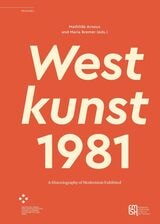
Westkunst, 1981
A Historiography of Modernism ExhibitedEdited by Mathilde Arnoux and Maria Bremer
Diaphanes, 2025
In 1981, the Cologne trade-fair center hosted a large exhibition titled Westkunst: Zeitgenössische Kunst seit 1939 (Western Art: Contemporary Art since 1939). Organized by art critic Laszlo Glozer and curator Kasper König, the Western-centric survey highlighted avant-garde art and politically charged themes of freedom and individual expression. By examining Westkunst’s historiographical stakes in light of the Iron Curtain division of Europe, the show is revealed as paradigmatic of the ways in which hegemonic concepts of Western art and the accompanying processes of othering were fashioned in the art world.
In this collective volume, Westkunst’s universalizing claims are scrutinized by focusing on the artistic tendencies exhibited; on exhibitionary discourses and practices of decontextualization, comparison, and appropriation; on the alleged realization of the values of progress, freedom, and autonomy; on the enacted conceptions of temporality and the architectural devices of narrativization; and on the exhibition’s blind spots and exclusions and the critical reactions it elicited. This analytic output makes fresh use of the archival materials, which are neither centralized nor systematized, with significant excerpts republished throughout the book.
Seen through the lens of exhibition history, this revisiting of Westkunst sheds light on a broader trend of cultural conservatism that was gaining strength in the 1980s, just before the end of the Cold War and the start of new forms of globalization.
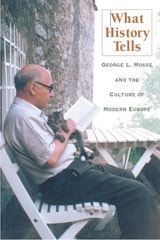
What History Tells
George L. Mosse and the Culture of Modern EuropeEdited by Stanley G. Payne, David J. Sorkin, and John S. Tortorice
University of Wisconsin Press, 2004
The contributors include Walter Laqueur, David Sabean, Johann Sommerville, Emilio Gentile, Roger Griffin, Saul Friedländer, Jay Winter, Rudy Koshar, Robert Nye, Janna Bourke, Shulamit Volkov, and Steven E. Aschheim.
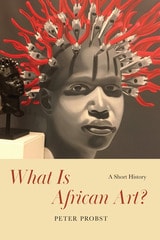
What Is African Art?
A Short HistoryPeter Probst
University of Chicago Press, 2022
This book examines the invention and development of African art as an art historical category. It starts with a simple question: What do we mean when we talk about African art? By confronting the historically shifting answers to this question, Peter Probst identifies “African art” as a conceptual vessel that manifests wider societal transformations.
What Is African Art? covers three key stages in the field’s history. Starting with the late nineteenth through the mid-twentieth centuries, the book first discusses the colonial formation of the field by focusing on the role of museums, collectors, and photography in disseminating visual cultures as relations of power. It then explores the remaking of the field at the dawn of African independence with the shift toward contemporary art and the rise of Black Atlantic studies in the 1970s and 1980s. Finally, it examines the post- and decolonial reconfiguration of the field driven by questions of representation, repair, and restitution.
What Is Art History?
Mark Roskill
University of Massachusetts Press, 1989
White Scholars/African American Texts
Edited by Lisa A. Long
Rutgers University Press, 2005
What makes someone an authority? What makes one person's knowledge more credible than another's? In the ongoing debates over racial authenticity, some attest that we can know each other's experiences simply because we are all "human," while others assume a more skeptical stance, insisting that racial differences create unbridgeable gaps in knowledge.
Bringing new perspectives to these perennial debates, the essays in this collection explore the many difficulties created by the fact that white scholars greatly outnumber black scholars in the study and teaching of African American literature. Contributors, including some of the most prominent theorists in the field as well as younger scholars, examine who is speaking, what is being spoken and what is not, and why framing African American literature in terms of an exclusive black/white racial divide is problematic and limiting.
In highlighting the "whiteness" of some African Americanists, the collection does not imply that the teaching or understanding of black literature by white scholars is definitively impossible. Indeed such work is not only possible, but imperative. Instead, the essays aim to open a much needed public conversation about the real and pressing challenges that white scholars face in this type of work, as well as the implications of how these challenges are met.
Whose India?
The Independence Struggle in British and Indian Fiction and HistoryTeresa Hubel
Duke University Press, 1996
Hubel collapses the boundary between literature and history by emphasizing the selected nature of the “facts” that comprise historical texts, and by demonstrating the historicity of fiction. In analyzing the orthodox construction of the British/Indian encounter, Hubel calls into question assumptions about the end of nationalism implicit in mainstream histories and fiction, which generally describe a battleground on which only ruling-class Indians and British meet. Marginalized texts by women, untouchables, and overt imperialists alike are, therefore, examined alongside the well-known work of figures such as Rudyard Kipling, Jawaharlal Nehru, E. M. Forster, and Mahatma Gandhi.
In Whose India? discursive ownership and resistance to ownership are mutually constructing categories. As a result, the account of Indian nationalism and British imperialism that emerges is much more complicated, multivocal, and even more contradictory than previous studies have imagined. Of interest to students and scholars engaged in literary, historical, colonial/postcolonial, subaltern, and Indian studies, Whose India? will also attract readers concerned with gender issues and the canonization of texts.
Why Learn History (When It’s Already on Your Phone)
Sam Wineburg
University of Chicago Press, 2018
With the internet always at our fingertips, what’s a teacher of history to do? Sam Wineburg has answers, beginning with this: We definitely can’t stick to the same old read-the-chapter-answer-the-questions-at-the-back snoozefest we’ve subjected students to for decades. If we want to educate citizens who can sift through the mass of information around them and separate fact from fake, we have to explicitly work to give them the necessary critical thinking tools. Historical thinking, Wineburg shows us in Why Learn History (When It’s Already on Your Phone), has nothing to do with test prep–style ability to memorize facts. Instead, it’s an orientation to the world that we can cultivate, one that encourages reasoned skepticism, discourages haste, and counters our tendency to confirm our biases. Wineburg draws on surprising discoveries from an array of research and experiments—including surveys of students, recent attempts to update history curricula, and analyses of how historians, students, and even fact checkers approach online sources—to paint a picture of a dangerously mine-filled landscape, but one that, with care, attention, and awareness, we can all learn to navigate.
It’s easy to look around at the public consequences of historical ignorance and despair. Wineburg is here to tell us it doesn’t have to be that way. The future of the past may rest on our screens. But its fate rests in our hands.
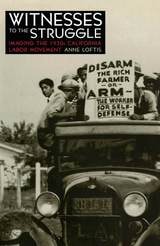
Witnesses to the Struggle
Imaging the 1930s California Labor MovementAnne Loftis
University of Nevada Press, 2014
In this groundbreaking interdisciplinary study, Loftis examines the artists who put a human face on the farmworkers’ plight in California during the Great Depression, focusing on writer John Steinbeck, photographer Dorothea Lange, sociologist and author Paul Taylor, and journalist Carey McWilliams. Loftis probes the interplay between journalism and art in the 1930s, when both academics and artists felt an urgent need to be relevant in the face of enormous misery. The power of their work grew out of their personal involvement in both the labor struggles and the hardships endured by workers and their families. Steinbeck, Lange, and the other artists and intellectuals in their circles created the public images of their times. Works such as The Grapes of Wrath or Lange’s Migrant Mother actually helped mold public opinion and form government policies. Even today these works remain icons in our shared perception of that era. Loftis helps us understand why this art still seems the truest representation of those desperate times, three-quarters of a century later.
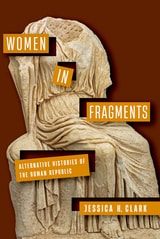
Women in Fragments
Alternative Histories of the Roman RepublicJessica H. Clark
University of Wisconsin Press, 2026
Our sources of knowledge about women in the ancient Roman Republic are flawed. Roman historians were uniformly male, as were most historians of ancient Rome until quite recently. In the historiography handed down by Enlightenment-era scholars, women generally played marginal and often sexualized roles, relegated to the footnotes by historians who assumed the Roman Republic to be fully androcentric. The evidence, however, suggests otherwise. In this detailed and insightful volume, Jessica H. Clark returns to the source material to gain insight into how Roman men understood the lives, roles, and contributions of the women they wrote about.
Reexamining the puzzle pieces of ancient literature, Clark proposes that the earliest Roman historians represented women in complex ways, revealing their appreciation of women’s communities and women’s engagement in the project of the Republic, in contrast to the attitudes assumed by scholars in the eighteenth and nineteenth centuries. She attributes those scholars’ assumptions to the social and political circumstances of their own times and demonstrates how these assumptions have continued to inform our own perceptions of Roman women and therefore Roman society more generally. This study ultimately uncovers not only the women of the Roman Republic but also how modern preconceptions have distorted their image and the stories we tell about ancient Rome.
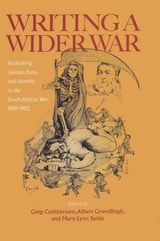
Writing A Wider War
Rethinking Gender, Race, and Identity in the South African War, 1899–1902Greg Cuthbertson
Ohio University Press, 2002
Writing a Wider War presents a dramatically new interpretation of the role of Boer women in the conflict and profoundly changes how we look at the making of Afrikaner nationalism. African experiences of the war are also examined, highlighting racial subjugation in the context of colonial war and black participation, and showcasing important new research by African historians.
The collection includes a reassessment of British imperialism and probing essays on J. A. Hobson; the masculinist nature of life on commando among Boer soldiers; Anglo-Jewry; secularism; health and medicine; nursing, women, and disease in the concentration camps; and the rivalry between British politicians and generals. An examination of the importance of the South African War in contemporary British political economy, and the part played by imperial propaganda, rounds off a thoroughly groundbreaking reinterpretation of this formative event in South Africa's history.
Writing Art History
Disciplinary DeparturesMargaret Iversen and Stephen Melville
University of Chicago Press, 2010
Faced with an increasingly media-saturated, globalized culture, art historians have begun to ask themselves challenging and provocative questions about the nature of their discipline. Why did the history of art come into being? Is it now in danger of slipping into obsolescence? And, if so, should we care?
In Writing Art History, Margaret Iversen and Stephen Melville address these questions by exploring some assumptions at the discipline’s foundation. Their project is to excavate the lost continuities between philosophical aesthetics, contemporary theory, and art history through close readings of figures as various as Michael Baxandall, Martin Heidegger, Jacques Lacan, and Alois Riegl. Ultimately, the authors propose that we might reframe the questions concerning art history by asking what kind of writing might help the discipline to better imagine its actual practices—and its potential futures.

Writing Beijing
History and Knowledge of the CapitalNaixi Feng
University of Michigan Press, 2027
Writing Beijing offers a comprehensive study of the textual representations of the city from the late Ming dynasty through the Republican era, interrogating how urban narratives were actively constructed, adapted, and repurposed across periods of political transformation. Scholars, officials, and travelers reshaped the capital’s identity by rewriting older texts, borrowing new surveys, and even inserting critiques into guidebooks.. This study reveals how the crises brought by intense social transformation, including dynastic collapse and foreign invasion, forced writers to reinvent Beijing on paper. Some turned the city into a monument to lost glory; others documented everyday life to resist imperialism. These narratives served to critique contemporary sociopolitical conditions, assert cultural legitimacy during times of crisis, and ultimately shape Beijing’s enduring cultural image as China’s symbolic capital.
Naixi Feng bridges literary studies, urban history, and critical historiography by examining a wide range of genres—including literary miscellanies, local gazetteers, Qing imperial compilations, Republican textbooks, social reports, and travel guides—to demonstrate how writing about Beijing was never merely descriptive but always a site of cultural and political contestation.
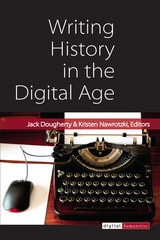
Writing History in the Digital Age
Jack Dougherty and Kristen Nawrotzki, editors
University of Michigan Press, 2013
Writing History in the Digital Age began as a “what-if” experiment by posing a question: How have Internet technologies influenced how historians think, teach, author, and publish? To illustrate their answer, the contributors agreed to share the stages of their book-in-progress as it was constructed on the public web.
To facilitate this innovative volume, editors Jack Dougherty and Kristen Nawrotzki designed a born-digital, open-access, and open peer review process to capture commentary from appointed experts and general readers. A customized WordPress plug-in allowed audiences to add page- and paragraph-level comments to the manuscript, transforming it into a socially networked text. The initial six-week proposal phase generated over 250 comments, and the subsequent eight-week public review of full drafts drew 942 additional comments from readers across different parts of the globe.
The finished product now presents 20 essays from a wide array of notable scholars, each examining (and then breaking apart and reexamining) if and how digital and emergent technologies have changed the historical profession.
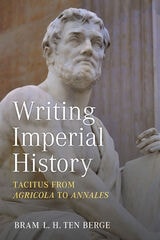
Writing Imperial History
Tacitus from Agricola to AnnalesBram L. H. ten Berge
University of Michigan Press, 2023
Writing Mormon History 2
Authors' Stories Behind Their WorksGeisner, Joseph W.
Signature Books, 2024
Like its predecessor, Writing Mormon History, this book delves into the captivating narratives of multiple historians as they unfold the backstories of their various publishing endeavors. The authors detail their journeys in crafting influential books, articles, newspaper pieces, and anthologies that have significantly shaped our comprehension of Mormon history. Beyond the polished final products that readers typically encounter, the book explores the driving forces compelling authors to explore their topics and the sacrifices they make along the way.
The volume invites readers to ponder the motivations that fuel an author’s commitment to rigorous research and writing, and sheds light on the substantial time, ranging from minutes to long hours, invested in the sources they cite. Through these narratives, readers gain an appreciation for the dedication and passion that goes into the making of historical scholarship.
Whether you're an avid historian, a student of history, a scholar, or an aspiring author, Writing Mormon History 2 offers an important glimpse into the minds of these writers. This anthology provides a unique opportunity to connect with the human stories behind the academic works that have left an indelible mark on our understanding of Mormon history.
Writing Political History Today
Edited by Willibald Steinmetz, Ingrid Gilcher-Holtey, and Heinz-Gerhard Haupt
Campus Verlag, 2013
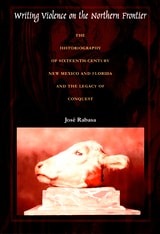
Writing Violence on the Northern Frontier
The Historiography of Sixteenth-Century New Mexico and Florida and the Legacy of ConquestJosé Rabasa
Duke University Press, 2000
To advance his argument Rabasa analyzes visual and verbal representations, colonialist programs, and the theories of colonization that informed the historiography of sixteenth-century New Mexico and Florida, which includes the territory from the Pacific coast to Kansas, and from present-day Florida to Tennessee and Arkansas. Using little-known materials from the northern borderlands of Spanish imperial expansion, Rabasa works to complicate notions of violence and their relationship to writing. Understood in juxtaposition with modern texts on postcolonial theory, his description of the dual function of these colonial texts—to represent material acts of violence and to act as violence itself—also emphasizes the lingering effects of this phenomenon in contemporary intellectual work and everyday life. In this way Writing Violence on the Northern Frontier serves not only as an explanation of what colonialist texts do but also instigates new ways of thinking about colonial discourse.
This book will interest scholars of colonial studies and early North American history, as well as a broader audience interested in interdisciplinary perspectives on the topic of racial, ethnic, and literary violences.
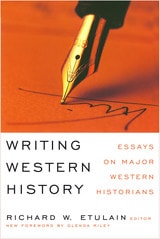
Writing Western History
Essays on Major Western HistoriansRichard W. Etulain
University of Nevada Press, 2002
Writing and Rewriting National Theatre Histories
S.E. Wilmer
University of Iowa Press, 2004
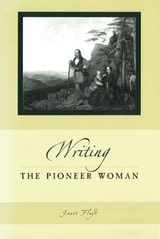
Writing the Pioneer Woman
Janet Floyd
University of Missouri Press, 2002
Focusing on a series of autobiographical texts, published and private, well known and obscure, Writing the Pioneer Woman examines the writing of domestic life on the nineteenth-century North American frontier. In an attempt to determine the meanings found in the pioneer woman's everyday writings—from records of recipes to descriptions of washing floors—Janet Floyd explores domestic details in the autobiographical writing of British and Anglo-American female emigrants.
Floyd argues that the figure of the pioneer housewife has been a significant one within general cultural debates about the home and the domestic life of women, on both sides of the Atlantic. She looks at the varied ideological work performed by this figure over the last 150 years and at what the pioneer woman signifies and has signified in national cultural debates concerning womanhood and home.
The autobiographies under discussion are not only of homemaking but also of emigration. Equally, these texts are about the enterprise of emigration, with several of them written to advise prospective emigrants. Using the insights of diaspora and migration theory, Floyd shows that these writings portray a far subtler role for the pioneer woman than is suggested by previous scholars, who often see her either as participating directly in the overall domestication of colonial space or as being strictly marginal to that process.
Written in response to the highly critical discussion of the attitudes and activities of female "civilizers" within "New" Western history and postcolonial studies, Writing the Pioneer Woman will be a valuable addition to the burgeoning discussion of the literature of domesticity.
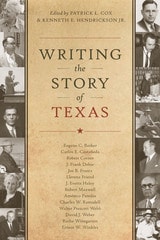
Writing the Story of Texas
Edited by Patrick L. Cox and Kenneth E. Hendrickson Jr.
University of Texas Press, 2013
The history of the Lone Star state is a narrative dominated by larger-than-life personalities and often-contentious legends, presenting interesting challenges for historians. Perhaps for this reason, Texas has produced a cadre of revered historians who have had a significant impact on the preservation (some would argue creation) of our state’s past. An anthology of biographical essays, Writing the Story of Texas pays tribute to the scholars who shaped our understanding of Texas’s past and, ultimately, the Texan identity.
Edited by esteemed historians Patrick Cox and Kenneth Hendrickson, this collection includes insightful, cross-generational examinations of pivotal individuals who interpreted our history. On these pages, the contributors chart the progression from Eugene C. Barker’s groundbreaking research to his public confrontations with Texas political leaders and his fellow historians. They look at Walter Prescott Webb’s fundamental, innovative vision as a promoter of the past and Ruthe Winegarten’s efforts to shine the spotlight on minorities and women who made history across the state. Other essayists explore Llerena Friend delving into an ambitious study of Sam Houston, Charles Ramsdell courageously addressing delicate issues such as racism and launching his controversial examination of Reconstruction in Texas, Robert Cotner—an Ohio-born product of the Ivy League—bringing a fresh perspective to the field, and Robert Maxwell engaged in early work in environmental history.
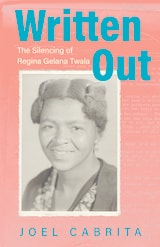
Written Out
The Silencing of Regina Gelana TwalaJoel Cabrita
Ohio University Press, 2023