Results by title
783 books match the query 'History & Theory' and 22 start with w
Wageless Life
A Manifesto for a Future beyond CapitalismIan G. R. Shaw
University of Minnesota Press, 2019
Drawing up alternate ways to “make a living” beyond capitalism
To live in this world is to be conditioned by capital. Once paired with Western democracy, unfettered capitalism has led to a shrinking economic system that squeezes out billions of people—creating a planet of surplus populations. Wageless Life is a manifesto for building a future beyond the toxic failures of late-stage capitalism. Daring to imagine new social relations, new modes of economic existence, and new collective worlds, the authors provide skills and tools for perceiving—and living in— a post-capitalist future.
Forerunners: Ideas First
Short books of thought-in-process scholarship, where intense analysis, questioning, and speculation take the lead
War and Rights
The Impact of War on Political and Civil RightsDavid L. Rousseau
University of Michigan Press, 2021
Warfare in Europe contributed to the development of the modern state. In response to external conflict, state leaders raised armies and defended borders. The centralization of power, the development of bureaucracies, and the integration of economies all maximized revenue to support war. But how does a persistent external threat affect the development of a strong state? The “Garrison State” hypothesis argues that states that face a severe security threat will become autocracies. Conversely, the “Extraction School,” argues that warfare indirectly promotes the development of democratic institutions.
Execution of large-scale war requires the mobilization of resource and usually reluctant populations. In most cases, leaders must extend economic or political rights in exchange for resolving the crisis. Large-scale warfare thus expands political participation in the long run. The authors use empirical statistical modeling to show that war decreases rights in the short term, but the longer and bigger a war gets, the rights of the citizenry expand with the conflict. The authors test this argument through historical case studies—Imperial Russia, Austro-Hungarian Dual Monarchy, African Americans in World War I and II, and the Tirailleurs Senegalese in World War I—through the use of large-N statistical studies—Europe 1900–50 and Global 1893–2011—and survey data. The results identify when, where, and how war can lead to the expansion of political rights.

War and an Irish Town
Eamonn McCann
Pluto Press, 1993
He witnessed the gradual transformation of the civil rights movement from a mild campaign for 'British Democracy' to an all-out military assault on the British state. This new edition updates the last edition (1980) with an additional introduction covering the last thirteen years.
War and an Irish Town is a trenchant, powerful narrative which reaches an unequivocal conclusion: 'There can be no internal solution to the Northern Ireland problem. The existence of the northern state is the problem'.
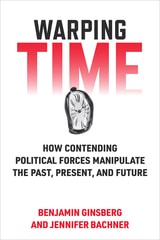
Warping Time
How Contending Political Forces Manipulate the Past, Present, and FutureBenjamin Ginsberg and Jennifer Bachner
University of Michigan Press, 2023
Warping Time shows how narratives of the past influence what people believe about the present and future state of the world. In Benjamin Ginsberg and Jennifer Bachner’s simple experiments, in which the authors measured the impact of different stories their subjects heard about the past, these “history lessons” moved contemporary policy preferences by an average of 16 percentage points; forecasts of the future moved contemporary policy preferences by an average of 12 percentage points; the two together moved preferences an average of 21 percentage points. And, in an Orwellian twist, the authors estimate that the “history lessons” had an average “erasure effect” of 8.5 percentage points—the difference between those with long-held preferences and those who did not recall that they previously held other opinions before participating in the experiment. The fact that the past, present, and future are subject to human manipulation suggests that history is not simply the product of impersonal forces, material conditions, or past choices. Humans are the architects of history, not its captives. Political reality is tenuous. Changes in our understanding of the past or future can substantially alter perceptions of and action in the present. Finally, the manipulation of time, especially the relationship between past and future, is a powerful political tool.

Wartime Washington
The Civil War Letters of Elizabeth Blair LeeEdited by Virginia Jeans Laas
University of Illinois Press, 1991

Waves of Knowing
A Seascape EpistemologyKarin Amimoto Ingersoll
Duke University Press, 2016
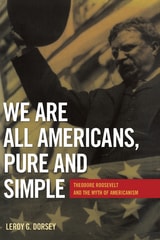
We Are All Americans, Pure and Simple
Theodore Roosevelt and the Myth of AmericanismLeroy G. Dorsey
University of Alabama Press, 2008
Redefining American identity through Roosevelt’s words.
The turn of the 20th century represented one of the most chaotic periods in the nation's history, as immigrants, Native Americans, and African Americans struggled with their roles as Americans while white America feared their encroachments on national identity. This book examines Theodore Roosevelt’s public rhetoric—speeches, essays, and narrative histories—as he attempted to craft one people out of many. Leroy G. Dorsey observes that Roosevelt's solution to the problem appeared straightforward: everyone could become "Americans, pure and simple" if they embraced his notion of "Americanism." Roosevelt grounded his idea of Americanism in myth, particularly the frontier myth—a heroic combination of individual strength and character. When nonwhites and immigrants demonstrated these traits, they would become true Americans, earning an exalted status that they had heretofore been denied.
Dorsey’s analysis illuminates how Roosevelt's rhetoric achieved a number of delicate, if problematic, balancing acts. Roosevelt gave his audiences the opportunity to accept a national identity that allowed "some" room for immigrants and nonwhites, while reinforcing their status as others, thereby reassuring white Americans of their superior place in the nation. Roosevelt’s belief in an ordered and unified nation did not overwhelm his private racist attitudes, Dorsey argues, but certainly competed with them. Despite his private sentiments, he recognized that racist beliefs and rhetoric were divisive and bad for the nation’s progress. The resulting message he chose to propagate was thus one of a rhetorical, if not literal, melting pot.
By focusing on Roosevelt’s rhetorical constructions of national identity, as opposed to his personal exploits or his role as a policy maker, We Are All Americans offers new insights into Roosevelt’s use of public discourse to bind the nation together during one of the most polarized periods in its history.
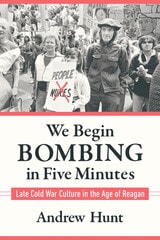
We Begin Bombing in Five Minutes
Late Cold War Culture in the Age of ReaganAndrew Hunt
University of Massachusetts Press, 2021
We Begin Bombing in Five Minutes focuses on a striking array of protest movements that took up issues such as the nuclear arms race, U.S. intervention in Central America, and American investments in South Africa. Hunt's new history of the eighties investigates how film, television, and other facets of popular culture critiqued Washington's Cold War policies and reveals that activists and cultural rebels alike posed a more meaningful challenge to the Cold War's excesses than their predecessors in the McCarthy era.
We Have Not a Government
The Articles of Confederation and the Road to the ConstitutionGeorge William Van Cleve
University of Chicago Press, 2017
In George William Van Cleve’s book, we encounter a sharply divided America. The Confederation faced massive war debts with virtually no authority to compel its members to pay them. It experienced punishing trade restrictions and strong resistance to American territorial expansion from powerful European governments. Bitter sectional divisions that deadlocked the Continental Congress arose from exploding western settlement. And a deep, long-lasting recession led to sharp controversies and social unrest across the country amid roiling debates over greatly increased taxes, debt relief, and paper money. Van Cleve shows how these remarkable stresses transformed the Confederation into a stalemate government and eventually led previously conflicting states, sections, and interest groups to advocate for a union powerful enough to govern a continental empire.
Touching on the stories of a wide-ranging cast of characters—including John Adams, Patrick Henry, Daniel Shays, George Washington, and Thayendanegea—Van Cleve makes clear that it was the Confederation’s failures that created a political crisis and led to the 1787 Constitution. Clearly argued and superbly written, We Have Not a Government is a must-read history of this crucial period in our nation’s early life.
We the Elites
Why the US Constitution Serves the FewRobert
Pluto Press, 2022
An adroit collection of essays exposing the constitution for what it really is – a rulebook to protect capitalism for the elites.
Written by 55 of the richest white men of early America, and signed by only 39 of them, the constitution is the sacred text of American nationalism. Popular perceptions of it are mired in idolatry, myth, and misinformation - many Americans have opinions on the constitution but have no idea what’s in it.
The misplaced faith of social movements in the constitution as a framework for achieving justice actually obstructs social change - incessant lengthy election cycles, staggered terms, and legislative sessions have kept social movements trapped in a redundant loop. This stymies progress on issues like labor rights, public health, and climate change, projecting the American people and the rest of the world towards destruction.
Robert Ovetz’s reading of the constitution shows that the system isn’t broken. Far from it. It works as it was designed.
We
Reviving Social HopeRonald Aronson
University of Chicago Press, 2017
Beneath today’s crisis Aronson examines our heartbreaking story: a century of catastrophic violence and the bewildering ambiguity of progress—all of which have contributed to the evaporation of social hope. As he shows, we are now in a time when hope is increasingly privatized, when—despite all the ways we are connected to each other—we are desperately alone, struggling to weather the maelstrom around us, demoralized by the cynicism that permeates our culture and politics, and burdened with finding personal solutions to social problems.
Yet, Aronson argues, even at a time when false hopes are rife, social hope still persists. Carefully exploring what we mean when we say we “hope” and teasing hope apart from its dangerously misconstrued sibling, “progress,” he locates seeds of real change. He argues that always underlying our experience—even if we completely ignore it—is the fact of our social belonging, and that this can be reactivated into a powerful collective force, an active we. He looks to various political movements, from the massive collective force of environmentalists to the movements around Sanders and Jeremy Corbyn, as powerful examples of socially energized, politically determined, and actionably engaged forms of hope. Even in this age of Donald Trump, the result is an illuminating and inspiring call that anyone can clearly hear: we can still create a better future for everyone, but only if we resist false hopes and act together.
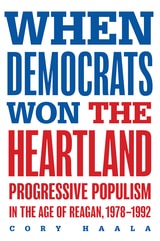
When Democrats Won the Heartland
Progressive Populism in the Age of Reagan, 1978-1992Cory Haala
University of Illinois Press, 2026
This left-oriented movement resurrected the imagery and policies of twentieth-century radical parties like the Minnesota Farmer-Labor Party and Robert La Follette’s Wisconsin Idea. Delving into progressive populist ideas and tactics, Haala illuminates the work of the activists and politicians who led protests, founded a congressional caucus, and backed presidential campaigns that sought to advance their cause. Haala’s account moves from Iron Range union halls to Iowa farmhouses to South Dakota reservations to revise views of Democratic Party history, the Midwest’s political culture, and populism’s role in US politics.
A counter to established political narratives, When Democrats Won the Heartland takes readers into the history of an unexpected political moment.
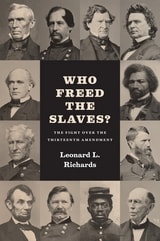
Who Freed the Slaves?
The Fight over the Thirteenth AmendmentLeonard L. Richards
University of Chicago Press, 2015
The real story, however, is much more complicated—and dramatic—than that. With Who Freed the Slaves?, distinguished historian Leonard L. Richards tells the little-known story of the battle over the Thirteenth Amendment, and of James Ashley, the unsung Ohio congressman who proposed the amendment and steered it to passage. Taking readers to the floor of Congress and the back rooms where deals were made, Richards brings to life the messy process of legislation—a process made all the more complicated by the bloody war and the deep-rooted fear of black emancipation. We watch as Ashley proposes, fine-tunes, and pushes the amendment even as Lincoln drags his feet, only coming aboard and providing crucial support at the last minute. Even as emancipation became the law of the land, Richards shows, its opponents were already regrouping, beginning what would become a decades-long—and largely successful—fight to limit the amendment’s impact.
Who Freed the Slaves? is a masterwork of American history, presenting a surprising, nuanced portrayal of a crucial moment for the nation, one whose effects are still being felt today.

Why We Lost the Sex Wars
Sexual Freedom in the #MeToo EraLorna N. Bracewell
University of Minnesota Press, 2021
Reexamining feminist sexual politics since the 1970s—the rivalries and the remarkable alliances
Since the historic #MeToo movement materialized in 2017, innumerable survivors of sexual assault and misconduct have broken their silence and called out their abusers publicly—from well-known celebrities to politicians and high-profile business leaders. Not surprisingly, conservatives quickly opposed this new movement, but the fact that “sex positive” progressives joined in the opposition was unexpected and seldom discussed. Why We Lost the Sex Wars explores how a narrow set of political prospects for resisting the use of sex as a tool of domination came to be embraced across this broad swath of the political spectrum in the contemporary United States.
To better understand today’s multilayered sexual politics, Lorna N. Bracewell offers a revisionist history of the “sex wars” of the 1970s, ’80s, and ’90s. Rather than focusing on what divided antipornography and sex-radical feminists, Bracewell highlights significant points of contact and overlap between these rivals, particularly the trenchant challenges they offered to the narrow and ambivalent sexual politics of postwar liberalism. Bracewell leverages this recovered history to illuminate in fresh and provocative ways a range of current phenomena, including recent controversies over trigger warnings, the unimaginative politics of “sex-positive” feminism, and the rise of carceral feminism. By foregrounding the role played by liberal concepts such as expressive freedom and the public/private divide as well as the long-neglected contributions of Black and “Third World” feminists, Bracewell upends much of what we think we know about the sex wars and makes a strong case for the continued relevance of these debates today.
Why We Lost the Sex Wars provides a history of feminist thinking on topics such as pornography, commercial sex work, LGBTQ+ identities, and BDSM, as well as discussions of such notable figures as Patrick Califia, Alan Dershowitz, Andrea Dworkin, Elena Kagan, Audre Lorde, Catharine MacKinnon, Cherríe Moraga, Robin Morgan, Gayle Rubin, Nadine Strossen, Cass Sunstein, and Alice Walker.
Why the American Century?
Olivier Zunz
University of Chicago Press, 1998
"It should certainly be the task of historians to explain the nation's triumphs as effectively as they have explained its failures, and Zunz in this intelligent, learned and ambitious book suggests a valuable new model for doing so."—Alan Brinkley, Times Literary Supplement
"Zunz is evenhanded in his judgments. . . . His thesis is both imaginative and well grounded in the appropriate sources."—David M. Oshinsky, New York Times Book Review
"Zunz is an innovative and perceptive social critic. He crosses disciplinary boundaries with ease and felicity, and is particularly adept at illustrating large themes with unusual but telling details."—Kent Blaser, American Studies
"An eye-opening introduction to the shaping of modern America."—Foreign Affairs
Wobblies of the World
A Global History of the IWWEdited by Peter Cole, David Struthers, and Kenyon Zimmer
Pluto Press, 2017
Founded in 1905, Chicago's Industrial Workers of the World (IWW) is a union unlike any other. With members affectionately called "Wobblies" and an evolutionary and internationalist philosophy and tactics, it rapidly grew across the world. Considering the history of the IWW from an international perspective for the first time, Wobblies of the World brings together a group of leading scholars to present a lively collection of accounts from thirteen diverse countries, revealing a fascinating story of anarchism, syndicalism, and socialism. Chapters include:
*”A Cosmopolitan Crowd”: Transnational Anarchists, the IWW and the American Radical Press by Kenyon Zimmer
*Living Social Dynamite: Early Twentieth-Century IWW-South Asia Connections by Tariq Khan
*IWW Internationalism and Interracial Organizing in the Southwestern United States by David M. Struthers
*Spanish Anarchists and Maritime Workers in the IWW by Bieito Alonso
*The IWW and the Dilemmas of Labor Internationalism by Wayne Thorpe
*Wobblies Down Under: The IWW in Australia by Verity Burgmann
*Ki Nga Kaimahi Maori ('To All Maori Workers'): The New Zealand IWW and the Maori by Mark Derby
*Patrick Hodgens Hickey and the IWW: A Transnational Relationship by Peter Clayworth
*Edith Frenette: A Transnational Radical Life by Heather Mayer
*Tom Barker and Revolutionary Europe by Paula de Angelis
*P. J. Welinder and “American Syndicalism” in Interwar Sweden by Johan Pries
*Tramp, Tramp, Tramp: The Songs of Joe Hill Around the World by Bucky Halker
*And much, much more!
Drawing on many important figures of the movement—Har Dayal, James Larkin, William D. "Big Bill" Haywood, Enrique Flores Magón, and more—the contributors describe how the IWW and its ideals spread, exploring the crucial role the IWW played in industries such as shipping, mining, and agriculture.
Ultimately, the book illuminates Wobblie methods of organizing, forms of expression, practices, and transnational issues, offering a fascinating alternative history of the group

Women on the Defensive
Living through Conservative TimesSylvia Bashevkin
University of Chicago Press, 1998
Prevailing accounts of the fate of women's movements in that decade ascribe their hardships to a postfeminist ideology or the result of a "backlash" against women, particularly in America. Sylvia Bashevkin's study excavates, however, a much more complex situation. By identifying the policies and goals held in common by feminists in all three countries and tracing their collision course with the conservative policies of the three administrations, she is able to document setbacks but also some progress, despite the right-of-center leaders. She also challenges the assumption that organized interests in the United States are less vulnerable in hard times than those in parliamentary systems, finding that the elections of Ronald Reagan, Brian Mulroney, and Margaret Thatcher had similar effects on both sides of the Atlantic. Her comparative analysis reveals that the policies of current leaders, while marginally better than their predecessors, will not allow women and women's movements to regain lost ground.
Organized thematically, rather than by country, Women on the Defensive describes the difficult relationship between feminists and conservatives during a time of bitter ideological and policy battles when the vibrant social movements of the 1960s and 1970s were seriously threatened.
World Orders, Old and New
Noam Chomsky
Pluto Press, 1997
Worldly Ethics
Democratic Politics and Care for the WorldElla Myers
Duke University Press, 2013

Worlds Beyond Bios
The Life of Matter and the Matter of LifeSophie Chao, Christine J. Winter, and David Schlosberg, editors
Duke University Press, 2026
Writing Political History Today
Edited by Willibald Steinmetz, Ingrid Gilcher-Holtey, and Heinz-Gerhard Haupt
Campus Verlag, 2013
Wrong-Doing, Truth-Telling
The Function of Avowal in JusticeMichel Foucault
University of Chicago Press, 2014
Three years before his death, Michel Foucault delivered a series of lectures at the Catholic University of Louvain that until recently remained almost unknown. These lectures—which focus on the role of avowal, or confession, in the determination of truth and justice—provide the missing link between Foucault’s early work on madness, delinquency, and sexuality and his later explorations of subjectivity in Greek and Roman antiquity.