Results by title
85 books match the query 'Housing' and 5 start with w
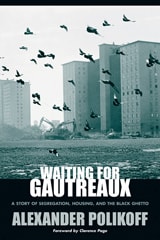
Waiting for Gautreaux
A Story of Segregation, Housing, and the Black GhettoAlexander Polikoff
Northwestern University Press, 2007
On his thirty-ninth birthday in 1966, Alexander Polikoff, a volunteer ACLU attorney and partner in a Chicago law firm, met some friends to discuss a pro bono case. Over lunch, the four talked about the Chicago Housing Authority construction program. All the new public housing, it seemed, was going into black neighborhoods. If discrimination was prohibited in public schools, wasn't it also prohibited in public housing?
And so began Gautreaux v. CHA and HUD, a case that from its rocky beginnings would roll on year after year, decade after decade, carrying Polikoff and his colleagues to the nation's Supreme Court (to face then-solicitor general Robert Bork); establishing precedents for suits against the discriminatory policies of local housing authorities, often abetted by HUD; and setting the stage for a nationwide experiment aimed at ending the concentration--and racialization--of poverty through public housing. Sometimes Kafkaesque, sometimes simply inspiring, and never less than absorbing, the story of Gautreaux, told by its principal lawyer, moves with ease through local and national civil rights history, legal details, political matters, and the personal costs--and rewards--of a commitment to fairness, equality, and justice. Both the memoir of a dedicated lawyer, and the narrative of a tenacious pursuit of equality, this story--itself a critical, still-unfolding chapter in recent American history--urges us to take an essential step in ending the racial inequality that Alexis de Toqueville prophetically named America's "most formidable evil."
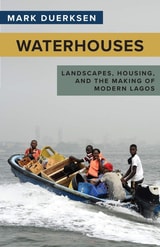
Waterhouses
Landscapes, Housing, and the Making of Modern LagosMark Duerksen
Ohio University Press, 2024
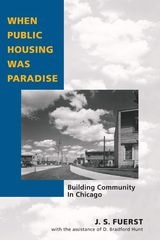
When Public Housing Was Paradise
BUILDING COMMUNITY IN CHICAGOJ. S. Fuerst, with the assistance of D. Bradford Hunt
University of Illinois Press, 2003
J. S. Fuerst has been involved with public housing in Chicago for more than half a century. He retired from Loyola University, where he was a professor of social welfare policy. He was the editor of Public Housing in Europe and America. D. Bradford Hunt is an assistant professor of social science at Roosevelt University. John Hope Franklin is James B. Duke Professor Emeritus of History at Duke University. He has served as president of the Organization of American Historians, the American Historical Association, and many more.
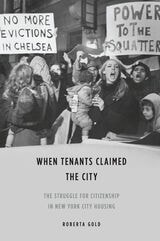
When Tenants Claimed the City
The Struggle for Citizenship in New York City HousingRoberta Gold
University of Illinois Press, 2014
In postwar America, not everyone wanted to move out of the city and into the suburbs. For decades before World War II, New York's tenants had organized to secure renters' rights. After the war, tenant activists raised the stakes by challenging the newly-dominant ideal of homeownership in racially segregated suburbs. They insisted that renters as well as owners had rights to stable, well-maintained homes, and they proposed that racially diverse urban communities held a right to remain in place--a right that outweighed owners' rights to raise rents, redevelop properties, or exclude tenants of color. Further, the activists asserted that women could participate fully in the political arenas where these matters were decided.
Grounded in archival research and oral history, When Tenants Claimed the City: The Struggle for Citizenship in New York City Housing shows that New York City's tenant movement made a significant claim to citizenship rights that came to accrue, both ideologically and legally, to homeownership in postwar America. Roberta Gold emphasizes the centrality of housing to the racial and class reorganization of the city after the war; the prominent role of women within the tenant movement; and their fostering of a concept of "community rights" grounded in their experience of living together in heterogeneous urban neighborhoods.
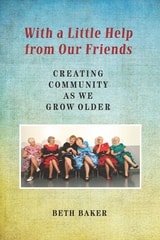
With a Little Help from Our Friends
Creating Community as We Grow OlderBeth Baker
Vanderbilt University Press, 2014
• a mobile home cooperative in small-town Oregon
• a senior artists colony in Los Angeles
• neighbors helping neighbors in "Villages" or "naturally occurring retirement communities"
• intentional cohousing communities
• best friends moving in together
• multigenerational families that balance togetherness and privacy
• niche communities including such diverse groups as retired postal workers, gays and lesbians, and Zen Buddhists
Drawing on new research showing the importance of social support to healthy aging and the risks associated with loneliness and isolation, the author encourages the reader to plan for a future with strong connections. Baker explores whether individuals in declining health can really stay rooted in their communities through the end of life and concludes by examining the challenge of expanding the home-care workforce and the potential of new technologies like webcams and assistive robots.
This book is the recipient of the annual Norman L. and Roselea J. Goldberg Prize for the best project in the area of medicine.