Results by title
517 books match the query 'In literature' and 27 start with w
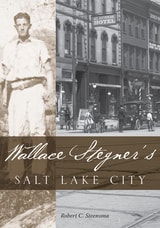
Wallace Stegners Salt Lake City
Robert C. Steensma
University of Utah Press, 2007
As he was later to say in his essay 'At Home in the Fields of the Lord,' he eventually realized that, if he had to have a hometown, it was Salt Lake City. He came to use the 'City of the Saints' for settings in three novels: The Big Rock Candy Mountain, Recapitulation, and The Preacher and the Slave (later retitled Joe Hill). His years in Utah helped develop the environmental ethic he espoused so eloquently in his famous 'Wilderness Letter.'
Robert Steensma has meticulously searched through archival photographs, quotations from Stegner’s writings, and interpretive essays in order to recreate the Salt Lake City of the 1920s and 1930s, the city of Stegner’s youth and young adulthood. This is a book that will appeal to all who have been moved by Stegner’s novels, nonfiction, or his urgent appeals for conservation.
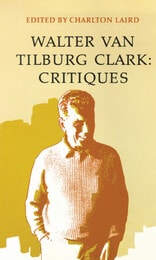
Walter Van Tilburg Clark
CritiquesCharlton Laird
University of Nevada Press, 1983
Beginning in 1849, Alfred Doten recorded his life in minute detail for more than 54 years. His revealing daily accounts of the West's lusty mining frontier included tales of lynching, vigilante justice, shootings in the street, grand opera and theatre, stock manipulations, seances, musical soirees, and general "jollifications." Clark selected and edited the most valuable portions of Doten's massive diaries. He said he knew of no other account, fact or fiction, that so graphically presented the tragic course of a single representative life through the violent transformations brought about by the California Gold Rush and the Nevada Silver Boom.

Wanted Dead or Alive
THE AMERICAN WEST IN POPULAR CULTUREEdited by Richard Aquila
University of Illinois Press, 1996
Wanted Dead or Alive presents the first-ever comprehensive look at how the American West has been depicted in popular culture. Following Richard Aquila's introduction, which examines the birth and growth of the pop culture West in the context of American history, noted experts explore developments in popular Western fiction, major forms of live Western entertainment, trends in Western movies and television shows, images of the West in popular music, and visual images of the West in popular art and advertising. For the reader on the trail of even more information, each section of the book concludes with suggestions for further reading.

We Are Three Sisters
Self and Family in the Writing of the BrontësDrew Lamonica
University of Missouri Press, 2003
West of the Border
The Multicultural Literature of the Western American FrontiersNoreen Groover Lape
Ohio University Press, 2000
Expanding the scope of American borderland and frontier literary scholarship, West of the Border examines the writings of nineteenth- and turn-of-the-century Native, African, Asian, and Anglo American frontier writers. This book views frontiers as “human spaces” where cultures make contact as it considers multicultural frontier writers who speak from “west of the border.”
James P. Beckwourth, a half-black fur trader; Sarah Winnemucca Hopkins, a Paiute translator; Salishan author Mourning Dove; Cherokee novelist John Rollin Ridge; Sui Sin Far, an Anglo-Chinese short story writer, and her sister, romance novelist Onoto Watanna; and Mary Austin, a white southwestern writer- each of these intercultural writers faces a rite of passage into a new social order. Their writings negotiate their various frontier ordeals: the encroachment of pioneers on the land; reservation life; assimilation; Christianity; battles over territories and resources; exclusion; miscegenation laws; and the devastation of the environment.
In West of the Border, Noreen Groover Lape raises issues inherent in American pluralism today by broaching timely concerns about American frontier politics, conceptualizing frontiers as intercultural contact zones, and expanding the boundaries of frontier literary studies by giving voice to minority writers.
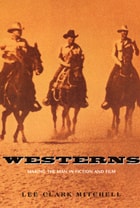
Westerns
Making the Man in Fiction and FilmLee Clark Mitchell
University of Chicago Press, 1996
Few genres are so closely identified with America as the Western. In this wide-ranging examination of the Western and its appeal, Lee Clark Mitchell ranges from the novels of James Fenimore Cooper to Louis L'Amour, and from classic films like Stagecoach to spaghetti Westerns like A Fistful of Dollar to show how Westerns helped assuage a series of crises in American culture. This landmark book shows that the Western owes its perennial appeal not to unchanging conventions but to the deftness with which it responds to the obsessions and fears of its audience. And no obsession, Lee Mitchell argues, has figured more prominently in the Western than what it means to be a man.
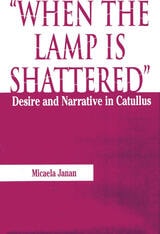
When the Lamp is Shattered
Desire and Narrative in CatullusMichaela Janan
Southern Illinois University Press, 1993
The poetry of the Late Roman Republican poet Gaius Valerius Catullus, a rich document of the human heart, is the earliest-known reasonably complete body of erotic verse in the West.
Though approximately 116 poems survive, uncertainties about the condition of the fragmented manuscript and the narrative order of the poems make the Catullan text unusually problematic for the modern critic. Indeed, the poems can be arranged in a number of ways, making a multitude of different plots possible and frustrating the reader’s desire for narrative closure.
Micaela Janan contends that since unsatisfied desire structures both the experience of reading Catullus and its subject matter, critical interpretation of the text demands a "poetics of desire." Furthermore, postmodern critical theory, narratology, and psychoanalysis suggest a flexible concept of the "subject" as a site through which a multitude of social, cultural, and unconscious forces move. Human consciousness, Janan contends, is inherently incomplete and in a continuous process of transformation. She therefore proposes an original and provocative feminist reading of Catullus, a reading informed by theories of consciousness and desire as ancient as Plato and as contemporary as Freud and Lacan.
The Late Roman Republic in which Catullus lived, Janan reminds us, was a time of profound social upheaval when political and cultural institutions that had persisted for centuries were rapidly breaking down—a time not unlike our own. Catullus’ poetry provides an unusually honest look at his culture and its contradictory representations of class, gender, and power. By bringing to the study of this major work of classical literature the themes of consciousness and desire dealt with in postmodern scholarship, Janan’s book invites a new conversation among literary disciplines.
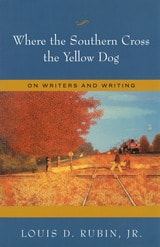
Where the Southern Cross the Yellow Dog
On Writers and WritingLouis D. Rubin, Jr.
University of Missouri Press, 2005
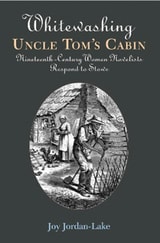
Whitewashing Uncle Tom's Cabin
Nineteenth-Century Women Novelists Respond to StoweJoy Jordan-Lake
Vanderbilt University Press, 2005
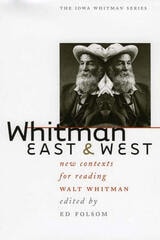
Whitman East and West
New Contexts for Reading Walt WhitmanEd Folsom
University of Iowa Press, 2002
Confirming the growing international spirit of American studies, the essays in Whitman East and West developed out of a landmark conference in Beijing, the first major conference in China to focus on an American poet. Scholars from Asia, Europe, and North America set out to track the ways in which Whitman's poetry has become part of China's cultural landscape as well as the literary landscapes of other countries. By describing his assimilation into other cultures and his resulting transformation into a hybrid poet, these essayists celebrate Whitman's multiple manifestations in other languages and contexts.
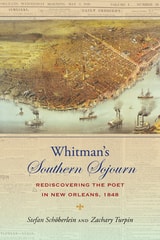
Whitman's Southern Sojourn
Rediscovering the Poet in New Orleans, 1848Stefan Schöberlein
University of Iowa Press, 2025
Far from some brief escape, New Orleans was a significant milestone in Whitman’s development as a political firebrand, as well as a major step for a professional journalist on the rise. Through a wealth of new texts, contexts, and personalities, Stefan Schöberlein and Zachary Turpin paint a vivid picture of a writer on the verge of Leaves of Grass, embracing the contradictions and the multitudes of New Orleans.
Whose India?
The Independence Struggle in British and Indian Fiction and HistoryTeresa Hubel
Duke University Press, 1996
Hubel collapses the boundary between literature and history by emphasizing the selected nature of the “facts” that comprise historical texts, and by demonstrating the historicity of fiction. In analyzing the orthodox construction of the British/Indian encounter, Hubel calls into question assumptions about the end of nationalism implicit in mainstream histories and fiction, which generally describe a battleground on which only ruling-class Indians and British meet. Marginalized texts by women, untouchables, and overt imperialists alike are, therefore, examined alongside the well-known work of figures such as Rudyard Kipling, Jawaharlal Nehru, E. M. Forster, and Mahatma Gandhi.
In Whose India? discursive ownership and resistance to ownership are mutually constructing categories. As a result, the account of Indian nationalism and British imperialism that emerges is much more complicated, multivocal, and even more contradictory than previous studies have imagined. Of interest to students and scholars engaged in literary, historical, colonial/postcolonial, subaltern, and Indian studies, Whose India? will also attract readers concerned with gender issues and the canonization of texts.
Wild Colonial Girl
Essays on Edna O'BrienEdited by Lisa Colletta and Maureen O'Connor
University of Wisconsin Press, 2006
Wild Colonial Girl situates O'Brien in Irish contexts that allow for an appraisal of her significant contribution to a specifically Irish women's literary tradition while attesting to the potency of writing against patriarchal conventions. Each chapter's clear and detailed readings of O'Brien's fiction build a convincing case for her literary, political, and cultural importance, providing an invaluable critical guide for an enriched appreciation of O'Brien and her work.

William Styron - American Writers 98
University of Minnesota Pamphlets on American WritersRichard Pearce
University of Minnesota Press, 1971
William Styron - American Writers 98 was first published in 1971. Minnesota Archive Editions uses digital technology to make long-unavailable books once again accessible, and are published unaltered from the original University of Minnesota Press editions.

Wingless Flights
Appalachian Women in FictionDanny L. Miller
University of Wisconsin Press, 1996
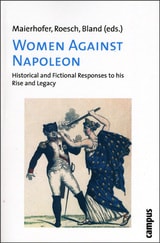
Women Against Napoleon
Historical and Fictional Responses to his Rise and LegacyEdited by Waltraud Maierhofer, Gertrud Roesch, and Caroline Bland
Campus Verlag, 2007
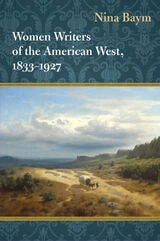
Women Writers of the American West, 1833-1927
Nina Baym
University of Illinois Press, 2012
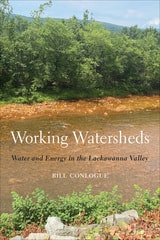
Working Watersheds
Water and Energy in the Lackawanna ValleyWilliam Conlogue
Temple University Press, 2025
Offering a fresh way to think about the Anthropocene, this distinctive history of water and coal in the Lackawanna Valley discusses how both water abundance and scarcity might play out as global temperatures rise. Working Watersheds is designed to trigger debates about the nature of history, the significance of literature, and the importance of linking person, place, and planet in an era of climate change.
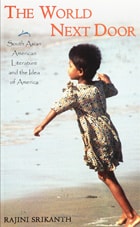
World Next Door
South Asian American LiteratureRajini Srikanth
Temple University Press, 2004
South Asian American literature, with its focus on the multiple geographies and histories of the global dispersal of South Asians, pulls back from a close-up view of the United States to reveal a wider landscape of many nations and peoples.
South Asian American poets, novelists, and playwrights depict the nation as simultaneously discrete and entwined with the urgencies of places as diverse as Bangladesh, Sri Lanka, India, Burma, Pakistan, and Trinidad. Drawing on the cosmopolitan sensibility of scholars like Anthony Appiah, Vinay Dharwadker, Martha Nussbaum, Bruce Robbins, and Amartya Sen, this book exhorts North American residents to envision connectedness with inhabitants of other lands. The world out there arrives next door.
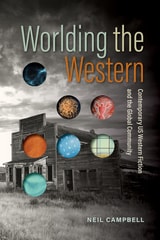
Worlding the Western
Contemporary US Western Fiction and the Global CommunityNeil Campbell
University of Nevada Press, 2022
Diversity, disparity, and opposition are central to the dynamic frictional fiction considered in this book. The American West provides a powerful test case in which these features are present and yet, historically, have often been masked or denied in the rush toward unanimity and nation building. Worlding is, therefore, a positive, critical concept through which to view the notion of a single world under pressure.
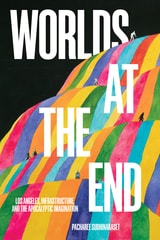
Worlds at the End
Los Angeles, Infrastructure, and the Apocalyptic ImaginationPacharee Sudhinaraset
Temple University Press, 2024
Worlds at the End analyzes destruction, rupture, and continuance through texts ranging from Karen Tei Yamashita’s Tropic of Orange, which considers racial colonial infrastructure, to the work of Diné poet Esther Belin, which illuminates how the separation between the Indian reservation and LA is part of a broader infrastructural network of termination. And she unpacks Octavia Butler’s post-apocalyptic novel, Parable of the Sower, where LA’s freeways and roadways are routes of forced migration, colonization, and flight.
Tearing down existing institutions that marginalize people of color and moving past them, Worlds at the End highlights the imaginaries of those subjugated, racialized, and made other, for whom modernity, freedom, and progress meant violence, brutality, and relegation to the status of devalued surplus populations. As Sudhinaraset deftly shows, the apocalypse marks moments of historical and spatial transition, offering stories of doomsdays that will give rise to resurgence and regeneration.
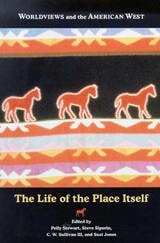
Worldviews And The American West
The Life of the Place ItselfPolly Stewart, Steve Siporin, C. W. Sullivan III, and Suzi Jones
Utah State University Press, 2003
A diverse group of writers and scholars follow the lead of noted folklorist Barre Toelken and consider, from the inside, the ways in which varied cultures in the American West understand and express their relations to the world around them. As Barre Toelken puts it in The Dynamics of Folklore, "'Worldview' refers to the manner in which a culture sees and expresses its relation to the world around it." In Worldviews and the American West, seventeen notable authors and scholars, employing diverse approaches and styles, apply Toelken's ideas about worldview to the American West. While the contributors represent a range of voices, methods, and visions, they are integrated through their focus on the theme of worldview in one region. Worldviews and the American West includes essays by Margaret K. Brady, Hal Cannon, Nora Marks Dauenhauer and Richard Dauenhauer, James S. Griffith, Barry Lopez, Robert McCarl, Elliott Oring, Twilo Scofield, Steve Siporin, Kim Stafford, C. W. Sullivan III, Jeannie B. Thomas, George Venn, George B. Wasson, and William A. Wilson. Each of the authors in this collection attempts to get inside one or more of the worldviews of the many cultures that have come to share and interpret the American West. The result is a lively mix of styles and voices as the authors' own worldviews interact with the multiple perspectives of the diverse peoples (and, in Barry Lopez's "The Language of Animals," other species) of the West. This diversity matches the geography of the region they all call home and gives varied life and meaning to its physical and cultural landscape.
Woven Shades of Green
An Anthology of Irish Nature LiteratureTim Wenzell
Bucknell University Press, 2019
Published by Bucknell University Press. Distributed worldwide by Rutgers University Press.
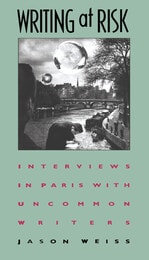
Writing At Risk
Interviews Uncommon WritersJason Weiss
University of Iowa Press, 1991
Much has been made of the image of writers in Paris—romanticized and idealized in fiction and on screen, these émigré artists in sidewalk cafés spark our imagination with unusual force. But rarely do the real-life figures speak to us directly to comment on their work, their lives, and their reasons for choosing to live and work in Paris.
In these striking interviews, E. M. Cioran, Julio Cortázar, Brion Gysin, Eugène Ionesco, Carlos Fuentes, Jean-Claude Carrière, Milan Kundera, Nathalie Sarraute, and Edmund Jabès do just this as they speak out on the risks they've taken, on their struggles and discoveries, on tradition, challenge, and their near-unanimous status as émigrés. A consummate interviewer, Jason Weiss spoke in depth with these pathbreaking artists regarding their lives, their craft, and their very special relationship to Paris. Their writings were naturally the main focus of investigation, but Weiss' concern was always to build on previous interviews, to deepen certain lines of inquiry and open new ones, to contribute fresh material to the ongoing record. The result is a series of invigorating, detailed portraits that go beyond personality, habits, and pleasures to examine some of the causes and effects in the unique relationship of place and temperament.
Writing at Risk suggests that there is more than we suspect binding writers of such disparate cultures and genres…perhaps their attitudes toward writing, perhaps their common attraction to risk. Readers will relish the immediacy of these interviews and will want to (re)discover the work of these exceptional artists.
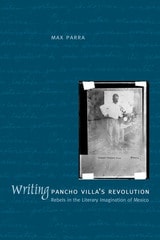
Writing Pancho Villa's Revolution
Rebels in the Literary Imagination of MexicoBy Max Parra
University of Texas Press, 2006
The 1910 Mexican Revolution saw Francisco "Pancho" Villa grow from social bandit to famed revolutionary leader. Although his rise to national prominence was short-lived, he and his followers (the villistas) inspired deep feelings of pride and power amongst the rural poor. After the Revolution (and Villa's ultimate defeat and death), the new ruling elite, resentful of his enormous popularity, marginalized and discounted him and his followers as uncivilized savages. Hence, it was in the realm of culture rather than politics that his true legacy would be debated and shaped.
Mexican literature following the Revolution created an enduring image of Villa and his followers. Writing Pancho Villa's Revolution focuses on the novels, chronicles, and testimonials written from 1925 to 1940 that narrated Villa's grassroots insurgency and celebrated—or condemned—his charismatic leadership. By focusing on works by urban writers Mariano Azuela (Los de abajo) and Martín Luis Guzmán (El águila y la serpiente), as well as works closer to the violent tradition of northern Mexican frontier life by Nellie Campobello (Cartucho), Celia Herrera (Villa ante la historia), and Rafael F. Muñoz (¡Vámonos con Pancho Villa!), this book examines the alternative views of the revolution and of the villistas. Max Parra studies how these works articulate different and at times competing views about class and the cultural "otherness" of the rebellious masses. This unique revisionist study of the villista novel also offers a deeper look into the process of how a nation's collective identity is formed.

Writing Wrongs
W.D. King
Temple University Press, 1997
Writing Wrongs: The Work of Wallace Shawn is a close and personal look into the life and literary work of the man whom Joseph Papp called "a dangerous writer." As the son of the late William Shawn, renowned editor of The New Yorker, Wallace Shawn was born into privilege and trained to thoroughly liberal values, but his plays relentlessly question the liberal faith in individualism and common decency. In an uncompromising way that is all his own, Shawn registers the shock of the new.
In works such as Aunt Dan and Lemon, My Dinner with Andre, and The Designated Mourner, he wrenches out of place all of the usual, comfortable mechanisms by which we operate as audiences. Perhaps our discomfort and struggle to understand a play might provoke some change in the way we see ourselves and behave in relation to others -- but Shawn offers little in the way of solace.
W.D. King's incisive critiques of the plays and inquiry into the life and times of their author develop a portrait of Shawn as a major figure in contemporary theater.
Writing a Usable Past
Russian Literary Culture, 1917-1937Angela Brintlinger
Northwestern University Press, 2008
In <i>Writing a Usable Past</i>, Brintlinger considers the interactions of post-Revolutionary Russian and emigre culture with the genre of biography in its various permutations, arguing that in the years after the Revolution, Russian writers looked to the great literary figures of the past to help them construct a post-Revolutionary present. In detailed looks at the biographical writing of Yuri Tynianov, Vladislav Khodasevich, and Mikhail Bulgakov, Brintlinger follows each author's successful biography/ies and their failed attempts at biographies of Alexander Pushkin on the centennial anniversary of his death. Brintlinger compares the Pushkin biographies to the other biographies examined, and in a concluding chapter she considers other, more successful commemorations of the great poet's death. She argues that popular commemorations--exhibits, concerts, special issues of journals--were a more fitting biography than the genre of the "usable past." For post-revolutionary cultural actors, including Tynianov, Khodasevich, and Bulgakov, Pushkin was a symbol rather than a model for constructing that usable past.