Results by title
751 books match the query 'International Relations' and 24 start with w
WHO INTERVENES?
ETHNIC CONFLICT AND INTERSTATE CRISISDavid Carment, Patrick James, and Zeynep Taydas
The Ohio State University Press, 2006
The book includes a comparative analysis of five case studies: India and Sri Lanka, Somalia and Ethiopia, Malaysia and the Thai Malay (a non-intervention), the immediate aftermath of the breakup of Yugoslavia, and Greece and Turkey with Cyprus. The case histories produce strong support for the relevance of the typology and catalysts. Ethnic composition, institutional constraint, and ethnic affinity and cleavage are very useful factors in distinguishing both the likelihood and form of intervention.
Policies that encourage institutional reform and support ethnic diversity can be expected to reduce the likelihood and even the perceived need for intervention.
War and Peace in International Rivalry
Paul F. Diehl and Gary Goertz
University of Michigan Press, 2001
War and the State
The Theory of International PoliticsR. Harrison Wagner
University of Michigan Press, 2010
War and the State exposes the invalid arguments employed in the unproductive debate about Realism among international relations scholars, as well as the common fallacy of sharply distinguishing between conflict among states and conflict within them. As R. Harrison Wagner demonstrates, any understanding of international politics must be part of a more general study of the relationship between political order and organized violence everywhere--as it was in the intellectual tradition from which modern-day Realism was derived. War and the State draws on the insights from Wagner's distinguished career to create an elegantly crafted essay accessible to both students and scholars.
"Possibly the most important book on international relations theory since Kenneth Waltz's Theory of International Politics."
---James Fearon, Stanford University
"This is one of the best books on international relations theory I have read in a very long time. It is required reading for any student of modern IR theory. Once again, Wagner has shown himself to be one of the clearest thinkers in the field today."
---Robert Powell, Robson Professor of Political Science, University of California, Berkeley
"Painting on a vast canvas, and tackling and integrating topics such as state formation, domestic politics, and international conflict, R. Harrison Wagner's War and the State offers many brilliant insights into the nature of international relations and international conflict. War and the State compellingly highlights the importance of constructing rigorous and valid theorizing and sets a high standard for all students of international relations. The field has much to gain if scholars follow the trail blazed by Wagner in this book."
---Hein Goemans, University of Rochester
R. Harrison Wagner is Professor of Government at the University of Texas.
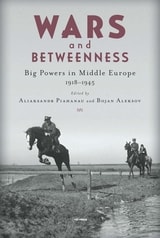
Wars and Betweenness
Big Powers and Middle Europe, 1918-1945Aliaksandr Piahanau
Central European University Press, 2020
The region between the Baltic and the Black Sea was marked by a set of crises and conflicts in the 1920s and 1930s, demonstrating the diplomatic, military, economic or cultural engagement of France, Germany, Russia, Britain, Italy and Japan in this highly volatile region, and critically damaging the fragile post-Versailles political arrangement. The editors, in naming this region as "Middle Europe" seek to revive the symbolic geography of the time and accentuate its position, situated between Big Powers and two World Wars.
The ten case studies in this book combine traditional diplomatic history with a broader emphasis on the geopolitical aspects of Big-Power rivalry to understand the interwar period. The essays claim that the European Big Powers played a key role in regional affairs by keeping the local conflicts and national movements under control and by exploiting the region's natural resources and military dependencies, while at the same time strengthening their prestige through cultural penetration and the cultivation of client networks.
The authors, however, want to avoid the simplistic view that the Big Powers fully dominated the lesser players on the European stage. The relationship was indeed hierarchical, but the essays also reveal how the "small states" manipulated Big-Power disagreements, highlighting the limits of the latters' leverage throughout the 1920s and the 1930s.

Wars, Parties and Nationalism
Essays on the Politics and Society of Nineteenth-century Latin AmericaEdited by Eduardo Posada-Carbo
University of London Press, 1995
Water Wisdom
Preparing the Groundwork for Cooperative and Sustainable Water Management in the Middle EastAbed Rabbo, Alfred
Rutgers University Press, 2010
Water in the Middle East
A Geography of PeaceEdited by Hussein A. Amery and Aaron Wolf
University of Texas Press, 2000
Finding "streams in the desert" has never been more urgent for the peoples of the Middle East. Rapid population growth and a rising standard of living are driving water demand inexorably upward, while the natural supply has not increased since Biblical times. Ensuring a fair and adequate distribution of water in the region is vitally important for building a lasting peace among the nations of the Middle East.
Addressing water needs from a geographical perspective, the contributors to this book analyze and assess the impact of scarce water resources in the Jordan River basin countries and territories (Israel, Jordan, Lebanon, Palestine, and Syria) as these long-time antagonists work toward peace. After geographical and historical overviews, the authors envision the future-what the water issues may be when Israel and Syria begin negotiating, the "hydro-security" needs of each nation, and the difficulties of planning for uncertainty. Without proposing any one ideal scheme, they discuss the possibilities for cooperative sharing of water resources, while honestly acknowledging the political constraints that may limit such projects. The final essay speaks to the needs of the one party so rarely represented at the negotiating table—the Jordan River itself.

Weapon of the Strong
Conversations on US State TerrorismJon Bailes and Cihan Aksan
Pluto Press, 2012
Weapon of the Strong analyses the forms of US state terrorism through exclusive, never before published interviews with leading commentators and theorists, including Noam Chomsky, Edward S. Herman, Richard A. Falk, Judith Butler, Ted Honderich, Norman Finkelstein and Gilbert Achcar. The interviews explore the different aspects of state terrorism: its functions, institutional supports and the legal and moral arguments surrounding it, and consider specific case studies in Europe, Latin America and the Middle East.
Weapon of the Strong makes an indispensable contribution to contemporary debates on terrorism and constructs a damning critique of US foreign policy from World War Two to the present day.

Western Window in the Arab World
By Leon Borden Blair
University of Texas Press, 1970
Since November 8, 1942, when American troops in Operation Torch first landed on the beaches of North Africa, almost a million Americans—military personnel and their dependents—have lived in Morocco. Their impact on the political and social evolution of Morocco has been significant, but historians and political scientists before this book had made little effort to chart its course or to assess its outcome.
The naval base at Port Lyautey in Morocco was the first foreign base captured by American troops in World War II, and United States objectives in Morocco continued to be primarily military. In 1942, as the price for French support against the Axis, the United States pledged its support for the restoration of the prewar French colonial empire. In 1950, faced with the threat of Soviet aggression, the United States negotiated an agreement with France and built four United States Air Force bases in Morocco without consultation with or notification of the Moroccan government.
In spite of its sterile diplomatic policy and both Communist and Moroccan nationalist demands for evacuation of United States military bases, the United States retained essential military facilities in Morocco for many years. Leon Blair concludes that American military personnel and their dependents favorably conditioned Moroccan public opinion. By their egalitarianism, humanitarianism, and evident interest, they reinforced the idealistic image of the United States that was held by the majority of Moroccans.
These Americans were neither individually nor collectively conscious agents in a campaign to modify Moroccan public opinion; they were simply a Western window in the Arab world, through which two civilizations might view one another. In the long run, they made a greater contribution in peace than in war.

What Holds Europe Together?
Krzysztof Michalski
Central European University Press, 2006
Whatever Happened to Antisemitism?
Redefinition and the Myth of the 'Collective Jew'Antony Lerman
Pluto Press, 2020
'This elegantly written, erudite book is essential reading for all of us, whatever our identifications' - Lynne Segal
Antisemitism is one of the most controversial topics of our time. The public, academics, journalists, activists and Jewish people themselves are divided over its meaning. Antony Lerman shows that this is a result of a 30-year process of redefinition of the phenomenon, casting Israel, problematically defined as the ‘persecuted collective Jew’, as one of its main targets.
This political project has taken the notion of the ‘new antisemitism’ and codified it in the flawed International Holocaust Remembrance Alliance’s ‘working definition’ of antisemitism. This text is the glue holding together an international network comprising the Israeli government, pro-Israel advocacy groups, Zionist organizations, Jewish communal defence bodies and sympathetic governments fighting a war against those who would criticize Israel.
The consequences of this redefinition have been alarming, supressing free speech on Palestine/Israel, legitimizing Islamophobic right-wing forces, and politicizing principled opposition to antisemitism.
When States Kill
Latin America, the U.S., and Technologies of TerrorEdited by Cecilia Menjívar and Néstor Rodríguez
University of Texas Press, 2005
Since the early twentieth century, technological transfers from the United States to Latin American countries have involved technologies of violence for social control. As the chapters in this book illustrate, these technological transfers have taken various forms, including the training of Latin American military personnel in surveillance and torture and the provision of political and logistic support for campaigns of state terror. The human cost for Latin America has been enormous—thousands of Latin Americans have been murdered, disappeared, or tortured, and whole communities have been terrorized into silence.
Organized by region, the essays in this book address the topic of state-sponsored terrorism in a variety of ways. Most take the perspective that state-directed political violence is a modern development of a regional political structure in which U.S. political interests weigh heavily. Others acknowledge that Latin American states enthusiastically received U.S. support for their campaigns of terror. A few see local culture and history as key factors in the implementation of state campaigns of political violence. Together, all the essays exemplify how technologies of terror have been transferred among various Latin American countries, with particular attention to the role that the United States, as a "strong" state, has played in such transfers.
When the Stakes Are High
Deterrence and Conflict among Major PowersVesna Danilovic
University of Michigan Press, 2002
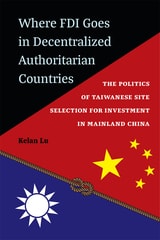
Where FDI Goes in Decentralized Authoritarian Countries
The Politics of Taiwanese Site Selection for Investment in Mainland ChinaKelan Lu
University of Michigan Press, 2023
Among all the decentralized authoritarian countries, China is distinctive not only because of its emergence as one of the largest foreign direct investment (FDI) recipient countries with one of the highest levels of fiscal decentralization, but also because of the combination of its fiscal decentralization and the cadre promotion system as incentive institutions for attracting FDI inflows. China is an important case to empirically investigate the impact of fiscal autonomy on adversarial investment because it has become the largest investment destination of its long-term adversary, Taiwan, with Taiwanese FDI being among the largest FDI in mainland China. Given the special role played by local Chinese governments in attracting and hosting Taiwanese FDI, it is important to study the differences between where Taiwanese FDI and other FDI goes.
Given the uniqueness of the China case and that of Taiwanese investment in mainland China, this book explores the following questions. What determines where FDI goes in authoritarian countries like China? Fiscal decentralization has been argued to be a driving force of skyrocketing FDI inflows in China due to its impact on local governments’ incentives. However, is the impact of fiscal autonomy on FDI monolithic with the dynamically changing levels of FDI inflows at the lower administrative levels in China, especially with its special cadre management system? Does the impact of fiscal decentralization on FDI strengthen or weaken or stay the same when attracting FDI inflows from adversarial states? And what are the implications of such adversarial investment—especially as it diffuses from coastal cities to the interior regions, or from key cities to peripheral regions—of decentralized authoritarian countries targeted by this investment?
Which Way Goes Capitalism?
In Search of Adequate Policies in a Dramatically Changing WorldDaniel Daianu
Central European University Press, 2009
Why Kosovo Matters
Denis MacShane
Haus Publishing, 2011
Why They Die
Civilian Devastation in Violent ConflictDaniel Rothbart and Karina V. Korostelina
University of Michigan Press, 2013
Why do civilians suffer most during times of violent conflict? Why are civilian fatalities as much as eight times higher, calculated globally for current conflicts, than military fatalities? In Why They Die, Daniel Rothbart and Karina V. Korostelina address these questions through a systematic study of civilian devastation in violent conflicts. Pushing aside the simplistic definition of war as a guns-and-blood battle between two militant groups, the authors investigate the identity politics underlying conflicts of many types. During a conflict, all those on the opposite side are perceived as the enemy, with little distinction between soldiers and civilians. As a result, random atrocities and systematic violence against civilian populations become acceptable.
Rothbart and Korostelina devote the first half of the book to case studies: deportation of the Crimean Tatars from the Ukraine, genocide in Rwanda, the Lebanon War, and the war in Iraq. With the second half, they present new methodological tools for understanding different types of violent conflict and discuss the implications of these tools for conflict resolution.
Win, Lose, or Draw
Domestic Politics and the Crucible of WarAllan C. Stam III
University of Michigan Press, 1996

Witness through Encounter
The Diplomacy of Benedict XVIBernard J. O'Connor
St. Augustine's Press, 2019
Appealing to dialogue is often just a safe way of referring to something negative, or at best blandly neutral: the avoidance of conflict, the denial of similarity, not stirring deep-seated disagreement, etc. When Bernard o’Connor says pope Benedict XVI facilitated dialogue, however, he means something quite positive, very much tangible and certainly transformative. In providing an account of the pope’s interactions with various groups of the international community, O’Connor attempts to convey Benedict XVI’s diplomacy as encounter, where even in the sphere of international relations exhortations to “dialogue” are invitations to see more clearly and be moved as much as move.
To dialogue is to embrace, revise perception such that our approaches to the great questions of our day are not simply shared but correct. As O’Connor writes, “Pope Benedict attempts to promote the outlook that a renewed emphasis upon objective, critical and structured philosophical reasoning positions practice, diplomatic and otherwise, to regain its lost foundation and framework. the quest for integrity, if nothing else, should motivate our fidelity to academic pursuit, to intellectual investigation, and to rigorous interdisciplinary inquiry. so influenced, practice will then reject what is arbitrary and be guided by what is time-tested and enduring.”
O’Connor illustrates true dialogue emerging from the encounter, and in turn provides scores of characteristics of this encounter as it unfolds in papal diplomacy. In providing scores of addresses and speeches to various bodies, O’Connor presents pope Benedict XVI as an example of effective diplomacy that treats the meetings on the world stage as engaging in true dialogue. encounter is the true basis of dialogue and one that allows it to open to what is truly a catalyst for change toward cooperation––witness, both personal and collective. As o’Connor shows, “where there is authentic encounter, as meeting in mutual trust, what arises is context for witness.” If authentic even the diplomatic encounter has the means to deepen and transform one’s being.
Witness Through Encounter intends to fulfill multiple needs. the diplomatic approach exemplified herein is singular and worthy of study among political scientists, sociologists, philosophers and diplomats eager to embrace a worldview that is more personal than simply humanistic. this work will also be useful in inter-religious settings. An additional advantage of O’Connor’s presentation of Benedict XVI’s diplomatic approach, his witness through encounter, is that it contains insight valuable to the scholar alongside the resources used.
World Politics Simulations in a Global Information Age
Hemda Ben-Yehuda, Luba Levin-Banchik, and Chanan Naveh
University of Michigan Press, 2015

World Politics and International Law
Francis Anthony Boyle
Duke University Press, 1985
In the second part, the author dissects the Entebbe raid, where Israeli forces rescued a group of hostages being detained by hijackers at a Ugandan airport. His analysis shows the deficiencies of the international system in dealing with such a complex issue, where several contradictory principles of international law could be applied and were defended by various protagonists.
The third part starts with a parallel problem--the Iranian hostages crisis, where a group of U.S. officials found themselves in an unprecedented situation of being captured by a band of students. A critical analysis of the handling of this problem by the Carter Administration is followed by vignettes of other crises faced by the Administration and by its successor, the Reagan Administration. This part is less analytical and more prescriptive. The author is no long satisfied with pointing out what went wrong; instead, he departs from the usual hands-off policy of political scientists and tries to indicate how much better each situation could have been handled if the decision makers had been paying more attention to international law and international organizations. The theme is slowly developed that in the long run national interest is better served not by practicing power politics and relying on the use of threat of force but by strengthening those international institutions that can provide a neutral environment for first slowing down a crisis and then finding an equitable solution acceptable to most of the parties in conflict.
The value of this book lies primarily in giving the reader a real insight into several important issues of today that are familiar to most people only from newspaper headlines and television news. While not everybody can agree with all his criticisms of the mistakes of various governments, there is an honest attempt by the author to present issues impartially and to let the blame fall where it may. Being both an international lawyer and a political scientist, the author has had the advantage of combining the methodology of these two social sciences into a rich tapestry with some startling shades and tones.
World Rule
Accountability, Legitimacy, and the Design of Global GovernanceJonathan GS Koppell
University of Chicago Press, 2010
Dilemmas from climate change to financial meltdowns make it clear that global interconnectedness is the norm in the twenty-first century. As a result, global governance organizations (GGOs)—from the World Trade Organization to the Forest Stewardship Council—have taken on prominent roles in the management of international affairs. These GGOs create and promulgate rules to address a host of pressing problems. But as World Rule reveals, they struggle to meet two challenges: building authority despite limited ability to impose sanctions and maintaining legitimacy while satisfying the demands of key constituencies whose support is essential to a global rulemaking regime.
Through a novel empirical study of twenty-five GGOs, Jonathan GS Koppell provides a clearer picture of the compromises within and the competition among these influential institutions by focusing attention on their organizational design. Analyzing four aspects of GGO organization in depth—representation and administration, the rulemaking process, adherence and enforcement, and interest group participation—Koppell describes variation systemically, identifies patterns, and offers explanations that link GGO design to the fundamental challenge of accountability in global governance.
Worldly Ethics
Democratic Politics and Care for the WorldElla Myers
Duke University Press, 2013

Worlds Apart
Bosnian Lessons for Global SecuritySwanee Hunt
Duke University Press, 2011