Results by title
167 books match the query 'Iowa' and 10 start with w

Was This Heaven?
A Self-Portrait of Iowa on Early PostcardsLyell D. Jr. Henry
University of Iowa Press, 1995
In the early decades of the twentieth century, Iowans all across the Hawkeye State succumbed to the nationwide craze for exchanging photographic postcards, mailing each other thousands of images—serious and whimsical—of Uncle Bob and Baby Dora, the Sunday school outing, train wrecks, the Fourth of July celebration, the merchants' carnival, the record-setting blizzard following the bin-busting harvest, the new courthouse, Ackley's Sauer-Kraut Band. Now, thanks to the generosity of David A. Wilson, whose ample collection of photographic cards would be the envy of those early Iowans, Lyell Henry has organized more than two hundred postcards into eight reflective chapters that create a beguiling collective portrait of Iowa life and culture from 1905 to 1919.
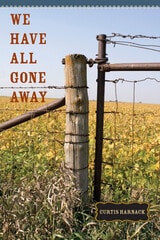
We Have All Gone Away
Curtis Harnack
University of Iowa Press, 1973
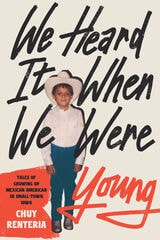
We Heard It When We Were Young
Renteria, Chuy
University of Iowa Press, 2021
Renteria looks past the public celebrations of diversity to dive into the private tensions of a community reflecting the changing American landscape. There are culture clashes, breakdancing battles, fistfights, quinceañeras, vandalism, adventures on bicycles, and souped-up lowriders, all set to an early 2000s soundtrack. Renteria and his friends struggle to find their identities and reckon with intergenerational trauma and racism in a town trying to do the same. A humorous and poignant reflection on coming of age, We Heard It When We Were Young puts its finger on a particular cultural moment at the turn of the millennium.
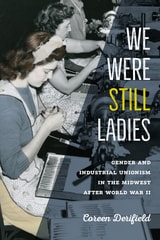
We Were Still Ladies
Gender and Industrial Unionism in the Midwest after World War IICoreen Derifield
University of Iowa Press, 2025
How did this transition into industrial work affect a woman’s sense of self? How did this new workforce change the dynamic of families and communities? While women choosing to work outside of the home may seem to have been a mundane decision, it caused tremendous change within families and with household roles. These alterations in daily life rippled throughout midwestern culture and society, even changing the landscape of small towns into decentralized industrial centers.
Wend Your Way
A Guide To Sites Along The Iowa Mormon TrailL. Matthew Chatterley
University of Iowa Press, 2007
Wend Your Way: A Guide to Sites Along the Mormon Trail tells the story of this great movement through Iowa. Tracing the trail from east to west through 12 counties the guide includes:
• Mormon Trail history for each county•Directs visitors to the 27 interpretive roadside panels that were constructed on the trail by U.S. National Park Service and Iowa Mormon Trails Association
•Reproduces the poignant illustrations that author L. Matthew Chatterley drew for these wayside exhibits
•Provides a map and directions by county to guide travelers to the route of the Mormon Trail, sites of Mormon camps and settlements and the interpretive roadside panels
•Lists other locations in southern Iowa that visitors will want to explore
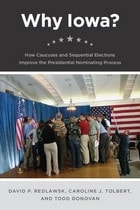
Why Iowa?
How Caucuses and Sequential Elections Improve the Presidential Nominating ProcessDavid P. Redlawsk, Caroline J. Tolbert, and Todd Donovan
University of Chicago Press, 2010
If Barack Obama had not won in Iowa, most commentators believe that he would not have been able to go on to capture the Democratic nomination for president. Why Iowa? offers the definitive account of those early weeks of the campaign season: from how the Iowa caucuses work and what motivates the candidates’ campaigns, to participation and turnout, as well as the lingering effects that the campaigning had on Iowa voters. Demonstrating how “what happens in Iowa” truly reverberates throughout the country, five-time Iowa precinct caucus chair David P. Redlawsk and his coauthors take us on an inside tour of one of the most media-saturated and speculated-about campaign events in American politics.
Considering whether a sequential primary system, in which early, smaller states such as Iowa and New Hampshire have such a tremendous impact is fair or beneficial to the country as a whole, the authors here demonstrate that not only is the impact warranted, but it also reveals a great deal about informational elements of the campaigns. Contrary to conventional wisdom, this sequential system does confer huge benefits on the nominating process while Iowa’s particularly well-designed caucus system—extensively explored here for the first time—brings candidates’ arguments, strengths, and weaknesses into the open and under the media’s lens.
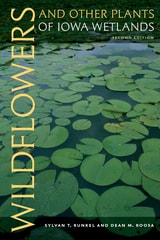
Wildflowers and Other Plants of Iowa Wetlands, 2nd edition
Sylvan T. Runkel, Dean M. Roosa, Thomas Rosburg
University of Iowa Press, 2015
In clear and accessible prose, authors Sylvan Runkel and Dean Roosa provide common, scientific, and family names; the Latin or Greek meaning of the scientific names; habitat and blooming times; and a complete description. Plants are presented by habitat (terrestrial or aquatic), then refined by habit (e.g., emergent, floating, or submerged) or taxonomic group (e.g., ferns and allies or trees, shrubs, and vines). Particularly interesting is the information on the many ways in which Native Americans and early pioneers used these plants for everything from pain relief to tonics to soup and the ways that wildlife today use them for food and shelter. Each of the more than 150 species accounts is accompanied by a brilliant full-page color photograph by botanist Thomas Rosburg, who has also updated the nomenclature and descriptions for certain species.
After decades of being considered an enemy of the settler, the farmer, and the citizen, Iowa’s wetlands have come into their own. We are finally caring for these important habitats. Runkel and Roosa’s updated field companion will be a valuable guide to today’s preservation and restoration initiatives.
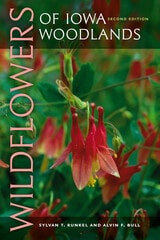
Wildflowers of Iowa Woodlands
Sylvan T. Runkel
University of Iowa Press, 2009
The species accounts are accompanied by brilliant full-page color photographs by Larry Stone, Thomas Rosburg, and Carl Kurtz. In clear, straightforward, and accessible prose, authors Sylvan Runkel and Alvin Bull provide common, scientific, and family names; the Latin or Greek meaning of the scientific names; habitat and blooming times; and a complete description of plant, flower, and fruit. Particularly interesting is the information on the many ways in which Native Americans and early pioneers used these plants for everything from pain relief to insecticides to tonics.
Iowa’s original savannas, woodlands, and forests were cleared with amazing thoroughness, yet enough beauty and diversity remain to give joy to hikers, birders, and mushroomers. Wildflowers of Iowa Woodlands will inspire both amateurs and professionals with the desire to learn more about the wonders of today’s woodlands.
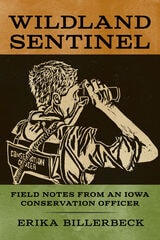
Wildland Sentinel
Field Notes from an Iowa Conservation OfficerErika Billerbeck
University of Iowa Press, 2020
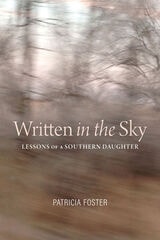
Written in the Sky
Lessons of a Southern DaughterPatricia Foster
University of Alabama Press, 2023
In Written in the Sky: Lessons of a Southern Daughter, Patricia Foster presents a double portrait of place and family, a book of deeply personal essays that interrogate the legacy of racial tensions in the South, the constriction of caste and gender, and the ways race, class, and white privilege are entwined in her family story. After interviewing girls at Booker T. Washington High School in Tuskegee, Alabama, visiting the National Memorial for Peace and Justice in Montgomery, Alabama, and exploring Africatown in Plateau, Alabama, Patricia Foster was moved to reflect on the racial scars and crossroads in her southern past as well as to reckon with the intimate places of her own wounding and grief.
The story of place, she discovers, emerges not only from family histories and cultural traditions but also from wrestling with a culture’s irreconcilable ideas: the hard push to determine what matters. What matters to her are the shadow stories beneath our mythologies, the complicated and radiant narratives that must be excavated and reckoned with, stories that have no neat or binary resolution, stories full of luminous moments and riveting facts, and stories where the secrets hide. Written in the Sky presents the best of nonfiction storytelling: searingly honest portraits, dramatic encounters, and lyrical narratives that will interest teachers and students as well as social justice advocates, policymakers, and readers compelled by stories of awakening and the white-hot beauty of language.