Results by title
108 books match the query 'Knowledge and learning' and 7 start with w

Wallace Stevens And The Apocalyptic Mode
Woodland, Malcolm
University of Iowa Press, 2005
This study begins with an examination of the textual and generic issues surrounding apocalypse, culminating in the idea of apocalyptic language as a form of “discursive mastery” over the mayhem of events. Woodland provides an informative religious/historical discussion of apocalypse and, engaging with such critics as Parker, Derrida, and Fowler, sets forth the paradoxes and complexities that eventually challenge any clear dualities between apocalyptic and antiapocalyptic thinking.
Woodland then examines some of Stevens’s wartime essays and poems and describes Stevens’s efforts to salvage a sense of self and poetic vitality in a time of war, as well as his resistance to the possibility of cultural collapse. Woodland discusses the major postwar poems “Credences of Summer” and “The Auroras of Autumn” in separate chapters, examining the interaction of (anti)apocalyptic modes with, respectively, pastoral and elegy.
The final chapter offers a perspective on Stevens’s place in literary history by examining the work of a contemporary poet, Jorie Graham, whose poetry quotes from Stevens’s oeuvre and shows other marks of his influence. Woodland focuses on Graham's 1997 collection The Errancy and shows that her antiapocalyptic poetry involves a very different attitude toward the possibility of a radical break with a particular cultural or aesthetic stance.
Wallace Stevens and the Apocalyptic Mode, offering a new understanding of Stevens’s position in literary history, will greatly interest literary scholars and students.
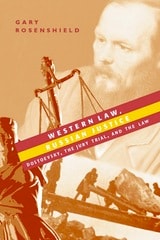
Western Law, Russian Justice
Dostoevsky, the Jury Trial, and the LawGary Rosenshield
University of Wisconsin Press, 2005

White Light
The Poetry of Alberto BlancoRonald J. Friis
Bucknell University Press, 2022
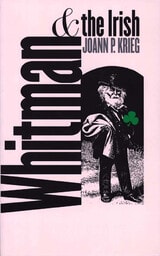
Whitman and the Irish
Joann P. Krieg
University of Iowa Press, 2000
Though Walt Whitman created no Irish characters in his early works of fiction, he did include the Irish as part of the democratic portrait of America that he drew in Leaves of Grass. He could hardly have done otherwise. In 1855, when the first edition of Leaves of Grass was published, the Irish made up one of the largest immigrant populations in New York City and, as such, maintained a cultural identity of their own. All of this “Irishness” swirled about Whitman as he trod the streets of his Mannahatta, ultimately becoming part of him and his poetry. As members of the working class, famous authors, or close friends, the Irish left their mark on Whitman the man and poet. In Whitman and the Irish, Joann Krieg convincingly establishes their importance within the larger framework of Whitman studies.
Focusing on geography rather than biography, Krieg traces Whitman's encounters with cities where the Irish formed a large portion of the population—New York City, Boston, Camden, and Dublin—or where, as in the case of Washington, D.C., he had exceptionally close Irish friends. She also provides a brief yet important historical summary of Ireland and its relationship with America.
Whitman and the Irish does more than examine Whitman's Irish friends and acquaintances: it adds a valuable dimension to our understanding of his personal world and explores a number of vital questions in social and cultural history. Krieg places Whitman in relation to the emerging labor culture of ante-bellum New York, reveals the relationship between Whitman's cultural nationalism and the Irish nationalism of the late nineteenth century, and reflects upon Whitman's involvement with the Union cause and that of Irish American soldiers.
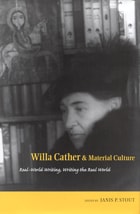
Willa Cather and Material Culture
Real-World Writing, Writing the Real WorldEdited by Janis P. Stout
University of Alabama Press, 2004
Willa Cather and Material Culture is a collection of 11 new essays that tap into a recent and resurgent interest among Cather scholars in addressing her work and her career through the lens of cultural studies. One of the volume's primary purposes is to demonstrate the extent to which Cather did participate in her culture and to correct the commonplace view of her as a literary connoisseur set apart from her times.
The contributors explore both the objects among which Cather lived and the objects that appear in her writings, as well as the commercial constraints of the publishing industry in which her art was made and marketed. Essays address her relationship to quilts both personally and as symbols in her work; her contributions to domestic magazines such as Home Monthly and Woman's Home Companion; the problematic nature of Hollywood productions of her work; and her efforts and successes as a businesswoman. By establishing the centrality of material matters to her writing, these essays contribute to the reclaiming of Cather as a modernist and highlight the significance of material culture, in general, to the study of American literature.
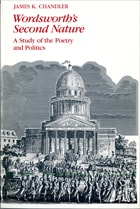
Wordsworth's Second Nature
A Study of the Poetry and PoliticsJames Chandler
University of Chicago Press, 1984
Central to the discussion, which restores Wordsworth to both the French and English contexts in which he matured, is a consideration of his relation to Rousseau and Burke. Chandler maintains that by the time Wordsworth set forth his "program for poetry" in 1798, he had turned away from the Rousseauist idea of nature that had informed his early republican writings. He had already become a poet of what Burke called "second nature"–human nature cultivated by custom, habit, and tradition–and an opponent of the quest for first principles that his friend Coleridge could not forsake. In his analysis of the poetry, Chandler suggests that even Wordsworth's most apparently private moments, the lyrical "spots of time," ideologically embodied the uncalculated habits of an oral narrative discipline and a native English mind.
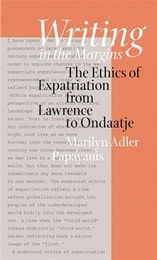
Writing in the Margins
The Ethics of Expatriation from Lawrence to OndaatjeMarilyn Adler Papayanis
Vanderbilt University Press, 2005