Results by title
486 books match the query 'LGBTQ+' and 25 start with w
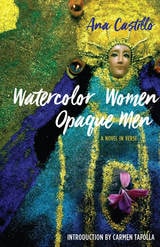
Watercolor Women Opaque Men
A Novel in VerseAna Castillo, introduction by Carmen Tafolla
Northwestern University Press, 2017
In this updated edition of Ana Castillo’s celebrated novel in verse, featuring a new introduction by Poet Laureate of Texas Carmen Tafolla, we revisit the story’s spirited heroine, known only as “Ella” or “She,” as she takes us through her own epic journey of self-actualization as an artist and a woman. With a remarkable combination of tenderness, lyricism, wicked humor, and biting satire, Castillo dramatizes Ella’s struggle through poverty as a Chicano single mother at the threshold of the twenty-first century, fighting for upward mobility while trying to raise her son to be independent and self-sufficient. Urged on by the gods of the ancients, Ella’s life interweaves with those of others whose existences are often neglected, even denied, by society’s status quo. Castillo’s strong rhythmic voice and exploration of such issues as love, sexual orientation, and cultural identity will resonate with readers today as much as they did upon the book’s original publication more than ten years ago. This expanded edition also includes a short preface by the author, as well as a glossary, a reader’s guide, and a list of additional suggested readings.

We Are Changed to Deer at the Broken Place
Kelly Weber
Tupelo Press, 2022
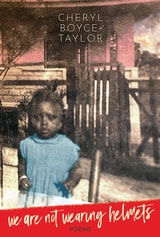
We Are Not Wearing Helmets
PoemsCheryl Boyce-Taylor
Northwestern University Press, 2022
Born in Trinidad and having grown up in Queens, Boyce‑Taylor creates a framework for her own experience out of the life experiences and work of beloved Black women in history. She salutes the women who have lifted her, including Audre Lorde, Fannie Lou Hamer, Ntozake Shange, and Winnie Mandela, as well as her mother, Eugenia Boyce, and her beloved daughter‑in‑law, Deisha Head Taylor.
The poems in this collection are unapologetic, fierce, and confrontational while remaining caring and intimate. They stand strong in the face of adversity and boldly demand what is owed while still honoring and cherishing what is loved.
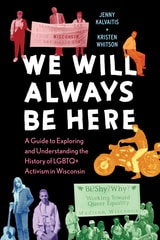
We Will Always Be Here
A Guide to Exploring and Understanding the History of LGBTQ+ Activism in WisconsinJenny Kalvaitis
Wisconsin Historical Society Press, 2021
We Will Always Be Here shines a light on powerful and often untold stories from Wisconsin’s history, featuring individuals across a wide spectrum of identities and from all corners of the state. The LGBTQ+ people, allies, and activists in this guide changed the world by taking steps that young people can take today—by educating themselves, telling their own stories, being true to themselves, building communities, and getting active. The aim of this celebratory book is not only to engage young people in Wisconsin’s LGBTQ+ history, but also to empower them to make positive change in the world.
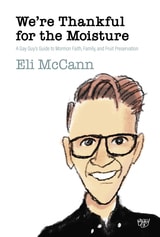
We're Thankful for the Moisture
A Gay Guy's Guide to Mormon Faith, Family, and Fruit PreservationMcCann, Eli
Signature Books, 2026
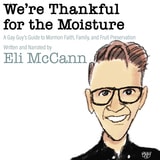
We're Thankful for the Moisture
A Gay Guy's Guide to Mormon Faith, Family, and Fruit PreservationMcCann, Eli
Signature Books, 2026
Whale Aria
Rajiv Mohabir
Four Way Books, 0
What Do Gay Men Want?
An Essay on Sex, Risk, and SubjectivityDavid M. Halperin
University of Michigan Press, 2010
“Compelling, timely, and provocative. The writing is sleek and exhilarating. It doesn’t waste time telling us what it will do or what it has just done—it just does it.”
—Don Kulick, Professor of Anthropology, New York University
How we can talk about sex and risk in the age of barebacking—or condomless sex—without invoking the usual bogus and punitive clichés about gay men’s alleged low self-esteem, lack of self-control, and other psychological “deficits”? Are there queer alternatives to psychology for thinking about the inner life of homosexuality? What Do Gay Men Want? explores some of the possibilities.
Unlike most writers on the topic of gay men and risky sex, David Halperin liberates gay male subjectivity from psychology, demonstrating the insidious ways in which psychology’s defining opposition between the normal and the pathological subjects homosexuality to medical reasoning and revives a whole set of unexamined moral assumptions about “good” sex and “bad” sex.
In particular, Halperin champions neglected traditions of queer thought, including both literary and popular discourses, by drawing on the work of well-known figures like Jean Genet and neglected ones like Marcel Jouhandeau. He shows how the long history of of gay men’s uses of “abjection” can offer an alternative, nonmoralistic model for thinking about gay male subjectivity, something which is urgently needed in the age of barebacking.
Anyone searching for nondisciplinary ways to slow the spread of HIV/AIDS among gay men—or interested in new modes of thinking about gay male subjectivity—should read this book.
David M. Halperin is W. H. Auden Collegiate Professor of the History and Theory of Sexuality, Professor of English, Professor of Women’s Studies, Professor of Comparative Literature, and Adjunct Professor of Classical Studies at the University of Michigan.

What Drowns the Flowers in Your Mouth
A Memoir of BrotherhoodRigoberto González
University of Wisconsin Press, 2018
Descending into a dark emotional space that compromises their mental and physical health, the brothers eventually find hope in aiding each other. This is an honest and revealing window into the complexities of Latino masculinity, the private lives of men, and the ways they build strength under the weight of grief, loss, and despair.
What Others Say About Us
StoriesJonathan Ayala
University of Arizona Press, 2027
A man is visited by his now famous ex-boyfriend, and he ponders a life that might have been. A new roommate destabilizes the close friendship between two twenty-somethings. A homesick immigrant plans an eightieth birthday party for the neighborhood grouch. A grisly crime sweeps up an unassuming history teacher, throwing him into the role of outcast.
El Paso serves as a backdrop for many of stories in this deeply human debut collection by Jonathan Ayala. Offering a portrait of contemporary gay Chicano lives, Ayala’s characters contend with the complexities found in navigating belonging, homecoming, falling in love, falling out of love, friendship, and what it means to be Mexican American in the United States today.
These thirteen emotionally rich, character-driven stories are filled with humor, tenderness, and insight into love, friendship, and community.

What Sex Is Death?
Dario Bellezza, Selected and Translated by Peter Covino
University of Wisconsin Press, 2025
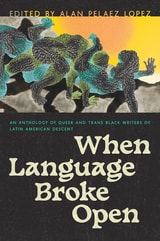
When Language Broke Open
An Anthology of Queer and Trans Black Writers of Latin American DescentEdited by Alan Pelaez Lopez
University of Arizona Press, 2023
By exploring themes of memory, care, and futurity, these contributions expand understandings of Blackness in Latin America, the Caribbean, and their U.S.-based diasporas. The volume offers up three central questions: How do queer and/or trans Black writers of Latin American descent address memory? What are the textures of caring, being cared for, and accepting care as Black queer and/or trans people of Latin American descent? And how do queer and trans embodiments help us understand and/or question the past and the present, and construct a Black, queer, and trans future?
The works collected in this anthology encompass a multitude of genres—including poetry, autobiography, short stories, diaries, visual art, and a graphic memoir—and feature the voices of established writers alongside emerging voices. Together, the contributors challenge everything we think we know about gender, sexuality, race, and what it means to experience a livable life.

Where Bones Dance
An English Girlhood, An African WarNina Newington
University of Wisconsin Press, 2007
Stories are layered upon stories: Anna's grandmother tells stories about life as a white woman on the Gold Coast; the clairvoyant and closeted "Aunt" Elsie gives Anna a story of transformation to hold onto in the coming tumult of adolescence. Yet Where Bones Dance also spirals down to the stories that are not told—sexual abuse, the myth of benign colonialism, the chaos of postcolonial Africa. Sensual and fantastical by turns, this moving, funny, immensely readable book delivers an understanding of the interplay of sexuality, gender, race, and war that is sophisticated beyond the years of its intrepid narrator.
Best Books for General Audiences, selected by the American Association of School Librarians and the Public Library Association

White Wedding
Kathleen J. Woods
University of Alabama Press, 2022
An enigmatic woman wanders from a pleasure mansion to a backyard wedding, upending the lives of everyone present
No one knows the woman at the wedding. Not the caterer, an easy target, succumbing to her advances. Not the pregnant bride or her tangled family, trying to spin a fairytale wedding under a melting hot summer sun. Not even the bride’s stepsister, Charlotte, who, in the middle of the night and despite her better judgment, allows this wandering wedding crasher into her car.
Crusted in dried blood and other bodily fluids, the woman exists in layers of sense and story, a nesting doll of pornographic tales in which fantasy and banality collide and blur. In this novel that is at once visceral, vivid, and spare, the uninvited guest gives each of those she meets what they want, whether they like it or not.
Here writhe distinct bodies in distinct ecstasies, echoing and defying inherited American narratives about gender, shame, and pleasure. With an edge of humor and horror, Woods explores if —and how—we consent to our own desires.

Willow Hammer
Patrick Donnelly
Four Way Books, 2025
In response to this crime, Donnelly traces the consequences of ignorance, denial, bargaining, complicity, and finally revelation that reverberated through his and his loved ones’ lives for five decades. His discovery of this catalyzing violation not only recontextualizes the siblings’ shared history, but inflects the present as—finding analogues of his sister’s abuse in the classical canon—he remembers his escape from home into spiritual disciplines and the study of dead languages. Revisiting the evolution of his own sexuality, he remembers singing a Byrd Mass after a night at a gay bathhouse, characterizing the tenor and bass as “two wrestling saints,” “lowest of the four voices— / once I thought I saw them kiss each other’s faces.”
And that—recovering glimpses of his sister’s unknowable interiority, reckoning with a truth that is unbearable and inescapable—is this book’s difficult and endless work. In the wake of a particular kind of harm, Willow Hammer seems to suggest, justice may be a wishful concept—but that doesn’t preclude testimony and salvage. “Now” documents the poet’s arrival at this compromise: “I remember my / little sister that was, / little willow of glass / upon whom he laid / his hammer hands.” There is no revocation of the hands, but with tenderness, wit, and fury, Donnelly’s lyrics refuse to let their shadow obscure his sister’s recovery of her own agency.
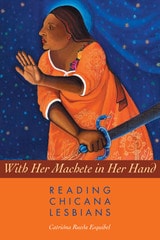
With Her Machete in Her Hand
Reading Chicana LesbiansBy Catrióna Rueda Esquibel
University of Texas Press, 2006
With the 1981 publication of the groundbreaking anthology This Bridge Called My Back: Writings by Radical Women of Color, Cherríe Moraga and Gloria Anzaldúa ushered in an era of Chicana lesbian writing. But while these two writers have achieved iconic status, observers of the Chicana/o experience have been slow to perceive the existence of a whole community—lesbian and straight, male as well as female—who write about the Chicana lesbian experience. To create a first full map of that community, this book explores a wide range of plays, novels, and short stories by Chicana/o authors that depict lesbian characters or lesbian desire.
Catrióna Rueda Esquibel starts from the premise that Chicana/o communities, theories, and feminisms cannot be fully understood without taking account of the perspectives and experiences of Chicana lesbians. To open up these perspectives, she engages in close readings of works centered around the following themes: La Llorona, the Aztec Princess, Sor Juana Inés de la Cruz, girlhood friendships, rural communities and history, and Chicana activism. Her investigation broadens the community of Chicana lesbian writers well beyond Moraga and Anzaldúa, while it also demonstrates that the histories of Chicana lesbians have had to be written in works of fiction because these women have been marginalized and excluded in canonical writings on Chicano life and experience.
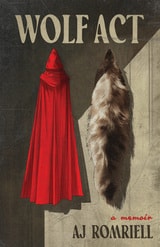
Wolf Act
AJ Romriell
University of Wisconsin Press, 2025
Through linked personal essays crafted in lyric, fabulist, and fragmented forms, Wolf Act charts a young man’s transformation. Weaving together wolfish fairy tales and mythology, Mormon theology and practice, piercings and tattoos, cave explorations, ghost stories, and more, Romriell explores a childhood of hiding, a familial reckoning, a religious exodus, and an effort to understand one’s life as worth saving—even when the meaning of the word “saving” must be reimagined.

Women Lovers, or The Third Woman
Natalie Clifford Barney, Edited and translated by Chelsea Ray, Introduction by Melanie C. Hawthorne
University of Wisconsin Press, 2016

Women Together/Women Apart
Portraits of Lesbian ParisLatimer, Tirza True
Rutgers University Press, 2005
What does it mean to look like a lesbian? Though it remains impossible to conjure a definitive image that captures the breadth of this highly nuanced term, today at least we are able to consider an array of visual representations that have been put into circulation by lesbians themselves over the last six or seven decades. In the early twentieth century, though, no notion of lesbianism as a coherent social or cultural identity yet existed.
In Women Together/Women Apart, Tirza True Latimer explores the revolutionary period between World War I and World War II when lesbian artists working in Paris began to shape the first visual models that gave lesbians a collective sense of identity and allowed them to recognize each other. Flocking to Paris from around the world, artists and performers such as Romaine Brooks, Claude Cahun, Marcel Moore, and Suzy Solidor used portraiture to theorize and visualize a "new breed" of feminine subject. The book focuses on problems of feminine and lesbian self-representation at a time and place where the rights of women to political, professional, economic, domestic, and sexual autonomy had yet to be acknowledged by the law. Under such circumstances, same-sex solidarity and relative independence from men held important political implications.
Combining gender theory with visual, cultural, and historical analysis, Latimer draws a vivid picture of the impact of sexual politics on the cultural life of Paris during this key period. The book also illuminates the far-reaching consequences of lesbian portraiture on contemporary constructions of lesbian identity.
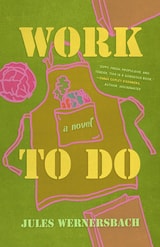
Work to Do
Jules Wernersbach
University of Iowa Press, 2026
When Eleanor founded Guadalupe Street Co-op in the early 1980s, she was in her mid-twenties and madly in love with her girlfriend, Meg. Together, they envisioned an idyllic grocery store owned by its workers and customers.
Forty years later, Guadalupe Street Co-op is an iconic Austin business with a loyal customer base, an antiquated business model, and a disgruntled staff. Roz, one of the store’s senior managers, is too caught up stalking her ex-wife online to notice that her girlfriend, Molly, is plotting with her coworkers to unionize. Roz also doesn’t see that Molly is not-so-secretly in a situationship with Randy, the dairy manager leading their collective.
Unfolding over the course of a single week during Texas hurricane season, Work to Do pings between the co-op’s first year and present day, as the unionization bid reaches fever pitch. The wind howls, the power goes out, and water creeps through the front door as questions of who owns the grocery store and who has a right to its future are posed. And will the workers ever be paid enough to buy the organic groceries they shelve?
Worms, Dirt
Daniel Barban Levin
Four Way Books, 2026
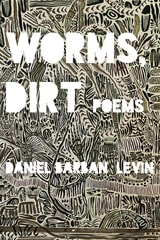
“The / drugs, the page, none of it is here. That was years ago,” Daniel Barban Levin writes in his debut collection of poems, trying to create an inventory of blank spaces, to describe the persistent presence — the psychological furniture — of what no longer exists. “There was a room. I lived there. / Now, I can’t find it anymore.”
Written in the wake of the media storm surrounding the revelation of the Sarah Lawrence cult, interrogating the constructs of confessionalism and journalistic epistemology after the release of memoirs and viral articles and a Hulu docu-series, Worms, Dirt considers the soil beneath the story playing out aboveground. These poems are a unique telling of two kinds of departure – leaving a cult and exiting a relationship. They weave together fragments and elisions of memory — “Was any of it right? Did any of it happen the way / You remembered?” — reverse engineering a story from the aftermath — “The piece you still can’t find. It must be true. He was // Gentle. Sometimes, he was gentle.” Devastating and open-hearted, these pages transcribe transformation and reconstruction of self, survival, reckoning. They confront the intimate betrayals of belonging to a high-control group or seeking love from the wrong romantic relationships. These lyrics confront horror and a fragile hope in their recognition of this inconceivable thing, the soft flesh smothered by the scar: “The hands’ capacity / For gentleness even as you watched them, in disbelief, dismantle you.”
Traversing New York and New Hampshire and landing in Los Angeles, Levin treats the things we leave behind as the material from which we grow. Most striking about Worms, Dirt is its lyrical metacommentary — as a book about writing a book, it constantly refuses the constraints of the imposed narrative memoir and the parasitic appetite for sensationalism, easily commodified true crime, and flattening characterizations of victims and villains. “For I am at work, writing this / For I have accrued so many reasons to live.”
Writing Desire
Sixty Years of Gay AutobiographyBertram J. Cohler
University of Wisconsin Press, 2007
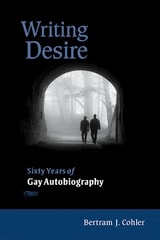
By contrasting the personal experience of these disparate writers, Cohler illustrates the social transformations that these men helped shape. Among Cohler's diverse subjects is Alan Helms, whose journey from Indiana to New York's gay society represents the passage of men who came of age in the 1950s and 1960s, when homosexuality was considered a hidden "disease." The liberating effects of Stonewall's aftermath are chronicled in the life of Arnie Kantrowitz, the prototypical activist for gay rights in the 1970s and the founder the Gay and Lesbian Alliance against Defamation. The artistic works of Tim Miller and Mark Doty evoke loss and shock during of the early stages of the AIDS epidemic in the 1980s. Cohler rounds out this collective group portrait by looking at the newest generation of writers in the Internet age via the blog of BrYaN, who did the previously unthinkable: he "outed" himself to millions of people.
A compelling mix of social history and personal biography, Writing Desire distills the experience of three generations of gay America.

Writing the Love of Boys
Origins of Bishonen Culture in Modernist Japanese LiteratureJeffrey Angles
University of Minnesota Press, 2010
Jeffrey Angles focuses on key writers, examining how they experimented with new language, genres, and ideas to find fresh ways to represent love and desire between men. He traces the personal and literary relationships between contemporaries such as the poet Murayama Kaita, the mystery writers Edogawa Ranpo and Hamao Shiro, the anthropologist Iwata Jun’ichi, and the avant-garde innovator Inagaki Taruho.
Writing the Love of Boys shows how these authors interjected the subject of male–male desire into discussions of modern art, aesthetics, and perversity. It also explores the impact of their efforts on contemporary Japanese culture, including the development of the tropes of male homoeroticism that recur so often in Japanese girls’ manga about bishonen love.

Wrong
A Critical Biography of Dennis CooperDiarmuid Hester
University of Iowa Press, 2020
Dennis Cooper is one of the most inventive and prolific artists of our time. Working in a variety of forms and media since he first exploded onto the scene in the early 1970s, he has been a punk poet, a queercore novelist, a transgressive blogger, an indie filmmaker—each successive incarnation more ingenious and surprising than the last. Cooper’s unflinching determination to probe the obscure, often violent recesses of the human psyche have seen him compared with literary outlaws like Rimbaud, Genet, and the Marquis de Sade.
In this, the first book-length study of Cooper’s life and work, Diarmuid Hester shows that such comparisons hardly scratch the surface. A lively retrospective appraisal of Cooper’s fifty-year career, Wrong tracks the emergence of Cooper’s singular style alongside his participation in a number of American subcultural movements like New York School poetry, punk rock, and radical queercore music and zines. Using extensive archival research, close readings of texts, and new interviews with Cooper and his contemporaries, Hester weaves a complex and often thrilling biographical narrative that attests to Cooper’s status as a leading figure of the American post–War avant-garde.
water/tongue
mai c. doan
Omnidawn, 2019