Results by title
998 books match the query 'Life' and 34 start with w
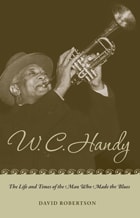
W. C. Handy
The Life and Times of the Man Who Made the BluesDavid Robertson
University of Alabama Press, 2011
Normal0falsefalsefalseEN-USX-NONEX-NONEMicrosoftInternetExplorer4
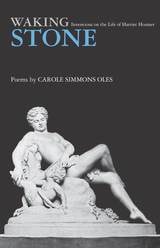
Waking Stone
Inventions on the Life of Harriet HosmerCarole Simmons Oles
University of Arkansas Press, 2006

Walking George
The Life of George John Beto and the Rise of the Modern Texas Prison SystemDavid M. Horton
University of North Texas Press, 2005
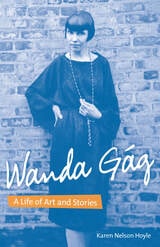
Wanda Gág
A Life of Art and StoriesKaren Nelson Hoyle
University of Minnesota Press, 2009
Now in paper.
At the young age of just 15, Wanda Gág received her dying father's last wish that she take up his dream of becoming a successful artist: "What papa couldn't do, Wanda would have to finish." Wanda assumed the role of head of the household and became the sole means of support for her sick mother and six siblings. Although times were tough, Wanda persevered and eventually became a celebrated artist and author living in New York City.
Karen Nelson Hoyle tells the story of Wanda Gág's eccentric life as a children's book author and traces the significant contributions she made to the genre. Drawn from extensive research of the artist's personal and professional papers and correspondence with friends and contemporaries, Hoyle presents a rich portrait of a gifted artist.

War and Empire
The American Way of LifePaul L. Atwood
Pluto Press, 2010
In this provocative study, Paul Atwood attempts to show Americans that their history is one of constant wars of aggression and imperial expansion.
In his long teaching career, Atwood has found that most students know virtually nothing about America's involvement in the wars of the 20th century, let alone those prior to World War I. War and Empire aims to correct this, clearly and persuasively explaining US actions in every major war since the declaration of independence. The book shows that, far from being dragged reluctantly into foreign entanglements, America's leaders have always picked its battles in order to increase their influence and power, with little regard for the American soldiers and 'enemy' civilians killed or made to suffer in the process.
This book is an eye-opening introduction to the American way of life for undergraduate students of American history, politics and international relations.

Weaving the Threads of Life
The Khita Gyn-Eco-Logical Healing Cult among the YakaRené Devisch
University of Chicago Press, 1993
Drawing on many years among urban and rural Yaka, Devisch analyzes their understanding of existence as a fabric of firmly but delicately interwoven threads of nature, body, and society. The fertility healing ritual calls forth forces, feelings, and meanings that allow women to rejoin themselves to the complex pattern of social and cosmic life. These elaborate rites—whether simulating mortal agony and rebirth, gestation and delivery, or flowering and decay; using music and dance, steambath or massage, dream messages or scarification—are not based on symbols of traditional beliefs. Rather, Devisch shows, the rites themselves generate forces and meaning, creating and shaping the cosmic, physical, and social world of their participants.
In contrast to current theoretical methods such as postmodern or symbolical interpretation, Devisch's praxiological approach is unique in also using phenomenological insights into the intent and results of anthropological fieldwork. This innovative work will have ramifications beyond African studies, reaching into the anthropology of medicine and the body, comparative religious history, and women's studies.
Wetwares
Experiments In Postvital LivingRichard Doyle
University of Minnesota Press, 2003
A dizzying tour of the ways technologies, both real and imagined, can transform humanity
The mind of the machine, the body suspended in time, organs exchanged, thought computed, genes manipulated, DNA samples abducted by aliens: the terrain between science and speculation, fraught with the possibility of technological and perhaps even evolutionary transformations, is the territory Richard Doyle explores in Wetwares. In a manner at once sober and playful, Doyle maps potentials for human transformation by new ecologies of information in the early twenty-first century.
Wetwares ranges over recent research in artificial life, cloning, cryonics, computer science, organ transplantation, and alien abduction. Moving between actual technical practices, serious speculative technology, and science fiction, Doyle shows us emerging scientific paradigms where “life” becomes more a matter of information than of inner vitality—in short, becomes “wetwares” for DNA and computer networks. Viewing technologies of immortality—from cryonics to artificial life—as disciplines for welcoming a thoroughly other future, a future of neither capital, god, human, nor organism, the book offers tools for an evolutionary, transhuman mutation in the utterly unpredictable decades to come.
What Good Is Journalism?
How Reporters and Editors Are Saving America's Way of LifeGeorge Kennedy and Daryl Moen
University of Missouri Press, 2007
To go by today’s critics of the news media—who have created a virtual cottage industry—American journalism has reached a nadir. Yet with all its well-documented faults, journalism is vital to the health of our democracy, the glue of information that holds this complex nation together. This book shows the most important roles that journalism plays in the world’s oldest democracy. Two seasoned educators and practitioners of journalism have assembled a team of writers who look beyond the critics to show that there is much to be praised about the state of American journalism today.
Journalism tells us most of what we know about the world beyond our own experience by going where its audience cannot or will not. It keeps watch on the government and other powerful institutions, exposes wrongdoing and injustice, and shares the endless fascinations of everyday life. Through stories of real people, this book forcefully argues that American journalism is better than its critics admit and a force for good in the lives of both individuals and the nation. Like the exemplary journalism it describes, it offers dozens of instances that show how good journalistic practices enrich the daily lives of citizens and enable them to play their own roles in the democracy.
These essays offer a multifaceted view of the press, tracing the development of free expression through American history and showing how the principles of journalism that we take for granted are playing a revolutionary role in emerging democracies. They report the results of a unique national survey—undertaken for this book—revealing how Americans really view and use the press, and cite the successes of good reporting, from hometown newspapers to NPR. They show how investigative journalism and computer-assisted reporting unearth important truths and even create new knowledge and suggest how citizens can demand the good journalism they need.
What good is journalism? This book spells out the answer through a conversation about journalism and democracy that offers both an antidote to the recent storm of ideologically based criticism of “liberal media” and a demonstration of the true worth of an institution essential to the protection of freedom. It provides today’s readers—and tomorrow’s journalists—a fresh perspective on the press to remind us where we would be without it.
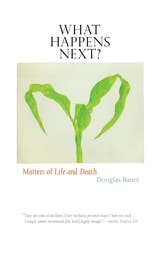
What Happens Next?
Matters of Life and DeathDouglas Bauer
University of Iowa Press, 2013
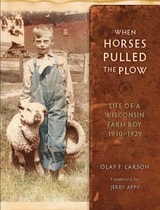
When Horses Pulled the Plow
Life of a Wisconsin Farm Boy, 1910–1929Olaf F. Larson
University of Wisconsin Press, 2011
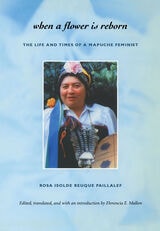
When a Flower Is Reborn
The Life and Times of a Mapuche FeministRosa Isolde Reuque Paillalef, Edited, translated, and with an introduction by Florencia E. Mallon
Duke University Press, 2002
A leading activist during the Pinochet dictatorship, Reuque—a woman, a Catholic, and a Christian Democrat—often felt like an outsider within the male-dominated, leftist Mapuche movement. This sense of herself as both participant and observer allows for Reuque’s trenchant, yet empathetic, critique of the Mapuche ethnic movement and of the policies regarding indigenous people implemented by Chile’s post-authoritarian government. After the 1990 transition to democratic rule, Reuque collaborated with the government in the creation of the Indigenous Development Corporation (CONADI) and the passage of the Indigenous Law of 1993. At the same time, her deepening critiques of sexism in Chilean society in general, and the Mapuche movement in particular, inspired her to found the first Mapuche feminist organization and participate in the 1996 International Women’s Conference in Beijing. Critical of the democratic government’s inability to effectively address indigenous demands, Reuque reflects on the history of Mapuche activism, including its disarray in the early 1990s and resurgence toward the end of the decade, and relates her hopes for the future.
An important reinvention of the testimonial genre for Latin America’s post-authoritarian, post-revolutionary era, When a Flower Is Reborn will appeal to those interested in Latin America, race and ethnicity, indigenous people’s movements, women and gender, and oral history and ethnography.
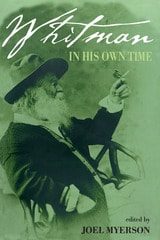
Whitman in His Own Time
A Biographical Chronicle of His Own Life, Drawn from Recollections, Memoirs, and Interviews by Friends and AssociatesJoel Myerson
University of Iowa Press, 2000
Few American writers were as concerned with their public image as was Walt Whitman. He praised his own work in unsigned reviews; he included engravings or photographs of himself in numerous editions of his work; and he assisted in the writing of two biographies of himself. Whitman was also written about extensively by others throughout his lifetime. Whitman in His Own Time is a collection of these contemporary accounts of the "good gray poet."
The interviews with and recollections of Whitman collected by Joel Myerson represent a wide spectrum of accounts—visitors from America and abroad; newspaper interviewers; Whitman's doctor and nurse during his final illness; his literary executors; a student from his early schoolteaching days; and such well-known authors as Bronson Alcott, John Burroughs, and Henry David Thoreau. The selections also paint a well-rounded picture of Whitman, from his early days as a schoolteacher to the moment of his death, and demonstrate a varying range of attitudes toward the poet. Yet throughout the entire collection, Whitman himself holds center stage, and he is seen as vividly today as he was over one hundred years ago. Myerson's introduction to this expanded edition places these accounts of Whitman within the context of the time and discusses new scholarship on Whitman's life.
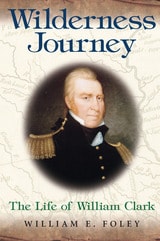
Wilderness Journey
The Life of William ClarkWilliam E. Foley
University of Missouri Press, 2005
Coinciding with the bicentennial in 2004 of the departure of Lewis and Clark’s famed Corps of Discovery, Wilderness Journey fills a major gap in scholarship. Intended for the general reader, as well as for specialists in the field, this fascinating book provides a well-balanced and thorough account of one of America’s most significant frontiersmen.

Wilderness Within
The Life of Sigurd F. OlsonDavid Backes
University of Minnesota Press, 1999
The critically acclaimed biography of this venerable naturalist and writer.
The first biography of this venerable naturalist and writer.
Sigurd Olson (1899-1982) was acknowledged during his lifetime as a leader of the American environmental movement, an emblematic figure for an entire generation of activists. A Wilderness Within is the first biography of this writer, teacher, and activist who was a harbinger of the opening of America’s ecological consciousness.From opposing the building of roads in the wilderness to preserving America’s most treasured wild rivers, Olson was involved in fierce battles over the environment throughout his life. He testified before Congress, spoke at town meetings, and was once even hanged in effigy.But Olson is best known for his many essays that express the wonder, awe, and peace he found in the wilderness. The lyricism and evocative beauty of his prose became a model for nature writers like Barry Lopez and Annie Dillard. Olson’s popular books, including The Singing Wilderness, Listening Point, and Reflections from the North Country, are beloved by generations of readers, with over 300,000 copies sold. A Wilderness Within looks beyond the environmental battles and books to expose the inner forces that drove Sigurd Olson. He rejected his father’s path as a minister and agonized over his own spiritual life, struggled with school and work. Backes details Olson’s painful path to becoming a writer, and the physical and emotional tolls that his activism and writing took of him. For this biography, Backes conducted interviews with Olson’s family and had complete access to Olson’s papers, diaries, correspondence, and photographs. This research is what makes A Wilderness Within the authoritative portrait of one of the greatest environmentalists of the twentieth century.A stunning look at a man with a vision for the natural world and a vision for himself, A Wilderness Within will be essential reading for Olson fans, historians, and outdoors people around the country.David Backes is the author of Canoe Country: An Embattled Wilderness (1991) and The Wilderness Companion (1992).424 pages Translation Rights: University of Minnesota Press
William James's "Springs of Delight"
The Return to LifePhil Oliver
Vanderbilt University Press, 2000
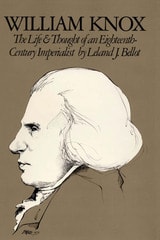
William Knox
The Life and Thought of an Eighteenth-Century ImperialistBy Leland J. Bellot
University of Texas Press, 1977
Colonial expert and pamphleteer William Knox has received attention in virtually every major study of the American Revolution, yet this is the first biography of Knox ever written.
Knox is best known as undersecretary of state in the American Department of the British government from 1770 to 1782. A prolific and candid commentator, he also made a reputation as a pamphleteer, defending the imperial cause during the decade preceding the Revolution. It had been his experience as provost marshal in Georgia from 1757 to 1762 that convinced Knox of the danger to the empire of the growing "democratic" forces in the American colonies.
While numerous historical works have focused on this or that aspect of Knox's career and thought, such treatment has produced at best a jigsaw portrait. Bellot's comprehensive narrative reveals Knox as a person—one whose Calvinist heritage and Scots-Irish upbringing profoundly influenced his view of empire—and as a historical actor and witness. Here is a look at the events of the revolutionary period through the eyes of a British bureaucrat who had a significant role in both the formation and the execution of British policy. This perspective also provides an excellent case study of the operation of the eighteenth-century British bureaucracy.
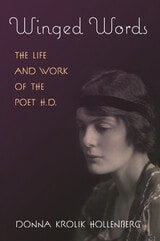
Winged Words
The Life and Work of the Poet H.D.Donna Krolik Hollenberg
University of Michigan Press, 2022
H.D.’s friends and lovers were a veritable Who’s Who of Modernism, and Hollenberg gives us a glimpse into H.D.’s relationships with them. With rich detail, the biography follows H.D. from her early years in America with her family, to her later years in England during both world wars, to Switzerland, which would eventually become H.D.’s home base. It explores her love affairs with both men and women; her long friendship with Bryher; the birth of her daughter, Perdita, and her imaginative bond with her; and her marriage to (and later divorce from) fellow poet Richard Aldington. Additionally, the book includes scenes from her relationships with Ezra Pound, Marianne Moore, William Carlos Williams, and D.H. Lawrence; H.D.’s fascination with spiritualism and the occult; and H.D.’s psychoanalysis with Sigmund Freud. The first new biography of H.D. to be published in over four decades, Winged Words is a must-read resource for anyone conducting research on H.D.
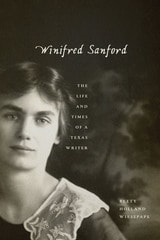
Winifred Sanford
The Life and Times of a Texas WriterBetty Holland Wiesepape
University of Texas Press, 2013
Winifred Sanford is generally regarded by critics as one of the best and most important early twentieth-century Texas women writers, despite publishing only a handful of short stories before slipping into relative obscurity. First championed by her mentor, H. L. Mencken, and published in his magazine, The American Mercury, many of Sanford’s stories were set during the Texas oil boom of the 1920s and 1930s and offer a unique perspective on life in the boomtowns during that period. Four of her stories were included in The Best American Short Stories of 1926.
Questioning the sudden end to Sanford’s writing career, Wiesepape, a leading literary historian of Texas women writers, delved into the author’s previously unexamined private papers and emerged with an insightful and revealing study that sheds light on both Sanford’s abbreviated career and the domestic lives of women at the time. The first in-depth account of Sanford’s life and work, Wiesepape’s biography discusses Sanford’s fiction through the lens of the sociohistorical contexts that shaped and inspired it. In addition, Wiesepape has included two previously unpublished stories as well as eighteen previously unpublished letters to Sanford from Mencken.
Winifred Sanford is an illuminating biography of one of the state’s unsung literary jewels and an important and much-needed addition to the often overlooked field of Texas women’s writing.
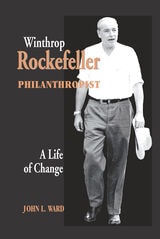
Winthrop Rockefeller, Philanthropist
A Life of ChangeJohn Ward
University of Arkansas Press, 2004
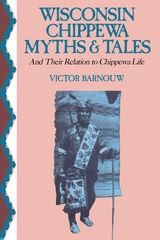
Wisconsin Chippewa Myths & Tales
And Their Relation to Chippewa LifeVictor Barnouw
University of Wisconsin Press, 1979
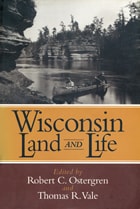
Wisconsin Land and Life
A Portrait of the StateRobert C. Ostergren
University of Wisconsin Press, 1997
These are images of Wisconsin's land and life, images that evoke a strong sense of place. This book, Wisconsin Land and Life, is an exploration of place, a series of original essays by Wisconsin geographers that offers an introduction to the state's natural environment, the historical processes of its human habitation, and the ways that nature and people interact to create distinct regional landscapes. To read it is to come away with a sweeping view of Wisconsin's geography and history: the glaciers that carved lakes and moraines; the soils and climate that fostered the prairies and great northern pine forests; the early Native Americans who began to shape the landscape and who established forest trails and river portages; the successive waves of Europeans who came to trade in furs, mine for lead and iron, cut the white pines, establish farms, work in the lumber and paper mills, and transform spent wheatfields into pasture for dairy cattle.
Readers will learn, too, about the platting and naming of Wisconsin's towns, the establishment of county and township governments, the growth of urban neighborhoods and parishes, the role of rivers, railroads, and religion in shaping the state's growth, and the controversial reforestation of the cutover lands that eventually transformed hardscrabble farms and swamps into a sportsman's paradise.
Abundantly illustrated with photos and maps, this book will richly reward anyone who wishes to learn more about the land and life of the place we know as Wisconsin.
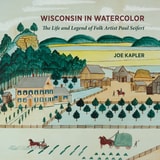
Wisconsin in Watercolor
The Life and Legend of Folk Artist Paul SeifertJoe Kapler
Wisconsin Historical Society Press, 2018
In 1867, German immigrant Paul Seifert settled in the Driftless Area of southwestern Wisconsin and began capturing the distinctive farms and landscapes of his new home in vivid, detailed watercolors. Today, these paintings are coveted by American folk art collectors across the country, but Seifert’s life remains shrouded in mystery.
In this first book written about Paul Seifert, author Joe Kapler examines the life of this enigmatic artist and provides context for his extraordinary art. The book features high-quality reproductions of twenty-two Seifert watercolors (more than half of which have never been published) and many close-ups of his characteristic details, from horses and hay wagons to dogs and dinner bells. Part art history treatment, part coffee table book, part research memoir, and part love letter to the Driftless Area, Wisconsin in Watercolor shines a long-awaited light on Seifert and the land he so carefully rendered over a hundred years ago.
With All Deliberate Speed
The Life of Philip ElmanNorman I. Silber
University of Michigan Press, 2004
-Anthony Lewis, New York Times columnist, and Pulitzer Prize-winning
author of Gideon's Trumpet
"The fascinating, eloquent, and skillfully edited oral memoir of a distinguished public servant, who was at the epicenter of major legal controversies that his memoir illuminates. A major contribution to modern American legal history."
-Richard A. Posner
"With All Deliberate Speed provides an insider's rich account, spanning over thirty years, of the inner workings of the Supreme Court, the Solicitor General's Office and the Federal Trade Commission that anyone seriously interested in a frank behind-the-scenes view of the federal government should find exceptionally provocative and intriguing"
-Drew Days III, Alfred M. Rankin Professor of Law, Yale University, and former Solicitor General of the United States, 1993-96
From a modest childhood in Patterson, N. J., Philip Elman rose to become clerk for the great Supreme Court Justice Felix Frankfurter, and then to a position in the U.S. Solicitor General's Office. As a member of that office, Philip Elman had an exceptional vantage point on one of the most momentous cases in U.S. Supreme Court history: Brown v. Board of Education.
In this oral history memoir of Elman's life, With All Deliberate Speed, author Norman I. Silber reveals the maneuvering that led to the Court's overturning the doctrine of "separate but equal." Working behind the scenes, it was Justice Department attorney Elman who came up with the concept of gradual integration-an idea that worked its way into the final decision as the famous phrase "with all deliberate speed." Though this expression angered those pressing for immediate desegregation, Elman claims that it unified a divided Court, thus enabling them to stand together against the evil of segregation.
With All Deliberate Speed records a decisive moment in Supreme Court history, but it is also Philip Elman's unforgettable oral memoir-the story of his entire career in government service, including his work with Attorney General Robert F. Kennedy as commissioner of the FTC, and his role in founding the modern consumer protection movement, which includes the antismoking campaign that put the Surgeon General's warning on cigarette packs.
At once rich historical testimony and a gripping read, With All Deliberate Speed offers a rarely glimpsed insider's understanding of the politics of the American legal system.
With the Bark Off
A Journalist’s Memories of LBJ and a Life in the News MediaNeal Spelce with Thomas Zigal
University of Texas Press, 2021
Within the Sweet Noise of Life
Selected PoemsSandro Penna
Seagull Books, 2020
Juggling traditional Italian prosody and subject matter with their gritty urban opposites in taut, highly concentrated poems, Penna’s lyrics revel in love and the eruption of Eros together with the extraordinary that can be found within simple everyday life. There is something ancient in Penna’s poetry, and something Etruscan or Greek about the poems, though the landscape is most often of Rome: sensual yet severe, sinuous yet solid, inscrutable, intangible, and languorous, with a Sphinx-like and sun-soaked smile. Penna’s city is eternal—a mythically decadent Rome that brings to mind Paris or Alexandria. And though the echoes resound—from Rimbaud, Verlaine, and Baudelaire to Leopardi, D’Annunzio, and Cavafy—the voice is always undeniably and wonderfully Penna’s own.
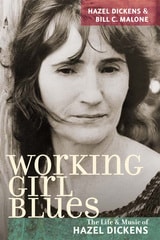
Working Girl Blues
The Life and Music of Hazel DickensHazel Dickens and Bill C. Malone
University of Illinois Press, 2007
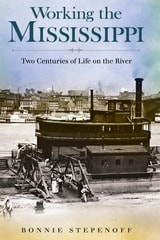
Working the Mississippi
Two Centuries of Life on the RiverBonnie Stepenoff
University of Missouri Press, 2015
The Mississippi River occupies a sacred place in American culture and mythology. Often called The Father of Rivers, it winds through American life in equal measure as a symbol and as a topographic feature. To the people who know it best, the river is life and a livelihood. River boatmen working the wide Mississippi are never far from land. Even in the dark, they can smell plants and animals and hear people on the banks and wharves.
Bonnie Stepenoff takes readers on a cruise through history, showing how workers from St. Louis to Memphis changed the river and were in turn changed by it. Each chapter of this fast-moving narrative focuses on representative workers: captains and pilots, gamblers and musicians, cooks and craftsmen. Readers will find workers who are themselves part of the country’s mythology from Mark Twain and anti-slavery crusader William Wells Brown to musicians Fate Marable and Louis Armstrong.
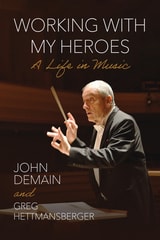
Working with My Heroes
A Life in MusicJohn L. DeMain and Greg Hettmansberger
University of Wisconsin Press, 2026
A Grammy and Tony Award–winning conductor, John DeMain has been a fixture of Madison, Wisconsin, for more than three decades, serving as music director of the Madison Symphony Orchestra and artistic director of the Madison Opera. Before and since then, he has been an internationally recognized conductor, equally at home in the worlds of classical music, opera, and Broadway.
In Working with My Heroes, written with the late Greg Hettmansberger, DeMain recounts incredible experiences—from his days studying piano in Youngstown, Ohio, to his years as an undergraduate and graduate student at Julliard, to his early jobs in summer stock productions, to numerous acclaimed productions—without ever losing sight of the wonder and awe he felt as a young musician first learning his way in the world. With warmth and humor, he provides valuable insight into the business of music making, while also sharing behind-the-scenes stories of entertaining situations he found himself in throughout the years—from playing piano at a gangster’s wedding to an unexpected dressing room encounter with a Broadway star to conducting an opera with circus elephants.
DeMain has had many career-defining moments behind the podium, conducting world premieres of Leonard Bernstein’s A Quiet Place, John Adams’s Nixon in China, and Jeanine Tesoro’s Blue, as well as the U.S. premiere of Philip Glass’s Akhnaten, among others. He guest-conducted symphonies and operas in New York, Chicago, Los Angeles, and elsewhere. DeMain cemented his reputation with the 1976 Houston Grand Opera performances of George and Ira Gershwin’s Porgy and Bess, establishing its stature as a quintessentially American opera. The singers, musicians, and composers DeMain has worked with over the past six decades are a veritable Who’s Who of American classical music. This memoir places readers by his side, allowing them to experience all the wonders and joy of a life spent making music.
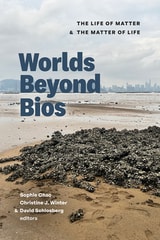
Worlds Beyond Bios
The Life of Matter and the Matter of LifeSophie Chao, Christine J. Winter, and David Schlosberg, editors
Duke University Press, 2026
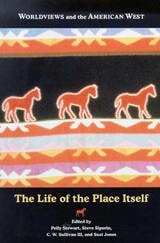
Worldviews And The American West
The Life of the Place ItselfPolly Stewart, Steve Siporin, C. W. Sullivan III, and Suzi Jones
Utah State University Press, 2003
A diverse group of writers and scholars follow the lead of noted folklorist Barre Toelken and consider, from the inside, the ways in which varied cultures in the American West understand and express their relations to the world around them. As Barre Toelken puts it in The Dynamics of Folklore, "'Worldview' refers to the manner in which a culture sees and expresses its relation to the world around it." In Worldviews and the American West, seventeen notable authors and scholars, employing diverse approaches and styles, apply Toelken's ideas about worldview to the American West. While the contributors represent a range of voices, methods, and visions, they are integrated through their focus on the theme of worldview in one region. Worldviews and the American West includes essays by Margaret K. Brady, Hal Cannon, Nora Marks Dauenhauer and Richard Dauenhauer, James S. Griffith, Barry Lopez, Robert McCarl, Elliott Oring, Twilo Scofield, Steve Siporin, Kim Stafford, C. W. Sullivan III, Jeannie B. Thomas, George Venn, George B. Wasson, and William A. Wilson. Each of the authors in this collection attempts to get inside one or more of the worldviews of the many cultures that have come to share and interpret the American West. The result is a lively mix of styles and voices as the authors' own worldviews interact with the multiple perspectives of the diverse peoples (and, in Barry Lopez's "The Language of Animals," other species) of the West. This diversity matches the geography of the region they all call home and gives varied life and meaning to its physical and cultural landscape.

Worldwide Laws Of Life
200 Eternal Spiritual PrinciplesJohn Marks Templeton
Templeton Press, 1998
Worldwide Laws of Life is full of wisdom drawn from the major sacred Scriptures of the world and various schools of philosophical thought, as well as from scientists, artists, historians, and others. Its aim is to assist people of all ages to learn more about the universal truths of life that transcend modern times or particular cultures.
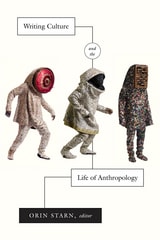
Writing Culture and the Life of Anthropology
Orin Starn
Duke University Press, 2015
Contributors. Anne Allison, James Clifford, Michael M.J. Fischer, Kim Fortun, Richard Handler, John L. Jackson, Jr., George E. Marcus, Charles Piot, Hugh Raffles, Danilyn Rutherford, Orin Starn, Kathleen Stewart, Michael Taussig, Kamala Visweswaran
Writing Vietnam, Writing Life
Caputo, Heinemann, O'Brien, ButlerTobey C. Herzog
University of Iowa Press, 2008
Philip Caputo, Larry Heinemann, Tim O'Brien, and Robert Olen Butler: four young midwestern Americans coming of age during the 1960s who faced a difficult personal decision—whether or not to fight in Vietnam. Each chose to participate. After coming home, these four veterans became prizewinning authors telling the war stories and life stories of soldiers and civilians. The four extended conversations included in Writing Vietnam, Writing Life feature revealing personal stories alongside candid assessments of each author's distinct roles as son, soldier, writer, and teacher of creative writing.
As Tobey Herzog's thoughtful interviews reveal, these soldier-authors have diverse upbringings, values, interests, writing careers, life experiences, and literary voices. They hold wide-ranging views on, among other things, fatherhood, war, the military, religion, the creative process, the current state of the world, and the nature of both physical and moral courage. For each author, the conversation and richly annotated chronology provide an overview of the writer's life, the intersection of memory and imagination in his writing, and the path of his literary career. Together, these four life stories also offer mini-tableaux of the fascinating and troubling time of 1960s and 1970s America. Above all, the conversations reveal that each author is linked forever to the Vietnam War, the country of Vietnam, and its people.
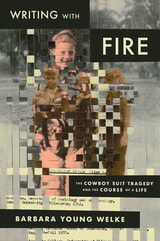
Writing with Fire
The Cowboy Suit Tragedy and the Course of a LifeBarbara Young Welke
University of Chicago Press, 2026
A cultural and legal history intertwined with a deeply emotional meditation on the course of life, memory, and the documents that define us.
During the 1940s and 1950s, an untold number of American children suffered devastating injuries when the fur-like fabric on the chaps of their Gene Autry–branded cowboy playsuits exploded into flame. Barbara Young Welke was researching this history when her teenage daughter unexpectedly died.
The shock of Welke’s loss transformed her understanding of the children and their families. Her experience also led her to question the norms of scholarship and of writing. Historians are trained to separate the personal from the intellectual, to be suspicious of emotion. These and other norms are embedded in and reinforced by the calling card of academics, the curriculum vitae. Welke wondered how that cold document—with its literal meaning, “the course of life”—had become a form that excludes so much of what gives life meaning. What impact did that have on what we know, how we know it, and how we understand ourselves? Similarly, Welke wondered, what might we see if we looked at the history of the cowboy suit tragedy as more than a matter of lawsuits brought by grieving families? Here, Welke traces the making, marketing, and selling of the cowboy suits; the lengths the defendants went to avoid and limit liability; and the meaning of the injuries, deaths, and legal settlements in the course of these children’s and families’ lives.
Writing with Fire interweaves the histories of the cowboy suit tragedy and the curriculum vitae. Grounded in archival and legal research, oral histories, and letters Welke wrote her daughter following her death, Welke offers an inimitable examination of trauma, law, autobiography, and identity. The result is revelatory and unforgettable: a provocative historical reflection on life and death, depression and war, markets and families, law, power, and precarity in modern America.