Results by title
1787 books match the query 'Literary Collections' and 113 start with w
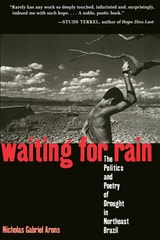
Waiting for Rain
The Politics and Poetry of Drought in Northeast BrazilNicholas Gabriel Arons
University of Arizona Press, 2004
In order to understand the impact of drought and the phenomenon of drought politics, Nicholas Gabriel Arons goes beyond traditional social-science scholarship to sources such as novels, poetry, popular art, and oral history. For many people in the region, these artistic renditions of life are, ironically, a better reflection of reality than political rhetoric, government archives, and newspaper accounts—even though they are infused with myth or hyperbole.
Drawing on interviews with artists and poets and on his own experiences in the Brazilian Northeast, Arons has written a poignant account of how drought has impacted the region’s culture. He intertwines ecological, social, and political issues with the words of some of Brazil’s most prominent authors and folk poets to show how themes surrounding drought—hunger, migration, endurance, nostalgia for the land—have become deeply embedded in Nordeste identity. Through this tapestry of sources, Arons shows that what is often thought of as a natural phenomenon is actually the result of centuries of social inequality, political corruption, and unsustainable land use.
Waiting for Rain dramatically depicts a region still suffering from austere social and political realities, where drought—even during rainy seasons—is ubiquitous in the hearts and minds of its residents. A book of hope and resistance, myth and reality, and suffering and salvation, it is also a personal narrative of self-discovery, tracing a young man’s struggle to understand how human tragedy on a grand scale can exist alongside natural beauty.
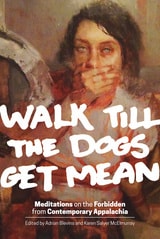
Walk Till the Dogs Get Mean
Meditations on the Forbidden from Contemporary AppalachiaAdrian Blevins
Ohio University Press, 2015
In Walk Till the Dogs Get Mean, Adrian Blevins and Karen Salyer McElmurray collect essays from today’s finest established and emerging writers with roots in Appalachia. Together, these essays take the theme of silencing in Appalachian culture, whether the details of that theme revolve around faith, class, work, or family legacies.
In essays that take wide-ranging forms—making this an ideal volume for creative nonfiction classes—contributors write about families left behind, hard-earned educations, selves transformed, identities chosen, and risks taken. They consider the courage required for the inheritances they carry.
Toughness and generosity alike characterize works by Dorothy Allison, bell hooks, Silas House, and others. These writers travel far away from the boundaries of a traditional Appalachia, and then circle back—always—to the mountains that made each of them the distinctive thinking and feeling people they ultimately became. The essays in Walk Till the Dogs Get Mean are an individual and collective act of courage.
Contributors:
Dorothy Allison, Rob Amberg, Pinckney Benedict, Kathryn Stripling Byer, Sheldon Lee Compton, Michael Croley, Richard Currey, Joyce Dyer, Sarah Einstein, Connie May Fowler, RJ Gibson, Mary Crockett Hill, bell hooks, Silas House, Jason Howard, David Huddle, Tennessee Jones, Lisa Lewis, Jeff Mann, Chris Offutt, Ann Pancake, Jayne Anne Phillips, Melissa Range, Carter Sickels, Aaron Smith, Jane Springer, Ida Stewart, Jacinda Townsend, Jessie van Eerden, Julia Watts, Charles Dodd White, and Crystal Wilkinson.
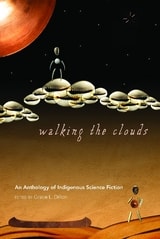
Walking the Clouds
An Anthology of Indigenous Science FictionEdited by Grace L. Dillon
University of Arizona Press, 2012
In this first-ever anthology of Indigenous science fiction Grace Dillon collects some of the finest examples of the craft with contributions by Native American, First Nations, Aboriginal Australian, and New Zealand Maori authors. The collection includes seminal authors such as Gerald Vizenor, historically important contributions often categorized as "magical realism" by authors like Leslie Marmon Silko and Sherman Alexie, and authors more recognizable to science fiction fans like William Sanders and Stephen Graham Jones. Dillon's engaging introduction situates the pieces in the larger context of science fiction and its conventions.
Organized by sub-genre, the book starts with Native slipstream, stories infused with time travel, alternate realities and alternative history like Vizenor's "Custer on the Slipstream." Next up are stories about contact with other beings featuring, among others, an excerpt from Gerry William's The Black Ship. Dillon includes stories that highlight Indigenous science like a piece from Archie Weller's Land of the Golden Clouds, asserting that one of the roles of Native science fiction is to disentangle that science from notions of "primitive" knowledge and myth. The fourth section calls out stories of apocalypse like William Sanders' "When This World Is All on Fire" and a piece from Zainab Amadahy's The Moons of Palmares. The anthology closes with examples of biskaabiiyang, or "returning to ourselves," bringing together stories like Eden Robinson's "Terminal Avenue" and a piece from Robert Sullivan's Star Waka.
An essential book for readers and students of both Native literature and science fiction, Walking the Clouds is an invaluable collection. It brings together not only great examples of Native science fiction from an internationally-known cast of authors, but Dillon's insightful scholarship sheds new light on the traditions of imagining an Indigenous future.

Walking, Writing and Performance
Autobiographical Texts by Deirdre Heddon, Carl Lavery and Phil SmithEdited by Roberta Mock
Intellect Books, 2009
This collection charts three projects by performers who generate autobiographical writing by walking through inspirational landscapes. Included in the book are the full texts of The Crab Walks and Crab Steps Aside by Phil Smith, Mourning Walk by Carl Lavery, and Tree by Deirdre Heddon, each accompanied by photographs and contextual essays. Taken together or separately, the work of all three artist-scholars raises important issues about memory, the ethics of autobiographical performance, ritual, life writing, and site-specific performance.
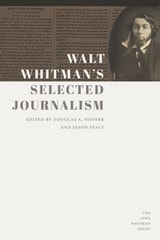
Walt Whitman's Selected Journalism
Walt Whitman
University of Iowa Press, 2015
Walt Whitman’s Selected Journalism covers Whitman’s early years as a part-time editorialist and ambivalent schoolteacher between 1838 and 1841. After 1841, it follows his work as a dedicated full-time newspaperman and editor, most prominently at the New York Aurora and the Brooklyn Daily Eagle between 1842 and 1848. After 1848 and up to the Civil War, Whitman’s journalism shows his slow transformation from daily newspaper editor to poet. This volume gathers journalism from throughout these early years in his career, focusing on reporting, reviews, and editorials on politics and democratic culture, the arts, and the social debates of his day. It also includes some of Whitman’s best early reportage, in the form of the short, personal pieces he wrote that aimed to give his readers a sense of immediacy of experience as he guided them through various aspects of daily life in America’s largest metropolis.
Over time, journalism’s limitations pushed Whitman to seek another medium to capture and describe the world and the experience of America with words. In this light, today’s readers of Whitman are doubly indebted to his career in journalism. In presenting Whitman-the-journalist in his own words here, and with useful context and annotations by renowned scholars, Walt Whitman’s Selected Journalism illuminates for readers the future poet’s earliest attempts to speak on behalf of and to the entire American republic.
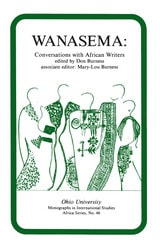
Wanasema
Conversations with African WritersDon Burness
Ohio University Press, 1985
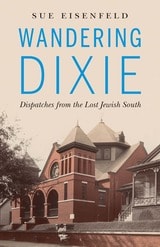
Wandering Dixie
Dispatches from the Lost Jewish SouthSue Eisenfeld
The Ohio State University Press, 2020
From South Carolina to Arkansas, she explores the small towns where Jewish people once lived and thrived. She visits the site of her distant cousin and civil rights activist Andrew Goodman’s murder during 1964’s Freedom Summer. She also talks with the only Jews remaining in some of the “lost” places, from Selma to the Mississippi Delta to Natchitoches, and visits areas with no Jewish community left—except for an old temple or overgrown cemetery. Eisenfeld follows her curiosity about Jewish Confederates and casts an unflinching eye on early southern Jews’ participation in slavery. Her travels become a journey of revelation about our nation’s fraught history and a personal reckoning with the true nature of America.
War Diary
Ingeborg Bachmann
Seagull Books, 2011
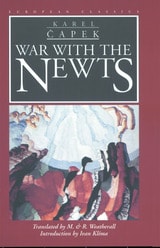
War with the Newts
Karel Capek
Northwestern University Press, 1996
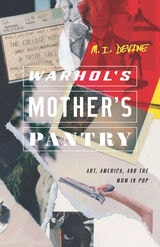
Warhol's Mother's Pantry
Art, America, and the Mom in PopM. I. Devine
The Ohio State University Press, 2020
“What are these fragments we’ve Jersey Shored against our ruin?” asks M. I. Devine, remixing T. S. Eliot, in this dizzying collection of essays that pays homage to the cultural forms that hold us steady. These fragments are stored in Warhol’s Mother’s Pantry, which takes us deep beneath the surfaces of pop to explore our shared quest for meaning today. Julia Warhola, an immigrant who arrived as the US was closing its borders a century ago, is the muse of reuse in these essays that cross boundaries—between now and then, high and low. She is the mom in pop who cut tin cans into flowers and taught Andy (and us) how to reshape and redeem our world. In essays as lyrical, witty, and experimental as the works they cover, Devine offers a new account of pop humanism. How we cut new things from the traditions we’re given, why we don’t stop believin’ (and carry on, wayward sons) when so much is stacked against us. Here are Leonard Cohen’s last songs and Molly Bloom’s last words; Vampire Weekend’s Rostam and Philip Larkin too; Stevie Smith, John Donne, and Kendrick Lamar; sonnets and selfies; early cinema and post–9/11 film, pop hooks, and pop art. In Devine’s hands, these literary and cultural artifacts are provocatively reassembled into an urgent and refreshing history that refuses to let its readers forget where pop came from and where it can go.

Washington Irving’s Contributions to the Corrector
Martin Roth, EditorIntroduction by Martin Roth
University of Minnesota Press, 1968
Washington Irving's Contributions to the Corrector was first published in 1968. Minnesota Archive Editions uses digital technology to make long-unavailable books once again accessible, and are published unaltered from the original University of Minnesota Press editions.
This volume makes available, for the first time in collected form, a series of sketches by Washington Irving which were published anonymously in a political newspaper, The Corrector, in 1804. The Corrector, a short-lived political sheet, was published in New York City by Washington Irving's brother Peter Irving. While it has been assumed that Washington Irving contributed to the periodical, the present collection represents the first attempt to identify his contributions.
The collection contains forty-five pieces by Washington Irving. In addition, Professor Roth provides a literary and historical background in a lengthy introduction, as well as annotations for each selection, giving the documentary evidence on which the attribution of authorship is based.
Washington Irving's sketches for The Corrector were written as campaign literature for Aaron Burr in the New York gubernatorial election of 1804. As Professor Roth points out, they are filled with low and indecent abuse, and they contradict accepted notions of Irving's literary character. The view of Irving from the nineteenth century onward has been that of a gentle, genial, and dignified personality, and his excursions in low invective or slapstick have generally been dismissed as accidents or exceptions to his read nature. The editor places this body of Irving's work in the perspective of traditional invective and traces its relationship to other comic and satiric writing of the eighteenth century.
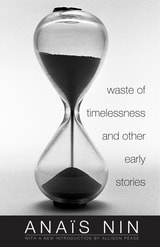
Waste of Timelessness and Other Early Stories
Anaïs Nin
Ohio University Press, 2017
Written when Anaïs Nin was in her twenties and living in France, the stories collected in Waste of Timelessness contain many elements familiar to those who know her later work as well as revelatory, early clues to themes developed in those more mature stories and novels. Seeded with details remembered from childhood and from life in Paris, the wistful tales portray artists, writers, strangers who meet in the night, and above all, women and their desires.
These experimental and deeply introspective missives lay out a central theme of Nin’s writing: the contrast between the public and private self. The stories are taut with unrealized sexual tension and articulate the ways that language and art can shape reality. Nin’s deft humor, ironic wit, and ecstatic prose display not only superb craftsmanship but also the author’s own constant balancing act between feeling and rationality, vulnerability and strength. Perhaps more than any other writer of the twentieth century, she mastered that act and wrote about it on her own terms, defying the literary and social norms of the time.
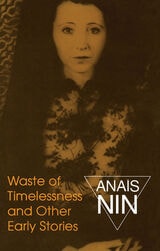
Waste of Timelessness and Other Early Stories
And Other Early StoriesAnaïs Nin
Ohio University Press, 1993
These stories precede all of Nin’s published work to date. In them are many sources of the more mature work that collectors and growing writers can appreciate.
Written when Anaïs Nin was in her twenties and living in Louveciennes, France, these stories contain many elements that will delight her readers: details remembered from childhood, of life in Paris, the cafés, theatres; characters including dancers, artists, writers, women who devote themselves to their work and visions as well as romance, strangers met in the night; themes such as the scruples of lovers, the search for brilliant, imaginative living; the writer’s experimentation with exotic words like “sybaritic” and “violaceous”. In the craft of these stories readers are treated to a deft sense of humor, ironic wit, much conversation as well as ecstatic prose, and surprise endings. Throughout all, the Nin personality shines, a wonderful mixture of feeling and rationality, of vulnerability and strength.
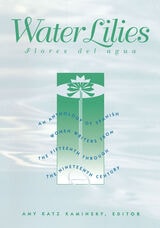
Water Lilies
An Anthology of Spanish Women Writers from the Fifteenth through the Nineteenth CenturyAmy Kaminsky
University of Minnesota Press, 1995
Poetry and prose by Spanish women presented here in both English and Spanish.
A dazzling sampler, Water Lilies brings to light a rich and until now largely invisible version of Spanish literary history. These hard-to-find works, most translated for the first time, are printed on facing pages in Spanish and English and located within a critical, biographical, and historical overview.
Here are five centuries of writing by Spanish women, the unknown recovered from obscurity, the well-known seen as they rarely have been-in the context of a women’s literary history. Some of these writers, like Rosalía de Castro in “The Bluestockings” and Teresa de Cartagena in Wonder at the Work of God, question the relationship between the woman writer and the act of writing. Some, like the poet Carolina Coronado in “The Twin Geniuses: Sappho and Saint Teresa of Jesus,” overtly seek a literary tradition. Others, like Saint Teresa in her Life and Luisa Sigea in her poetry, provide touchstones for women in search of such a tradition.Legends and stories of women’s friendships, the inconstancy of men, and the love of God; Spain’s first autobiographical text; secular and religious poetry from medieval through recent times; an excerpt from one of the few chivalresque novels written by a woman; a full-length Golden Age comedia: this is the wide range of works Water Lilies comprises. Brought together for the first time, the writers articulate their resistance to, and their complicity in, a literary history that, until now, has tried to exclude them.
Water's Edge
Writing on WaterEdited by Lenore Manderson and Forrest Gander
Northwestern University Press, 2023
A wide-ranging consideration of water’s plenitude and paucity—and of our relationship to its many forms
Water is quotidian, ubiquitous, precious, and precarious. With their roots in this element, the authors of Water’s Edge reflect on our natural environment: its forms, textures, and stewardship. Born from a colloquium organized by the editors at the Institute at Brown for Environment and Society, the anthology features a diverse group of writers and artists from half a dozen countries, from different fields of scholarship and practice: artists, biologists, geologists, poets, ecocritics, actors, and anthropologists. The contributors explore and celebrate water while reflecting on its disturbances and pollution, and their texts and art play with the boundaries by which we differentiate literary forms.
In the creative nonfiction, poetry, and visual art collected here, water moves from backdrop to subject. Ashley Dawson examines the effects of industrial farming on the health of local ecosystems and economies. Painter Kulvinder Kaur Dhew captures water’s brilliance and multifaceted reflections through a series of charcoal pieces that interlace the collection. Poet Arthur Sze describes the responsibility involved in the careful management of irrigation ditches in New Mexico. Rather than concentrating their thoughts into a singular, overwhelming argument, the authors circulate moments of apprehension, intimation, and felt experience. They are like tributaries, each carrying, in a distinctive style, exigent and often intimate reports concerning a substance upon which all living organisms depend.
We Are All Armenian
Voices from the DiasporaEdited by Aram Mrjoian
University of Texas Press, 2023
A collection of essays about Armenian identity and belonging in the diaspora.
In the century since the Armenian Genocide, Armenian survivors and their descendants have written of a vast range of experiences using storytelling and activism, two important aspects of Armenian culture. Wrestling with questions of home and self, diasporan Armenian writers bear the burden of repeatedly telling their history, as it remains widely erased and obfuscated. Telling this history requires a tangled balance of contextualizing the past and reporting on the present, of respecting a culture even while feeling lost within it.
We Are All Armenian brings together established and emerging Armenian authors to reflect on the complications of Armenian ethnic identity today. These personal essays elevate diasporic voices that have been historically silenced inside and outside of their communities, including queer, multiracial, and multiethnic writers. The eighteen contributors to this contemporary anthology explore issues of displacement, assimilation, inheritance, and broader definitions of home. Through engaging creative nonfiction, many of them question what it is to be Armenian enough inside an often unacknowledged community.
We Are All Zimbabweans Now
James Kilgore
Ohio University Press, 2011
We Are Civic Media
Sangita Shresthova, Dan Sinker, Pratik Nyaupane, Sophie Madej, and Colin Maclay
Northwestern University Press, 2025
“Civic media” is the use of contemporary technologies to connect communities, inspire action, build civic capacity, and sustain social change efforts. Written by artists, creators, storytellers, organizers, and others working at the intersections of technology, social justice, and culture, this book summons civic media through the lived experiences of its contributors.
Latoya Peterson delves into the therapeutic power of gaming; Akilah Hughes discusses identity and community through the lens of her campaign to change her high school's racist mascot; and Tyree Boyd-Pates emphasizes the potential power of museum curation to challenge power dynamics and bridge digital and physical realms. Through the experiences of these grassroots practitioners and many others, We Are Civic Media offers accessible insights for those interested in understanding, respecting, and practicing civic media.
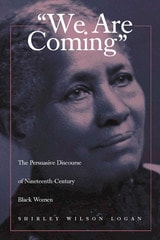
We Are Coming
The Persuasive Discourse of Nineteenth-Century Black WomenShirley Wilson Logan
Southern Illinois University Press, 1999
Shirley Wilson Logan analyzes the distinctive rhetorical features in the persuasive discourse of nineteenth-century black women, concentrating on the public discourse of club and church women from 1880 until 1900.
Logan develops each chapter in this illustrated study around a feature of public address as best exemplified in the oratory of a particular woman speaker of the era. She analyzes not only speeches but also editorials, essays, and letters.
Logan first focuses on the prophetic oratory of Maria Stewart, the first American-born black woman to speak publicly. Turning to Frances Harper, she considers speeches that argue for common interests between divergent communities. And she demonstrates that central to the antilynching rhetoric of Ida Wells is the concept of "presence," or the tactic of enhancing certain selected elements of the presentation.
In her discussion of Fannie Barrier Williams and Anna Cooper, Logan shows that when speaking to white club women and black clergymen, both Williams and Cooper employ what Kenneth Burke called identification. To analyze the rhetoric of Victoria Matthews, she applies Carolyn Miller's modification of Lloyd Bitzer's concept of the rhetorical situation.
Logan also examines the discourse of women associated with the black Baptist women's movement and those participating in college-affiliated conferences.
The book includes an appendix with little-known speeches and essays by Anna Julia Cooper, Selena Sloan Butler, Lucy Wilmot Smith, Mary V. Cook, Adella Hunt Logan, Victoria Earle Matthews, Lucy C. Laney, and Georgia Swift King.
We Are Meant to Rise
Voices for Justice from Minneapolis to the WorldCarolyn Holbrook
University of Minnesota Press, 2021
A brilliant and rich gathering of voices on the American experience of this past year and beyond, from Indigenous writers and writers of color from Minnesota
In this significant collection, Indigenous writers and writers of color bear witness to one of the most unsettling years in the history of the United States. Essays and poems vividly reflect and comment on the traumas we endured in 2020, beginning with the arrival of the COVID-19 pandemic crisis, deepened by the blatant murder of George Floyd by Minneapolis police officers and the uprisings that immersed our city into the epicenter of passionate, worldwide demands for justice. In inspired and incisive writing these contributors speak unvarnished truths not only to the original and pernicious racism threaded through the American experience but also to the deeply personal, in essays about family, loss, food culture, economic security, and mental health. Their call and response is united here to rise and be heard.
We Are Meant to Rise lifts up the astonishing variety of BIPOC writers in Minnesota. From authors with international reputations to newly emerging voices, it features people from many cultures, including Indigenous Dakota and Anishinaabe, African American, Hmong, Somali, Afghani, Lebanese, Korean, Vietnamese, Japanese, Puerto Rican, Colombian, Mexican, transracial adoptees, mixed race, and LGBTQ+ perspectives. Most of the contributors have participated in More Than a Single Story, a popular and insightful conversation series in Minneapolis that features Indigenous and people of color speaking on what most concerns their communities.
We Are Meant to Rise meets the events of the day, the year, the centuries before, again and again, with powerful testament to the intrinsic and unique value of the human voice.
Contributors: Suleiman Adan, Mary Moore Easter, Louise Erdrich, Anika Fajardo, Safy-Hallan Farah, Said Farah, Sherrie Fernandez-Williams, Pamela R. Fletcher Bush, Shannon Gibney, Kathryn Haddad, Tish Jones, Ezekiel Joubert III, Douglas Kearney, Ed Bok Lee, Ricardo Levins Morales, Arleta Little, Resmaa Menakem, Tess Montgomery, Ahmad Qais Munhazim, Melissa Olson, Alexs Pate, Bao Phi, Mona Susan Power, Samantha Sencer-Mura, Said Shaiye, Erin Sharkey, Sun Yung Shin, Michael Torres, Diane Wilson, Kao Kalia Yang, and Kevin Yang.
We Carry Smoke and Paper
Essays on the Grief and Hope of ConversionMelody S. Gee
University of Iowa Press, 2024
In essays that explore the parallels between conversion and language acquisition, isolated liturgies, cultural inheritances, stalled initiations, disrupted storytelling, and adoption, Gee examines conversion’s grief and hope, losses and gains, hauntings and promises. We Carry Smoke and Paper is a memoir about what we owe to those who sacrifice everything for us, and it is about the many conversions in a lifetime that turn our heads via whispers and shouts, calling us to ourselves.

We Mark Your Memory
writings from the descendants of indentureEdited by David Dabydeen, Maria del Pilar Kaladeen, and Tina K. Ramnarine
University of London Press, 2018
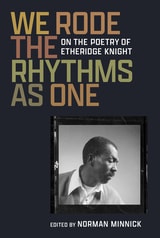
We Rode the Rhythms as One
On the Poetry of Etheridge KnightEdited by Norman Minnick
University of Michigan Press, 2026
Knight’s story is one of transformation—an odyssey from hardship and incarceration to artistic prominence—anchored by his unwavering belief in the power of poetry to unite and heal. This comprehensive volume is also a historical and cultural exploration, situating Knight’s work amid the Black Arts Movement, the Civil Rights Movement, and the ongoing fight for social justice. Readers will find themselves drawn to Knight’s unfiltered voice, his reflections on Black identity, and his insistence on making poetry accessible to all—whether through intimate letters or reflections on the sociopolitical climate that shaped his art. Suitable for poetry enthusiasts, scholars, and general readers alike, We Rode the Rhythms as One invites us to reconsider Knight’s enduring impact and the vital role of poetry in reflecting and reshaping human experience.
We Take Our Cities with Us
A MemoirSorayya Khan
The Ohio State University Press, 2022
Weary Men
Arne Garborg, translated by Sverre Lyngstad, and afterword by Per Buvik
Northwestern University Press, 1999
Originally published in 1891, Weary Men introduces a bachelor nearly middle age named Gabriel Gram, who suffers an existential crisis, considers suicide, but finally finds solace in a religious conversion of questionnable sincerity. Garborg depicts Gram's Kristiania (present day Oslo) in fascinating detail as Gram divides his time between male friends and "new women," a new generation of Norwegian women embolded to walk freely with men in public but who continue to rebuff Gram's sexual advances.
Welcome to Our Hillbrow
A Novel of Postapartheid South AfricaPhaswane Mpe
Ohio University Press, 2011
Welcome to the Mountain
A Portable Bread Loaf Writers' ConferenceLauren Francis-Sharma
Four Way Books, 2026
What do Truman Capote, Joan Didion, Archibald MacLeish, and Robert Hayden have in common? They are among the impressive array of American writers who have contributed to the legacy of the Bread Loaf Writers’ Conference in the last one hundred years.
To commemorate this esteemed institution’s centennial, Welcome to the Mountain recreates the experience of being in a writerly community that celebrates literature and invests in literary apprenticeship. This volume, edited by Lauren Francis-Sharma and Jennifer Grotz, comprises an extraordinary sampling of work from the historical to the contemporary, including lectures and readings first delivered at Bread Loaf. Its expansive range showcases everything from highly celebrated texts to rarer pieces and insightful musings by Toni Morrison, Brigit Pegeen Kelly, Randall Kenan, Czesław Miłosz, Julia Alvarez, and so many more.
Welcome to the Mountain tells the endless and thrilling stories of how writers become writers and how literary traditions evolve through our conversations with each other. Through this extraordinary book, we invite readers to make themselves at home in the rich landscape of American letters.
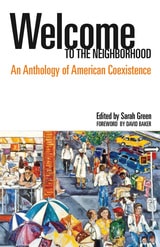
Welcome to the Neighborhood
An Anthology of American CoexistenceSarah Green
Ohio University Press, 2019
How to live with difference—not necessarily in peace, but with resilience, engagement, and a lack of vitriol—is a defining worry in America at this moment. The poets, fiction writers, and essayists (plus one graphic novelist) who contributed to Welcome to the Neighborhood don’t necessarily offer roadmaps to harmonious neighboring. Some of their narrators don’t even want to be neighbors. Maybe they grieve, or rage. Maybe they briefly find resolution or community. But they do approach the question of what it means to be neighbors, and how we should do it, with open minds and nuance.
The many diverse contributors give this collection a depth beyond easy answers. Their attentions to the theme of neighborliness as an ongoing evolution offer hope to readers: possible pathways for rediscovering community, even just by way of a shared wish for it. The result is an enormously rich resource for the classroom and for anyone interested in reflecting on what it means to be American today, and how place and community play a part.
Contributors include Leila Chatti, Rita Dove, Jonathan Escoffery, Rebecca Morgan Frank, Amina Gautier, Ross Gay, Mark Halliday, Joy Harjo, Edward Hirsch, Marie Howe, Sonya Larson, Dinty W. Moore, Robert Pinsky, Christine Schutt, and many more.

Welcome to the Neighborhood
An Anthology of American CoexistenceSarah Green
Ohio University Press, 2001
How to live with difference—not necessarily in peace, but with resilience, engagement, and a lack of vitriol—is a defining worry in America at this moment. The poets, fiction writers, and essayists (plus one graphic novelist) who contributed to Welcome to the Neighborhood don’t necessarily offer roadmaps to harmonious neighboring. Some of their narrators don’t even want to be neighbors. Maybe they grieve, or rage. Maybe they briefly find resolution or community. But they do approach the question of what it means to be neighbors, and how we should do it, with open minds and nuance.
The many diverse contributors give this collection a depth beyond easy answers. Their attentions to the theme of neighborliness as an ongoing evolution offer hope to readers: possible pathways for rediscovering community, even just by way of a shared wish for it. The result is an enormously rich resource for the classroom and for anyone interested in reflecting on what it means to be American today, and how place and community play a part.
Contributors include Leila Chatti, Rita Dove, Jonathan Escoffery, Rebecca Morgan Frank, Amina Gautier, Ross Gay, Mark Halliday, Joy Harjo, Edward Hirsch, Marie Howe, Sonya Larson, Dinty W. Moore, Robert Pinsky, Christine Schutt, and many more.
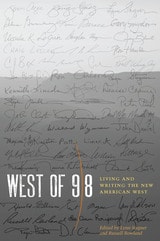
West of 98
Living and Writing the New American WestEdited by Lynn Stegner and Russell Rowland
University of Texas Press, 2011
What does it mean to be a westerner? With all the mythology that has grown up about the American West, is it even possible to describe "how it was, how it is, here, in the West—just that," in the words of Lynn Stegner? Starting with that challenge, Stegner and Russell Rowland invited several dozen members of the western literary tribe to write about living in the West and being a western writer in particular. West of 98 gathers sixty-six literary testimonies, in essays and poetry, from a stellar collection of writers who represent every state west of the 98th parallel—a kind of Greek chorus of the most prominent voices in western literature today, who seek to "characterize the West as each of us grew to know it, and, equally important, the West that is still becoming."
In West of 98, western writers speak to the ways in which the West imprints itself on the people who live there, as well as how the people of the West create the personality of the region. The writers explore the western landscape—how it has been revered and abused across centuries—and the inescapable limitations its aridity puts on all dreams of conquest and development. They dismantle the boosterism of manifest destiny and the cowboy and mountain man ethos of every-man-for-himself, and show instead how we must create new narratives of cooperation if we are to survive in this spare and beautiful country. The writers seek to define the essence of both actual and metaphoric wilderness as they journey toward a West that might honestly be called home.
A collective declaration not of our independence but of our interdependence with the land and with each other, West of 98 opens up a whole new panorama of the western experience.
West of the Border
The Multicultural Literature of the Western American FrontiersNoreen Groover Lape
Ohio University Press, 2000
Expanding the scope of American borderland and frontier literary scholarship, West of the Border examines the writings of nineteenth- and turn-of-the-century Native, African, Asian, and Anglo American frontier writers. This book views frontiers as “human spaces” where cultures make contact as it considers multicultural frontier writers who speak from “west of the border.”
James P. Beckwourth, a half-black fur trader; Sarah Winnemucca Hopkins, a Paiute translator; Salishan author Mourning Dove; Cherokee novelist John Rollin Ridge; Sui Sin Far, an Anglo-Chinese short story writer, and her sister, romance novelist Onoto Watanna; and Mary Austin, a white southwestern writer- each of these intercultural writers faces a rite of passage into a new social order. Their writings negotiate their various frontier ordeals: the encroachment of pioneers on the land; reservation life; assimilation; Christianity; battles over territories and resources; exclusion; miscegenation laws; and the devastation of the environment.
In West of the Border, Noreen Groover Lape raises issues inherent in American pluralism today by broaching timely concerns about American frontier politics, conceptualizing frontiers as intercultural contact zones, and expanding the boundaries of frontier literary studies by giving voice to minority writers.
Western Icelandic Short Stories
Kirsten Wolf
University of Manitoba Press, 1992
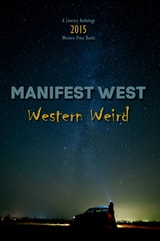
Western Weird
Mark Todd
University Press of Colorado, 2015
The 2015 theme for Manifest West’s annual anthology is “Western Weird.” The works in this collection reflect both myths and suspected truths about the part of the United States we call “the West.” But this year’s edition focuses entirely on the tradition of the strange. To borrow from Jeff VanderMeer’s definition for speculative fiction’s “New Weird,” this volume creates a new parallel genre for work that subverts the traditional romanticized ideas about place, playing with clichés about the West in order to put these elements to discomfiting, rather than consoling, ends.
Topics included in this collection of poetry, fiction, and creative nonfiction range from the West’s numinous fascination with E.T., Bigfoot, and ghosts and its celebration of its indigenous fauna and deadly landscapes to its uncomfortable relationships with its own marginalized peoples and its unforgiving and sometimes violent traditions. The tone of these works ranges from light—even campy—to chilling, but all allow readers to gaze straight into the many faces of what makes the West a weird place.
For the first time in the series, this volume includes solicited work as well as open submissions, including a number of established and award-winning writers and serving its mission by giving voice to brand-new writers.
Western Weird is the fourth volume in Western Press Books’ literary anthology series, Manifest West. The press, affiliated with Western State Colorado University, annually produces one anthology focused on Western regional writing
Contributors:
Bredt Bredthauer, Bartholomew Brinkman, Amy Brunvand, George David Clark, Michael Luis Dauro, Carol V. Davis, Russell Davis, Joe DiBuduo, Michael Engelhard, Daniel Ervin, Mel Goldberg, R. S. Gwynn, Aline Kaplan, Don Kunz , Nate Liederbach, Ellaraine Lockie, Nathan Alling Long, Robert McBrearty, Teresa Milbrodt, Lance Nizami, William Notter, Marlene Olin, C. R. Resetarits, Kate Robinson, Michaela Roessner, David J. Rothman, Matt Schumacher, Renée Thompson, Wendy Videlock, Vivian Wagner, Kirby Wright
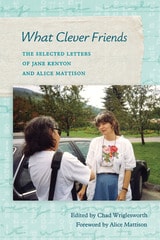
What Clever Friends
The Selected Letters of Jane Kenyon and Alice MattisonEdited by Chad Wriglesworth
University of Michigan Press, 2026
Witty, tender, and aware; tempestuous and lyrical, these letters trace the evolution of a deep and largely unknown friendship that situates Kenyon’s work within a collaborative environment of other poets and novelists who were committed to the flourishing of contemporary women’s writing. With more than 500 edited and annotated letters, a retrospective foreword written by Alice Mattison, and a scholarly introduction written by Chad Wriglesworth, What Clever Friends conveys a compelling story that will interest readers and writers.
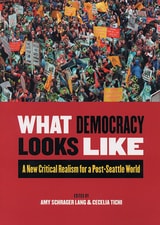
What Democracy Looks Like
A New Critical Realism for a Post-Seattle WorldLang, Amy
Rutgers University Press, 2006
The convergence of activists in Seattle during the World Trade Organization meetings captured the headlines in 1999. These demonstrations marked the first major expression on U.S. soil of worldwide opposition to inequality, privatization, and political and intellectual repression. This turning point in world politics coincided with an ongoing quandary in academia-particularly in the humanities where the so-called "death of theory" has left the field on tenuous footing.
In What Democracy Looks Like, the editors and twenty-seven contributors argue that these crises-in the world and the academy-are not unrelated. The essays insist that, in the wake of "Seattle," teachers and scholars of American literature and culture are faced with the challenge of addressing new points of intersection between American studies and literary studies. The narrative, the poem, the essay, and the drama need to be reexamined in ways that are relevant to the urgent social and political issues of our time.
Collectively urging scholars and educators to pay fresh attention to the material conditions out of which literature arises, this path-breaking book inaugurates a new critical realism in American literary studies. It provides a crucial link in the growing need to merge theory and practice with the goal of reconnecting the ivory tower elite to the activists on the street.
What Happens Next?
Matters of Life and DeathDouglas Bauer
University of Iowa Press, 2013
What Is What Was
Richard Stern
University of Chicago Press, 2002
In the book's seven sections are analyses of the Wimbledon tennis tournament as an Anglification machine, of Silicon Valley at its shaky peak, of James and Dante as travel writers, a Lucretian look at today's cosmology, American fiction in detail and depth, a "thought experiment" for Clarence Thomas, a salvation scheme for Ross Perot, a semi-confession of the writer.
The book contains but isn't philosophy, criticism, opinion, reportage, or autobiography (although the author says it is as much of this as he plans to write). There is a recurrent theme, the ways in which actuality is made and remade in description, argument and narration, fictional and nonfictional, but above all, What Is What Was is a provocative entertainment by a writer who, as Philip Roth once said, "knows as much as anyone writing American prose about family mischief, intellectual shenanigans, love blunders—and about writing American prose."
What Makes a Man?
Sex Talk in Beirut and BerlinRashid al-Daif and Joachim Helfer. Translated by Ken Seigneurie and Gary Schmidt
University of Texas Press, 2015
In 2003, Lebanese writer Rashid al-Daif spent several weeks in Germany as part of the “West-East Divan” program, a cultural exchange effort meant to improve mutual awareness of German and Middle Eastern cultures. He was paired with German author Joachim Helfer, who then returned the visit to al-Daif in Lebanon. Following their time together, al-Daif published in Arabic a literary reportage of his encounter with Helfer in which he focuses on the German writer’s homosexuality. His frank observations have been variously read as trenchant, naïve, or offensive. In response, Helfer provided an equally frank point-by-point riposte to al-Daif’s text. Together these writers offer a rare exploration of attitudes toward sex, love, and gender across cultural lines. By stretching the limits of both fiction and essay, they highlight the importance of literary sensitivity in understanding the Other.
Rashid al-Daif’s “novelized biography” and Joachim Helfer’s commentary appear for the first time in English translation in What Makes a Man? Sex Talk in Beirut and Berlin. Also included in this volume are essays by specialists in Arabic and German literature that shed light on the discourse around sex between these two authors from different cultural contexts.
What Night Brings
Carla Trujillo
Northwestern University Press, 2003
What Wars Leave Behind
The Faceless and the ForgottenJ. Malcolm Garcia
University of Missouri Press, 2014
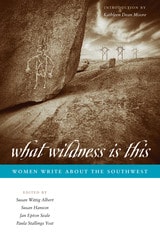
What Wildness Is This
Women Write about the SouthwestEdited by Susan Wittig Albert, Susan Hanson, Jan Epton Seale, and Paula Stallings Yost
University of Texas Press, 2007
Winner, WILLA Literary Award for Creative Nonfiction, 2008
How do women experience the vast, arid, rugged land of the American Southwest? The Story Circle Network, a national organization dedicated to helping women write about their lives, posed this question, and nearly three hundred women responded with original pieces of writing that told true and meaningful stories of their personal experiences of the land. From this deep reservoir of writing—as well as from previously published work by writers including Joy Harjo, Denise Chávez, Diane Ackerman, Naomi Shihab Nye, Leslie Marmon Silko, Gloria Anzaldua, Terry Tempest Williams, and Barbara Kingsolver—the editors of this book have drawn nearly a hundred pieces that witness both to the ever-changing, ever-mysterious life of the natural world and to the vivid, creative, evolving lives of women interacting with it.
Through prose, poetry, creative nonfiction, and memoir, the women in this anthology explore both the outer landscape of the Southwest and their own inner landscapes as women living on the land—the congruence of where they are and who they are. The editors have grouped the writings around eight evocative themes:
- The way we live on the land
- Our journeys through the land
- Nature in cities
- Nature at risk
- Nature that sustains us
- Our memories of the land
- Our kinship with the animal world
- What we leave on the land when we are gone
From the Gulf Coast of Texas to the Pacific Coast of California, and from the southern borderlands to the Great Plains and the Rocky Mountains, these intimate portraits of women's lives on the land powerfully demonstrate that nature writing is no longer the exclusive domain of men, that women bring unique and transformative perspectives to this genre.
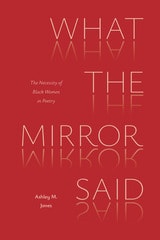
What the Mirror Said
The Necessity of Black Women in PoetryAshley M. Jones
University of Michigan Press, 2026
Part critical essay, part personal essay collection, What the Mirror Said traces the influence of nine Black women poets in Jones’s writing and life. She brings together historical biographical information, personal reflection, and close readings as she explores personal connections to poets from Phillis Wheatley to Patricia Smith. This book is expansive in its study, from classical metrical scansion to metaphorical explication. In offering new ways to interpret poems by important contemporary poets, What the Mirror Said makes the case for the need to study and celebrate Black women poets.
What's Nature Worth
Terre Satterfield
University of Utah Press, 2004
When Borne Across
Literary Cosmopolitics in the Contemporary Indian NovelBishnupriya Ghosh
Rutgers University Press, 2004
India’s 1997 celebration of the Golden Jubilee marked fifty years of independence from British colonial rule. This anniversary is the impetus for Bishnupriya Ghosh’s exploration of the English language icons of South Asian post-colonial literature: Salman Rushdie, Vikram Chandra, Amitav Ghosh, Upamanyu Chatterjee, and Arundhati Roy. These authors, grouped together as South Asian cosmopolitical writers, produce work challenging and expanding preconceived notions of Indian cultural identity, while being sold simultaneously as popular English literature within the global market. This commodification of Indian language and identity reinforces incomplete and simplified images of India and its writers, and at times counteracts the expressed agenda of the writers. In When Borne Across, Ghosh focuses on the politics of language and history, and the related processes of translation and migration within the global network. In so doing, she develops a new approach to literary studies that adapts conventional literary analysis to the pressures, constraints, and liberties of our present era of globalization.
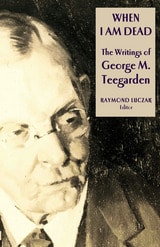
When I Am Dead
The Writings of George M. TeegardenRaymond Luczak
Gallaudet University Press, 2007
The Sixth Volume in the Gallaudet Classics in Deaf Studies Series
George M. Teegarden (1852-1936) taught at the Western Pennsylvania School for the Deaf for 48 years, established the printing department, and also served as the first editor of the school’s magazine. Despite these significant contributions, his greatest gift to deaf people was his skill as a writer and poet who was deaf, as readers will discover in When I Am Dead: The Writings of George M. Teegarden.
Editor Raymond Luczak selected Teegarden’s prose in When I Am Dead from several books, including Raindrop, and Stories, Old and New. Noting that these stories were never written for hearing readers, Luczak marvels at Teegarden’s ability to write English prose that the ASL-familiar reader would find incredibly easy to transliterate. By employing a rich blend of original stories and revisions of fables and myths, Teegarden taught his students the importance of improving their reading and writing skills to outfit them “for the battle of life.” He produced a body of work that Luczak characterizes as “a breath of fresh air: quick, painless, and usually told with a sense of wonder.”
Luczak’s choice of poems came from Teegarden’s self-published volume Vagrant Verses, a summation of his affection for Gallaudet College, the Deaf community, and all deaf people. The eponymous poem “When I Am Dead” articulates concisely the beliefs that directed Teegarden’s life of service:
“When I am dead, I hope to be
Remembered—this is true—
Not for my wit or vanities
But what I did for you.”
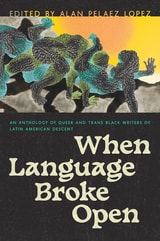
When Language Broke Open
An Anthology of Queer and Trans Black Writers of Latin American DescentEdited by Alan Pelaez Lopez
University of Arizona Press, 2023
By exploring themes of memory, care, and futurity, these contributions expand understandings of Blackness in Latin America, the Caribbean, and their U.S.-based diasporas. The volume offers up three central questions: How do queer and/or trans Black writers of Latin American descent address memory? What are the textures of caring, being cared for, and accepting care as Black queer and/or trans people of Latin American descent? And how do queer and trans embodiments help us understand and/or question the past and the present, and construct a Black, queer, and trans future?
The works collected in this anthology encompass a multitude of genres—including poetry, autobiography, short stories, diaries, visual art, and a graphic memoir—and feature the voices of established writers alongside emerging voices. Together, the contributors challenge everything we think we know about gender, sexuality, race, and what it means to experience a livable life.
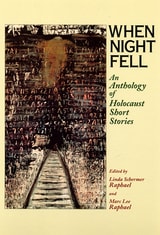
When Night Fell
An Anthology of Holocaust Short StoriesLinda Schermer Raphael and Marc Lee Raphael
Rutgers University Press, 1999
Both survivors of the Holocaust and those who were not there agree that it is impossible to tell what happened as the Nazi Final Solution was put into effect. No writing can adequately imagine the concentration camps, ghettos, and death camps. And that is precisely why writers must tell-and retell-what happened there.
In When Night Fell: An Anthology of Holocaust Short Stories, Linda Schermer Raphael and Marc Lee Raphael have collected twenty-six short stories that tell of the human toll of the Holocaust on those who survived its horrors, as well as later generations touched by its memory. The stories are framed by discussion of the current debate about who owns the Holocaust and who is entitled to speak about it.
Some of the stories included here are by internationally acclaimed authors. Others may be new to many readers. When Night Fell is a fitting memorial to this genocidal horror, putting eloquent voice to human endurance that is-almost-beyond words.
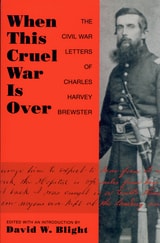
When This Cruel War Is Over
The Civil War Letters of Charles Harvey BrewsterDavid W. Blight
University of Massachusetts Press, 1992
“I am scared most to death every battle we have, but I don't think you need be afraid of my sneaking away unhurt.” Thus wrote Adjutant Charles Harvey Brewster of the 10th Massachusetts to his sister Martha in 1864, in one of over 200 letters he would pen during his four years of service.
Born and raised in Northampton, Massachusetts, Brewster was a twenty-seven-year-old store clerk when he enlisted in Company C of the 10th Massachusetts Volunteers in April 1861. During the next three and a half years he fought in many of the major battles of the Virginia campaigns—Fair Oaks, the Seven Days, Chancellorsville, Gettysburg, the Wilderness, the “Bloody Angle” at Spotsylvania—rising through the ranks to become second lieutenant and later adjutant of his regiment. His letters, most of which were written to his mother and two sisters, record not only the horrors he witnessed on the battlefield, but also his inner struggle with his own values, convictions, and sense of manhood.
In a thoughtful and illuminating introductory essay, David W. Blight explores the evolution of Brewster's understanding of the terrible conflict in which he was engaged. Blight shows how Brewster's attitudes toward race and slavery gradually changed, in part as a result of his contact with escaped slaves and his experience recruiting black troops. He also examines the shift in Brewster's conception of courage, as the realities of war collided with the romantic ideals he had previously embraced. This recently discovered and exceptionally literate collection of 137 letters chronicles the experiences of an ordinary Union soldier caught up in extraordinary events. At times naive and sentimental, at times mature and realistic, Brewster's correspondence not only provides remarkable insight into the meaning of the Civil War for the average Yankee, but also testifies to the persistent power of war to attract and repel the human imagination.
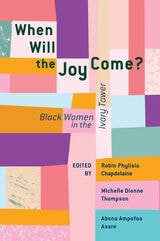
When Will the Joy Come?
Black Women in the Ivory TowerEdited by Robin Phylisia Chapdelaine, Michelle Dionne Thompson, and Abena Ampofoa Asare
University of Massachusetts Press, 2023
How do Black women in higher education create, experience, and understand joy? What sustains them? While scholars have long documented sexism, racism, and classism in the academy, one topic has been conspicuously absent from the literature—how Black women academics have found joy in the midst of adversity. Moving beyond questions of resilience, labor for others, and coping, When Will the Joy Come? focuses on the journeys of over thirty Black women at various stages of their careers.
Joy is a mixture of well-being, pleasure, alignment, and purpose that can be elusive for Black women scholars. With racial reckoning and a global pandemic as context, this volume brings together honest and vital essays that ponder how Black women balance fatigue and frustrations in the halls of the ivory tower, and explore where, when, and if joy enters their lives. By carefully contemplating the emotional, physical, and material consequences of their labor, this collection demonstrates that joy is a tactical and strategic component of Black women’s struggle.
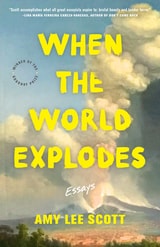
When the World Explodes
EssaysAmy Lee Scott
The Ohio State University Press, 2025