Results by title
458 books match the query 'Literature' and 13 start with w
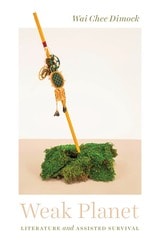
Weak Planet
Literature and Assisted SurvivalWai Chee Dimock
University of Chicago Press, 2020
Drawing on Native American studies, disability studies, and environmental humanities, Dimock shows how hope can be found not in heroic statements but in incremental and unspectacular teamwork. Reversing the usual focus on hegemonic institutions, she highlights instead incomplete gestures given an afterlife with the help of others. She looks at Louise Erdrich’s and Sherman Alexie’s user-amended captivity narratives; nontragic sequels to Moby-Dick by C. L. R. James, Frank Stella, and Amitav Ghosh; induced forms of Irishness in Henry James, Colm Tóibín, W. B. Yeats, and Gish Jen; and the experimentations afforded by a blurry Islam in works by Henri Matisse, James Joyce, Ezra Pound, and Langston Hughes. Celebrating literature’s durability as an assisted outcome, Weak Planet gives us new ways to think about our collective future.

What Happens in Literature
Edward W. Rosenheim Jr.
University of Chicago Press, 2000
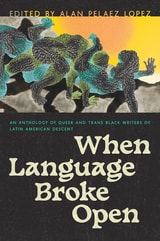
When Language Broke Open
An Anthology of Queer and Trans Black Writers of Latin American DescentEdited by Alan Pelaez Lopez
University of Arizona Press, 2023
By exploring themes of memory, care, and futurity, these contributions expand understandings of Blackness in Latin America, the Caribbean, and their U.S.-based diasporas. The volume offers up three central questions: How do queer and/or trans Black writers of Latin American descent address memory? What are the textures of caring, being cared for, and accepting care as Black queer and/or trans people of Latin American descent? And how do queer and trans embodiments help us understand and/or question the past and the present, and construct a Black, queer, and trans future?
The works collected in this anthology encompass a multitude of genres—including poetry, autobiography, short stories, diaries, visual art, and a graphic memoir—and feature the voices of established writers alongside emerging voices. Together, the contributors challenge everything we think we know about gender, sexuality, race, and what it means to experience a livable life.
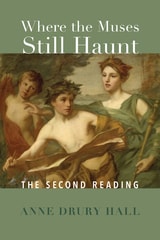
Where the Muses Still Haunt
The Second ReadingAnne Drury Hall
St. Augustine's Press, 2022
After leaving school and becoming lost in adulthood, can one return to these books and revive the quest to be great? For this is why we call such books "great". Yet as Hall says, "few people use the phrase 'great books' any more except ironically, because there is an odd view in the current intellectual fog that there is no such thing as 'greatness'". She is compelled, then, to reexamine the so-called great books and make the case for their eternal importance. It is a task that requires not only swimming against the disenchanted march of the post-modern reader into adulthood, but also asserting the unthinkable––namely, that great books were written by great men who achieved this status through their own labor and endurance.
Hall reintroduces the reader to Plato, Homer, Chaucer, Shakespeare, Milton and Melville and hopes this will expose the fraud of most of contemporary literature, and encourage taste and stamina for the works that promise to exhilarate. And Hall argues well that the thrill of these books draws from one shared feature: "The heart of these books is the drama of choice." If Roger Scruton is famous for showing us that ideas have consequences, Hall provides the reader the vision of himself as standing on the brink and the urgency of taking life seriously again. For many this means taking books seriously again.
This book is an important companion to the works treated therein, for teachers and students alike. Both need encouragement in the laboring of instruction or reading the impressive classics. Particularly apt is Hall's treatment of the difficulty of teaching Shakespeare. For the not-so-recent university graduate, perhaps this book will bring him once again to wander where the Muses still haunt. Indeed, even the well-read will enjoy Hall's keen interpretation of the glory of these stories. This is a book written by a true teacher.
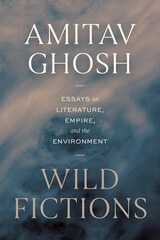
Wild Fictions
Essays on Literature, Empire, and the EnvironmentAmitav Ghosh
University of Chicago Press, 2025
A collection of essays on themes central to Ghosh’s work: imperialism and decolonization, climate change, and the stories of ordinary people making lives amid these historical forces.
Wild Fictions brings together Amitav Ghosh’s extraordinary writings on subjects that have obsessed him over the last twenty-five years: literature and language; climate change and the environment; and human lives, travel, and discoveries. Threaded throughout the collection are his reflections on the spaces that we inhabit and how we occupy them. From the significance of the commodification of the clove to the diversity of the mangrove forests in Bengal and the radical fluidity of multilingualism, Wild Fictions is a powerful refutation of imperial violence, a fascinating exploration of the fictions we weave to absorb history, and a reminder of the importance of sensitivity and empathy.
With the combination of moral passion, intellectual curiosity, and literary elegance that defines his writing, Ghosh makes readers understand the world in new and urgent ways. Together, the pieces in Wild Fictions chart a course that allows us to heal our relationships and restore the delicate balance with the volatile landscapes to which we all belong.
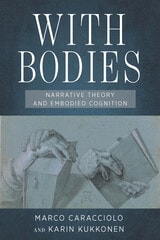
With Bodies
Narrative Theory and Embodied CognitionMarco Caracciolo and Karin Kukkonen
The Ohio State University Press, 2021

Wittgenstein & Critical Theory
Beyond Postmodern Criticism and Toward Descriptive InvestigationsSusan B. Brill
Ohio University Press, 1994
Brill’s work discusses at length the implications of Wittgenstein for literary criticism and theory. The volume specifically investigates the implications of Wittgenstein’s work for a number of contemporary critical orientations (notably poststructualism, feminism, and psychology). In addition, the research includes actual applications of Wittgenstein for literary criticism: diverse literary texts (including a number of poems and stories by Native American authors) are approached via a Wittgensteinian method as a means of discerning which critical approaches might be more or less efficacious. Not only does the book provide a solid introduction to Wittgensteinian philosophy for the critical scholars, but it also provides a clear methodology useful to critics seeking a means to navigate through the entanglement of contemporary criticism and theory.
Brill argues that a reliance upon the philosophy of Ludwig Wittgenstein can enable literary critics to escape the seemingly endless dialectic between modern and postmodern theory. Instead of debating which theory is theoretically best, we need to describe when theories work—and when they do not.
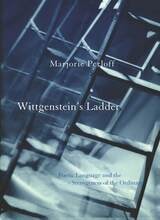
Wittgenstein's Ladder
Poetic Language and the Strangeness of the OrdinaryMarjorie Perloff
University of Chicago Press, 1996
"This book has the lucidity and the intelligence we have come to expect from Marjorie Perloff.—Linda Munk, American Literature
"[Perloff] has brilliantly adapted Wittgenstein's conception of meaning and use to an analysis of contemporary language poetry."—Linda Voris, Boston Review
"Wittgenstein's Ladder offers significant insights into the current state of poetry, literature, and literary study. Perloff emphasizes the vitality of reading and thinking about poetry, and the absolute necessity of pushing against the boundaries that define and limit our worlds."—David Clippinger, Chicago Review
"Majorie Perloff has done more to illuminate our understanding of twentieth century poetic language than perhaps any other critic. . . . Entertaining, witty, and above all highly original."—Willard Bohn, Sub-Stance
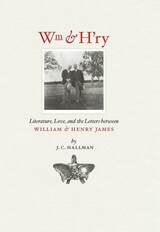
Wm & H'ry
Literature, Love, and the Letters between Wiliam and Henry JamesJ. C. Hallman
University of Iowa Press, 2013
William and Henry James served as each other’s muse and critic. For instance, the event of the death of Mrs. Sands illustrates what H’ry never stated: even if the “matter” of his fiction was light, the minds behind it lived and died as though it was very heavy indeed. He seemed to best understand this himself only after Wm fully fleshed out his system. “I can’t now explain save by the very fact of the spell itself . . . that [Pragmatism] cast upon me,” H’ry wrote in 1907. “All my life I have . . . unconsciously pragmatised.”
Wm was never able to be quite so gracious in return. In 1868, he lashed out at the “every day” elements of two of H’ry’s early stories, and then explained: “I have uttered this long rigmarole in a dogmatic manner, as one speaks, to himself, but of course you will use it merely as a mass to react against in your own way, so that it may serve you some good purpose.” He believed he was doing H’ry a service as he criticized a growing tendency toward “over-refinement” or “curliness” of style. “I think it ought to be of use to you,” he wrote in 1872, “to have any detailed criticism fm even a wrong judge, and you don’t get much fm. any one else.” For the most part, H’ry agreed. “I hope you will continue to give me, when you can, your free impression of my performance. It is a great thing to have some one write to one of one’s things as if one were a 3d person & you are the only individual who will do this.”
Word Crimes
Blasphemy, Culture, and Literature in Nineteenth-Century EnglandJoss Marsh
University of Chicago Press, 1998
From extensive archival and literary research, Joss Marsh reconstructs a unified and particular account of blasphemy in Victorian England. Rewriting English history from the bottom up, she tells the forgotten stories of more than two hundred working-class "blasphemers," like Foote, whose stubborn refusal to silence their "hooligan" voices helped secure our rights to speak and write freely today. The new standards of criminality used to judge their "word crimes" rewrote the terms of literary judgment, demoting the Bible to literary masterpiece and raising Literature as the primary standard of Victorian cultural value.

Words Were Bullets and Seeds
Literature, Intellectuals, and Revolution in Angola and Mozambique, 1961–1986Tom Stennett
University of Michigan Press, 2027
Words Were Bullets and Seeds examines the literary and political writings of Mozambican and Angolan Marxist intellectuals that performed crucial roles in the organizations that have come to dominate postcolonial Mozambique and Angola: Frelimo and the MPLA. Tom Stennett draws on archival materials from Portugal, Angola, Mozambique, Cape Verde, Tanzania, and the United Kingdom to reframe our understanding of Angolan and Mozambican liberation struggles through an analysis of the political poetry in Portuguese written by leading intellectuals of the movements. Stennett argues that traditional political forms—speeches, party literature, manifestos—demand a close textual analysis that is sensitive to aesthetics and the specific ways in which Angolan and Mozambican revolutionaries engaged with political idioms and theories such as Négritude, African socialism, Pan-Africanism, and Marxism. Words Were Bullets and Seeds leverages literary texts as historical sources with insights into political ideological struggles to provide a nuanced understanding of Mozambican and Angolan postcolonial debates.
Writing against War
Literature, Activism, and the British Peace MovementCharles Andrews
Northwestern University Press, 2017
The cataclysm of the First World War gave rise to the British Peace Movement, a spectrum of pacifist, internationalist, and antiwar organizations and individuals. Antiwar sentiments found expression not only in editorials, criticism, and journalism but also in novels and other works of literature. Writing against War examines the work of Aldous Huxley, Storm Jameson, Siegfried Sassoon, Rose Macaulay, and Virginia Woolf to analyze the effects of their attempts to employ fiction in the service of peace activism. It further traces how Huxley, Woolf, and others sought to reconcile their antiwar beliefs with implacable military violence.
The British Peace Movement's failure to halt the rise of fascism and the Second World War continues to cast a shadow over contemporary pacifist movements. Writing about War will fascinate scholars of peace studies and literature and offers valuable insights for current-day peace activists and artists who seek to integrate creativity with activism.
Writing on the Soil
Land and Landscape in Literature from Eastern and Southern AfricaNg’ang’a Wahu-Muchiri
University of Michigan Press, 2023
Across contiguous nation-states in Eastern Africa, the geographic proximity disguises an ideological complexity. Land has meant something fundamental in the sociocultural history of each country. Those concerns, however, have manifested into varied political events, and the range of struggles over land has spawned a multiplicity of literary interventions. While Kenya and Uganda were both British colonies, Kenya's experience of settler land alienation made for a much more violent response against efforts at political independence. Uganda's relatively calm unyoking from the colonial burden, however, led to a tumultuous post-independence. Tanzania, too, like Kenya and Uganda, resisted British colonial administration—after Germany's defeat in World War 1.
In Writing on the Soil, author Ng’ang’a Wahu-Mũchiriargues that representations of land and landscape perform significant metaphorical labor in African literatures, and this argument evolves across several geographical spaces. Each chapter's analysis is grounded in a particular locale: western Kenya, colonial Tanganyika, post-independence Tanzania, Zimbabwe, Nairobi, Dar es Salaam, Anam Ka'alakol (Lake Turkana), Kampala, and Kitgum in Northern Uganda. Moreover, each section contributes to a deeper understanding of the aesthetic choices that authors make when deploying tropes revolving around land, landscape, and the environment. Mũchiri disentangles the numerous connections between geography and geopolitical space on the one hand, and ideology and cultural analysis on the other. This book embodies a multi-layered argument in the sphere of African critical scholarship, while adding to the growing field of African land rights scholarship—an approach that foregrounds the close reading of Africa’s literary canon.