Results by title
133 books match the query 'Mammals' and 9 start with w

Wapiti Wilderness
Margaret Murie
University Press of Colorado, 1987
For over 37 years, Margaret and Olaus Murie made their home in the mountainous wilderness of the Tetons, where Olaus Murie conducted his famous studies of the American elk: the wapiti. Through these years their home was almost a nature-conservation shrine to thousands of Americans interested in outdoors, animals, and nature. Wapiti Wilderness, begun by Mrs. Murie as a sequel to her book Two in the Far North, which told of the Muries' life and expeditions in Alaska, became a collaborative effort by both the Muries.
In alternate chapters, Olaus tells of his work as a field biologist for the old U.S. Bureau of Biological Survey and recounts stories of his studies of not only elk but also other great animals. And Mrs. Murie, from her side, describes their life together on the trail and in the various camps and nature adventures in that wilderness during all four seasons. The book is replete with stories of Jackson Hole residents, “pioneer poets,” and the wild creatures that made their way into the Murie household. Olaus Murie's evocative pen-and-ink drawings illuminate each chapter, and four pages of photographs help complete the picture of what life was like in the wapiti wilderness.
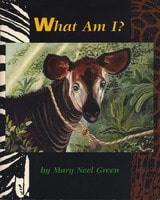
What Am I?
By Mary Neel Green
University of Texas Press, 1999
In the dense, shady rain forest, it's easy for a little guy to get lost from his mother. When a young okapi wanders away from his mom, he discovers the world of people and learns that he is a very special animal, different from all the rest. But still he misses his mother and their home in the forest. How can he get back?
This heartwarming tale with a happy ending introduces children from ages three to eight to the okapi, a graceful, elusive animal native to the Ituri Forest of Congo-Zaire. Based on the true story of an okapi calf that escaped from captivity, it is sure to delight young animal lovers, while teaching them basic facts about the family life of the okapi. A brief afterword provides more information for parents and older children.
Where the Buffalo Roam
Restoring America's Great PlainsAnne Matthews
University of Chicago Press, 2002
This edition includes a new foreword by environmental historian Donald Worster. Matthews's new afterword describes how with growing support from Native Americans and private groups like the Nature Conservancy, the Poppers' dream of a Buffalo Commons is becoming a reality.
"An admirably crafted book, as poignant and entertaining as it is informative."—Seattle Times
"A priceless piece of Americana."—The Boston Globe
"Matthew's delightful account of the Poppers, their proposal and the controversy surrounding it does focus new attention on the region and its problems."—The Philadelphia Inquirer
"Bright, active, effective journalism. . . . An extremely savvy overlook of the dilemmas of the Great Plains."—Wallace Stegner
Wild Cats of the World
Mel Sunquist and Fiona Sunquist
University of Chicago Press, 2002
Wild Cats of the World is a treasure trove of answers to questions like these, and many others, for anyone who's interested in learning more about the world's felids, including the ones with whom we share our homes. Mel and Fiona Sunquist have spent more than a decade gathering information about cats from every available source, many of them quite difficult to find, including scientific papers, descriptions of hunts, archeological findings, observations by naturalists and travelers, reports from government agencies, and newsletters from a wide variety of organizations. Weaving information from these sources together with their own experiences observing wild cats around the world, the Sunquists have created the most comprehensive reference on felids available. Each of their accounts of the 36 species of cat contains a description of the cat, including human interactions with it, as well as detailed data on its distribution, ecology and behavior, status in the wild, and efforts to conserve it. Numerous photographs, including more than 40 in full color, illustrate these accounts.
Ranging from the two-pound black-footed cat to the five-hundred-pound tiger, and from the African serval with its satellite-dish ears to the web-footed fishing cat of Asia, Wild Cats of the World will fascinate and educate felid fans of any stripe (or spot).
Wild Horses of the West
History and Politics of America's MustangsJ. Edward de Steiguer
University of Arizona Press, 2011
In Wild Horses of the West, J. Edward de Steiguer provides an entertaining and well-researched look at one of the most controversial animal welfare issues of our time—the protection of free-roaming horses on the West’s public lands. This is the first book in decades to include the entire story of these magnificent animals, from their evolution and biology to their historical integration into conquistador, Native American, and cowboy cultures. And the story isn’t over. De Steiguer goes on to address the modern issues— ecology, conservation, and land management—surrounding wild horses in the West today.
Featuring stunning color photographs of wild horses, this extremely thorough and engaging blend of history, science, and politics will appeal to students of the American West, conservation activists, and anyone interested in the beauty and power of these striking animals.
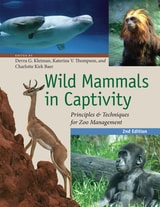
Wild Mammals in Captivity
Principles and Techniques for Zoo Management, Second EditionEdited by Devra G. Kleiman, Katerina V. Thompson, and Charlotte Kirk Baer
University of Chicago Press, 2010
Zoos, aquaria, and wildlife parks are vital centers of animal conservation and management. For nearly fifteen years, these institutions have relied on Wild Mammals in Captivity as the essential reference for their work. Now the book reemerges in a completely updated second edition. Wild Mammals in Captivity presents the most current thinking and practice in the care and management of wild mammals in zoos and other institutions. In one comprehensive volume, the editors have gathered the most current information from studies of animal behavior; advances in captive breeding; research in physiology, genetics, and nutrition; and new thinking in animal management and welfare.
In this edition, more than three-quarters of the text is new, and information from more than seventy-five contributors is thoroughly updated. The standard text for all courses in zoo biology, Wild Mammals in Captivity will, in its new incarnation, continue to be used by zoo managers, animal caretakers, researchers, and anyone with an interest in how to manage animals in captive conditions.
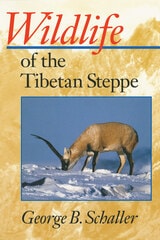
Wildlife of the Tibetan Steppe
George B. Schaller
University of Chicago Press, 1998
The plains ungulates are the main focus of this book—especially the Tibetan antelope, or chiru, whose migrations define this ecosystem much as those of the wildebeest define the Serengeti. Schaller's descriptions of mammal numbers and distribution, behavior, and ecology provide baseline information that may allow wildlife, grasslands, and pastoralists to continue to coexist harmoniously in this region.
This project led to the creation of the 130,000-square-mile Chang Tang Reserve by the Tibetan government in 1993, and Wildlife of the Tibetan Steppe should help promote future studies as well as conservation and management efforts.
"Schaller makes significant contributions to an understanding of the origins and ecology of Tibetan wildlife that will thrill specialists. . . . Schaller's book is much more than an ecological synthesis. It is a quest for conservation, a case history by a very brave and capable man, driven by no small passion to prevent the tragedy of extinction that looms over Tibet's fauna. His book touches not only the mind but also the heart, and in the context of conservation and the future it raises questions to torture the soul. . . . Wildlife of the Tibetan Steppe will long remain a unique, important source of biological, but also sociological, insights and challenges. I found it well written and difficult to put down."—Valerius Geist, Nature
"The topics in Wildlife of the Tibetan Steppe are at least as diverse as the topography; they range from geology and paleoecology to descriptions of ungulates and carnivores unknown to most of the non-Chinese speaking world. Individual chapters focus on kiangs, Bactrian camels, yaks, chirus, blue sheep, and Tibetan argalis and gazelles. Not only is much of the biological information new, but subsumed within these chapters are current and past estimates of population sizes both in the Chang Tang Reserve and in protected and nonprotected areas of 'the' plateau. Insights are provided into social structure, and speculations about the evolution and adaptive bases of behavior are carefully offered. Subsequent chapters involve discussions of carnivore communities and interactions between people and wildlife, including the localized but devastating effects of poachers. . . . This book has something for all audiences. . . . [A]n exciting testimony to the past and present status of a biologically spectacular region."—Joel Berger, Conservation Biology
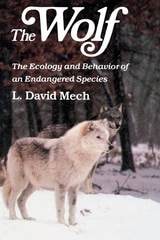
Wolf
The Ecology and Behavior of an Endangered SpeciesDavid Mech
University of Minnesota Press, 1981
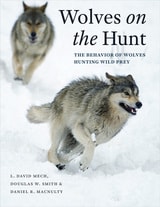
Wolves on the Hunt
The Behavior of Wolves Hunting Wild PreyL. David Mech, Douglas W. Smith, and Daniel R. MacNulty
University of Chicago Press, 2015
Combining behavioral data, thousands of hours of original field observations, research in the literature, a wealth of illustrations, and—in the e-book edition and online—video segments from cinematographer Robert K. Landis, the authors create a compelling and complex picture of these hunters. The wolf is indeed an adept killer, able to take down prey much larger than itself. While adapted to hunt primarily hoofed animals, a wolf—or especially a pack of wolves—can kill individuals of just about any species. But even as wolves help drive the underlying rhythms of the ecosystems they inhabit, their evolutionary prowess comes at a cost: wolves spend one-third of their time hunting—the most time consuming of all wolf activities—and success at the hunt only comes through traveling long distances, persisting in the face of regular failure, detecting and taking advantage of deficiencies in the physical condition of individual prey, and through ceaseless trial and error, all while risking injury or death.
By describing and analyzing the behaviors wolves use to hunt and kill various wild prey—including deer, moose, caribou, elk, Dall sheep, mountain goats, bison, musk oxen, arctic hares, beavers, and others—Wolves on the Hunt provides a revelatory portrait of one of nature’s greatest hunters.