66 books match the query 'Masculinity in literature' and 4 start with w
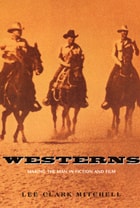
cover of Westerns: Making the Man in Fiction and Film

Westerns

Making the Man in Fiction and Film

Lee Clark Mitchell

University of Chicago Press, 1996

A history of the Western in fiction and on film that shows how it reflects the changing obsessions and fears of American culture

Few genres are so closely identified with America as the Western. In this wide-ranging examination of the Western and its appeal, Lee Clark Mitchell ranges from the novels of James Fenimore Cooper to Louis L'Amour, and from classic films like Stagecoach to spaghetti Westerns like A Fistful of Dollar to show how Westerns helped assuage a series of crises in American culture. This landmark book shows that the Western owes its perennial appeal not to unchanging conventions but to the deftness with which it responds to the obsessions and fears of its audience. And no obsession, Lee Mitchell argues, has figured more prominently in the Western than what it means to be a man. 
[more]
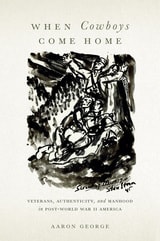
cover of When Cowboys Come Home: Veterans, Authenticity, and Manhood in Post–World War II America

When Cowboys Come Home

Veterans, Authenticity, and Manhood in Post–World War II America

Aaron George

Rutgers University Press, 2024

When Cowboys Come Home: Veterans, Authenticity, and Manhood in Post–World War II America is a cultural and intellectual history of the 1950s that argues that World War II led to a breakdown of traditional markers of manhood and opened space for veterans to reimagine what masculinity could mean. One particularly important strand of thought, which influenced later anxieties over “other-direction” and “conformity,” argued that masculinity was not defined by traits like bravery, stoicism, and competitiveness but instead by authenticity, shared camaraderie, and emotional honesty. To elucidate this challenge to traditional “frontiersman” masculinity, Aaron George presents three intellectual biographies of important veterans who became writers after the war: James Jones, the writer of the monumentally important war novel From Here to Eternity; Stewart Stern, one of the most important screenwriters of the fifties and sixties, including for Rebel without a Cause; and Edward Field, a bohemian poet who used poetry to explore his love for other men. Through their lives, George shows how wartime disabused men of the notion that war was inherently a brave or heroic enterprise and how the alienation they felt upon their return led them to value the authentic connections they made with other men during the war.
 
[more]
cover of White Men Aren't

White Men Aren't

Thomas DiPiero

Duke University Press, 2002

Psychoanalytic theory has traditionally taken sexual difference to be the fundamental organizing principle of human subjectivity. White Men Aren’t contests that assumption, arguing that other forms of difference—particularly race—are equally important to the formation of identity. Thomas DiPiero shows how whiteness and masculinity respond to various, complex cultural phenomena through a process akin to hysteria and how differences traditionally termed “racial” organize psychic, social, and political life as thoroughly as sexual difference does. White masculinity is fraught with anxiety, according to DiPiero, because it hinges on the unstable construction of white men’s cultural hegemony. White men must always struggle against the loss of position and the fear of insufficiency—against the specter of what they are not.

Drawing on the writings of Freud, Lacan, Butler, Foucault, and Kaja Silverman, as well as on biology, anthropology, and legal sources, Thomas DiPiero contends that psychoanalytic theory has not only failed to account for the role of race in structuring identity, it has in many ways deliberately ignored it. Reading a wide variety of texts—from classical works such as Oedipus Rex and The Iliad to contemporary films including Boyz 'n' the Hood and Grand Canyon—DiPiero reveals how the anxiety of white masculine identity pervades a surprising range of Western thought, including such ostensibly race-neutral phenomena as Englightenment forms of reason.
[more]
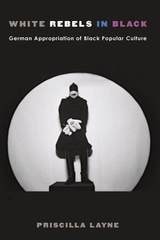
cover of White Rebels in Black: German Appropriation of Black Popular Culture

White Rebels in Black

German Appropriation of Black Popular Culture

Priscilla Layne

University of Michigan Press, 2018

Analyzing literary texts and films, White Rebels in Black shows how German authors have since the 1950s appropriated black popular culture, particularly music, to distance themselves from the legacy of Nazi Germany, authoritarianism, and racism, and how such appropriation changes over time. Priscilla Layne offers a critique of how blackness came to symbolize a positive escape from the hegemonic masculinity of postwar Germany, and how black identities have been represented as separate from, and in opposition to, German identity, foreclosing the possibility of being both black and German. Citing four autobiographies published by black German authors Hans Jürgen Massaquo, Theodor Michael, Günter Kaufmann, and Charly Graf, Layne considers how black German men have related to hegemonic masculinity since Nazi Germany, and concludes with a discussion on the work of black German poet, Philipp Khabo Köpsell.
[more]