Results by title
128 books match the query 'Men' and 5 start with w

White Men Aren't
Thomas DiPiero
Duke University Press, 2002
Drawing on the writings of Freud, Lacan, Butler, Foucault, and Kaja Silverman, as well as on biology, anthropology, and legal sources, Thomas DiPiero contends that psychoanalytic theory has not only failed to account for the role of race in structuring identity, it has in many ways deliberately ignored it. Reading a wide variety of texts—from classical works such as Oedipus Rex and The Iliad to contemporary films including Boyz 'n' the Hood and Grand Canyon—DiPiero reveals how the anxiety of white masculine identity pervades a surprising range of Western thought, including such ostensibly race-neutral phenomena as Englightenment forms of reason.
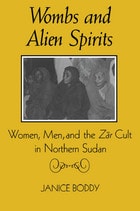
Wombs and Alien Spirits
Women, Men, and the Zar Cult in Northern SudanJanice Boddy
University of Wisconsin Press, 1989
Based on nearly two years of ethnographic fieldwork in a Muslim village in northern Sudan, Wombs and Alien Spirits explores the zâr cult, the most widely practiced traditional healing cult in Africa. Adherents of the cult are usually women with marital or fertility problems, who are possessed by spirits very different from their own proscribed roles as mothers. Through the woman, the spirit makes demands upon her husband and family and makes provocative comments on village issues, such as the increasing influence of formal Islam or encroaching Western economic domination. In accommodating the spirits, the women are able metaphorically to reformulate everyday discourse to portray consciousness of their own subordination.
Janice Boddy examines the moral universe of the village, discussing female circumcision, personhood, kinship, and bodily integrity, then describes the workings of the cult and the effect of possession on the lives of men as well as women. She suggests that spirit possession is a feminist discourse, though a veiled and allegorical one, on women's objectification and subordination. Additionally, the spirit world acts as a foil for village life in the context of rapid historical change and as such provides a focus for cultural resistance that is particularly, though not exclusively, relevant to women.
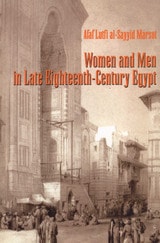
Women and Men in Late Eighteenth-Century Egypt
By Afaf Lutfi al-Sayyid Marsot
University of Texas Press, 1995
In the late eighteenth century, decentralized and chaotic government in Egypt allowed women a freedom of action that has not been equaled until recent times. Delving extensively into archival sources, Afaf Marsot presents the first comprehensive picture of women's status and opportunities in this period.
Marsot makes important connections between forms of government, economic possibilities, and gender relations, showing how political instability allowed women to acquire property, independent of males, as a hedge against political uncertainty. She traces the linkages that women formed among themselves and with the ulama (non-Ottoman native elites) who aided and supported them. The book concludes with a comparison of women's status in the nineteenth century, when the introduction of European institutions that did not recognize their legal existence marginalized women, causing them to have to rely on men as major breadwinners. These important findings about the relationship between forms of government and the status of women will be of interest to a wide audience.
Working Women, Working Men
Sao Paulo & the Rise of Brazil’s Industrial Working Class, 1900–1955Joel Wolfe
Duke University Press, 1993
Drawing on a diverse range of sources—oral histories along with union, industry, and government archival materials—Wolfe's account focuses not only on labor leaders and formal Left groups, but considers the impact of grassroots workers' movements as well. He pays particular attention to the role of gender in the often-contested relations between leadership groups and thee rank and file. Wolfe's analysis illuminates how various class and gender ideologies influenced the development of unions, industrialists' strategies, and rank-and-file organizing and protest activities.
This study reveals how workers in Sào Paulo maintained a local grassroots social movement that, by the mid–1950s, succeeded in seizing control of Brazil's state-run official unions. By examining the actions of these workers in their rise to political prominence in the 1940s and 1950s, this book provides a new understanding of the sources and development of populist politics in Brazil.
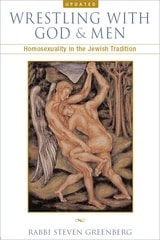
Wrestling with God and Men
Homosexuality in the Jewish TraditionRabbi Steven Greenberg
University of Wisconsin Press, 2005
For millennia, two biblical verses have been understood to condemn sex between men as an act so abhorrent that it is punishable by death. Traditionally Orthodox Jews, believing the scripture to be the word of God, have rejected homosexuality in accordance with this interpretation. In 1999, Rabbi Steven Greenberg challenged this tradition when he became the first Orthodox rabbi ever to openly declare his homosexuality.
Wrestling with God and Men is the product of Rabbi Greenberg’s ten-year struggle to reconcile his two warring identities. In this compelling and groundbreaking work, Greenberg challenges long held assumptions of scriptural interpretation and religious identity as he marks a path that is both responsible to human realities and deeply committed to God and Torah. Employing traditional rabbinic resources, Greenberg presents readers with surprising biblical interpretations of the creation story, the love of David and Jonathan, the destruction of Sodom, and the condemning verses of Leviticus. But Greenberg goes beyond the question of whether homosexuality is biblically acceptable to ask how such relationships can be sacred. In so doing, he draws on a wide array of nonscriptural texts to introduce readers to occasions of same-sex love in Talmudic narratives, medieval Jewish poetry and prose, and traditional Jewish case law literature. Ultimately, Greenberg argues that Orthodox communities must open up debate, dialogue, and discussion—precisely the foundation upon which Jewish law rests—to truly deal with the issue of homosexual love.
This book will appeal not only to members of the Orthodox faith but to all religious people struggling to resolve their belief in the scriptures with a desire to make their communities more open and accepting to gay and lesbian members.
2005 Finalist for the Lambda Literary Awards, for Religion/Spirituality