Results by title
491 books match the query 'Moral and ethical aspects' and 21 start with w

Walls
Enclosure and Ethics in the Modern LandscapeThomas Oles
University of Chicago Press, 2014
In Walls, Oles shows how our minds and our politics are shaped by–and shape–our divisions in the landscape. He traces the rich array of practices and meanings connected to the making and marking of boundaries across history and prehistory, and he describes how these practices have declined in recent centuries. The consequence, he argues, is all around us in the contemporary landscape, riven by walls shoddy in material and mean in spirit. Yet even today, Oles demonstrates, every wall remains potentially an opening, a stage, that critical place in the landscape where people present themselves and define their obligations to one another. In an evocative epilogue, Oles brings to life a society of productive, intentional, and ethical enclosure—one that will leave readers more hopeful about the divided landscapes of the future.
War without Bodies
Framing Death from the Crimean to the Iraq WarMartin Danahay
Rutgers University Press, 2022
Analyzing poetry, photographs, video and video games the book illustrates the ways in which war was framed in these different historical contexts. It examines the cultural assumptions that influenced the reception of images of war and discusses how death and damage to bodies was made acceptable to the public. War Without Bodies aims to heighten awareness of how acceptance of war is coded into texts and how active resistance to such hidden messages can help prevent future unnecessary wars.
Was Hitler a Darwinian?
Disputed Questions in the History of Evolutionary TheoryRobert J. Richards
University of Chicago Press, 2013
We Are Civic Media
Sangita Shresthova, Dan Sinker, Pratik Nyaupane, Sophie Madej, and Colin Maclay
Northwestern University Press, 2025
“Civic media” is the use of contemporary technologies to connect communities, inspire action, build civic capacity, and sustain social change efforts. Written by artists, creators, storytellers, organizers, and others working at the intersections of technology, social justice, and culture, this book summons civic media through the lived experiences of its contributors.
Latoya Peterson delves into the therapeutic power of gaming; Akilah Hughes discusses identity and community through the lens of her campaign to change her high school's racist mascot; and Tyree Boyd-Pates emphasizes the potential power of museum curation to challenge power dynamics and bridge digital and physical realms. Through the experiences of these grassroots practitioners and many others, We Are Civic Media offers accessible insights for those interested in understanding, respecting, and practicing civic media.
Weapons for Victory
The Hiroshima Decision Fifty Years LaterRobert James Maddox
University of Missouri Press, 2004
The highly acclaimed Weapons for Victory originally appeared in 1995, the fiftieth anniversary of the end of World War II. Now, in this paperback edition, Robert James Maddox provides a new introduction about the ongoing controversy related to the decision to bomb Hiroshima.
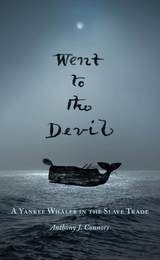
Went to the Devil
A Yankee Whaler in the Slave TradeAnthony J. Connors
University of Massachusetts Press, 2019
In this riveting biography, Anthony J. Connors explores this question by detailing not only the troubled, adventurous life of this man but also the turbulent times in which he lived. Set in an era of social and political fragmentation and impending civil war, when changes in maritime law and the economics of whaling emboldened slaving agents to target captains and their vessels for the illicit trade, Davoll's story reveals the deadly combination of greed and racial antipathy that encouraged otherwise principled Americans to participate in the African slave trade.
What Are Stem Cells?
Definitions at the Intersection of Science and PoliticsJohn Lynch
University of Alabama Press, 2011
What Comes after Entanglement?
Activism, Anthropocentrism, and an Ethics of ExclusionEva Haifa Giraud
Duke University Press, 2019
Whenever Two or More Are Gathered
Relationship as the Heart of Ethical DiscourseMichael M. Harmon and O. C. McSwite
University of Alabama Press, 2011
A Scholarly Exploration of How Relationships Shape Moral Understanding.
Whenever Two or More Are Gathered focuses on the critical role of ethics and moral responsibility in the field of public administration. Michael M. Harmon and O. C. McSwite posit that administrative ethics, as presently conceived and practiced, is largely a failure, incapable of delivering on its original promise of effectively regulating official conduct in order to promote the public interest. They argue that administrative ethics is compromised at its very foundations by two core assumptions: that human beings act rationally and that language is capable of conveying clear, stable, and unambiguous principles of ethical conduct.
The result is the illusion that values, principles, and rules of ethical conduct can be specified in workably clear ways, in particular, through their formalization in official codes of ethics; that people are capable of comprehending and responding to them as they are intended; and that the rewards and punishments attached to them will be effective in structuring daily behavior.
In a series of essays that draw on both fiction and film, as well as the disciplines of pragmatism, organizational theory, psychoanalysis, structural linguistics, and economics, Harmon and McSwite make their case for human relationship as the proper foundation of administrative ethics. “Exercising responsible ethical practice requires attaining a special kind of relationship with other people. Relationship is how the pure freedom that resides in the human psyche—for ethical choice, creativity, or original action of any type—can be brought into the structured world of human social relations without damaging or destroying it.” Furthermore, they make the case for dropping the term “ethics” in favor of the term “responsibility,” as “responsibility accentuates the social [relational] nature of moral action.”
Where Human Rights Begin
Edited by Wendy Chavkin and Ellen Chesler
Rutgers University Press, 2005
More than a decade ago, three landmark world conferences placed the human rights of women on the international agenda. The first, in Vienna, officially extended the definition of human rights to include a woman’s right to self-determination and equality. A year later, in Cairo, this concept was elaborated to deal explicitly with issues of sexuality and procreation. Subsequently, at a conference in Beijing, the international community committed to a wide range of practical interventions to advance women’s sexual, social, political, and economic rights.
Despite these accomplishments, we find ourselves at an ever more difficult juncture in the struggle to fully realize women’s rights as human rights. Complications, such as terrorism and the “war” against it, the HIV/AIDS pandemic, the incursion of religious fundamentalism into governments, and the U.S. government’s retreat from the international agenda on sexual and reproductive rights have raised questions about the direction of policy implementations and have prevented straightforward progress.
This timely collection brings together eight wide-reaching and provocative essays that examine the practical and theoretical issues of sexual and reproductive health policy and implementation.

Whither College Sports
Amateurism, Athlete Safety, and Academic IntegrityAndrew Zimbalist
Rutgers University Press, 2022
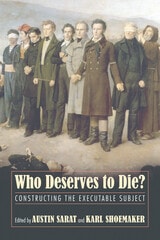
Who Deserves to Die?
Constructing the Executable SubjectAustin Sarat
University of Massachusetts Press, 2011
How do we select those who will be subject to capital punishment? How do we identify the worst of the worst and decide who among them can and should be executed? Today these questions are more pressing than they have ever been. As the number of people sentenced to death and executed declines in the United States, those who are executed stand out as distinctive kinds of criminals, distinctive kinds of people. Does a death sentence affirm or deny their humanity? Is such a sentence an act of revenge or a carefully calculated act of justice?
These are more than questions for policy and law. They are one way of getting a handle on how our culture understands what makes life worth preserving and of delving into its complex calculus of punishment and retribution. Who Deserves to Die? brings together a distinguished group of death penalty scholars to assess the forms of legal subjectivity and legal community that are supported and constructed by the doctrines and practices of punishment by death in the United States. They help us understand what we do and who we become when we decide who is fit for execution.
In addition to the editors, contributors include Vanessa Barker, Thomas L. Dumm, Daniel Markel, Linda Meyer, Ruth A. Miller, Ravit Reichman, Susan R. Schmeiser, Mateo Taussig-Rubbo, and Robert Weisberg.

Who's a Good Dog?
And How to Be a Better HumanJessica Pierce
University of Chicago Press, 2023
A guide to cultivating a shared life of joy and respect with our dogs.
Who’s a Good Dog? is an invitation to nurture more thoughtful and balanced relationships with our canine companions. By deepening our curiosity about what our dogs are experiencing, and by working together with them in a spirit of collaboration, we can become more effective and compassionate caregivers.
With sympathy for the challenges met by both dogs and their humans, bioethicist Jessica Pierce explores common practices of caring for dogs, including how we provide exercise, what we feed, how and why we socialize and train, and how we employ tools such as collars and leashes. She helps us both to identify potential sources of fear and anxiety in our dogs’ lives and to expand practices that provide physical and emotional nourishment. Who’s a Good Dog? also encourages us to think more critically about what we expect of our dogs and how these expectations can set everyone up for success or failure. Pierce offers resources to help us cultivate attentiveness and kindness, inspiring us to practice the art of noticing, of astonishment, of looking with fresh eyes at these beings we think we know so well. And more than this, she makes her findings relatable by examining facets of her relationship with Bella, the dog in her life. As Bella shows throughout, all dogs are good dogs, and we, as humans and dog guardians, could be doing a little bit better to get along with them and give them what they need.
Why We Can't Have Nice Things
Social Media’s Influence on Fashion, Ethics, and PropertyMinh-Ha T. Pham
Duke University Press, 2022

Wicked Cinema
Sex and Religion on ScreenBy Daniel Cutrara
University of Texas Press, 2014
From struggles over identity politics in the 1990s to current concerns about a clash of civilizations between Islam and Christianity, culture wars play a prominent role in the twenty-first century. Movies help to define and drive these conflicts by both reflecting and shaping cultural norms, as well as showing what violates those norms. In this pathfinding book, Daniel S. Cutrara employs queer theory, cultural studies, theological studies, and film studies to investigate how cinema represents and often denigrates religion and religious believers—an issue that has received little attention in film studies, despite the fact that faith in its varied manifestations is at the heart of so many cultural conflicts today.
Wicked Cinema examines films from the United States, Europe, and the Middle East, including Crimes and Misdemeanors, The Circle, Breaking the Waves, Closed Doors, Agnes of God, Priest, The Last Temptation of Christ, and Dogma. Central to all of the films is their protagonists’ struggles with sexual transgression and traditional belief systems within Christianity, Judaism, or Islam—a struggle, Cutrara argues, that positions believers as the Other and magnifies the abuses of religion while ignoring its positive aspects. Uncovering a hazardous web of ideological assumptions informed by patriarchy, the spirit/flesh dichotomy, and heteronormativity, Cutrara demonstrates that ultimately these films emphasize the “Otherness” of the faithful through a variety of strategies commonly used to denigrate the queer, from erasing their existence, to using feminization to make them appear weak, to presenting them as dangerous fanatics.

Wild Mammals in Captivity
Principles and Techniques for Zoo Management, Second EditionEdited by Devra G. Kleiman, Katerina V. Thompson, and Charlotte Kirk Baer
University of Chicago Press, 2010
Zoos, aquaria, and wildlife parks are vital centers of animal conservation and management. For nearly fifteen years, these institutions have relied on Wild Mammals in Captivity as the essential reference for their work. Now the book reemerges in a completely updated second edition. Wild Mammals in Captivity presents the most current thinking and practice in the care and management of wild mammals in zoos and other institutions. In one comprehensive volume, the editors have gathered the most current information from studies of animal behavior; advances in captive breeding; research in physiology, genetics, and nutrition; and new thinking in animal management and welfare.
In this edition, more than three-quarters of the text is new, and information from more than seventy-five contributors is thoroughly updated. The standard text for all courses in zoo biology, Wild Mammals in Captivity will, in its new incarnation, continue to be used by zoo managers, animal caretakers, researchers, and anyone with an interest in how to manage animals in captive conditions.
Windows into the Soul
Surveillance and Society in an Age of High TechnologyGary T. Marx
University of Chicago Press, 2016
In this landmark book, Marx sums up a lifetime of work on issues of surveillance and social control by disentangling and parsing the empirical richness of watching and being watched. Using fictional narratives as well as the findings of social science, Marx draws on decades of studies of covert policing, computer profiling, location and work monitoring, drug testing, caller identification, and much more, Marx gives us a conceptual language to understand the new realities and his work clearly emphasizes the paradoxes, trade-offs, and confusion enveloping the field. Windows into the Soul shows how surveillance can penetrate our social and personal lives in profound, and sometimes harrowing, ways. Ultimately, Marx argues, recognizing complexity and asking the right questions is essential to bringing light and accountability to the darker, more iniquitous corners of our emerging surveillance society.
For more information, please see www.garymarx.net.
Wisecracks
Humor and Morality in Everyday LifeDavid Shoemaker
University of Chicago Press, 2024
A good sense of humor is key to the good life, but a joke taken too far can get anyone into trouble. Where to draw the line is not as simple as it may seem. After all, even the most innocent quips between friends rely on deception, sarcasm, and stereotypes and often run the risk of disrespect, meanness, and harm. How do we face this dilemma without taking ourselves too seriously?
In Wisecracks, philosopher David Shoemaker examines this interplay between humor and morality and ultimately argues that even morally suspect humor is an essential part of ethical life. Shoemaker shows how improvised “wisecracks” between family and friends—unlike scripted stand-up, sketches, or serials—help us develop a critical human skill: the ability to carry on and find the funny in tragedy. In developing a new ethics of humor in defense of questionable gibes, Wisecracks offers a powerful case for humor as a healing presence in human life.
Without a Tear
Our Tragic Relationship with AnimalsMark H. Bernstein
University of Illinois Press, 2004
Most people who write about our ethical obligations concerning animals base their arguments on emotional appeals or contentious philosophical assumptions; Bernstein, however, argues from reasons but carries little theoretical baggage. He considers the issues in a religious context, where he finds that Judaism in particular has the resources to ground moral obligations to animals. Without a Tear also makes novel use of feminist ethics to add to the case for drawing animals more closely into our ethical world.
Bernstein details the realities of factory farms, animal-based research, and hunting fields, and contrasting these chilling facts with our moral imperatives clearly shows the need for fundamental changes to some of our most basic animal institutions. The tightly argued, provocative claims in Without a Tear will be an eye-opening experience for animal lovers, scholars, and people of good faith everywhere.

Women against Abortion
Inside the Largest Moral Reform Movement of the Twentieth CenturyKarissa Haugeberg
University of Illinois Press, 2017
Worldly Ethics
Democratic Politics and Care for the WorldElla Myers
Duke University Press, 2013