Results by title
618 books match the query 'Motion pictures' and 17 start with w
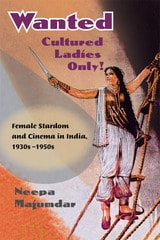
Wanted Cultured Ladies Only!
Female Stardom and Cinema in India, 1930s-1950sNeepa Majumdar
University of Illinois Press, 2008
West African Screen Media
Comedy, TV Series, and TransnationalizationBoukary Sawadogo
Michigan State University Press, 2019
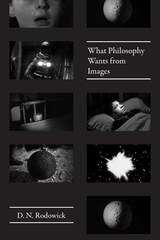
What Philosophy Wants from Images
D. N. Rodowick
University of Chicago Press, 2017
Rodowick here explores work by artists such as Ken Jacobs, Ernie Gehr, Victor Burgin, Harun Farocki, and others—artists who are creating forms that express a new historical consciousness of images. These forms acknowledge a complex relationship to the disappearing past even as they point toward new media that will challenge viewers’ confidence in what the images they see are or are becoming. What philosophy wants from images, Rodowick shows, is to renew itself conceptually through deep engagement with new forms of aesthetic experience.
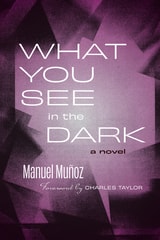
What You See in the Dark
A NovelManuel Muñoz and Charles Taylor
Northwestern University Press, 2025
A doomed love story unfolds alongside the production of Psycho in 1950s Bakersfield, California
Muñoz’s debut novel tells the story of Teresa, an aspiring singer too far away from Los Angeles to share the city’s glamour. In Dan Watson, the most desirable man in town, she believes she has found someone to help her realize those dreams. But when a famous actress arrives from Hollywood with a legendary director in tow, local gossip about Teresa and Dan turns to speculation about the celebrity visitors there to work on what will become an iconic, groundbreaking film of madness and murder at a roadside motel: Alfred Hitchcock’s Psycho. Framed by a foreword from film critic Charles Taylor, Muñoz’s haunting tale reflects “the slow winding down of everything that once seemed certain.”
When Movies Mattered
Reviews from a Transformative DecadeDave Kehr
University of Chicago Press, 2011
If you have ever wanted to dig around in the archives for that perfect Sunday afternoon DVD and first turned to a witty weekly column in the New York Times, then you are already familiar with one of our nation’s premier film critics. If you love movies—and the writers who engage them—and just happen to have followed two of the highest circulating daily papers in the country, then you probably recognize the name of the intellectually dazzling writer who has been penning pieces on American and foreign films for over thirty years. And if you called the City of the Big Shoulders home in the 1970s or 1980s and relied on those trenchant, incisive reviews from the Chicago Reader and the Chicago Tribune to guide your moviegoing delight, then you know Dave Kehr.
When Movies Mattered presents a wide-ranging and illuminating selection of Kehr’s criticism from the Reader—most of which is reprinted here for the first time—including insightful discussions of film history and his controversial Top Ten lists. Long heralded by his peers for both his deep knowledge and incisive style, Kehr developed his approach to writing about film from the auteur criticism popular in the ’70s. Though Kehr’s criticism has never lost its intellectual edge, it’s still easily accessible to anyone who truly cares about movies. Never watered down and always razor sharp, it goes beyond wry observations to an acute examination of the particular stylistic qualities that define the work of individual directors and determine the meaning of individual films.
From current releases to important revivals, from classical Hollywood to foreign fare, Kehr has kept us spellbound with his insightful critical commentaries. When Movies Mattered will secure his place among our very best writers about all things cinematic.
Where Histories Reside
India as Filmed SpacePriya Jaikumar
Duke University Press, 2019
Where No Black Woman Has Gone Before
Subversive Portrayals in Speculative Film and TVBy Diana Adesola Mafe
University of Texas Press, 2018
When Lieutenant Uhura took her place on the bridge of the Starship Enterprise on Star Trek, the actress Nichelle Nichols went where no African American woman had ever gone before. Yet several decades passed before many other black women began playing significant roles in speculative (i.e., science fiction, fantasy, and horror) film and television—a troubling omission, given that these genres offer significant opportunities for reinventing social constructs such as race, gender, and class. Challenging cinema’s history of stereotyping or erasing black women on-screen, Where No Black Woman Has Gone Before showcases twenty-first-century examples that portray them as central figures of action and agency.
Writing for fans as well as scholars, Diana Adesola Mafe looks at representations of black womanhood and girlhood in American and British speculative film and television, including 28 Days Later, AVP: Alien vs. Predator, Children of Men, Beasts of the Southern Wild, Firefly, and Doctor Who: Series 3. Each of these has a subversive black female character in its main cast, and Mafe draws on critical race, postcolonial, and gender theories to explore each film and show, placing the black female characters at the center of the analysis and demonstrating their agency. The first full study of black female characters in speculative film and television, Where No Black Woman Has Gone Before shows why heroines such as Lex in AVP and Zoë in Firefly are inspiring a generation of fans, just as Uhura did.
Where Social Identities Converge
Latin American and Latinx Youth on ScreenTraci Roberts-Camps
Vanderbilt University Press, 2024
White Rebels in Black
German Appropriation of Black Popular CulturePriscilla Layne
University of Michigan Press, 2018
Whitewashing the Movies
Asian Erasure and White Subjectivity in U.S. Film CultureDavid C Oh
Rutgers University Press, 2022
Wicked Cinema
Sex and Religion on ScreenBy Daniel Cutrara
University of Texas Press, 2014
From struggles over identity politics in the 1990s to current concerns about a clash of civilizations between Islam and Christianity, culture wars play a prominent role in the twenty-first century. Movies help to define and drive these conflicts by both reflecting and shaping cultural norms, as well as showing what violates those norms. In this pathfinding book, Daniel S. Cutrara employs queer theory, cultural studies, theological studies, and film studies to investigate how cinema represents and often denigrates religion and religious believers—an issue that has received little attention in film studies, despite the fact that faith in its varied manifestations is at the heart of so many cultural conflicts today.
Wicked Cinema examines films from the United States, Europe, and the Middle East, including Crimes and Misdemeanors, The Circle, Breaking the Waves, Closed Doors, Agnes of God, Priest, The Last Temptation of Christ, and Dogma. Central to all of the films is their protagonists’ struggles with sexual transgression and traditional belief systems within Christianity, Judaism, or Islam—a struggle, Cutrara argues, that positions believers as the Other and magnifies the abuses of religion while ignoring its positive aspects. Uncovering a hazardous web of ideological assumptions informed by patriarchy, the spirit/flesh dichotomy, and heteronormativity, Cutrara demonstrates that ultimately these films emphasize the “Otherness” of the faithful through a variety of strategies commonly used to denigrate the queer, from erasing their existence, to using feminization to make them appear weak, to presenting them as dangerous fanatics.
Widescreen Dreams
Growing Up Gay at the MoviesPatrick E. Horrigan
University of Wisconsin Press, 2001
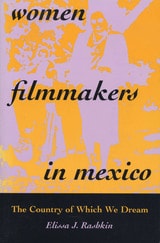
Women Filmmakers in Mexico
The Country of Which We DreamBy Elissa J. Rashkin
University of Texas Press, 2001
Women filmmakers in Mexico were rare until the 1980s and 1990s, when women began to direct feature films in unprecedented numbers. Their films have won acclaim at home and abroad, and the filmmakers have become key figures in contemporary Mexican cinema. In this book, Elissa Rashkin documents how and why women filmmakers have achieved these successes, as she explores how the women's movement, film studies programs, governmental film policy, and the transformation of the intellectual sector since the 1960s have all affected women's filmmaking in Mexico.
After a historical overview of Mexican women's filmmaking from the 1930s onward, Rashkin focuses on the work of five contemporary directors—Marisa Sistach, Busi Cortés, Guita Schyfter, María Novaro, and Dana Rotberg. Portraying the filmmakers as intellectuals participating in the public life of the nation, Rashkin examines how these directors have addressed questions of national identity through their films, replacing the patriarchal images and stereotypes of the classic Mexican cinema with feminist visions of a democratic and tolerant society.

Women at Work in Twenty-First-Century European Cinema
Barbara Mennel
University of Illinois Press, 2019
Barbara Mennel delves into the ways these films about female labor capture the tension between feminist advances and their appropriation by capitalism in a time of ongoing transformation. Looking at independent and genre films from a cross-section of European nations, Mennel sees a focus on economics and work adapted to the continent's varied kinds of capitalism and influenced by concepts in second-wave feminism. More than ever, narratives of work put female characters front and center--and female directors behind the camera. Yet her analysis shows that each film remains a complex mix of progressive and retrogressive dynamics as it addresses the changing nature of work in Europe.
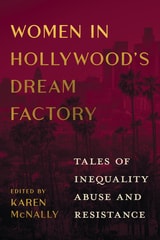
Women in Hollywood's Dream Factory
Tales of Inequality, Abuse, and ResistanceEdited by Karen McNally
University of Illinois Press, 2026
The #MeToo revelations put a twenty-first-century stamp on the age-old story of women’s mistreatment in Hollywood. Karen McNally edits a collection focused on examining and revising film history in the aftermath of the women’s stories, past and present, that have come to light.
The collection begins with essays on the interplay between reality and imagination in narratives and representations of women’s experiences of unequal treatment. In Part 2, contributors discuss how the gendered attitudes of the media’s stories enable inequality in Hollywood and look at the forces that arise whenever women resist these media assaults. The next section addresses the structures that built the inequalities and mistreatment while Part 4 revisits established narratives to challenge, renew, and expand upon our understanding of film history through women’s stories. Essays in the final section address the combination of inequality and resistance that defines women’s experiences in Hollywood.
Piercing and astute, Women in Hollywood’s Dream Factory confronts our perception of Hollywood as a mythological land of dreams.
Contributors: Alicia Byrnes, Anna M. Dempsey, Harriet Fletcher, Amanda Konkle, Tamar Jeffers McDonald, Kerry McElroy, Adrienne L. McLean, Karen McNally, Donna Peberdy, Melanie Piper, Victoria K. Pistivsek, Sarah Polley, Ina C. Seethaler, Gabrielle Stecher, and Jennifer Voss

World Film Locations
ClevelandEdited by Alberto Zambenedetti
Intellect Books, 2016
This new entry in the World Film Locations series offers the first-ever extended look at Cleveland on screen. Richly illustrated with images from dozens of productions, it reveals Cleveland to be usefully chameleonic, appealing to some filmmakers for its modern downtown’s ability to mimic more prominent (and more expensive) cities, to others for the way its shuttered factories and decaying docks signify contemporary urban distress. With entries on such classics as The Fortune Cookie, The Deer Hunter, A Christmas Story, and Marvel’s The Avengers, as well as lesser-known films, the volume reveals Cleveland to be a far more compelling, and far more varied, on-screen presence than even most film buffs would expect.
Like all the books in this series, World Film Locations: Cleveland is designed to appeal to cinephiles and scholars alike, while also serving as a silver screen souvenir for those who make the city their home as well as for those who visit it.
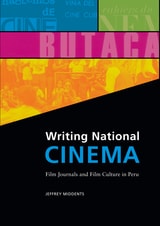
Writing National Cinema
Film Journals and Film Culture in PeruJeffrey Middents
Dartmouth College Press, 2009