Results by title
968 books match the query 'Movements' and 23 start with w
Watsuji on Nature
Japanese Philosophy in the Wake of HeideggerDavid W. Johnson
Northwestern University Press, 2019
In an engagingly lucid and deft analysis, Watsuji on Nature radically expands our appreciation of twentieth-century Japanese philosophy and shows what it has to offer to a global philosophical conversation.
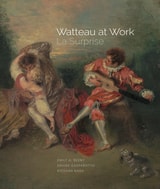
Watteau at Work
La SurpriseEmily A. Beeny
J. Paul Getty Trust, The, 2022
The painting La Surprise by Jean Antoine Watteau (1684–1721) belongs to a new genre of painting invented by the artist himself—the fête galante. These works, which show graceful open-air gatherings filled with scenes of courtship, music and dance, strolling lovers, and actors, do not so much tell a story as set a mood: one of playful, wistful, nostalgic reverie. Esteemed by collectors in Watteau’s day as a work that showed the artist at the height of his skill and success, La Surprise vanished from public view in 1848, not to reemerge for more than a century and a half. Acquired by the Getty Museum in 2017, it has never before been the subject of a dedicated publication. Marking the three hundredth anniversary of Watteau’s death, this book considers La Surprise within the context of the artist’s oeuvre and discusses the surprising history of collecting Watteau in Los Angeles.
This volume is published to accompany an exhibition on view at the J. Paul Getty Museum at the Getty Center from November 23, 2021, to February 20, 2022.
Ways of Making and Knowing
The Material Culture of Empirical KnowledgeEdited by Pamela H. Smith, Amy R. W. Meyers, and Harold J. Cook
Bard Graduate Center, 2017
Wayward Reproductions
Genealogies of Race and Nation in Transatlantic Modern ThoughtAlys Eve Weinbaum
Duke University Press, 2004
Gracefully traversing a wide range of discourses––including literature, evolutionary theory, early anthropology, Marxism, feminism, and psychoanalysis––Weinbaum traces a genealogy of the race/reproduction bind within key intellectual formations of the late nineteenth and twentieth centuries. She examines two major theorists of genealogical thinking—Friedrich Nietzsche and Michel Foucault—and unearths the unacknowledged ways their formulations link race and reproduction. She explores notions of kinship and the replication of racial difference that run through Charlotte Perkins Gilman’s work; Marxist thinking based on Friedrich Engel’s The Origin of the Family; Charles Darwin’s theory of sexual selection; and Sigmund Freud’s early studies on hysteria. She also describes W. E. B. Du Bois’s efforts to transcend ideas about the reproduction of race that underwrite citizenship and belonging within the United States. In a coda, Weinbaum brings the foregoing analysis to bear on recent genomic and biotechnological innovations.
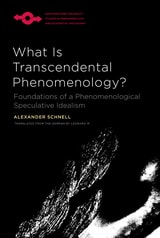
What Is Transcendental Phenomenology?
Foundations of a Phenomenological Speculative IdealismAlexander Schnell; Leonard Ip
Northwestern University Press, 2027
Offering a systematic introduction to a vital discipline
Phenomenology is a now century-old school of philosophy, to which Alexander Schnell offers here a threefold introduction that explores its diversity of approaches. In What Is Transcendental Phenomenology?, Schnell provides an in-depth overview of the Husserlian phenomenological method and its fundamental concepts (epoché and reduction, eidetic variation, phenomenological description, and phenomenological construction). He then examines that method’s limits, stressing the necessity of overcoming them in order to achieve a constructive approach while staying true to its fundamental disciplinary frameworks. Finally, he outlines a theory of understanding that expands the phenomenological method and highlights its speculative grounding before turning to speculative realists’ criticisms of the field. Schnell’s work shows that phenomenology can face the challenge of speculative thinking from an idealist standpoint, making a vital contribution to current debates about new, or speculative, realism. This important volume not only answers its titular question but, in its mode of discussing its subject, is itself phenomenology.
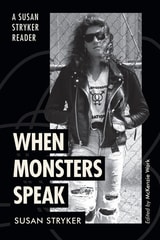
When Monsters Speak
A Susan Stryker ReaderSusan Stryker. Edited by McKenzie Wark
Duke University Press, 2024
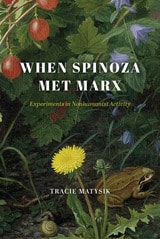
When Spinoza Met Marx
Experiments in Nonhumanist ActivityTracie Matysik
University of Chicago Press, 2022
Karl Marx was a fiery revolutionary theorist who heralded the imminent demise of capitalism, while Spinoza was a contemplative philosopher who preached rational understanding and voiced skepticism about open rebellion. Spinoza criticized all teleological ideas as anthropomorphic fantasies, while Marxism came to be associated expressly with teleological historical development. Why, then, were socialists of the German nineteenth century consistently drawn to Spinoza as their philosophical guide? Tracie Matysik shows how the metaphorical meeting of Spinoza and Marx arose out of an intellectual conundrum around the meaning of activity. How is it, exactly, that humans can be fully determined creatures but also able to change their world? To address this paradox, many revolutionary theorists came to think of activity in the sense of Spinoza—as relating. Matysik follows these Spinozist-socialist intellectual experiments as they unfolded across the nineteenth century, drawing lessons from them that will be meaningful for the contemporary world.
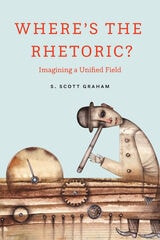
Where's the Rhetoric?
Imagining a Unified FieldS. Scott Graham
The Ohio State University Press, 2020
Building on this foundation, Graham then argues for a more unified approach to contemporary rhetorical inquiry—one that eschews disciplinary demarcations between rhetoric’s various subareas. Specifically, Graham uses his unified field theory to explore 1) the rise of the “tweetorial” as a parascientific genre, 2) inventional practices in new media design, 3) statistical approaches to understanding biomedical discourse, and 4) American electioneering rhetorics. The book overall demonstrates how seemingly disparate intellectual approaches within rhetoric can be made to speak productively to one another in the pursuit of shared scholarly goals around questions of genre, media, and political discourse—thereby providing a foundation for imagining a more unified field.

Who Says Anything about Winning?
Eight Exercises in Philosophical ResignationTereza Matejcková
Karolinum Press, 2026
A contemporary philosophical argument that boldly proposes resignation as the path to a fully realized self.
Traditional cultures have exercises that teach people discipline. Even modern philosophers, Hegel, Nietzsche, and Kierkegaard, paid special attention to striving for spirituality, although outside religious frameworks. However, if we are to grow, a more relaxed relationship to the self may be beneficial; hence the notion of resignation. A resigned will is not weak; it can resist itself and others. Such resignation is a man’s defense against becoming a mere element in a sequence of events. Art, philosophy, and mainly freedom all rely on the ability to create distance. In Who Says Anything about Winning?, Tereza Matejcková offers more than a history of a notion or a thematic reading of the legacy of respected thinkers; she offers a fresh view of self-acceptance and growth.
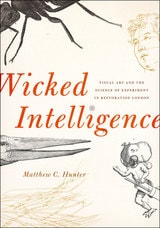
Wicked Intelligence
Visual Art and the Science of Experiment in Restoration LondonMatthew C. Hunter
University of Chicago Press, 2013
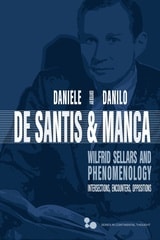
Wilfrid Sellars and Phenomenology
Intersections, Encounters, OppositionsDaniele De Santis
Ohio University Press, 2023
Wilfrid Sellars tackled the difficult problems of reconciling Pittsburgh school–style analytic thought, Husserlian phenomenology, and the Myth of the Given.
This collection of essays brings into dialogue the analytic philosophy of Wilfrid Sellars—founder of the Pittsburgh school of thought—and phenomenology, with a special focus on the work of Edmund Husserl. The book’s wide-ranging discussions include the famous Myth of the Given but also more traditional problems in the philosophy of mind and phenomenology such as the
- status of perception and imagination
- nature of intentionality
- concept of motivation
- relationship between linguistic and nonlinguistic experiences
- relationship between conceptual and preconceptual experiences
Moreover, the volume addresses the conflicts between Sellars’s manifest and scientific images of the world and Husserl’s ontology of the life-world. The volume takes as a point of departure Sellars’s criticism of the Myth of the Given, but only to show the many problems that label obscures. Contributors explain aspects of Sellars’s philosophy vis-à-vis Husserl’s phenomenology, articulating the central problems and solutions of each. The book is a must-read for scholars and students interested in learning more about Sellars and for those comparing Continental and analytic philosophical thought.
Contributors
Walter Hopp
Wolfgang Huemer
Roberta Lanfredini
Danilo Manca
Karl Mertens
Antonio Nunziante
Jacob Rump
Daniele De Santis
Michela Summa
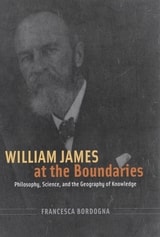
William James at the Boundaries
Philosophy, Science, and the Geography of KnowledgeFrancesca Bordogna
University of Chicago Press, 2008
What was the goal of this unusual speech? Rather than an oddity, Francesca Bordogna asserts that the APA address was emblematic—it was just one of many gestures that James employed as he plowed through the barriers between academic, popular, and pseudoscience, as well as the newly emergent borders between the study of philosophy, psychology, and the “science of man.” Bordogna reveals that James’s trespassing of boundaries was an essential element of a broader intellectual and social project. By crisscrossing divides, she argues, James imagined a new social configuration of knowledge, a better society, and a new vision of the human self. As the academy moves toward an increasingly interdisciplinary future, William James at the Boundaries reintroduces readers to a seminal influence on the way knowledge is pursued.
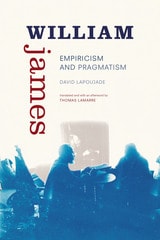
William James
Empiricism and PragmatismDavid Lapoujade
Duke University Press, 2020
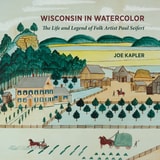
Wisconsin in Watercolor
The Life and Legend of Folk Artist Paul SeifertJoe Kapler
Wisconsin Historical Society Press, 2018
In 1867, German immigrant Paul Seifert settled in the Driftless Area of southwestern Wisconsin and began capturing the distinctive farms and landscapes of his new home in vivid, detailed watercolors. Today, these paintings are coveted by American folk art collectors across the country, but Seifert’s life remains shrouded in mystery.
In this first book written about Paul Seifert, author Joe Kapler examines the life of this enigmatic artist and provides context for his extraordinary art. The book features high-quality reproductions of twenty-two Seifert watercolors (more than half of which have never been published) and many close-ups of his characteristic details, from horses and hay wagons to dogs and dinner bells. Part art history treatment, part coffee table book, part research memoir, and part love letter to the Driftless Area, Wisconsin in Watercolor shines a long-awaited light on Seifert and the land he so carefully rendered over a hundred years ago.
Wisdom's Apprentice
Thomistic Essays in Honor of Lawrence Dewan, O.P.Peter A. Kwasniewski
Catholic University of America Press, 2007

Wittgenstein & Critical Theory
Beyond Postmodern Criticism and Toward Descriptive InvestigationsSusan B. Brill
Ohio University Press, 1994
Brill’s work discusses at length the implications of Wittgenstein for literary criticism and theory. The volume specifically investigates the implications of Wittgenstein’s work for a number of contemporary critical orientations (notably poststructualism, feminism, and psychology). In addition, the research includes actual applications of Wittgenstein for literary criticism: diverse literary texts (including a number of poems and stories by Native American authors) are approached via a Wittgensteinian method as a means of discerning which critical approaches might be more or less efficacious. Not only does the book provide a solid introduction to Wittgensteinian philosophy for the critical scholars, but it also provides a clear methodology useful to critics seeking a means to navigate through the entanglement of contemporary criticism and theory.
Brill argues that a reliance upon the philosophy of Ludwig Wittgenstein can enable literary critics to escape the seemingly endless dialectic between modern and postmodern theory. Instead of debating which theory is theoretically best, we need to describe when theories work—and when they do not.
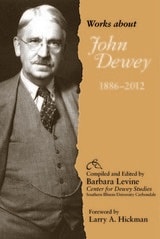
Works about John Dewey, 1886-2012
Compiled and Edited by Barbara Levine
Southern Illinois University Press, 2014
Works of John Dewey, 1886–2012 is an invaluable and meticulously compiled resource for the growing number of scholars and researchers seeking a deeper understanding of the work of the prominent American philosopher, psychologist, and educational reformer.
Dewey (1859–1952), an influential philosopher credited with the founding of pragmatism and also recognized as a pioneer in functional psychology and the progressive moment in education, was hailed by Life magazine in 1990 as one of the one hundred most important Americans of the twentieth century. This rich and continually expanding compendium of historical and more recent essays, research, and references is a testament to the growing interest in Dewey’s intellectual work and his measurable impact in the United States and throughout the world.
In Works of John Dewey, 1886–2012, some four thousand new entries are presented in ebook format, in addition to those from earlier print and electronic editions dating back to 1995. Copies of most of the works have been obtained and are stored at the Center for Dewey Studies. For the first time, users can access all items from all editions in one user-friendly format. Jump links to alphabetical sections facilitate movement through the vast collection of entries. Users can search by keyword and author.

Worlding
Finding a Way in Broken TimesKathleen Stewart
Duke University Press, 2027

Worlds Beyond Bios
The Life of Matter and the Matter of LifeSophie Chao, Christine J. Winter, and David Schlosberg, editors
Duke University Press, 2026
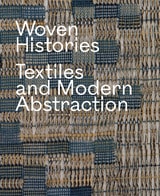
Woven Histories
Textiles and Modern AbstractionEdited by Lynne Cooke
University of Chicago Press, 2023
Published on the occasion of an exhibition curated by Lynne Cooke, Woven Histories offers a fresh and authoritative look at textiles—particularly weaving—as a major force in the evolution of abstraction. This richly illustrated volume features more than fifty creators whose work crosses divisions and hierarchies formerly segregating the fine arts from the applied arts and handicrafts.
Woven Histories begins in the early twentieth century, rooting the abstract art of Sophie Taeuber-Arp in the applied arts and handicrafts, then features the interdisciplinary practices of Anni Albers, Sonia Delaunay, Liubov Popova, Varvara Stepanova, and others who sought to effect social change through fabrics for furnishings and apparel. Over the century, the intersection of textiles and abstraction engaged artists from Ed Rossbach, Kay Sekimachi, Ruth Asawa, Lenore Tawney, and Sheila Hicks to Rosemarie Trockel, Ellen Lesperance, Jeffrey Gibson, Igshaan Adams, and Liz Collins, whose textile-based works continue to shape this discourse. Including essays by distinguished art historians as well as reflections from contemporary artists, this ambitious project traces the intertwined histories of textiles and abstraction as vehicles through which artists probe urgent issues of our time.
Writing and Difference
Jacques Derrida
University of Chicago Press, 1978
The second half of the book contains some of Derrida's most compelling analyses of why and how metaphysical thinking must exclude writing from its conception of language, finally showing metaphysics to be constituted by this exclusion. These essays on Artaud, Freud, Bataille, Hegel, and Lévi-Strauss have served as introductions to Derrida's notions of writing and différence—the untranslatable formulation of a nonmetaphysical "concept" that does not exclude writing—for almost a generation of students of literature, philosophy, and psychoanalysis.
Writing and Difference reveals the unacknowledged program that makes thought itself possible. In analyzing the contradictions inherent in this program, Derrida foes on to develop new ways of thinking, reading, and writing,—new ways based on the most complete and rigorous understanding of the old ways. Scholars and students from all disciplines will find Writing and Difference an excellent introduction to perhaps the most challenging of contemporary French thinkers—challenging because Derrida questions thought as we know it.
Writing and Difference
Jacques Derrida
University of Chicago Press, 1980
The second half of the book contains some of Derrida's most compelling analyses of why and how metaphysical thinking must exclude writing from its conception of language, finally showing metaphysics to be constituted by this exclusion. These essays on Artaud, Freud, Bataille, Hegel, and Lévi-Strauss have served as introductions to Derrida's notions of writing and différence—the untranslatable formulation of a nonmetaphysical "concept" that does not exclude writing—for almost a generation of students of literature, philosophy, and psychoanalysis.
Writing and Difference reveals the unacknowledged program that makes thought itself possible. In analyzing the contradictions inherent in this program, Derrida foes on to develop new ways of thinking, reading, and writing,—new ways based on the most complete and rigorous understanding of the old ways. Scholars and students from all disciplines will find Writing and Difference an excellent introduction to perhaps the most challenging of contemporary French thinkers—challenging because Derrida questions thought as we know it.
Wrong-Doing, Truth-Telling
The Function of Avowal in JusticeMichel Foucault
University of Chicago Press, 2014
Three years before his death, Michel Foucault delivered a series of lectures at the Catholic University of Louvain that until recently remained almost unknown. These lectures—which focus on the role of avowal, or confession, in the determination of truth and justice—provide the missing link between Foucault’s early work on madness, delinquency, and sexuality and his later explorations of subjectivity in Greek and Roman antiquity.